


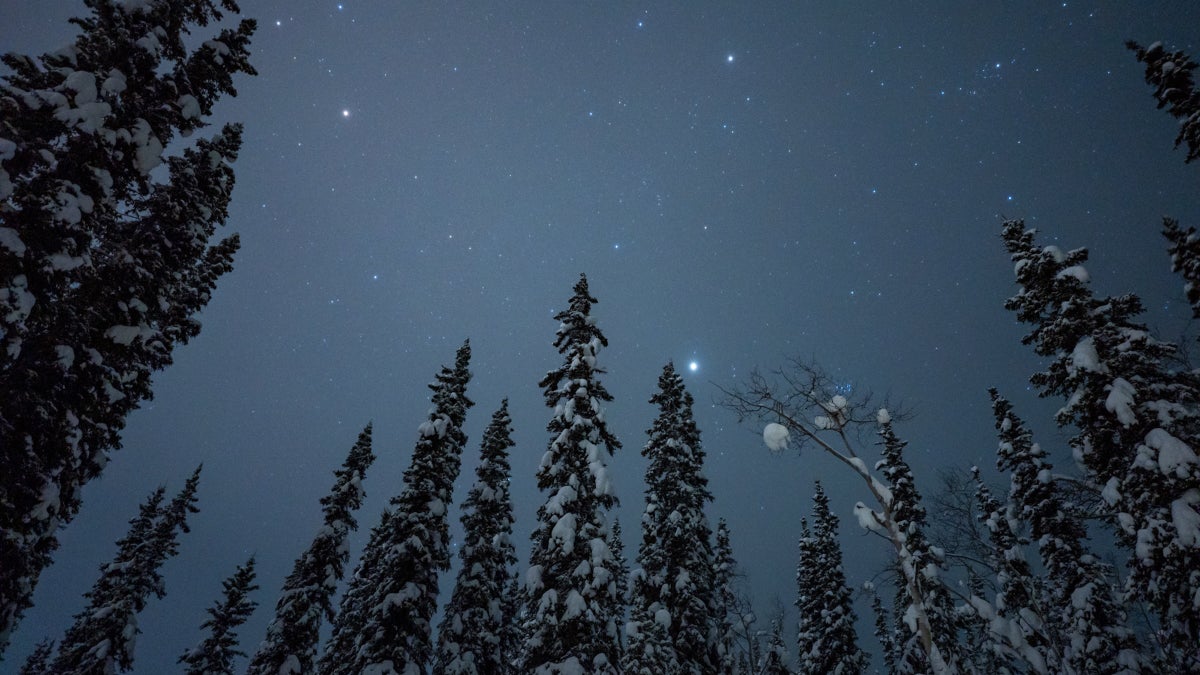
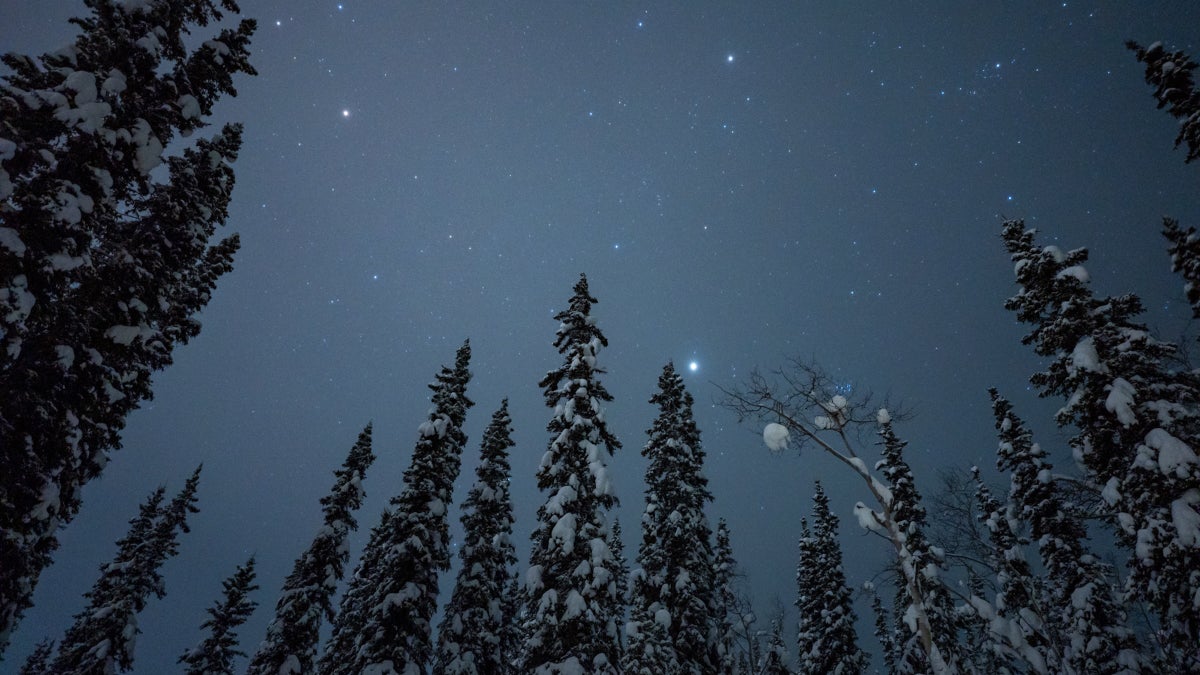
If the idea of stargazing without skipping bedtime sounds enticing, mark your calendar for late February. The month ends with an action-packed evening planet parade, with six planets in the sky at once—and all but two visible to the naked eye.
One of my favorite things about a planet parade? You can enjoy it close to home. Many of the planets are bright enough to admire right in your own backyard, even with overpowering city lights. Yet with several planets hugging the horizon, you will need a strategic viewpoint to watch.
Here are my best tips on how to catch this February’s six-planet spectacle, including when and where to spot it.
What Is a Planet Parade?
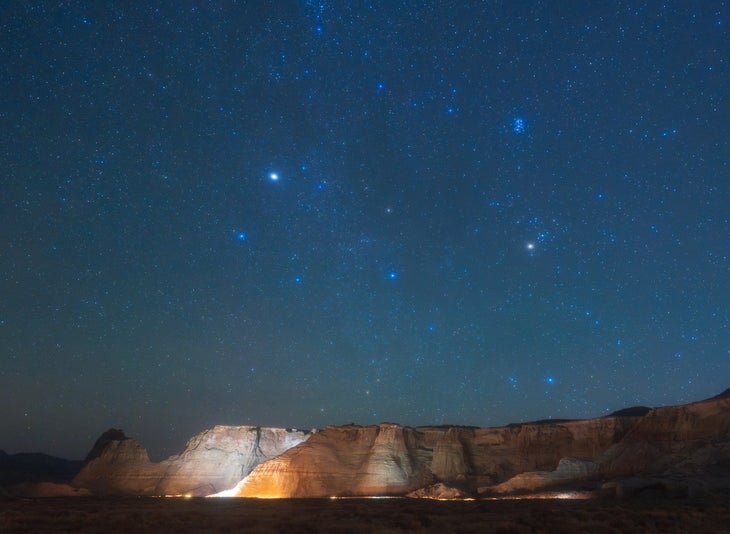
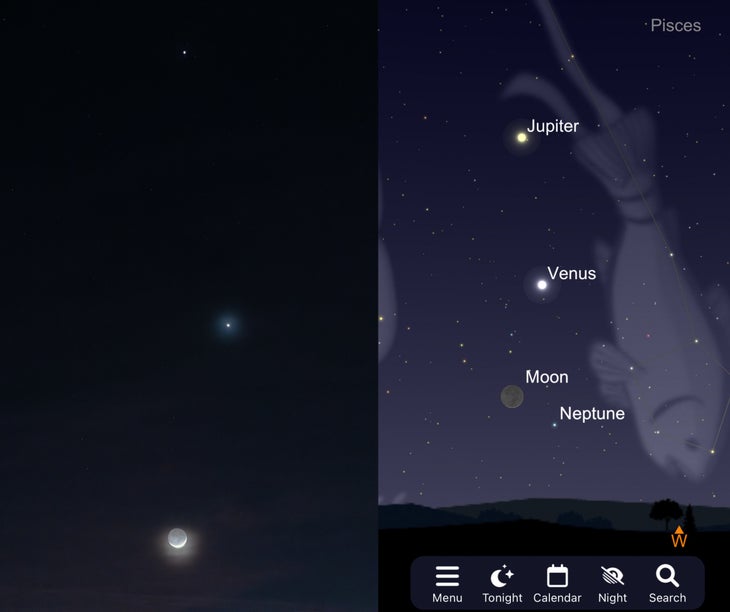
During a planet parade, several of our neighboring bodies appear in the night sky at once. This month, that includes Venus, Mercury, Saturn, and Neptune, which will hover above the western horizon once the sun sets. Uranus is high in the southern sky near the Pleiades star cluster, and vivid Jupiter glimmers up in the east.
You can see all but Neptune and Uranus with the naked eye; you’ll need strong binoculars or a telescope to view these outermost planets. Even a pair of at-home binoculars can help you better admire the others. For instance, I can see Jupiter’s brightest moons with my Nikon Monarch M7 8×42 wildlife binoculars. (Here’s all of my must-have stargazing gear.)
Spotting several planets at once is awe-striking. The view gets even more enchanting when you realize why planet parades happen in the first place. During our solar system’s formation billions of years ago, gas and debris gathered in a ring around our sun. The planets were created along this disk of detritus, and they still follow its orbit today, along a rough arc-like path known as the ecliptic.
When to See the February Planet Parade
The best night to see this month’s planet parade is February 28, according to NASA. That’s when horizon-hugging planets like Venus will stay up longer. But that’s not the only night for a solid show. You can see the arc of planets for a few weeks, and several nights are especially noteworthy.
On the evening of February 18, the barely-there crescent moon will appear as a sliver just beside Mercury. The next night, you’ll find it just above Saturn. On February 23, it will hover near the Pleiades star cluster, which is just above Uranus. Watch from February 26 to 27, as the waxing gibbous disk glides near luminous Jupiter.
If you’re in the early-to-bed crowd, this is the planet parade you’ve been waiting for. The action begins just after sundown, and our neighbors stay visible for between 30 and 60 minutes before Venus and Mercury set. (An important reminder: wait until the sun is fully set to point optical aids west.)
Where to Watch the Planet Parade in February
Location is everything for this month’s planet parade. While you don’t need to travel for dark skies, you do need to find a perch with clear views to the west horizon, where Venus, Mercury, Saturn, and Neptune gather. For that, a lake, mountaintop, or observation tower will do. And choose a viewing night with clear weather, as clouds can obscure the show.
I’ve gathered west-facing public viewpoints in every region. If your area’s not on this list, here’s a tip: pick a local spot known for exceptional sunsets, because Venus, Mercury, Saturn, and Neptune will all follow our bright star.
The Northeast
Verona Beach State Park, New York
Just east of the Finger Lakes region you’ll find one of Upstate New York’s best planet-parade viewpoints: Verona Beach State Park. The waterfront escape offers 13 miles of hiking trails to pass the pre-sunset hours, with clear views across massive Oneida Lake once the astronomical fun begins. The park lies ten miles from Syracuse. It stays open from dawn until dusk, and the vehicle entrance fee is $7.
Cape Cod National Seashore, Massachusetts
Enjoy snow-dusted dunes and unobstructed western horizon views from the Cape Cod National Seashore. While February gets frigid along this scenic stretch of Massachusetts, it also provides a rare experience: a Cape getaway without the crowds. Watch the planet parade from one of several viewpoints along the coast, including Herring Cove Beach or the Race Point or Wood End Lighthouses. Entrance starts at $15.
The Midwest
Wind Cave National Park, South Dakota
A climb up Wind Cave National Park’s Boland Ridge gets you to the park’s tippy-top, where you can watch the sunset and planets reach the horizon line. The trail, reached via gravel road, is 5.2 miles round-trip. Prepare for cold weather, and keep watch for wildlife like bison and elk. Park entrance is free.
Sleeping Bear Dunes National Lakeshore, Michigan
With soaring sand and clear views to the west, Sleeping Bear Dunes National Lakeshore is perfect for this month’s planet parade. Try the area around Sleeping Bear Dune Overlook on Pierce Stocking Scenic Drive, or take the rugged 3.5-mile round-trip Dunes Trail to peer across Lake Michigan. Spend your daytime hours snowshoeing, cross-country skiing, or sledding down the Dune Climb (weather-permitting). Entrance starts at $25.
The West
Saguaro National Park, Arizona
Stargazers can snag multiple planetary views from Saguaro National Park, with the sky dots visible above the distant Tucson peaks. From the park’s eastern side, try lookouts along the Tanque Verde Ridge Trail, or take a scenic golden-hour ride down Cactus Forest Drive. If you’re on the destination’s western side, head just outside Saguaro National Park West to Gate Pass Overlook in Tucson Mountain Park. This sunset vantage point stays open until 8 P.M., and it’s free. (Saguaro National Park entrance starts at $15.)
Pawnee National Grassland, Colorado
With flat, open terrain, at Colorado’s Pawnee National Grassland, you can watch the planets dip toward the horizon. This getaway, located 35 miles east of Fort Collins, is open year-round, although be prepared for winter’s cold and snow. For the best evening-sky views, hike the two-mile trail out to the first towering Butte. Grassland entrance is free.
The West Coast
Rialto Beach, Washington
Rialto Beach is a fan-favorite for Pacific Northwest sunsets. With unobstructed views to the western horizon, it’s also ideal for February’s planet parade. Get your heart pumping before golden hour on a waterfront hike to Hole-in-the-Wall arch, located around 1.5 miles from the beach entrance. Of course, Rialto isn’t the only seaside spot with west-facing views; try an oceanfront Airbnb. Entrance starts at $15.
Sunset Cliffs Natural Park, California
California sky-watchers have a smorgasbord of sky-watching options for this month’s planet parade. Chief among them is San Diego’s Sunset Cliffs Natural Park, where astronomy enthusiasts can watch the planets appear atop craggy coastal bluffs. While you’re here, keep an eye out for gray whales; the cetaceans’ migration perfectly coincides with February’s parade of planets. Entrance is free.
The South
Big Cypress National Preserve: Everglades City, Florida
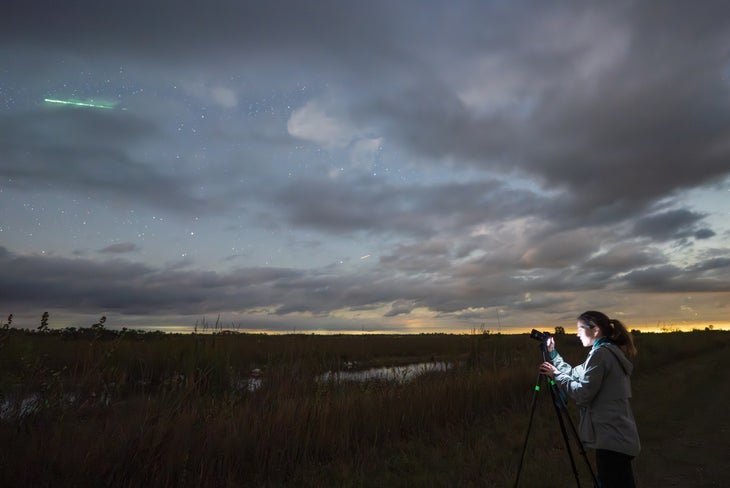
As a DarkSky-certified park, Big Cypress National Preserve allures stargazers throughout the year. In late February, it’s an exceptional venue for planet-watching, particularly in the treeless prairies along remote sections like Wagon Wheel Road. Park entrance is free, and its roads stay open 24 hours for sky-watching. Stay alert for wildlife on the roads, especially at night.
Jekyll Island: Golden Isles, Georgia
While many sunbathers enjoy Jekyll Island’s eastern Atlantic-view beaches, a trip to the getaway’s western side comes with stellar views of our planetary neighbors this February. Head to the fishing pier off of Clam Creek Road or St. Andrew’s Beach and viewing platform on the island’s southern end. These hangouts offer free nighttime access and some of the best sunset views in the region.
The post How to See the Best Planet Parade of the Year appeared first on Outside Online.