









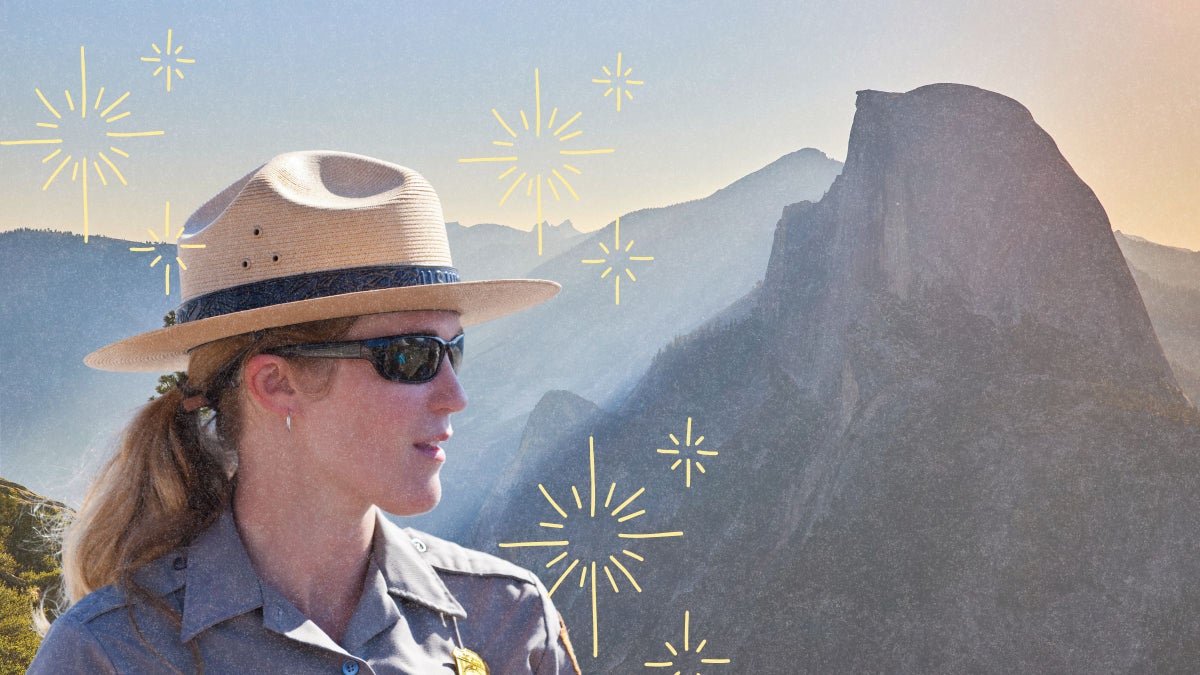
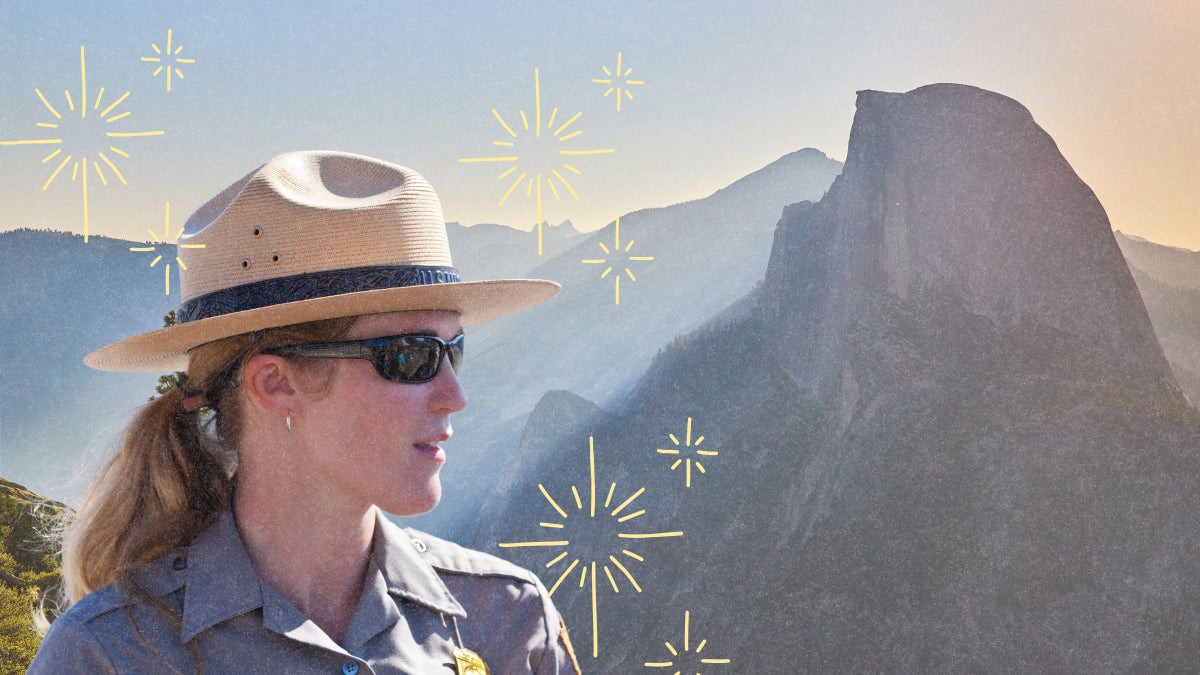
If you think visiting national parks is great, try exploring one full-time—and getting paid to do it. That’s the marquee perk of working as a National Park Service ranger, but it’s not the only one. The prospect of on-site housing, after-hours park access, and a government pension all draw people to the gig. Some rangers get to work in delicate ecosystems that are off-limits to visitors. Others fight fires, swing chainsaws, rappel rock faces, and handle rare wildlife in the line of regular duty. Cool, huh?
It might sound like a dream job. It certainly used to be. But these days, getting the gig in the first place isn’t easy. Neither is keeping it. Since the so-called Valentine’s Day Massacre of February 2025—a mass layoff that resulted in 1,000 park employees losing their jobs—further layoffs, hiring freezes, and budget cuts have left job stability feeling like a distant memory. Many rangers say they’re operating in survival mode just to keep parks functioning. Others have scaled back on advocacy work or DEI initiatives for fear of getting reported or losing their jobs.
Now, as part of the application process for government jobs, you have to name your favorite executive order. It’s a mandatory field; you can’t skip it.
Affected rangers have called the firings devastating. That’s because rangering isn’t just a clock-in, clock-out sort of gig. Many folks live, work, and recreate within the national park. Those in employee housing bunk with their coworkers, share family meals, have themed game nights, or put on plays together. On their off hours, rangers volunteer for unpaid park initiatives—or start new ones. For many, the park and its needs quickly swell to consume their lives. It’s family. It’s purpose. Losing all that overnight feels less like a firing and more like a breakup.
But is it better to love and get hurt than to have never loved at all? According to one longtime ranger, the answer is an unequivocal yes. Here’s a peek behind the curtain of one of America’s most treasured—and tenuous—dream jobs.
The Gig at a Glance
Job: Full-time national park ranger
Age: Mid-thirties
Years in the Business: 5
Salary: $73,000
How Competitive Is It to Become a Park Ranger?
Working as a ranger is a lifelong goal for a lot of people, so there are a lot of applicants for relatively few jobs. It’s not uncommon to apply two or three times before getting hired.
The other obstacle is that you have to apply through USA Jobs, which is a nightmare. The application process is exceptionally complicated, and the system is a black box. You think you know what your hiring manager wants, but your resume first has to pass through regional HR. Those people might be hundreds of miles from the park and have no idea what the job involves.
So, HR might say yes or no to your resume depending on who they are and what day it is. There’s some luck involved. Fortunately, once you have your foot in the door, it’s a lot easier to get rehired into the federal system.
What’s the Best Part of the Job?
The park was already my favorite place in the whole world. Then it became the place where I got to learn and work and take care of its unique natural resources. Knowing that I’m having an impact on a place that’s been so significant in my life—that’s the best.
What’s the Worst Part of the Job?
Before the new administration, I would say there wasn’t really anything I didn’t like about it. I honestly loved every aspect of my job. Now, though, the worst part is the federal bureaucracy. And the pay could be better.
Can You Afford the Rent?
Yes, but it’s not easy. The communities surrounding national parks are usually remote, which means housing is in low supply and landlords can charge whatever they want. A lot of people get fleeced. I have friends who pay $1,400 a month for a tiny attic room on a federal salary.
My salary is higher than it used to be, but I’ve seen people with a master’s degree make just $1,500 a month for an internship. They’re so desperate to get their foot in the door, they’ll take anything. When the average price of a home in the area is $800,000, it’s hard to get ahead.
On-site employee housing can be cheaper, but not necessarily. Some of it remains unaffordable given our wages.
How Have Things Changed for Rangers Over the Past Year?
When the new administration came into office, things started changing immediately. There were all these executive orders. Now, as part of the application process for government jobs, you have to name your favorite executive order. It’s a mandatory field; you can’t skip it.
Park priorities have also radically shifted. Before, our focus was on sustainability, climate change, and trying to build diverse ecosystems. Now, we can’t even say any of those words in the proposals we submit. Instead of saying, “This project is important for climate resilience and conservation,” we have to say, “This project will keep the iconic park landscape beautiful for America.” We have to disguise science as patriotism. Which is ridiculous because science isn’t loyal to any country—it’s just the pursuit of knowledge.
Rangers are getting weeded out. The culture feels fractured and unsafe.
There’s also no sense of trust between managers and employees anymore. We now have to write five bullet points every Monday to prove what we’re working on. If every employee spends 15 minutes doing that every Monday, that costs America something like $17 million per week. Everyone feels like they’re being watched and evaluated, and that they could be fired at any moment. The culture of collaboration has been replaced with a culture of fear.
What Do You Mean by “a Culture of Fear?”
Park employees were told that if we got caught supporting DEI initiatives, we could lose our jobs. One day, I showed up to work to find the single-stall bathrooms, which had previously been updated with ungendered signage, had their signs switched back to being gendered. Changing the signs in the first place had been someone’s personal project, and they were so terrified of being associated with it that they changed them back.
The wild thing is that building code actually stipulates that single-stalled bathrooms should be ungendered to ensure adequate toilet access for all visitors in a building. So, this person went out of their way to violate building regulations because they were so scared of losing their job for being affiliated with a DEI initiative.
The fear isn’t unfounded. Rangers are getting weeded out. The culture feels fractured and unsafe. One of my colleagues said it feels like someone just shot a hole into a sinking ship, and now it’s leaking water. We’re all bailing it out as fast as we can, thinking we can keep it afloat. But in reality, we’re going down with it.
Do You Think the Situation Will Improve?
I think things will get worse. It seems like Washington is trying to weed out positions to make parks function less well so they can make a good case to privatize the parks. They won’t do that in a month or two months or probably even this year. But I think when people forget that the government weeded out so many employees, and that’s why parks aren’t functioning, that’s when they’ll make that case, and a private company will buy them up.
Did These Changes Ever Make You Think About Quitting?
Never. Because it’s not the park’s fault. It’s Washington’s fault. And despite everything, I love this place, and I love this job.
Is the Outfit Comfortable?
No, not really. We do have a few items to choose from (and a handbook telling us what we’re allowed to wear with what). The ranger uniform everyone thinks of isn’t the worst, but it’s also not the best.
What’s the Wildest Visitor Comment You’ve Ever Gotten?
Sometimes people come during the dry season when the waterfalls don’t have water. They come up to me and ask, “When do you turn the waterfalls on?” I’ve gotten that question several times. But honestly, I don’t mind it. There’s something kind of sweet about it.
What’s Your Biggest Visitor Pet Peeve?
Probably when people leave their food out or feed the squirrels. That gets me.
Does Working in the Park Day In and Day Out Ever Leave You Numb to Its Beauty?
When I took this job, I told myself that the minute I stopped taking the same pictures every time I drove into the park, it was time for me to go. I’ve never stopped taking those pictures. I’ve been coming to this park for almost 20 years, and I still feel the same awe to this day.
Quotes have been edited for length and clarity, as well as to preserve the source’s anonymity.
The post I’ve Been a National Park Ranger for 5 Years. This Is What It’s Really Like. appeared first on Outside Online.