








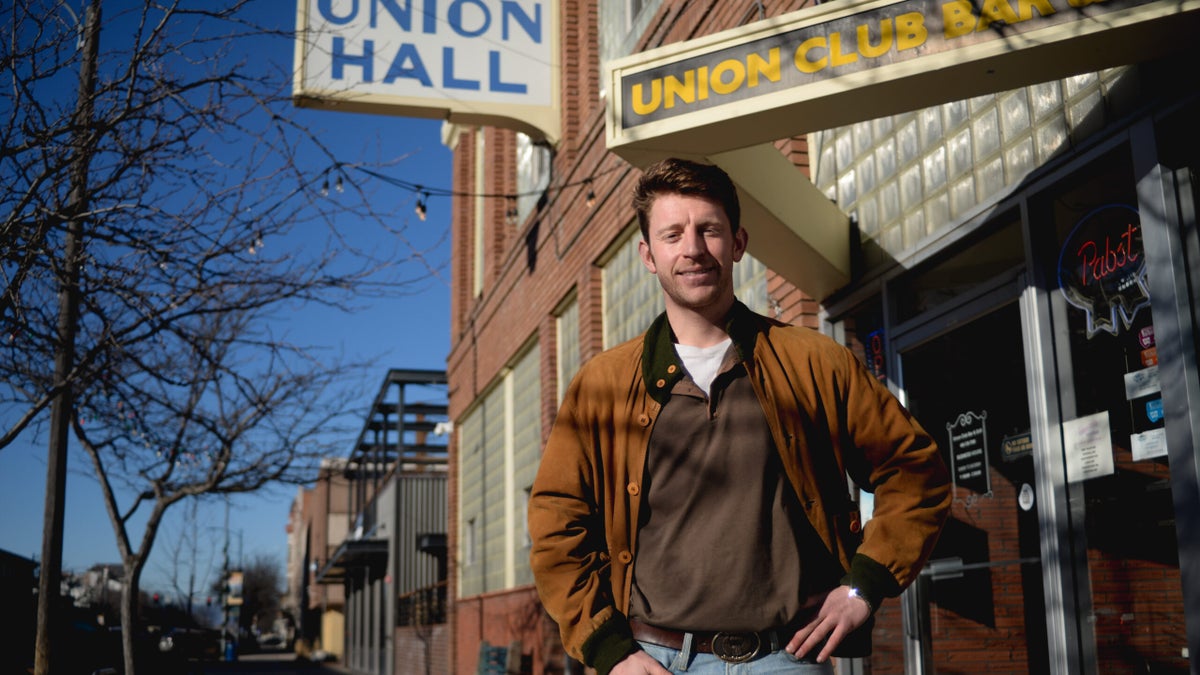
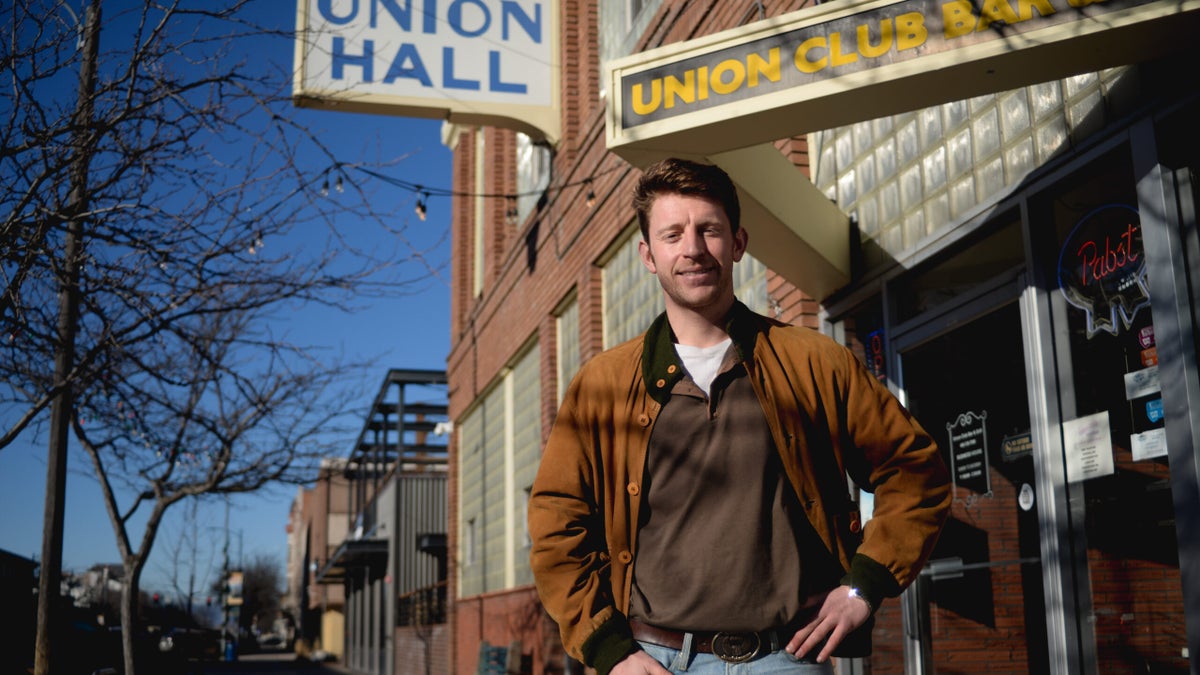
Like many Montanans, Sam Forstag typically wears forestry work boots, denim pants, and a button-up layered flannel. Forstag, 31, is a smokejumper-turned-politician running for Montana’s U.S. House of Representatives seat.
Now, the Democrat is running against Montana’s Republican incumbent Ryan Zinke. Forstag told Outside that protecting public lands is at the top of his list of proposed policies. He says his years spent on the fire lines across the state have made him an advocate for the people who protect and manage public lands.
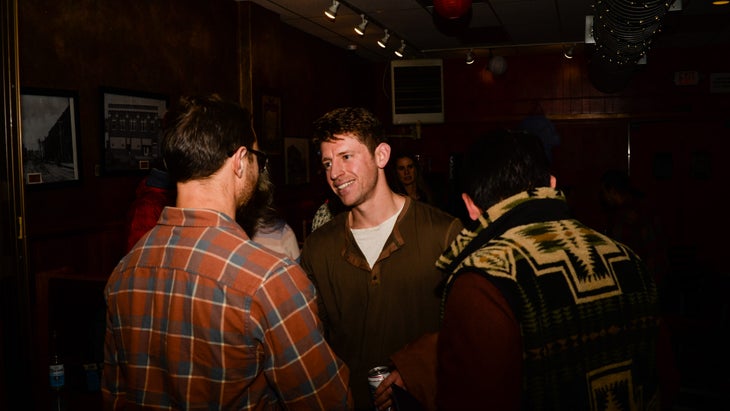
Following his January 5 campaign kickoff at a dive bar in Missoula, I sat down with Forstag to talk about his political aspirations.

OUTSIDE: Environmental groups argue that rollbacks of land protections amount to attacks on American land resources. What’s your take on that?
Sam Forstag: The past year’s attacks on public lands are pretty core to why I’m running. In Montana, we lost nearly a quarter of my co-workers in the Forest Service last year. Most of them were Montanans making less than $20 an hour.
Too often, we let this conversation be twisted into a choice between sustainability and solidarity. That’s a false choice. We can preserve environmental protections without sacrificing the industries people depend on for a living. If we want to protect our public lands, we need to make sure the public knows what’s happening and sees the value of standing up. There is no public land without public support. That means making sure that the people who live and work on our public lands can afford to do so, whether that’s a fishing guide, a firefighter, or a logger.
We don’t have to settle for a government that lurches from crisis to crisis, and we don’t have to settle for elected officials who warp public goods into sources of profit for themselves. We can make our land management more efficient and effective by investing up front and ensuring those investments go to working people, not corporate profits.
That oughta leave us all feeling hopeful, and that’s the core of why I’m running for Congress.
Your opponent, Ryan Zinke, co-founded the Public Lands Caucus in 2025. But he has also argued that some public lands should be made available for mining and industry. How do you balance conservation with economic use of public lands?
Our public lands are the most valuable resource we have in Montana and in this country. They make our lives richer by providing a place to hike, ski, hunt, and camp. For a lot of us, they’re also the places we work—whether it’s public servants building trails and fighting fires, guides and outfitters working in tourism, or loggers and mill workers harvesting timber. Public lands can do all of these things.
Zinke has used his position in Congress to undermine so much of what makes our public lands “public.” He spent 2025 voting to gut our public lands agencies and fire public servants to fund tax cuts for the wealthy, and recently led an effort to roll back basic protections in the Boundary Waters Wilderness in Minnesota. That’s not conservation, that’s cowardice.
To be clear, there’s an important place for responsible development of resources on public lands. We can do that by investing resources up front in community collaboration to avoid drawn-out litigation, and by investing in clear, enforceable timelines when disagreements arise. And if a company wants to draw on our public lands, we’d better make damn sure that they’re following the rules and bearing the responsibility of leaving our lands in healthy condition when they’re done.
Federal public lands should be kept public and owned by all of us. Period.
The National Park Service (NPS) has faced chronic underfunding for maintenance, staffing, and preservation. President Donald Trump says agencies like NPS are wasteful and expensive. Do you believe NPS and other agencies should be reinforced, and are there areas where you see a need for thinning?
There are massive inefficiencies in the federal government. I know. I’ve seen them firsthand. The people are not the inefficiency. Federal employees account for 4-6 percent of the federal budget, and most of the public servants I know work their tails off for a whole lot less than they could make elsewhere.
Last February, DOGE fired 300 Forest Service workers across Montana in one day with no notice, for no good reason. In that round of firings, 85 percent of the people were making less than $20 an hour. Those same cuts led to thousands of layoffs at the NPS, even as our national parks are seeing record traffic. The waste I see in our federal agencies isn’t the public servants making $15 or $20 an hour; it’s the corrupt members of Congress like Zinke who have gotten $20 million richer since taking office.
So yes, we should invest more in the public servants who keep our national parks and forests running, and we should reel in the public resources being sucked up by corrupt elected officials. We ought to root out inefficiencies by rooting out corruption, and we ought to fortify our public lands by investing more in public servants.
You’ve spoken about federal spending cuts. Which specific programs related to land management or conservation would you protect, and why?
We need to have a bigger conversation about what reinvesting in public lands can look like. That doesn’t just mean rehiring the 20-30 percent of public lands employees who were fired last year; it means dreaming big about what it would take to actually start fixing our housing and wildfire crises more effectively. We spend over $7 billion a year on fighting wildfires, and about 1 percent of that on the sort of hazardous fuels mitigation that could help us fight those fires before they start.
When we lurch from crisis to crisis, we end up spending more for worse outcomes. Whether it’s forest management, housing, or healthcare, we deserve leaders in Congress with the courage to invest up front in more effective, less costly solutions. We should invest much more in our public lands to fund local, good-paying jobs. That would help revitalize the economies of struggling rural communities, help us finally stop governing from crisis to crisis, and help leave future generations with a more prosperous, stable system of public lands.
What do you believe Americans 50 years from now should inherit when it comes to public lands?
We have an inheritance of some 640 million acres of federal public land in this country, and I don’t want to leave my kids or grandkids with any less. We also have serious problems on our public lands—chronic underfunding, a growing wildfire crisis, and public processes that often move too slowly to be effective. We can fix that by investing up front in measures such as active forest management to address crises before they arise, and by modernizing outdated processes that make our government less efficient.
This interview was edited for clarity and length.
The post He Jumps out of Planes Fighting Wildfires. Now, Sam Forstag Is Coming For Ryan Zinke. appeared first on Outside Online.