








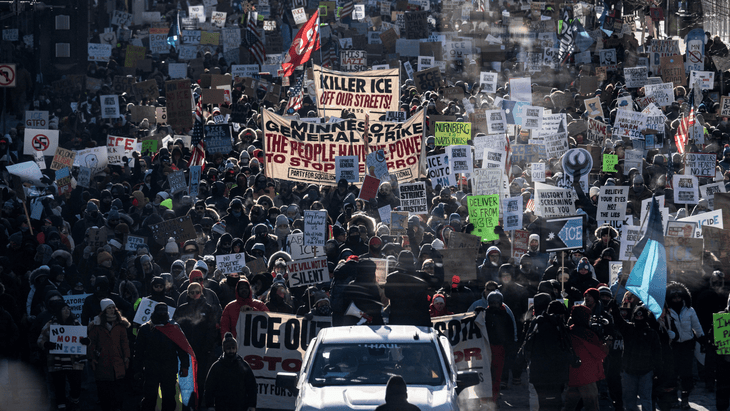
On Friday, January 23, tens of thousands of Minnesota residents packed the streets of downtown Minneapolis despite sub-zero temperatures. Workplaces, schools, and entire city blocks were shut down. People from all walks of life came together to march in response to the presence of federal agents from Immigration and Customs Enforcement (ICE) in their state.
Just across the Mississippi River on an unusually quiet East Hennepin Avenue, Mill City Running sat empty. After holding the weekly Friday morning group run in temperatures dipping to minus 26 degrees Fahrenheit, the staff of the local running specialty store collectively decided to close shop and stand in solidarity with their neighbors.
“It was pretty universal that the staff wanted to go march,” says Andrea Haus, community and marketing manager at Mill City Running. “It seemed that was the right thing to do—offer that group run, a safe place for people to gather and have their normalcy for the day, and then if they want to protest or strike or go march, they could do that.”
Over the past month, the arrival of more than 3,000 federal agents, as a part of Operation Metro Surge, has upended daily life for residents of the Twin Cities. The operation, organized by the Department of Homeland of Security (DHS) and with the stated purpose of apprehending and deporting undocumented immigrants, has led to over 3,000 arrests, according to the DHS, as well as the highly publicized killings of U.S. citizens Renee Good and Alex Pretti.
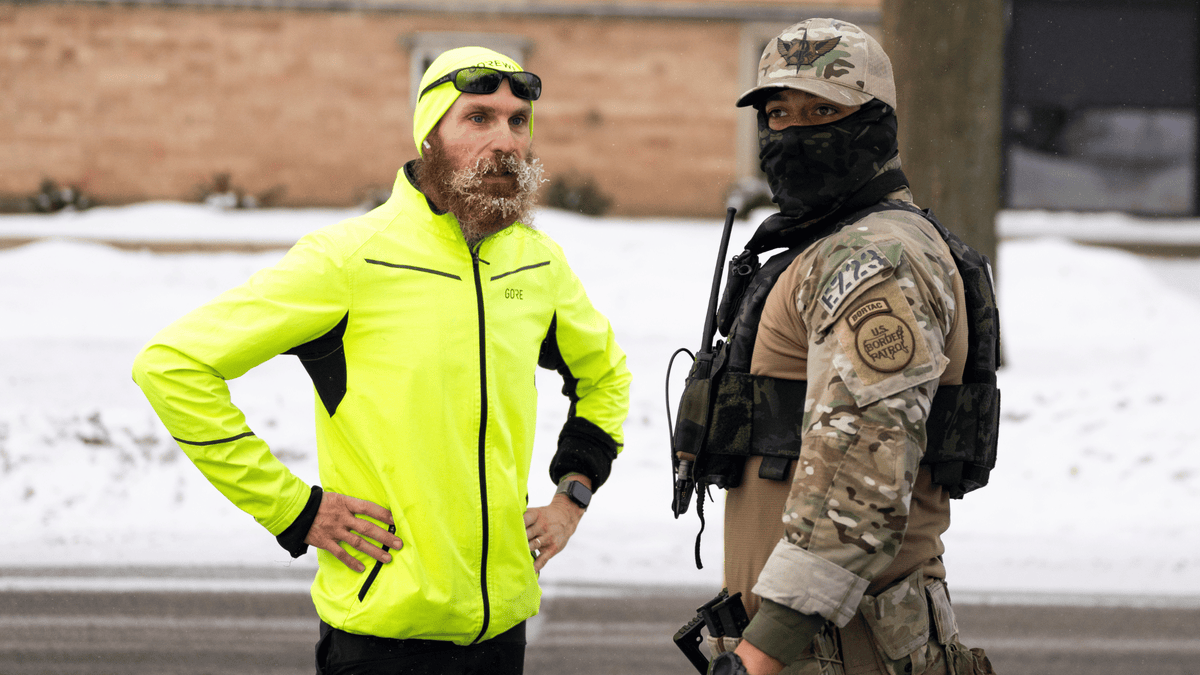
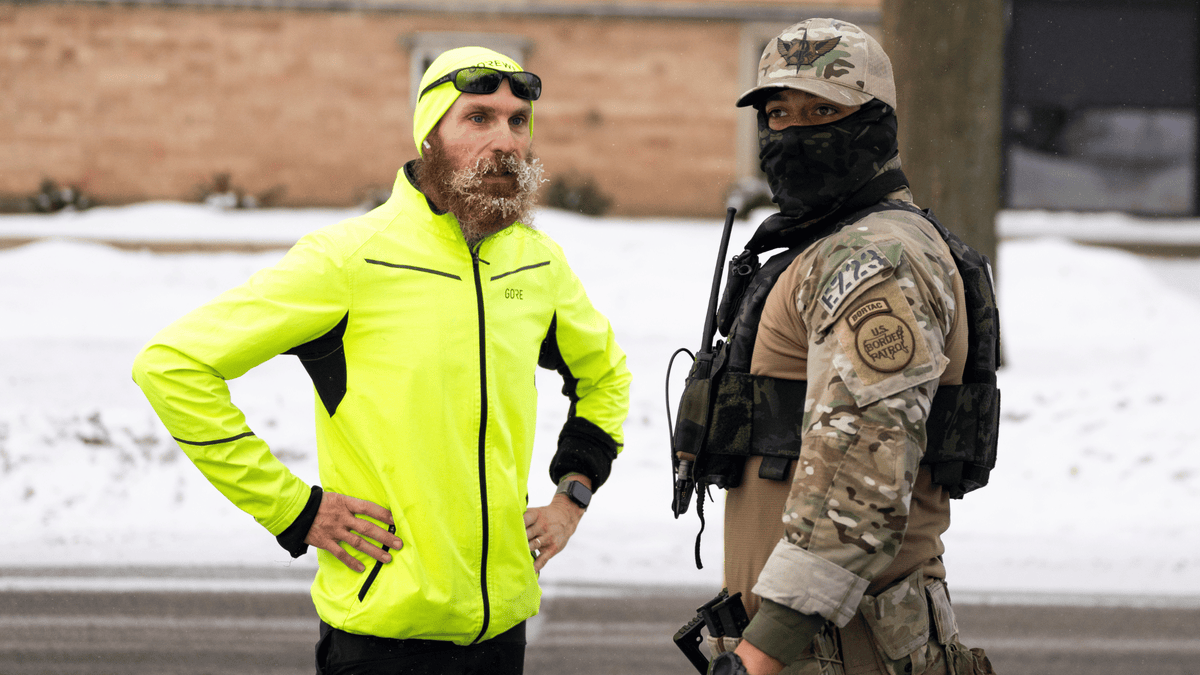
The concentration of agents—which is reported to be higher than “the ten largest metro police departments combined”—in Minneapolis, a city of 428,000 people, means that many residents and runners encounter immigration agents, often masked and in unmarked vehicles, on a daily basis.
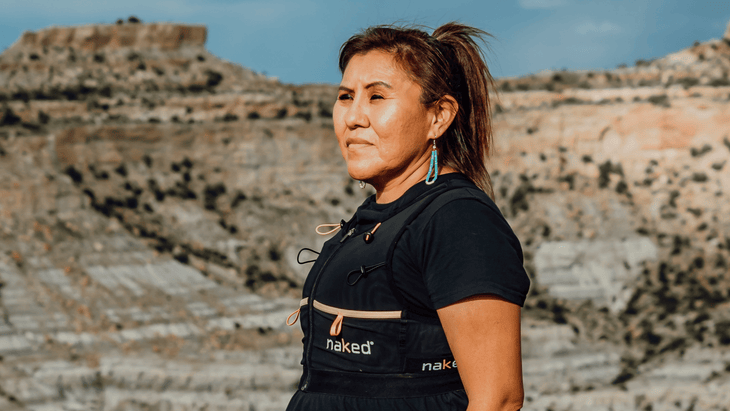
Verna NezBegay Volker, a Navajo runner and founder of Native Women Run (NWR), takes extra precautions when she leaves her home in a rural area southeast of the Twin Cities.
“I have to always now look around for vehicles that could be potentially ICE,” Volker says. “I have to carry my tribal ID, my passport, my driver’s license, and even my social security card. I don’t know if it’s going to even make a difference if I show those.”
Her daily life and daily runs have changed drastically since the start of Operation Metro Surge. When ICE came to a small town near her, she stopped running her favorite local trail there. Errands and trips to Minneapolis, where she lived for 16 years, are on pause. When she leaves the house, checking an app that tracks the presence of ICE agents is now as much a part of her routine as checking for her wallet and keys.
“Going outdoors, it shouldn’t be a second thought,” Volker says. “It should just be something that we enjoy. And sadly, I think here in Minnesota, some of us are just a little bit hesitant right now.”
As fear grips many residents, Minneapolitans have mobilized to help their neighbors through the likes of mutual aid, grocery deliveries, ride shares, and community patrols. On the streets of the city, runners can be seen with whistles ready to alert neighbors to the presence of ICE agents and phones ready to record.
“Some of the neighborhoods that are getting hit the hardest with immigration enforcement and raids, they will ask for people who are comfortable being out to be out in the streets,” Haus says. “Some of our runners have been meeting outside of the group runs, and they’ll just run up and down those streets for their run. Maybe it’s a little more boring, but it’s eyes on the street to fulfill that need.”
Finding Safety in Numbers
After the shooting of Renee Good on January 7 left the city reeling, Minneapolis-based professional marathoner Gabriella Rooker began to feel the fear and anxiety hitting especially close to home. One night, a few days after the shooting, the sound of helicopters circling overhead in the aftermath of another ICE shooting kept her awake before her morning cross-training.
“It just felt real and so unreal at the same time. How is this happening?” Rooker says.
Kristen, another Minneapolis-based runner who agreed to speak with Outside Run on the condition of anonymity, has been volunteering with a local group to help deliver food to families afraid to leave their homes. On a recent drop-off in frigid winter temperatures, she wore a face covering as she brought groceries toward a house where children were returning home from school.
“They just saw a masked person in a coat walking up, and they looked so scared and started running into the house,” Kristen says. “And it really just hit me, what people are experiencing in the community.”
For people of color in the Twin Cities, the fear of violence and detention is ever-present. U.S. citizens have been held at gunpoint and detained in warrantless raids. A viral photo shows 5-year-old Liam Conejo Ramos—whose family has an active asylum case—being detained by federal agents before being sent with his father to a detention facility in Texas.
Kristen says that a member of her running team’s training group was taken by immigration agents and similarly sent to Texas, where the individual is in touch with a lawyer and family members. “Many Minnesotans, myself included, want to care for and protect individuals regardless of legal status, as we are all neighbors,” she adds.
“People are at risk of being stopped, harassed, and taken away by masked individuals that don’t even bother identifying themselves,” Carolina Rubio MacWright, an immigration attorney and ultrarunner based in New Jersey, says. “It is dangerous to be running around by yourself, especially if you are a brown, Black, or Indigenous person. Right now, what the running community needs to do is check on their most vulnerable members.”
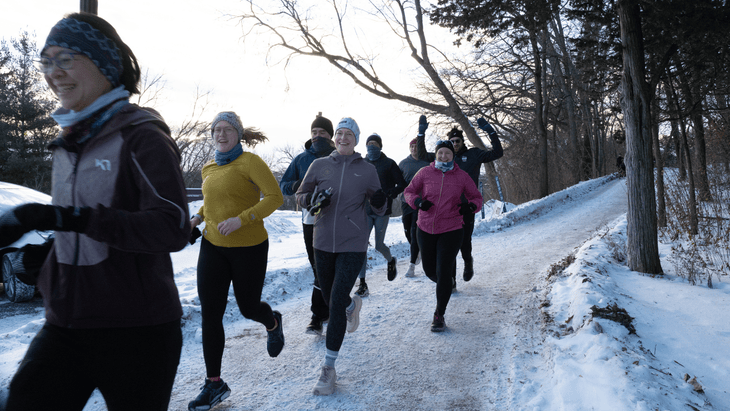
Haus emphasizes that there is safety in numbers, as members of Mill City Running coordinate ride shares to keep each other safe on the way to and from group runs. Across Minneapolis, secure group chats—like the grocery delivery dispatch that Kristen is a part of—have acted as nodes of organization. Many current mutual-aid and rapid-response networks in the city initially began as a response to the murder of George Floyd on May 25, 2020, and the subsequent protests. Today, those networks are once again activated and being put into action.
“The depth of support that we’re seeing and the neighborhood rapid-response groups, they’re just incredible,” Haus says. “You put a message out, and all of a sudden, all of your neighbors are outside just to help you.”
MacWright explains that runners have the right to observe and document immigration enforcement operations in public, and to alert others to ICE’s presence.
“People have the right to film. And people also should, as they’re filming, describe what is happening in that moment. State the date, state how many people there are, state what they’re wearing, state whether they have weapons or not,” MacWright says. “There is power in numbers. And the more angles we have of people filming and people describing what is happening, the better. We just have to remind ourselves that there are constitutional rights that we have.”
Running as Resistance

Amidst all the fear and violence, it can be easy to question the purpose of an athletic pursuit.
“I’ve honestly really struggled with my relationship with running in the past couple weeks,” Kristen says. “Like, I don’t know why I care so much about my times when people are literally being ripped out of their homes. But at the same time, my friends have been continually reminding me that, in addition to doing other things that help the community, joy is a form of resistance. If we just stop doing everything that we enjoy, then they’ve won.”
For many, Rooker adds, running is a way to check in and reset. Her time spent training has helped give her the fuel to continue speaking up and resisting ICE’s presence in the city. As she navigates the balance of running and resistance, Rooker shares the frustrations of many of her fellow local runners in seeing silence from big names in the running community.
“If you’re going to say something, say something. Make a stance and make it clear what you believe in,” Rooker says. “To me this isn’t a politics issue. This is a humanity issue.”
Running is not separate from the issues facing immigrants across the country, MacWright says, and her work, as an immigration attorney, nonprofit leader, and activist, is not separate from her running. In fact, she says, running and justice are intertwined.
“Running is a really important tool, which is why I’ve been fighting so hard for running not to disappear for my community,” MacWright says. “People are realizing that running is a privilege, and unless we all fight for the things that we love, for it to be accessible to all, we can all lose this ability to run.”
At Mill City Running, Haus and her coworkers are committed to keeping the camaraderie and community alive. In the ever-evolving cityscape of Minneapolis, a weekly group run can provide much-needed stability. No matter the frigid winter conditions or presence of federal agents, she refuses to stop running.
“If running helps people take a breath or take a pause or cause their own discomfort, then we want to be here to keep doing that,” Haus says.
Ways to Help
Donate to Immigrant Law Center of Minnesota
Donate to Immigrant Rapid Response Fund
Donate to Immigrant Defense Network
Donate to Unidos MN
Donate to Rent Relief for MN Families
Find other mutual aid opportunities
The post A Real Look into How Runners are Responding in Minnesota appeared first on Outside Online.