








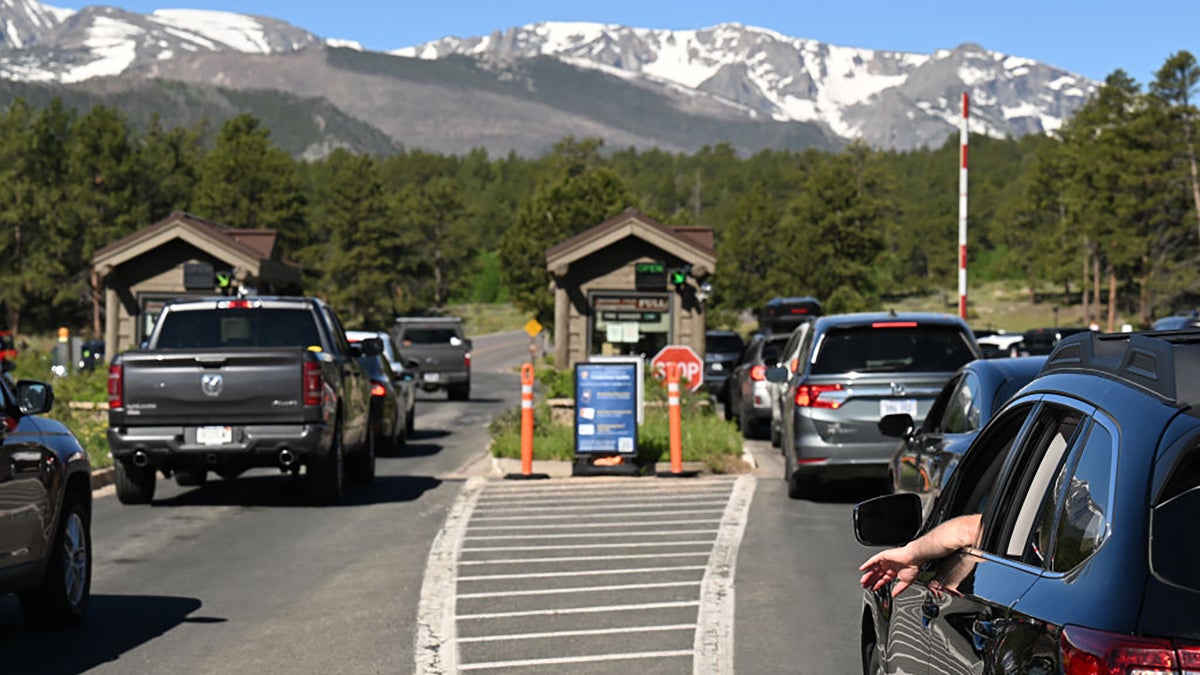
The Trump administration is ditching the timed-entry reservation systems at some of our most popular national parks.
Mount Rainier National Park recently announced that reservations will not be required in 2026, and Yosemite National Park just eliminated the need for reservations for the popular “Firefall” display in February, when the sun sets against Horse Tail Falls, giving the illusion that the waterfall is on fire. Local outlets in Montana reported that Glacier National Park will also do away with its required reservations for Going-to-the-Sun Road, and park officials in Utah are considering ending timed entry at Arches National Park.
In light of these closures, Outside asked the National Park Service whether these changes were part of a broader shift away from timed-entry programs and reservations.
“The National Park Service continuously analyzes timed entry reservations to determine whether to continue or adjust in future years,” the NPS spokesperson said. “Visitor use data, gate counts, congestion monitoring, traffic operations, and feedback from the public and gateway communities help inform determinations.”
I don’t know why these timed-entry programs are going away.
A System to Combat Overcrowding
Timed reservation entries are a recent concept to the NPS system, rolling out to most sites within the last decade to tamp down overcrowding.
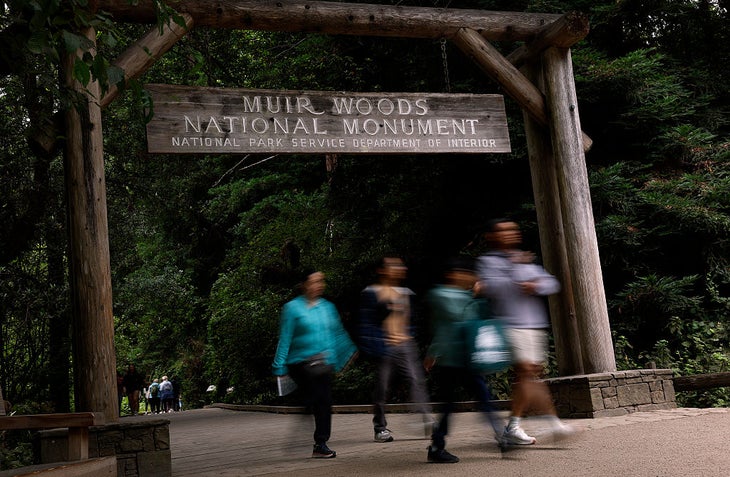
California’s Muir Woods National Monument was the first national park unit to require vehicle reservations back in 2018 in an attempt to quell the crowds. Yosemite followed suit with a pilot reservation program in 2020, when the pandemic brought a surge of interest along with crowded parking lots and long wait times at entry gates. Several of the most visited national parks followed suit, with Arches launching its timed-entry program in 2022. Last year, nine national parks implemented reservation systems during some stretch of the year (California’s Muir Woods National Monument requires them year-round.)
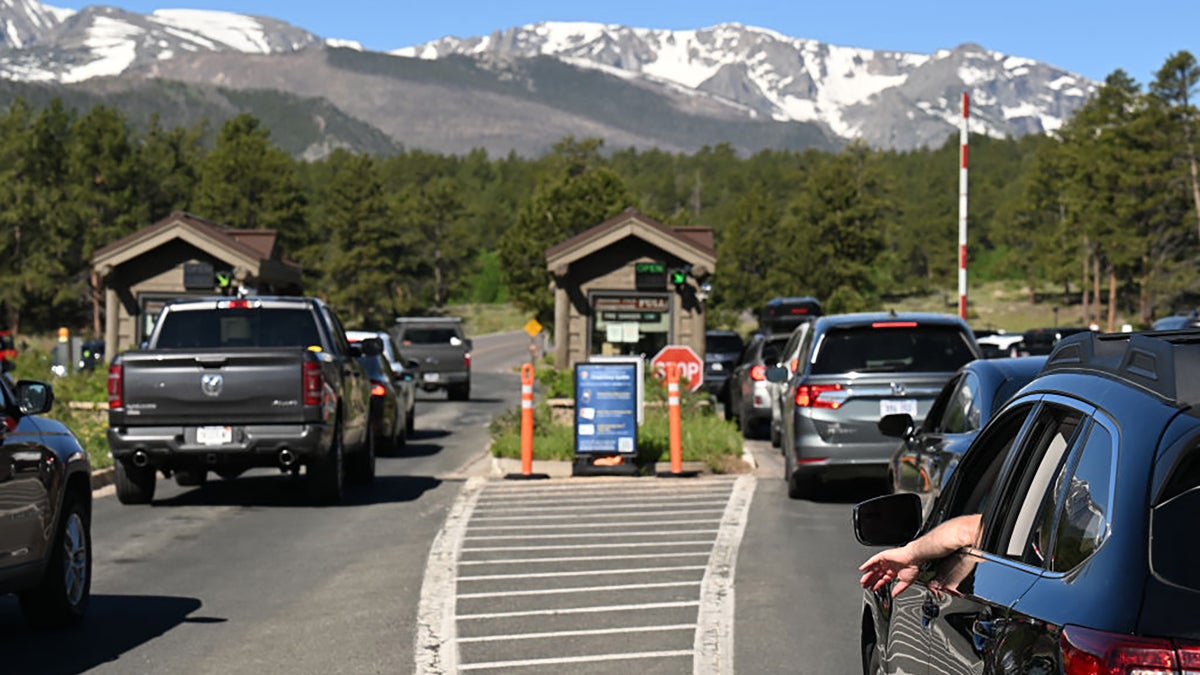
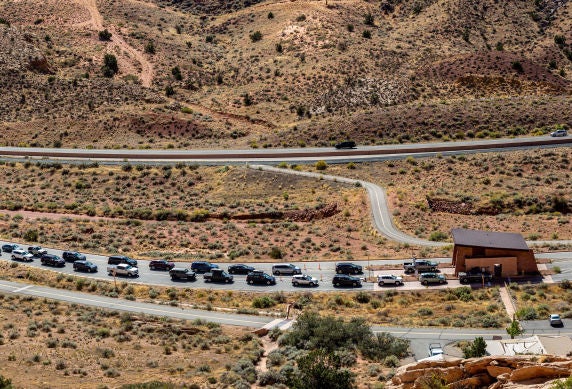
While the details surrounding each reservation vary park by park, the underlying concept is consistent: you need to plan six months in advance if you want to visit Arches in June, hike to Bear Lake in Rocky Mountain National Park in July, or visit other popular NPS sites. The reservation system has been controversial since its post-pandemic adoption. Such foresight can be hard for many people, and some gateway communities worry that the reservation system would reduce the economic benefit of the parks in their backyards. Many reservation systems were meant to be pilot programs with the intent to be reviewed, revised, and potentially discarded after each season based on the data collected by each park unit.
But by most accounts, these reservation systems have been successful at reducing crowds and minimizing impact on the natural resources within each park.
“These very busy parks were experiencing acute congestion at very specific times,” says Cassidy Jones, a former park ranger and the current senior visitation manager for the National Parks Conservation Association. “When everyone shows up within the same few hours, people start parking on the shoulders of roads, trails get crowded and widened…park visitors weren’t having a good experience and park staff was stressed. We found that timed reservations are an easy, cost-effective way to spread visitation out.”
I was skeptical of the reservation systems when they were implemented after the pandemic (I’m terrible at planning vacations in advance), but I also remember life before those systems were put in place. I’ve sat in a very long line at the entrance of Arches National Park with my kids in the back of a minivan, only to have to skip our intended hike once we were inside the park because there was no parking at the trailhead. And I’ve visited that same park since the reservations and enjoyed a relatively seamless experience. Arches wasn’t void of crowds by any means, but there was parking and I didn’t have to wait in line at the entrance gate. I’ve visited Rocky Mountain National Park before and after the reservations were put in place and found the experience to be much better with the timed entries in place.
Some Locals Say Reservations Hurt Business
Still, some Utah state officials are pushing to eliminate the entrance reservations at Arches, citing a drop in visitor spending surrounding the park after the system was put in place in 2022. But Moab’s mayor, Joette Langianese, told The Salt Lake Tribune that the timed entry system had no negative economic impact on the city of Moab.
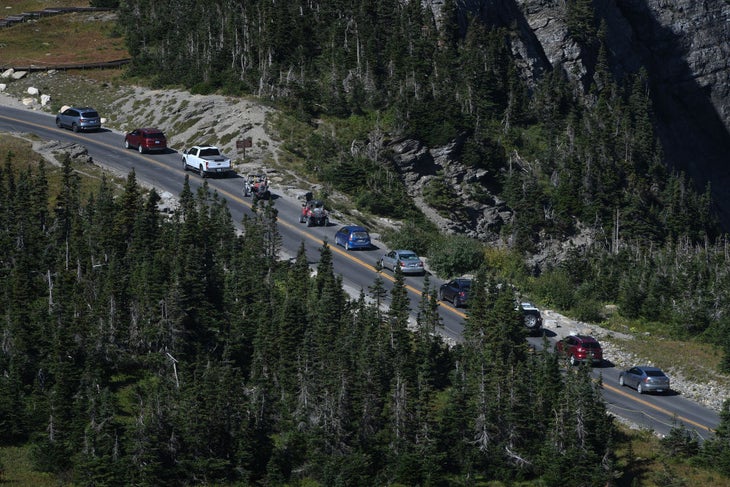
It’s looking like Glacier National Park will also eliminate its timed entry system for 2026, which required reservations for driving Going-to-the-Sun Road at peak hours during the summer. Park Superintendent Dave Roemer told members of a local Chamber of Commerce meeting that the reservation system did succeed in reducing midday traffic but created a safety issue, as the park saw an increase in early-morning traffic.
“We don’t think people driving in the dark to get to Logan Pass is good for the park or the visitor,” he said at a recent meeting in Columbia Falls, Montana.
Jones says no official announcement regarding Glacier’s reservation system has been released, but all signs point towards a free-for-all this summer. Danny Gignoux, vice president of Glacier Guides and Montana Rafting, said park officials told him they could remove all verbiage about vehicle reservations from their website.
“I think the reservation system has worked well for Glacier,” Gignoux says. “People who were planning their vacations were able to get a reservation, and if you didn’t plan in advance, there were still opportunities to visit early in the morning or late in the afternoon.”
Gignoux says he’s “cautiously optimistic” that drivers will be able to navigate the road without reservations this summer.
Jones is not as optimistic, largely because visitation to Glacier and the other popular parks with reservations has not mellowed out since Covid. In fact, the national park system saw record visitation in 2024 with 331.9 million visitors. Meanwhile, the Trump administration has reduced the NPS permanent staff by 25 percent over the last year.
“Spreading visitors out over time makes the operations smoother for staff and visitors,” Jones says. “With the reduced staff and record-setting interest in our parks, this could be a perfect storm for overcrowding, which will lead to damage to park resources.”
Will Traffic Jams Return?
Jones’ skepticism is not just theoretical. Yosemite National Park was notorious for its traffic jams and lack of parking throughout the valley until it introduced a timed entry system in 2020. The Department of Interior decided to pause that system in the summer of 2023, and the horrendous traffic jams and parking problems immediately returned. The park reinstated the timed entry system for 2024.
Thanks to the Yosemite experiment of 2023, we have an example of what happens when you remove a reservation system from a highly trafficked park, so it leaves me, and others, wondering why the Trump administration would continue to pursue the discontinuation of these reservations that seem to be working as designed. It makes sense to refine each system, changing the specifics to better suit the visitation patterns, but eliminating them altogether? Why?
Jones thinks it might just be part of the Trump administration’s approach to park management.
“Frankly, the park service is being dismantled by the Trump administration,” Jones says. “They’ve reduced the staff by 25 percent, and we know they’re keenly interested in taking away tools that the park service uses to manage the resources.”
It’s possible that reason will prevail and many of these reservation systems will remain in place in 2026. Still, visitors should also prepare for a more chaotic summer in our parks, with less park staff and more crowds, if these timed entry systems are retracted.
Danny Gignoux has solid advice for national park visitors this summer: “The national parks are precious. Take a deep breath, and remember that all those other people in the park at the same time as you are just trying to enjoy it too. Be nice. Thank a ranger.”
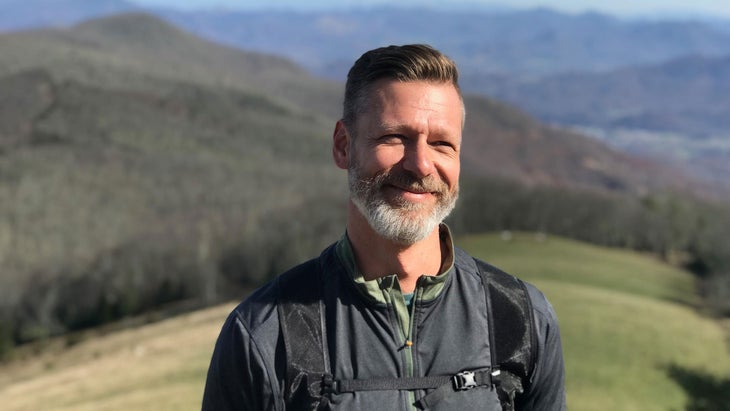
Graham Averill is Outside’s national parks columnist. He’s grown to appreciate the timed entry systems over the last few years, even though he’s unable to plan vacations six months in advance. He recently wrote about his love for mega ski passes.
The post If National Parks Reservations Disappear, Will Overcrowding Return? appeared first on Outside Online.