









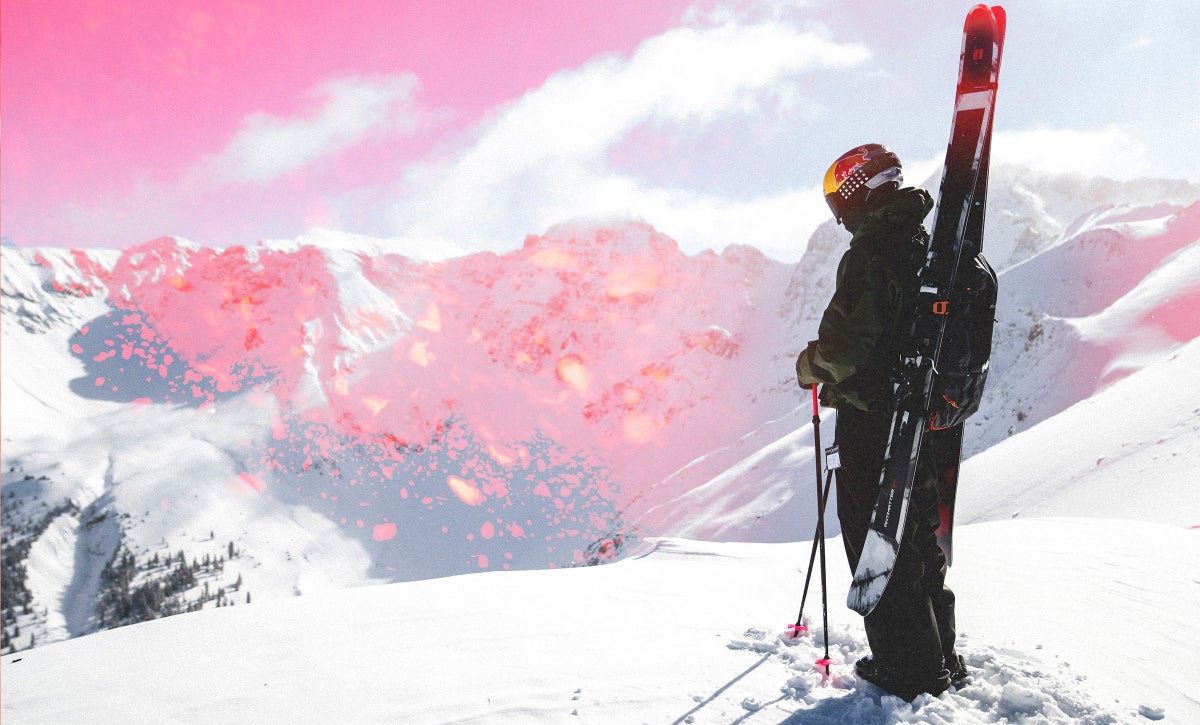
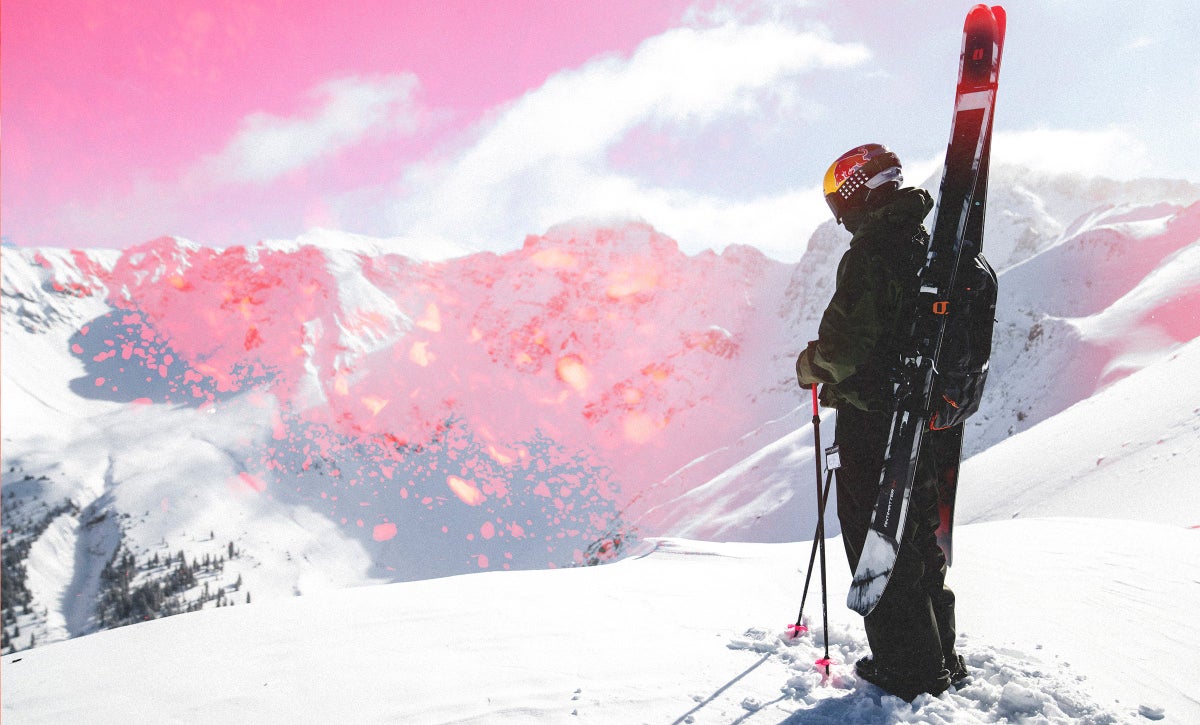
Call me old-fashioned, but for me, skiers fall into one of two categories: those who like directional all-mountain skis, and those who don’t. I did not peg Max Palm, the wunderkind who blasted onto the scene with the first ever double-backflip thrown in a Freeride World Tour competition, as a directional ski kind of guy. As creatively as he approaches big mountain terrain—throwing tricks off massive cliffs and wind lips as if they were features in a slopestyle course—I assumed he was a twintip loyalist through and through.
But apparently, he isn’t. As I sat squished behind him in a Suburban loaded down with ski gear on the drive from Durango Airport to Silverton Mountain, Colorado, Palm casually dropped that he prefers more traditional ski designs: skis with rocker, sure, but also a healthy dose of metal and camber.
Being a wholeheartedly directional skier myself, I breathed a sigh of relief. I was on my way to test Armada’s new Antimatter freeride skis, designed with heavy input from Armada’s athletes—Palm in particular—and suddenly the story made a lot more sense.
Antimatter: A Return to Armada’s Creative Roots
When I heard that Antimatter would replace the Declivity/Reliance all‑mountain line, I had mixed feelings.
The Declivity and Reliance skis, introduced in 2020, were a radical departure from Armada’s bread‑and‑butter freeride shapes—loose, freestyle‑leaning skis like the ARV and ARW—and, frankly, the first Armada skis I truly clicked with. With more metal and straighter, more directional shapes than we’d seen from the brand before, they were traditional all‑mountain skis that wanted to carve and charge, not just slash and slarve. They suited my style—and the chewed‑up Colorado conditions I ski most often—beautifully.
But as Armada continued to tweak the line, it became clear the brand had drifted far from its freestyle roots. SKI’s testers began describing the Declivity and Reliance skis as “stout” and “damp”—basically the antithesis of Armada’s design philosophy.
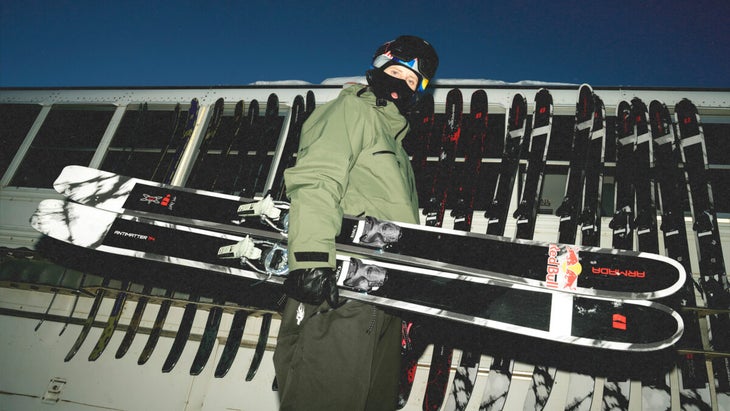
Enter Antimatter: an intentional move back toward Armada’s freeride core. The new collection debuts with the Antimatter 114—Palm’s pro model—and the Antimatter 100 as the flagship skis.
“[Declivity/Reliance] didn’t feel ‘Armada,’” explained Jesse Ambrogi-Yanson, Armada’s global alpine marketing manager. “It was too far away from our core, what we know as a brand, who we are, and what we feel comfortable fully being. Antimatter blends both worlds—performance and Armada—and is a more correct version of how we see freeride evolving.”
Testing the Antimatter 100 at Silverton
Does that mean the Antimatter skis feel like classic Armada favorites? Not exactly.
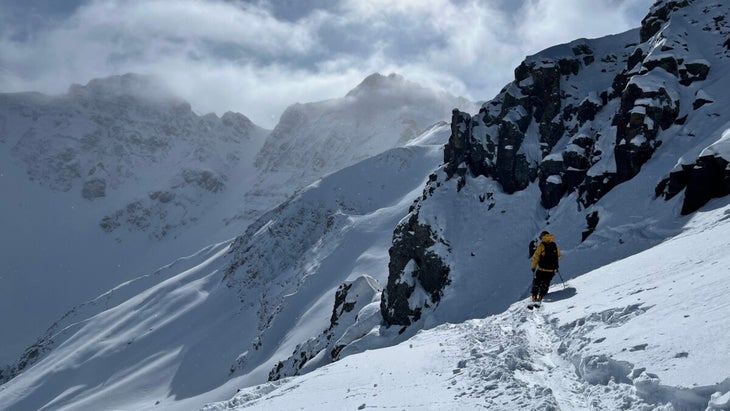
I spent two days on the Antimatter 100 chasing Palm and fellow Armada athletes Todd Ligare and Anne Hjorleifsen (née Wangler) around Silverton Mountain. While Colorado’s snowpack is historically low, we lucked into six inches of fresh on top of Silverton’s steep, ungroomed runs the night before our arrival.
A 100-millimeter-waisted ski would not have been my first choice for the fluff on top of variable crust we encountered, but the shortest Antimatter 114 is 181 centimeters—and I wasn’t about to size up 10 centimeters while trying to keep pace with pro skiers in demanding terrain. And actually, I was pleasantly surprised by how well the Antimatter 100 performed in the variable conditions and even in powder.
Construction That Balances Charge and Play
I credit Armada’s new design. Speedmetal—a strategically shaped Titanal laminate running down the center of the ski—gives the Antimatter models more backbone than Armada’s other freeride skis. It feels stable and predictable in chop and at speed without crossing into “too much ski.” The tip uses a multi-radius shape with a relatively low rise, so you get a long effective edge on firm and mixed snow—but still enough early rise to keep the ski planing in deep, soft snow.
But for me, the real differentiator is the tail. Compared to the outgoing Declivity models, the Antimatter tail is noticeably looser. It releases quickly, letting you pivot, slash, and slarve at a moment’s notice—exactly what you want in tight trees, chutes, and technical terrain.
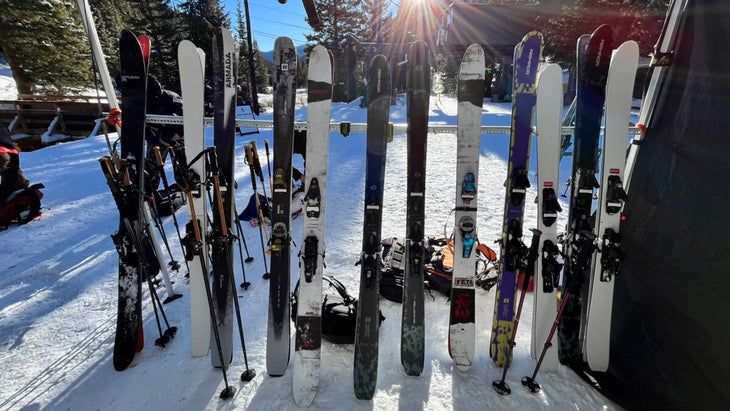
But importantly—and I want to stress this to my fellow directional skiers out there—the tail is not too soft or short, at least not when you’re skiing off-piste. On hard groomers, expert skiers might find the effective edge in the tail shorter than a traditional all-mountain charger—but that’s not the mission here. The Antimatter 114 and 100 feature Armada’s freeride rocker profile, which adds taper in the tip and tail for increased maneuverability in soft snow. The narrower Antimatter models use Armada’s all-mountain rocker profile, with more traditional camber underfoot and in the tail.
I haven’t had a chance to ski any of these models yet, so I can’t promise they’ll hold up in a high-speed carve, but considering the athletes behind the new Antimatter lineup—skiers with serious technical skiing chops in addition to freestyle skills—I think we can rest easy.
“Antimatter takes what we learned with the Declivity/Reliance and makes it more ‘Armada,’ allowing for the fusion of traditional performance-oriented skis with a more modern freeride feel and characteristics,” said Ambrogi-Yanson.
Final Take: A Directional Skier Learns New Tricks
If the Antimatter 100, a scaled-down version of Palm’s Antimatter 114 signature ski, is any indication, I think Armada may have successfully recalibrated.
After two days following Palm around Silverton on the Antimatter 100, I realize something about myself: I’m a directional skier who wants to ski more creatively. I still want metal, camber, and stability when the snow is chewed up and the lines get steep—but I also want a ski that encourages me to loosen up and play when the terrain opens up.
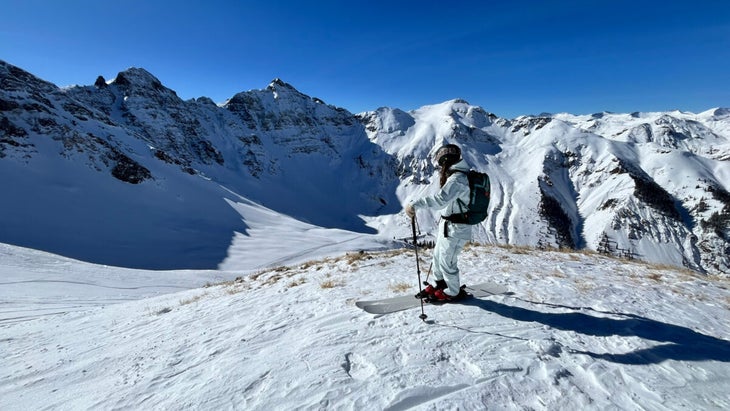
That’s exactly where the Antimatter lands. It charges when you ask it to, then gets out of its own way when you want to get expressive. It doesn’t force you to choose between being a “directional skier” or a “freeride skier.” It lets you be both.
My only gripe: Armada should make the Antimatter 114 in a more approachable length for women, so the rest of us can get in on the fun.
The Antimatter collection spans seven men’s models and five women’s models and will be available next fall.
The post Armada’s New All-Mountain Skis Aim to Bridge a Longstanding Divide Among Skiers appeared first on Outside Online.