








“What I love about the Cempasúchil expression is how alive it feels in the glass—it carries the season, the land, and the hands that made it, while revealing layers of flower, fruit, and agave that are both delicate and vibrant,” Alejandro Rossbach tells Maxim of his newest small-run ancestral mezcal. “It’s a spirit that surprises and delights every time, and it’s deeply rooted in Oaxaca, in tradition, and in the work we’ve put in together to bring it to life.”
Along with his brother Christian, Alejandro recently purchased the Bozal label from its founder August Sebastiani, a multigenerational winemaker approaching mezcal through a vintner’s terroir lens. “As producers ourselves, Bozal was the only brand, aside from our own, that we could ever imagine owning,” the Mexican entrepreneur adds. “Its philosophy mirrored ours through authenticity, respect for origin, refined craftsmanship, and a deep love for mezcal’s untamed spirit… From the beginning, this was never about changing the brand. It was about stewardship.”
With this latest Cempasúchil expression, the Rossbach siblings’ Maguey Spirits hits the ground running with one of the most interesting and unique mezcal’s we’ve ever tasted. As soon as your nose nears the bottle, Bozal Cempasúchil immediately announces itself by filling your nostrils with a sweet floral bouquet rare in the world of mezcal. It carries a sense of time and place, not just of Oaxaca, but of a very specific moment in Oaxaca—namely Día de los Muertos—when cempasúchil blooms in the warm desert air.
That sense of ceremonial rootedness defines this annual Cempasúchil release. Deeply tied to Día de los Muertos as it is lived and felt in Oaxaca, the mezcal draws its soul from the traditional Mexican marigold known as the “flower of the dead.” Across Indigenous communities like the Zapotecs and beyond, legend says its bright orange petals and unmistakable aroma guide spirits back to their loved ones. When we’ve visited people’s homes in Oaxaca during this time, altars for the deceased literally glow with its amber color. Orange petals are sprinkled around offerings for the deceased like their favorite tamales, cigarettes and personal items like glasses and cowboy boots; paths are traced from the front door to these alters, the scent unmistakable. The perfumed flowers serve as both offering and invitation for the spirits.
“Cempasúchil is the predominant botanical used in the mezcal, carefully integrated through ancestral techniques so that its aromatics emerge naturally and in balance,” Alejandro reveals. “The result is a spirit that feels unfamiliar in aroma, yet deeply rooted in Oaxacan tradition.”
Only a small fraction of mezcals qualify for the rigorous ancestral designation, of which Bozal Cempasúchil is, demanding one of mezcal’s most labor-intensive and sacred processes. Under the steady guidance of Maestro Mezcalero Marcelino Ortiz, the espadín agaves are harvested and sheared, their hearts roasted in underground earthen pit ovens. With wooden mallets workers crush them by hand in canoe-like troughs, wild airborne yeasts driving fermentation in open-air wooden tubs. After the first distillation in clay pot stills—a pre-Hispanic technique known for producing expressive, earthy profiles—fresh cempasúchil flowers and mandarin orange peels are soaked into the spirt for infusion. To seamless marry the wide gamut of aromatics with the espadín, the juice is then distilled once again in the very same clay pot stills.
Despite its potent 47% ABV, the Cempasúchil feels vivid rather than hot. As expected bright marigold florals rise immediately on the nose, followed by the mandarin peel, gentle spice, and a soft herbal undercurrent. On the palate, green pepper and orange zest mingle with nutmeg and anise, creating tension between freshness and warmth. The finish lingers with subtle smoke and black pepper, stretching long and clean, never overpowering. Bozal’s Cempasúchil surprises on first sip and continues to reveal itself with each return to the glass.

Part of their flagship Reserva line, Bozal’s most intimate and traditional collection, these mezcals are micro-batched in extremely limited quantities, distilled only once a year and never replicated until the following season. Production is split between two palenques, the original in Durango and a new one in Etla. Alejandro explains that the Reserva line exists as a space for discovery, where Bozal can explore seasonality, cultural memory, and place through ancestral techniques. While the core range highlights regionality and agave diversity, Reserva dives deeper, touching the roots of mezcal itself.
“[Maestro Mezcalero] Ortiz was part of the original team that opened Etla with us, and alongside my brother Christian and [production manager] Andrés [Martínez Zamora], we worked closely to shape each process, bringing our experience as producers to the table while respecting the traditional craft,” Alejandro continues. “This palenque became a space where shared input and direction allowed tradition and innovation to meet, creating something greater than any single contributor.”
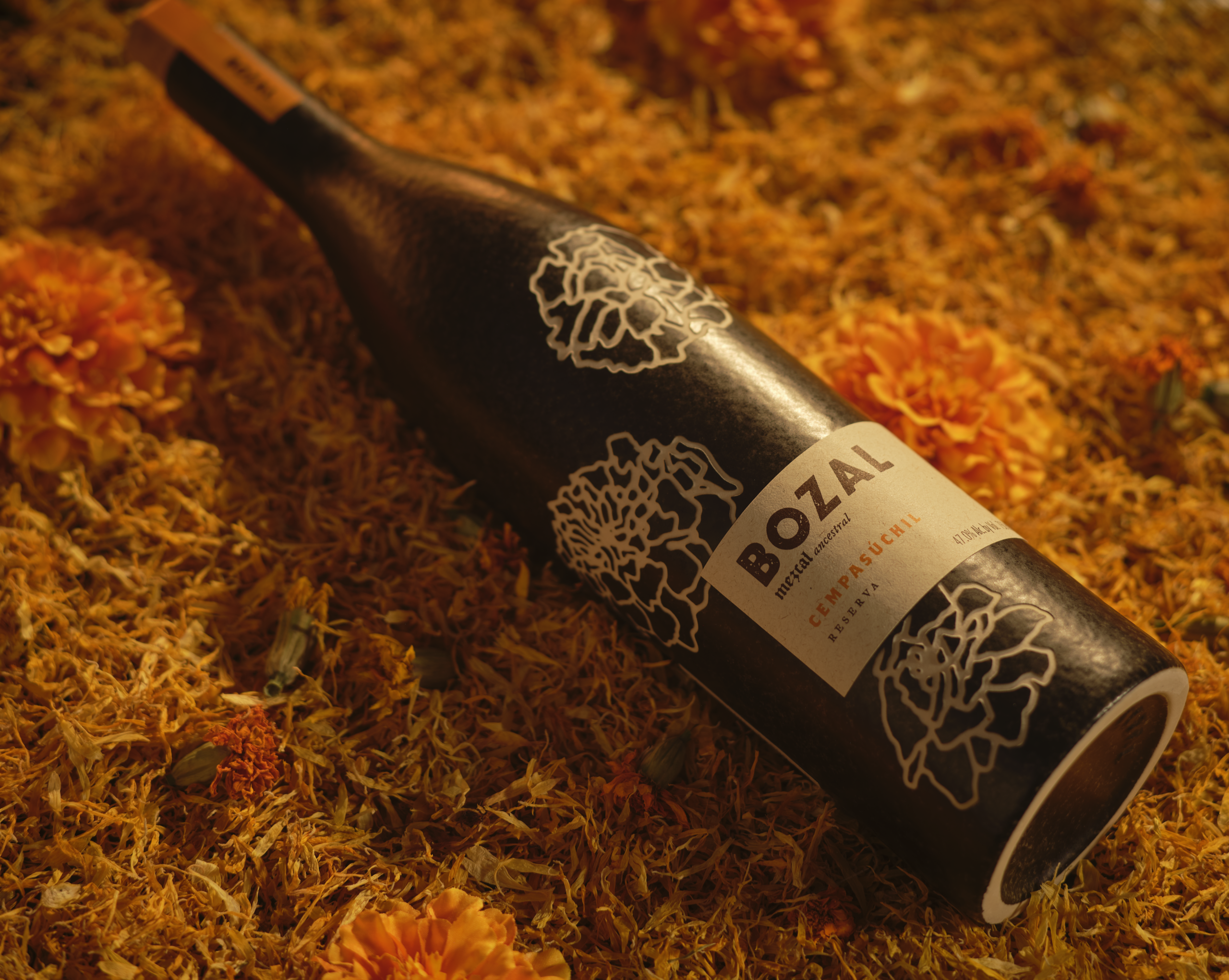
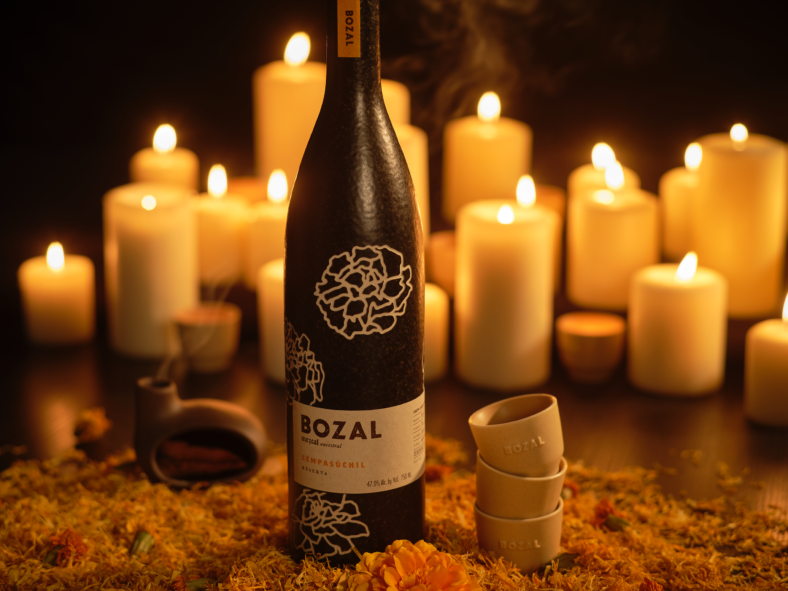
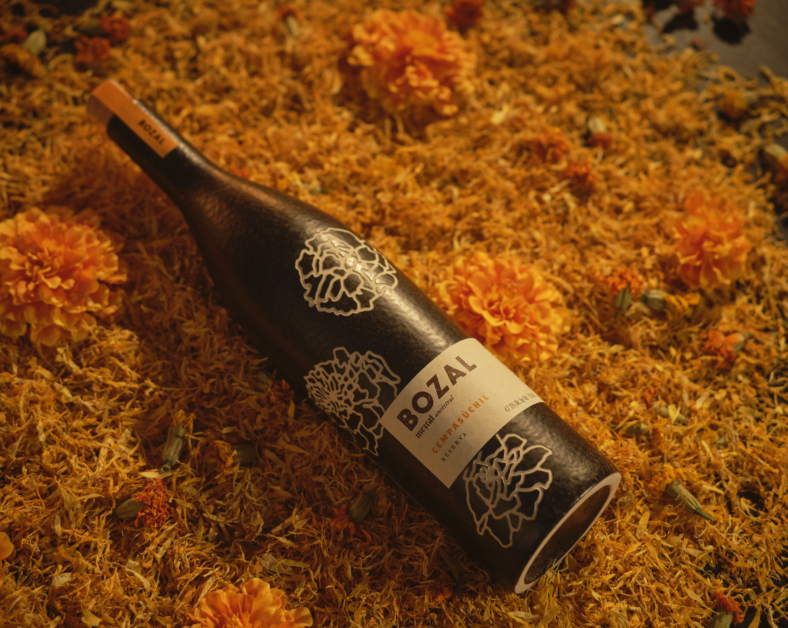
The Reserva Cempasúchil release sold out almost instantly last year, and this year’s edition arrives nationwide in an elegant, hauntingly black ceramic bottle engraved with marigold motifs. It’s an eye-catching package that invites pause before the pour, which is then quick to catch both the nose and palate with its singular aromatic profile.
Follow our Deputy Editor on Instagram at @nickstecher and @boozeoftheday.