





Artist Mariah Reading is no stranger to the U.S. National Parks, and over the last decade, she’s completed five park art residencies. These programs place artists in national parks—she’s been stationed at Zion, Acadia, Glacier, Denali, and Acadia.
While working as a park ranger at Guadalupe Mountains National Park in west Texas, Reading, 31, found inspiration in items left behind by humans.
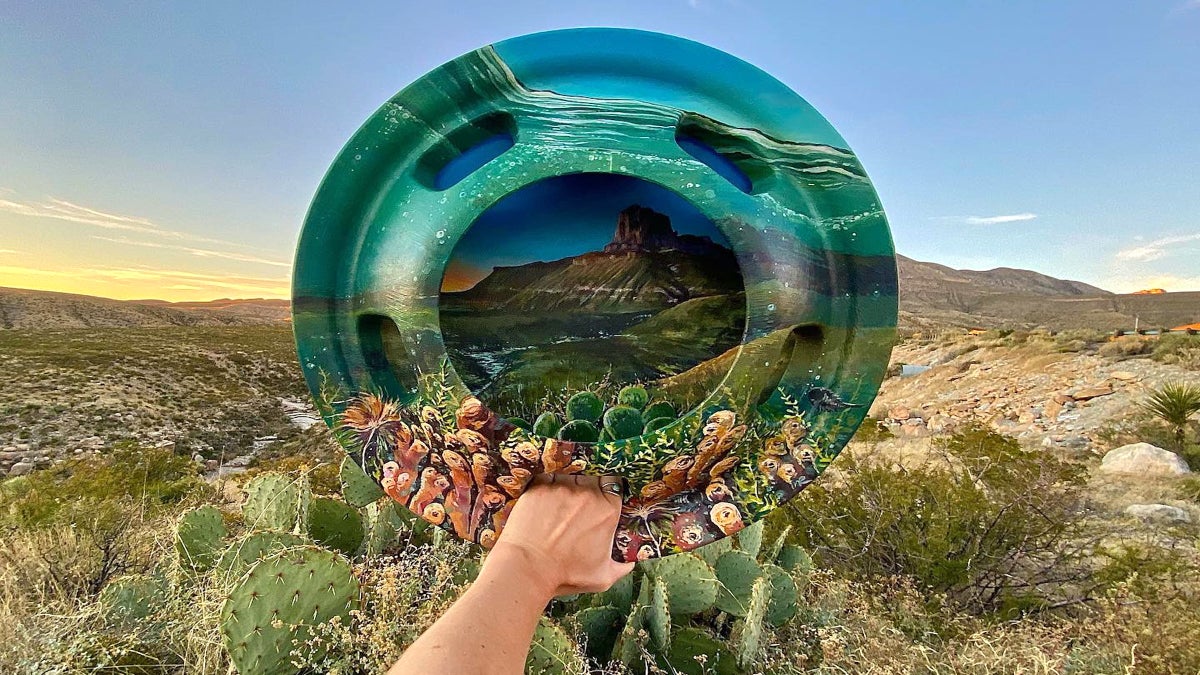
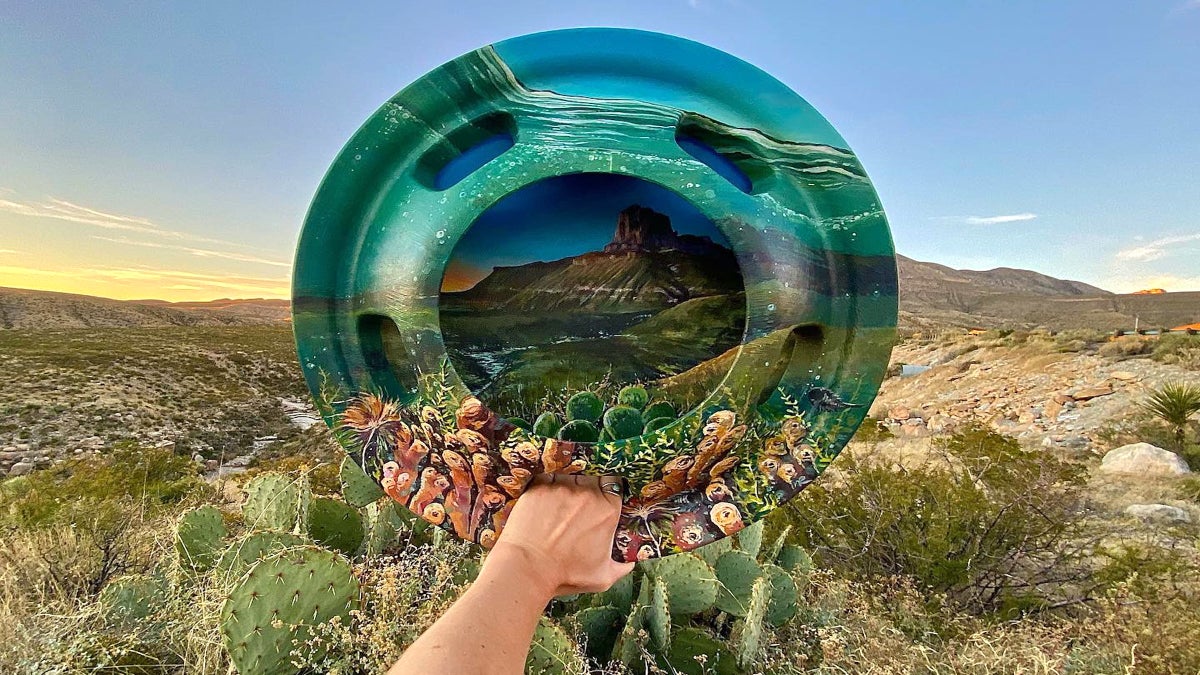
She found a truck hubcap that was cracked in a way that outlined the mountains. She painted the cap, and named it “El (Hub)Capitan.”
“The hubcap spoke for itself,” she laughed.
Since then, Reading has been working for the national parks and turning trash into something more meaningful. But in 2025, her position was cut amid mass layoffs across the park service, and now her art serves as a voice for the parks. Outside spoke to Reading to learn more about her artistic inspirations.
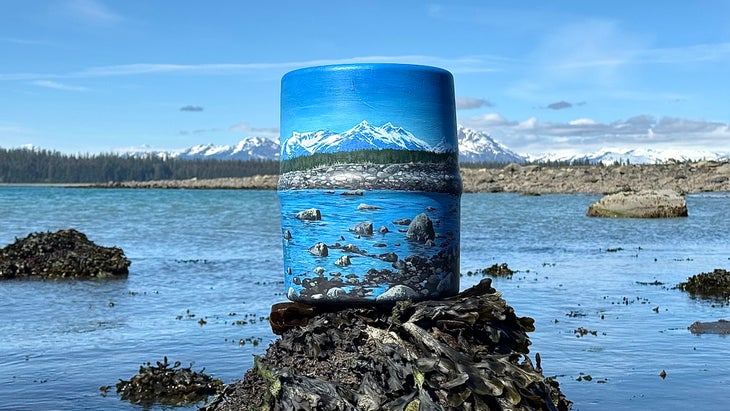
OUTSIDE: By pairing realistic landscapes with trash you’ve found in national parks, your art creates a striking tension. What larger message do you hope audiences walk away with?
Mariah Reading: I’m not a zero-waste person. A lot of us put a lot of pressure on ourselves to be perfect and environmentally conscious, and it’s overwhelming given the state of the world and our country right now. It can be disparaging. I hope that my work makes people think about their own impact on this earth, but also that many hands make light work.
It’s the greater impact of many people working together to limit their waste or come up with small solutions every day. Small changes, small habits to better the environment and our communities. I feel like making these bite-sized motions toward a beautiful community and environment is the big message that I want people to take away from my art.
I hope that, through my art, people can see themselves reflected in objects like a water bottle, a coffee cup, or a shoe—we all have shoes. Can you see yourself reflected in that item, but then can you also see yourself reflected in that environment? It sparks a human connection to the landscapes around us, and my art fuels those connections and the small changes they inspire.
Can you walk us through your artistic process, from the moment you encounter a piece of trash to capturing the final image?
I have two different methods to my madness.
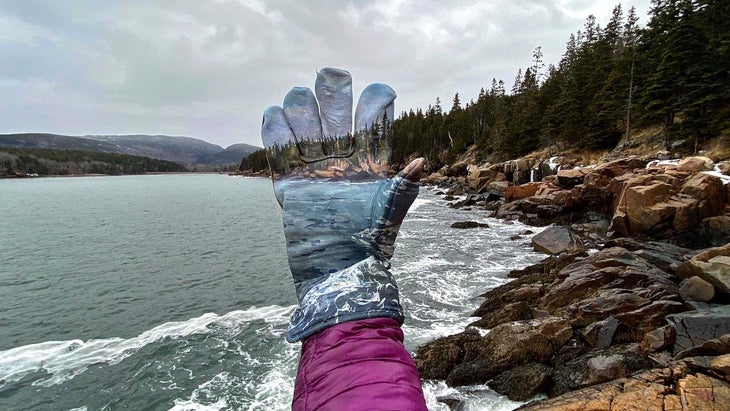
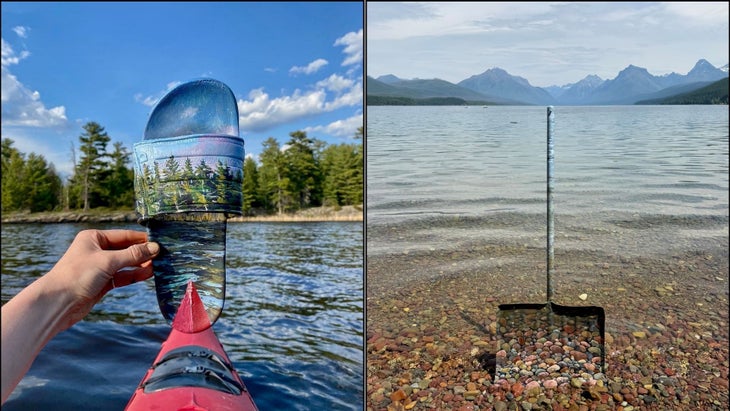
One, if I’m hiking or backpacking or kayaking, especially when I’m in a residency focused on making art, I usually have a little baggy in my pack that has small tubes of paint, some water, paintbrushes, and a little palette. If I happen upon a piece of trash, I can sit right down where it was found and paint the surrounding environment.
The second method happens when I find an object and bring it to my studio for painting using an image I took that day. Once the painting is done, I wait for a time with similar lighting, tides, and cloud structure, and then hike out to photograph the piece. There have been some pieces that have taken five or six different hikes to get the right lighting. Sometimes, the season has changed by the time I’ve finished the painting, and it’s a reminder that the landscape continues to change; it’s not just a pinpoint in time.
How would you describe your relationship with the outdoors, and in what ways does your art express that connection?
I need to live in a place that’s somewhat accessible for hiking and walking, and I feel very fortunate and privileged to have placed myself in those spaces. It’s given me so much confidence, especially in my twenties and early thirties.
I’ve been able to see a wide, wide range of landscapes through hiking, backpacking, and kayaking. It’s an immersive way to experience the beauties of the outdoors—I feel very connected to our natural world.
Was there a moment when your work as a national park volunteer and resident truly intersected with your life as an artist?
The National Park Service wouldn’t exist without artists. In 1871, the U.S. Geological Survey went out west to survey the geysers and beauties of Yellowstone, and they brought artists with them, like Thomas Moran, to depict these scenes. He painted sweeping landscapes of the American West and brought them back to the East Coast so taxpayers could witness them.
The areas that national parks are now in are all indigenous native land. For thousands of years, these lands have also been home to indigenous art, whether in basket weaving, oral history, songwriting, or beading. There are so many different forms of art that indigenous people have used to depict these beautiful lands. Art, landscape, and the environment are interwoven.
How does the outdoors shape art—and how does art, in turn, shape our experience of the outdoors?
Art and art making serve as a reflection tool after you leave that area. It makes your memories stronger, makes your impression greater. Art tethers you to that place and to the importance of preserving that place.
To put you there, or if you see a piece of art and haven’t been there personally, you can step into that world through the artist’s eyes. It’s vital to civilization. It’s vital to society
It’s the heartbeat of what it means to be a human.
The post Meet the Former Ranger Turning National Park Trash Into One-of-a-Kind Art appeared first on Outside Online.