








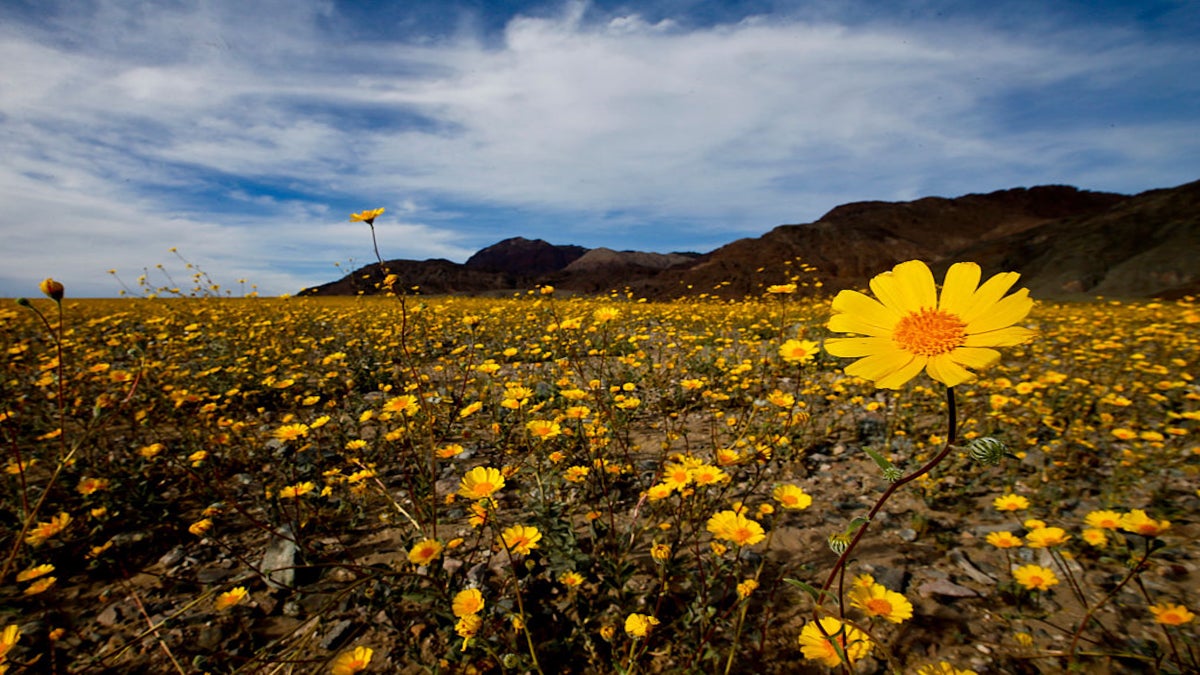
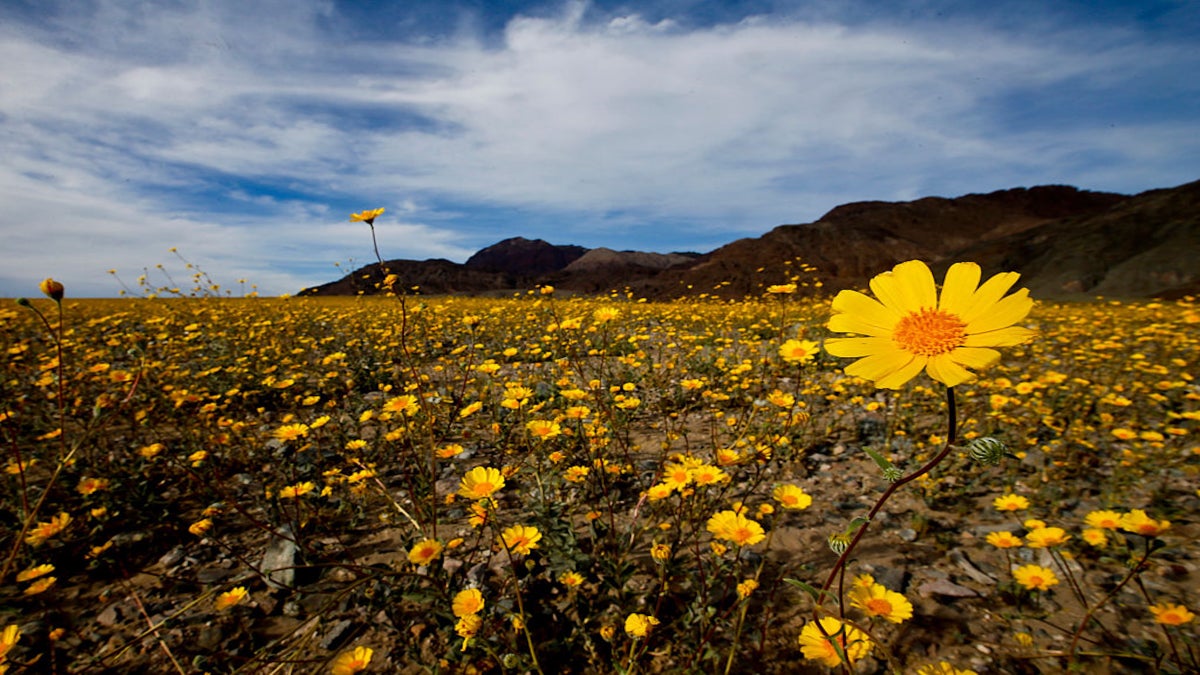
Record rainfall in Southern California is bringing unusual surprises to the otherwise arid landscape of Death Valley National Park. In November 2025, severe rainstorms revived an ancient lake that once reached depths of 7,000 feet.
Park experts believe that the drenched soil will create a dramatic bloom in wildflowers that may last for months.
“Death Valley is poised for a better-than-average bloom, and with a little luck, it could even be better than that,” wrote David Blacker, executive director of the Death Valley Natural History Association, in the organization’s January wildflower report.
Sunny weather in the forecast signals the start of a bloom, which Blacker believes is likely to pop by early February.
“At this time, we do not have any large areas of flowers blooming; however, we do have large areas of the park that are showing preliminary signs of an above-average bloom,” wrote Blacker. “How long they will last after they come up will depend entirely on the weather. We need mild temps and mild winds. If we get them, we could have flowers into May.”
The National Park Service (NPS) agrees—the agency wrote in its annual wildflower season update that 2026 is expected to be an exceptional bloom year in Death Valley. Sprouts have already been recorded in washes and hillsides, with low-elevation areas likely to see flowers in February and March. Higher elevations will probably have blooms from April through May, possibly even June.
“Death Valley is famous for its spectacular, spring wildflower displays, but those are the exception, not the rule. Only under perfect conditions does the desert fill with a sea of gold, purple, pink, or white flowers,” writes NPS on its website.
Superblooms of this magnitude tend to happen just once every decade or so, with the last three being in 2016, 2005, and 1998.
How To Spot the 2026 Superbloom
The best places to see Death Valley’s superbloom are located near the park entrance, a few miles down Badwater Road, near Furnace Creek, between Mud Canyon and Hells Gate, and then from Hells Gate to the Highway.
For more specific directions and details, you can read Blacker’s full report here.
What Causes a Superbloom?
Conditions have to be just right to bring on a superbloom, including abundant rain, lots of warmth, and little wind. In Death Valley, most desert wildflowers are annuals, meaning they bloom only once in their lives. This allows their seeds to remain dormant during the desert’s extreme seasons and bloom when conditions are perfect.
“By blooming en masse during good years, wildflowers can attract large numbers of pollinators such as butterflies, moths, bees, and hummingbirds that might not otherwise visit Death Valley,” writes NPS.
Respecting Nature During a Superbloom
The Internet is full of news stories about tourists behaving badly during a superbloom. People flock to meadows of wildflowers to snap photos and enjoy the sights, but in doing so, they often trample plants, scare off animals, and create erosion.
The NPS reminds bloom viewers to remain on trails when enjoying the flora. Stepping into meadows of flowers can compress the soil, limiting plants’ ability to absorb water and nutrients.
And the park service also reminds visitors to capture images rather than take flowers home.
We Want To See Your Superbloom Photos
Have you ever seen a superbloom? If so, show us your photos in the comments of this article.
The post Unusually High Rain Is Transforming Death Valley Into a Rare Superbloom appeared first on Outside Online.