






“There is no safe ice” is a common aphorism among anglers who fish on frozen lakes and rivers. But the primal drive to hook the first walleye of winter—and post the trophy on social media—can lead to questionable choices. In December 2023 on northern Minnesota’s Upper Red Lake, 122 people were rescued after a small crack turned into a 30-foot gap of open water. No one died that day, but four people did end up in the water.
Two years after this incident, I’m staring out at the same vast expanse from the eastern shoreline of Upper Red Lake, about 70 miles south of the U.S.-Canada border. It’s mid-December, minus ten degrees Fahrenheit, and there is between 12 and 14 inches of ice underfoot. I’ve hitched a ride in a SnoBear, a micro party bus that zooms around on snow tracks and boasts four holes in the floor for fishing. We’re gliding across the windswept, white, and desolate surface of the lake, which covers 120,000 acres. I can’t see to the far shore because fierce winds are whipping up snow. But I can see dozens of fish houses, from soft-sided pop-up tents to luxurious, RV-like “Ice Castles” scattered like rainbow-colored Skittles across the surface.
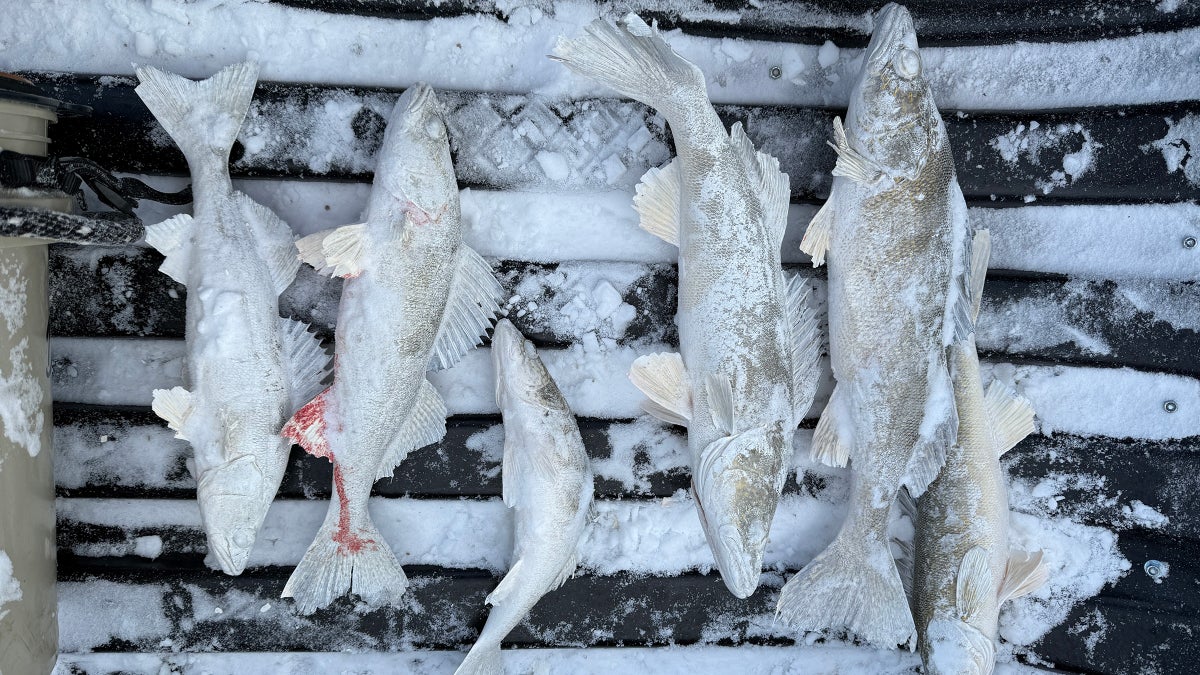
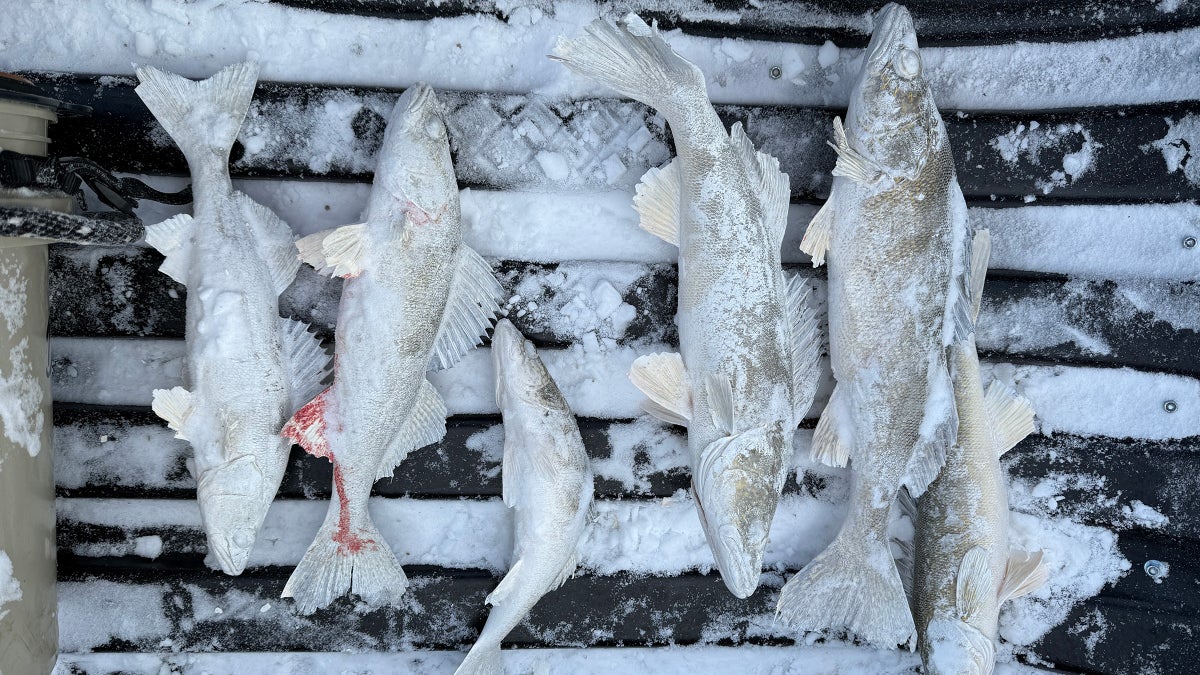
Most of the anglers are here for the Kelliher Fire and Rescue Relief Association Fishing Derby, a day-long contest where participants pay a $20 fee to catch up to four walleye (only one longer than 17 inches). Anglers enter each fish in a prize pool drawing. For a $50 derby and raffle entry, entrants have a chance to win even bigger prizes like an Ambush Slayer Skid House, an Arctic Cat Kitty Cat 120 snowmobile, or $1,000 cash. All proceeds go toward a fire truck that will cost the department three-quarters of a million dollars.
We reach a yellow icehouse, a half mile out, where an American flag on a tall pole is furiously flapping. Cole Koisti, the owner of Cole’s Snobear Expeditions, drops me off and drives away with his guests, a local wild rice farmer and his visiting family from North Dakota.
I’m no stranger to cold—I grew up in northern Minnesota. And I learned how to fish for walleye (in the summer) when I was about four. But I am a stranger to the rarefied world of ice fishing. In the 30 seconds I’m outside, the only bare skin on my face—about an inch around my eyes and cheeks—goes numb. The rest of me is bundled into an expedition puffy and down snow pants, a pair of choppers that reach my elbows, a buff, fleece hat, and boots designed for the Arctic.
I open the icehouse door, step inside, and immediately break into a sweat as a half-dozen uniformed men, volunteers from the 27-member Kelliher Volunteer Fire Department crew, nod hello. The group includes its stoic chief, Rick Thayer, a man of few words who offers me a bowl of his homemade chili. He leaves most of the talking to his mustachioed assistant chief, Mark Bieganek, who is clearly pumped that this day, which has been on his bucket list for decades, has finally arrived.
“We haven’t had a fishing derby in 22 years!” Bieganek booms. The contest used to be held by the North Beltrami Sportsmen’s Club every January or February, but the event organizers either passed away or moved on. Despite the dangerously frigid conditions outside, Bieganek is thrilled that, after a few thin years, the lake is nearly frozen solid.
“The good lord has been making ice for us!” he exclaims. “I was just telling the guys, ‘Fellas, I’m not afraid of failure, I’m afraid this is going to be so big that it’s overwhelming.’”
The post Think You’re Tough? Spend an Afternoon at Minnesota’s Coldest Ice Fishing Derby. appeared first on Outside Online.