









In their swift march toward installing a kind of Oval Office monarchy over the past year, the Supreme Court’s Republican-appointed majority has signaled that it would give the president unfettered power over federal agencies, even ones Congress tried to carve out as independent from partisan politics. But last spring, the GOP wing attempted to insulate the Federal Reserve, whose independence is a cornerstone of retirement accounts and the global economy, from presidential manipulation. In a mere sentence in a shadow docket order, they assured investors that the Fed was simply different from all other agencies, and so President Donald Trump could not fire its leaders at will.
The GOP-appointed justices foolishly thought they could secure the Fed’s independence.
The idea that the justices could empower Trump but also contain that power is a folly we see repeated throughout history. It is the hubris of a group of people who think they can control a would-be authoritarian; that he will be useful to their purposes without ever turning on them. If you give someone like Trump every power but one, he will find a way to take the last one too.
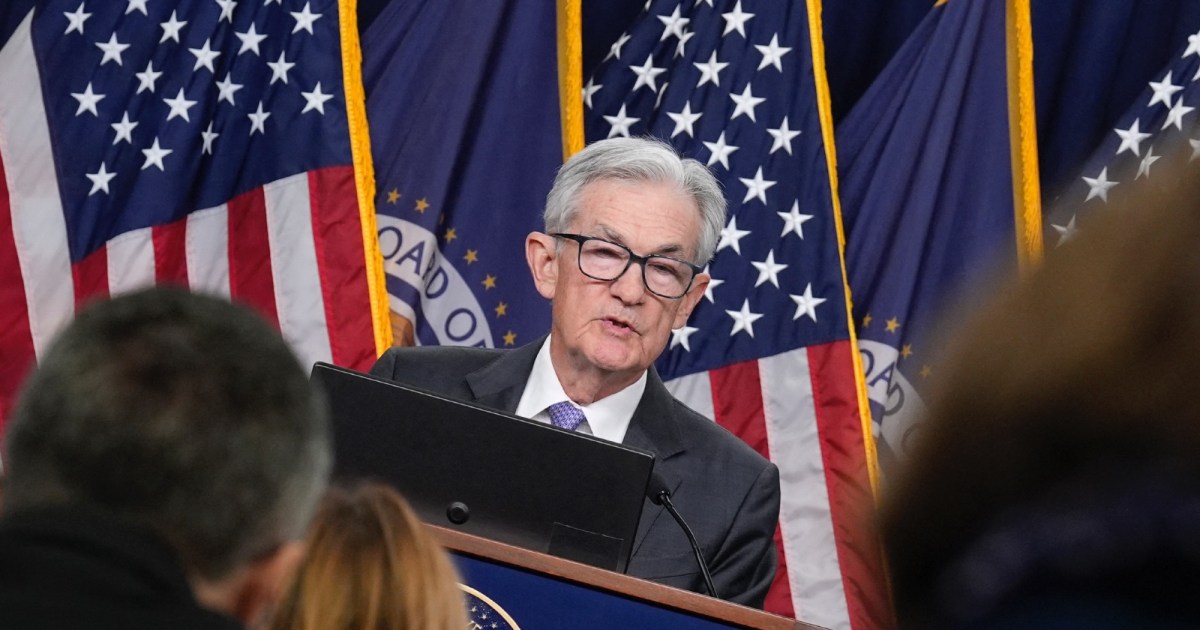
And so late Sunday, news broke that the Justice Department has launched a criminal investigation into the chairman of the Federal Reserve, Jerome Powell, over testimony he gave to Congress about the renovation of the Fed’s Washington headquarters. On Sunday night, Powell, who has tried to avoid a confrontation with Trump for months, released a defiant video accusing the administration of using the Justice Department investigation as a back-door means to control interest rates. “This unprecedented action should be seen in the broader context of the administration’s threats and ongoing pressure,” Powell said. “This is about whether the Fed will be able to continue to set interest rates based on evidence and economic conditions—or whether instead monetary policy will be directed by political pressure or intimidation.”
That is exactly right. The GOP-appointed justices foolishly thought that if they insulated the governors of the Fed from presidential removal without cause, that would be enough to secure the board’s independence, and with it the economic stability that comes with an independent body setting monetary policy. But the court’s rapid expansion of presidential power elsewhere had already swallowed that possibility.
In 2024, as Trump was staring down a criminal trial for trying to overturn the 2020 election results while running for president, the Republican-appointees rode to his rescue with a shocking new doctrine of presidential immunity. In an opinion by Chief Justice John Roberts, the court’s rightwing majority announced that presidents could not be prosecuted for criminal acts that are within their core powers, and have near total immunity for other official acts. What counts as a core power is not entirely clear, but one of them is: the power to investigate and prosecute. Roberts’ infamous decision in Trump v. United States did not just protect Trump from prosecution, it gave him the power to use criminal investigation and prosecution to harass, intimidate, impoverish, and coerce anyone—even with sham prosecutions ginned up for political purposes.
With the immunity case, Roberts handed Trump a loaded weapon. Now, he is using that weapon to take control of the Fed. Even though the norm of prosecutorial independence was not ironclad, Trump v. United States discarded the idea that the attorney general serves the people rather than the president. Further, it okayed the use of the DOJ’s prosecutorial functions in the furtherance of a presidential crime. “The Trump Court said explicitly that the president’s exclusive and preclusive power over investigation and prosecution includes the power to direct sham investigations and prosecutions, i.e., ones that have no lawful basis,” former New York University School of Law dean Trevor Morrison told me last year. Prosecutions no longer need to be tethered to reality.
Back in office, Trump’s administration has taken the decision to heart: the president himself is unconstrained, while politically-motivated prosecutions hound his critics. You can see that in Trump’s October directive to Attorney General Pam Bondi, which he accidentally shared publicly, to investigate three people he doesn’t like: former FBI Director James Comey, New York Attorney General Leticia James, and Sen. Adam Schiff, a Democrat from California who oversaw Trump’s first impeachment in 2019. While there is no such public directive from Trump to Bondi or his longtime toady Jeanine Pirro, the US attorney in DC, ordering up an investigation into Powell, it’s clear that the prosecution is Trump’s brainchild. Trump has spent months contemplating Powell’s removal while criticizing the expensive renovation project.
Powell isn’t the first member of the Federal Reserve that Trump has targeted. Next week, the Supreme Court will hear oral arguments over Trump’s attempt to fire Fed governor Lisa Cook while a criminal case against her proceeds—one that likewise appears to be bogus and inspired by a desire to take control of the Fed.
“The Trump Court said explicitly that the president… includes the power to direct sham investigations .”
Frighteningly, the Fed does much more than set interest rates, and control of its bottomless money supply and other powers could transform it into a slush fund to reward loyalists and family members and to de-bank and financially destroy Trump’s enemies. Moreover, access to the Fed’s coffers could allow Trump to circumvent Congress’ spending authority, transforming Trump into a government of one. What could be more tempting to a wannabe king?
The idea that the justices could give Trump such a weapon but control where he aimed it was always absurd. The immunity decision built upon a series of rulings issued by Roberts which embraced the so-called unitary executive theory, the idea that the president must have total control over the executive branch. This theory has been a hobbyhorse of the right since the 1980s, used to circumvent Congress and agency expertise in favor of deregulation. Since Trump’s return to office, the justices have deployed the theory to greenlight Trump’s power grabs, including his assertions of complete control over independent agencies—the ones the justices promised were somehow different from the Fed.
In recent years, critics have warned that the unitary executive theory is a fast-track to autocracy, because agency expertise and independence are key elements of modern democracies. The all-powerful presidency envisioned by the unitary executive theory, by contrast, mimics authoritarian takeovers in countries like Turkey and Hungary where democracy has recently eroded, giving an intellectual gloss to what looks, under Trump, to be a constitutional coup. But Roberts and his colleagues have plowed ahead, using Trump’s power grabs to create their long-sought uber-powerful presidency. Roberts’ opinions justified this expansion of presidential power on the grounds that the president was uniquely democratically accountable; but predictably, the more power he has given Trump, the less accountable he has become.
The criminal investigation of Powell demonstrates Trump’s insatiable desire to control the levers of the economy. It also shows how silly Trump’s allies in robes have been in assuming that Trump would stay within the limits they set for him. A thoughtful court would have surely realized that handing the president control over almost every lever of power would give him the tools to take over the rest. But this court’s GOP-appointed majority has rushed breathlessly forward, not willing to contemplate either the ramifications of their own actions or the limits of their power.