








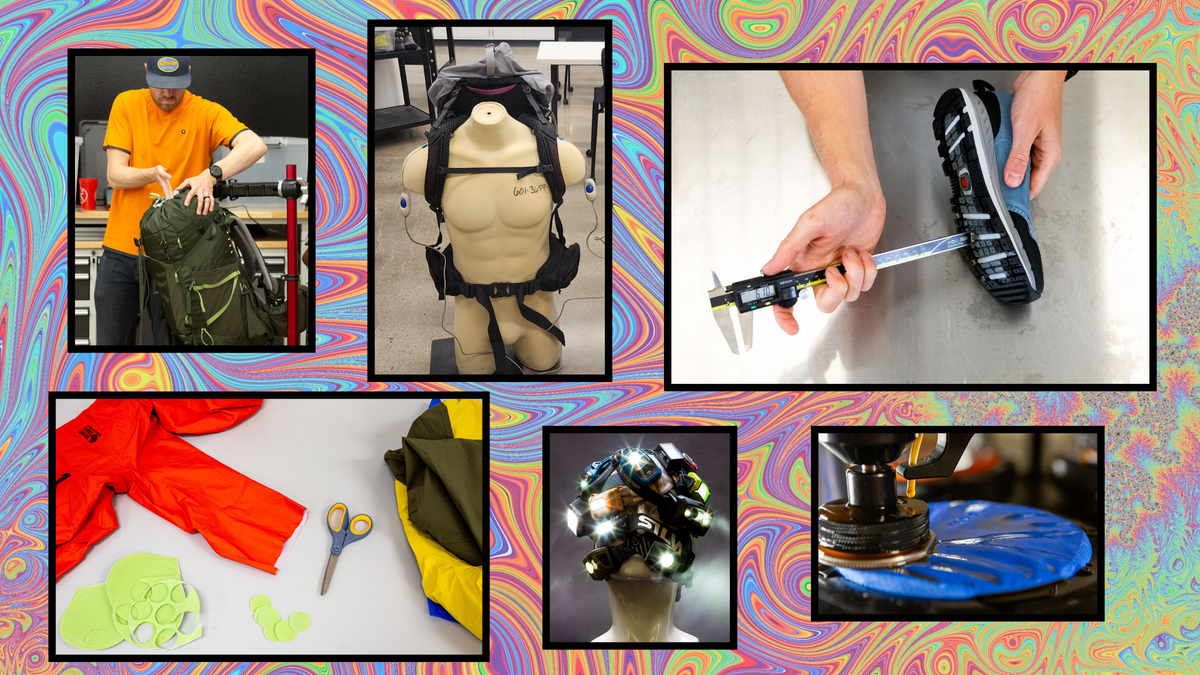
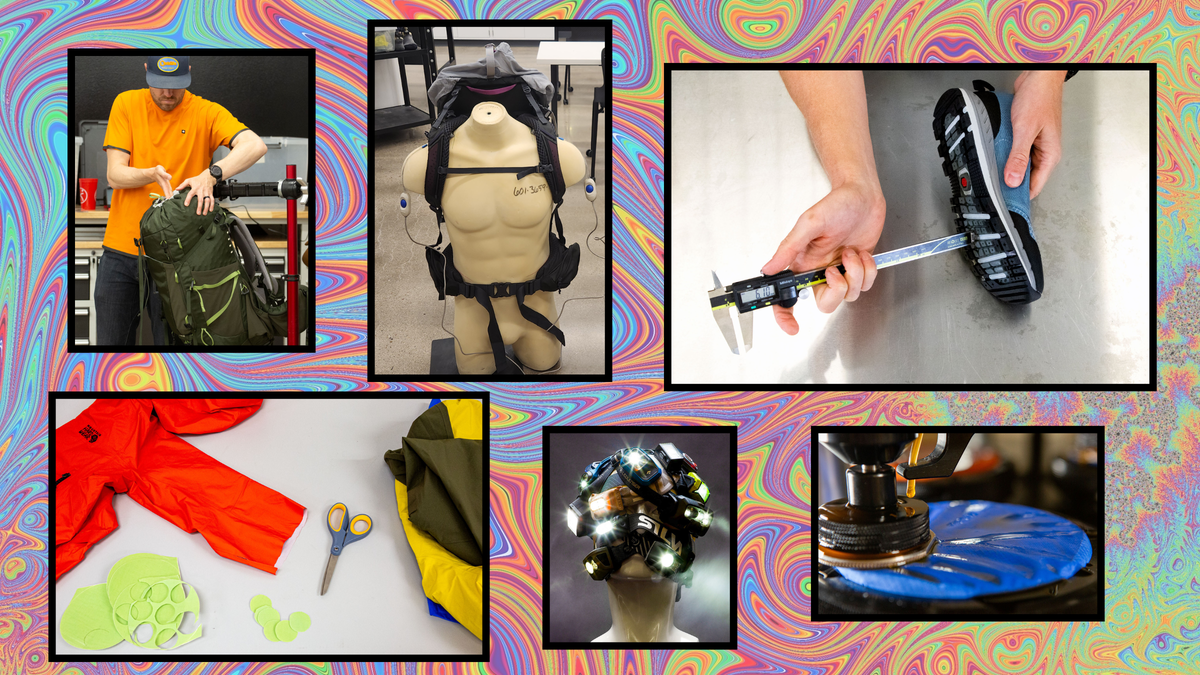
Here at Outside, we’ve always relied on expert field-testing for our gear reviews. But sometimes, we want to really nerd out over data. Which rain shell can withstand a downpour? And do any of them actually breathe? How do the best of the best compare in a controlled setting? With that in mind, we partnered with CU Denver to build the Outside Lab in 2023 and test backpacking gear at a scientific level. This summer, the Lab was chock full of gear, with clever, innovative tests for everything from backpack comfort to headlamp brightness. Take a look, and leave a comment below to let us know what sort of test you’d like to see next.
Stuffing Backpacking Packs to Their Breaking Point
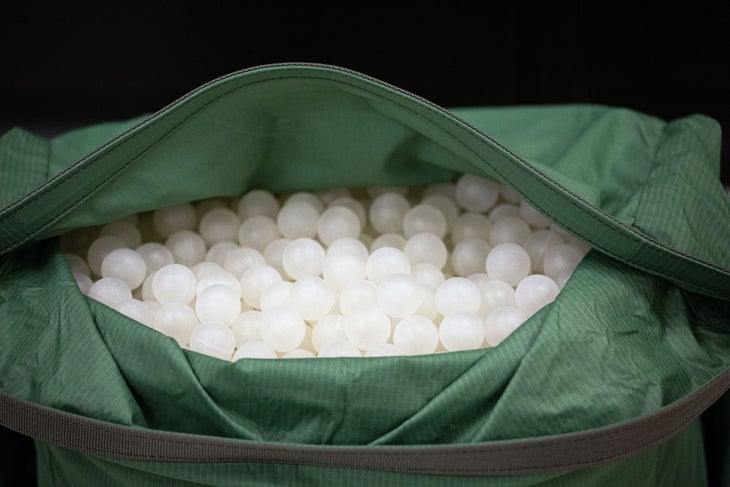
Have you ever loaded up a pack with 40 pounds of gear, only to find that it yanked on your shoulders and wobbled as you hiked? Or that a 50 liter pack could only hold closer to 40 liters of gear? Those are the quandaries we set out to explore with our backpack and ultralight pack testing this year. First, we took measurements for the dry weight (weight of the pack by itself), and stuffed every pocket with uniform plastic balls (like half-size ping pong balls) to find the true volume breakdown. Both of those numbers are often misrepresented by outdoor brands.
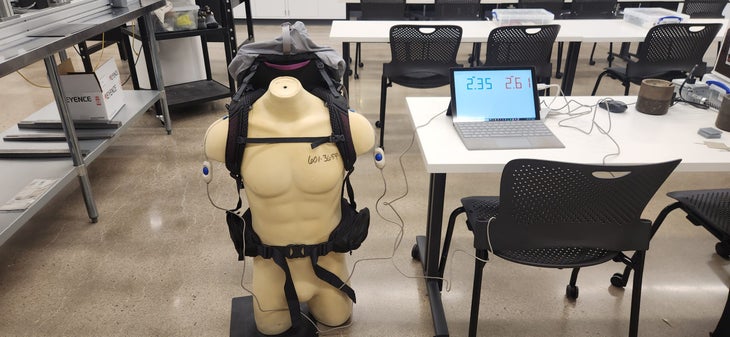
Next, we invented a test to measure how much weight each pack could comfortably carry, which meant adding sensors to the hipbelt (where most of the weight should be carried) and shoulder straps. When more than 50% of the weight in the pack was detected on the shoulder strap sensors, we knew the pack had reached its limit. You’d be shocked to see how little (or how much) some of the more popular backpacks are capable of handling.
Read more and find our test results:
Best Ultralight Backpacks (2025)
How We Test Backpack Effective Load Carry
Extreme Water and Abrasion Testing for Rain Jackets
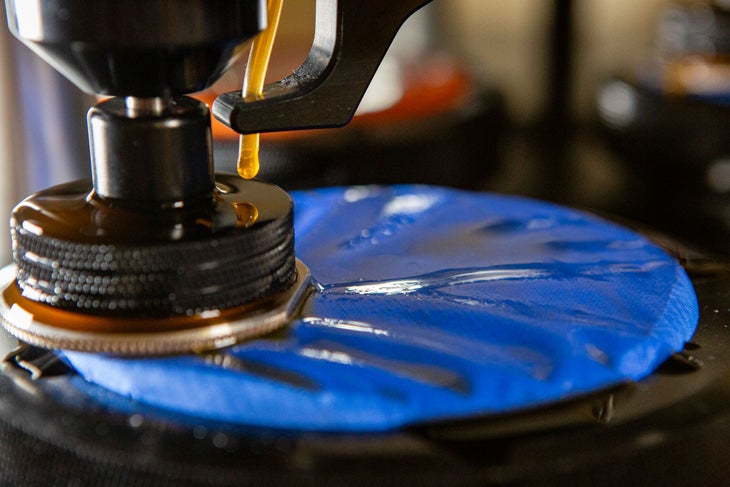
Rain jacket waterproofing can be all over the place: Some “fully waterproof” shells can only handle 30 minutes of steady rain. Instead of relying on marketing information, we did our own evaluations at the Outside Lab, focusing on durability, breathability, waterproofness, and wind resistance to get objective ratings. We used James Heal fabric test machines—AirPro, AquAbrasion, and HydroView—and our own custom breathability set-up to do testing. The results should help you make an informed decision about whether that jacket will survive the Pacific Northwest or a gnarly bushwack through brush.
Read more and find our test results:
Best Men’s Rain Jackets (2025)
Best Women’s Rain Jackets (2025)
Here’s How to Choose Your Waterproof Jacket
Poking Holes in Backpacking Sleeping Pads
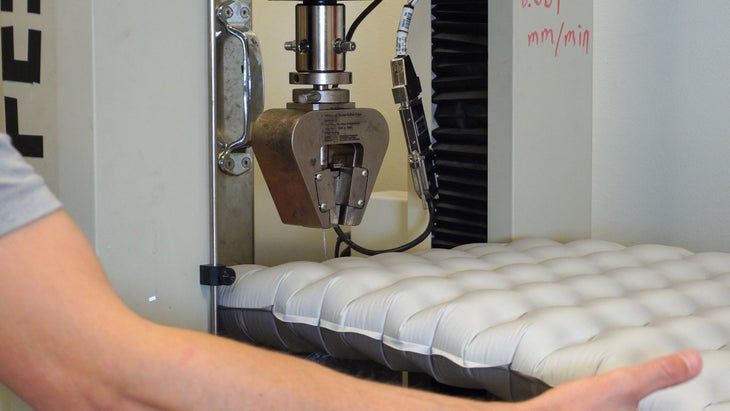
If you’ve ever woken up on the cold, hard ground in the middle of the night, you know how miserable a failed sleeping pad can be. To that end, we created a puncture test in the lab using 6 different needle sizes (some with blunt tips) to replicate cactus spines, pine needles, splinters, and small sticks. Punctures aren’t the only form of failure, and no pad is fully puncture-proof, but we wanted to know which of our favorites require babying, and which can handle the sharp claws of a canine companion.
Read more and find our test results: Best Backpacking Sleeping Pads (2025)
Wind-Testing Backpacking Stoves
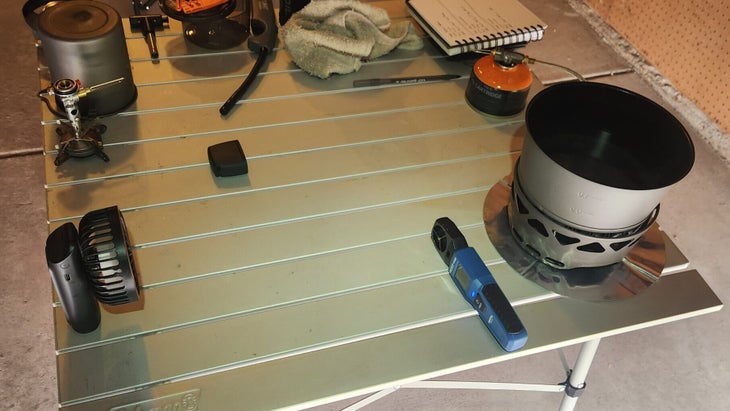
Ultralight canister stoves seem like a no-brainer until you encounter your first stiff breeze. To test how well different stoves handle wind, we grabbed a stopwatch and an adjustable fan. For each stove, we recorded the time it took to boil one cup of water at different wind speeds, and took notes on how easy they were to ignite. Fuel efficiency was calculated at each wind speed and factored into our test score. Check out our reviews to see which stove is a match for that fourteener.
Read more and find our test results: Best Backpacking Stoves (2025)
The Biggest Myth About Hiking Shoe Tread, Busted by Science
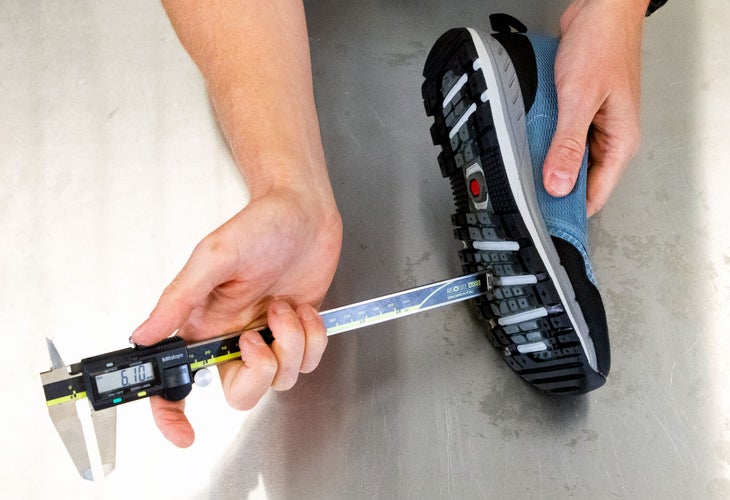
Do you know what makes a hiking shoe, trail runner, or approach shoe grip better than your traditional running shoe? Outsole design is important, but toothier, aggressive tread doesn’t always mean better grip. Check out our discussion in the Outside Lab with Backpacker Editor-In-Chief Adam Roy where we bust some myths around what makes a shoe grippy, and how to match the lugs to your terrain. Watch here.
Headlamp Testing: Much More Than Lumens
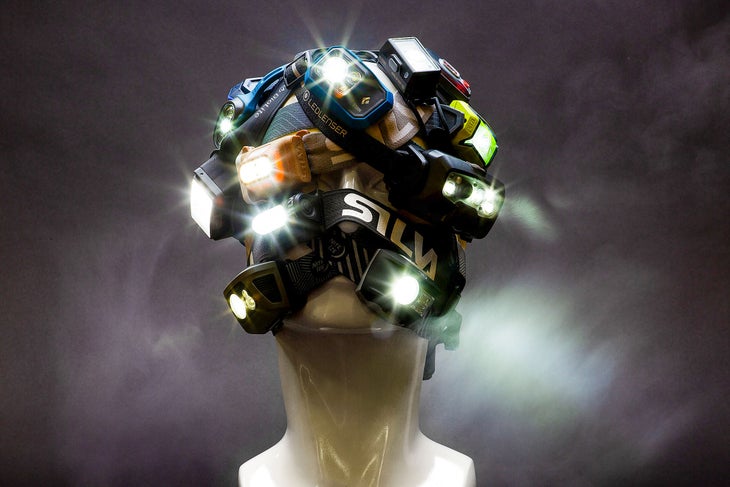
Most folks shopping for a headlamp look at the number of lumens it puts out. More lumens means brighter light, right? Not quite! In this article, we head to the Outside Lab again with Editor-In-Chief Adam Roy to dig down into the nitty-gritty of headlamps. How long does a peak lumen rating last? How does the battery perform in the cold? And do you need a wide beam, or a long spotlight? Watch here.
Can Your Three-Season Tent Survive A Winter Camping Trip? Here’s How to Tell
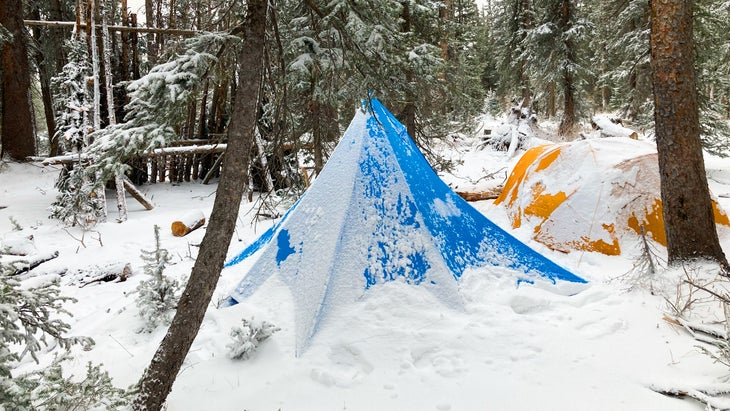
What makes a three-season tent different from a four-season, and can yours handle wintery nights? There’s a good deal of crossover in the three-season backpacking tent world, and a few key factors (like thicker fabrics, sturdy pole construction, and frame design) are critical to surviving a heavy blanket of snow. In this article and video, Editor-in-Chief Adam Roy joins us to break down some of the science that makes our favorite cold weather shelters work, and how they’re different from your fair-weather options. Watch here.
The post Lab Tested: A Look at the Coolest Devices We Used to Test Backpacking Gear in 2025 appeared first on Outside Online.