








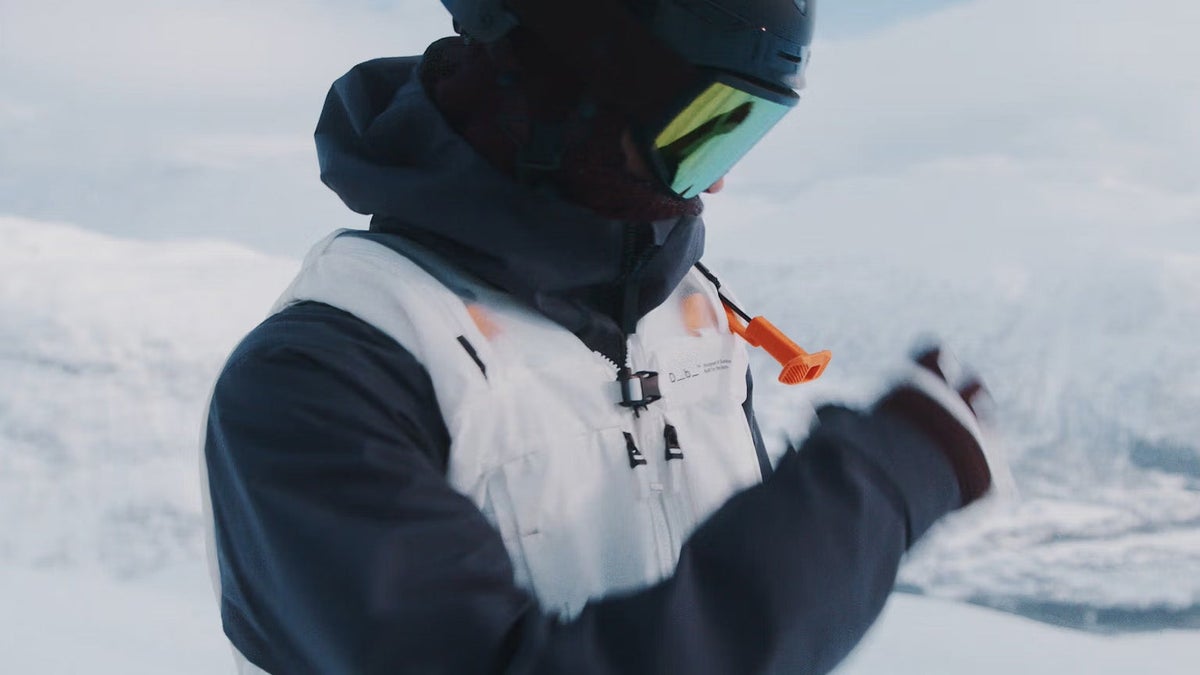
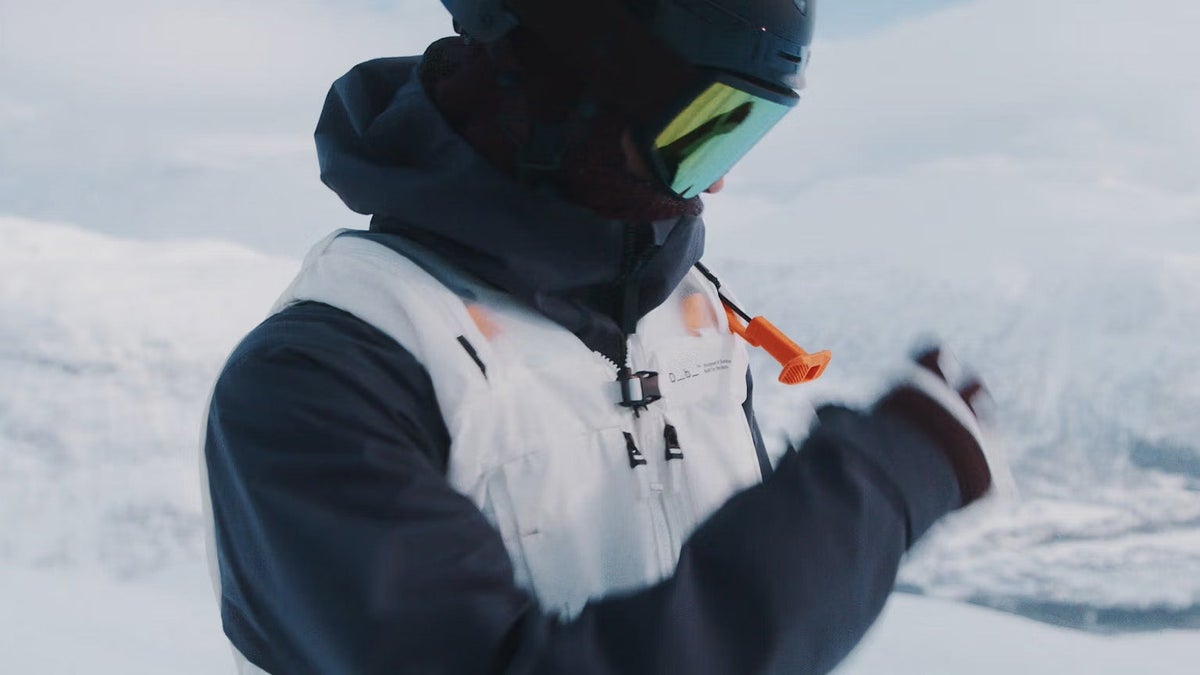
When Safeback first introduced its SBX avalanche survival system—a device integrated into packs to provide airflow to buried avalanche victims—it felt like a genuine breakthrough in avalanche safety.
Unlike airbags, which aim to keep you on the surface, the SBX tackles the most common cause of avalanche fatalities: asphyxiation. Once activated, a battery-powered fan pulls oxygen-rich air from the snowpack and pumps it into the breathing space around a buried victim’s face while venting out carbon dioxide. The system can deliver up to 150 liters of air per minute for as long as 90 minutes—far beyond the typical 15-minute window before oxygen levels drop dangerously low.
Watch: How Safeback SBX Works
It seemed like a game-changing solution to a terrifying problem—and one we were eager to evaluate when it first appeared in products like the Db Snow Pro Vest 8L and Bergans of Norway Y MountainLine Daypack 40L. But there was one major issue: we couldn’t actually test the most important claim. As much as SKI prides itself on rigorous gear testing, we’re not about to bury ourselves—or our testers—under snow to see how long it takes to asphyxiate with or without an SBX. So when we tested the Db Snow Pro Vest with Safeback SBX, we could assess the system’s integration with the pack (fit, comfort, weight, etc.), we couldn’t verify the core promise of the technology.
A team of researchers in Europe, however, found a way to test it safely.
A Controlled Burial Test
The Norwegian company behind SBX had spent three years developing and integrating the system into backpacks and vests when, in 2023, it approached Eurac Research—an independent research institute in South Tyrol, Italy—to run a clinical trial on the technology. To reduce potential bias, the study was funded by Eurac Research and MountainLab (Mountain Medicine Research Group, University of Bergen), and Eurac’s Institute for Mountain Emergency Medicine agreed to publish the findings regardless of outcome.
Researchers buried 24 volunteers 50 centimeters below avalanche-density snow while monitoring their vital signs through an array of sensors. Twelve of the subjects used placebo devices; the other half used active SBX units. The results were stark: seven participants in the control group hit dangerously low oxygen saturation levels (below 80 percent), prompting early termination of their burials after a median of 6.4 minutes. Not one of the SBX users hit critical oxygen levels, and all remained safely buried for the full 35-minute duration of the experiment.
The study, later published in the Journal of the American Medical Association (JAMA), concluded that “a user-carried avalanche safety device that delivers airflow from avalanche debris to the user’s airways without requiring supplemental oxygen delayed critical hypoxemia and hypercapnia during simulated critical burial.”
What It Means for Real-World Avalanche Survival
Safeback showed confidence by pushing for an independent clinical trial with published results no matter the outcome—a gamble that paid off. According to the study, “in a real-life situation, emergency services or the victim’s companions would likely have had more than five times as much time to respond [with SBX], and potential cardiac arrest would occur much later.”
Time is the single most precious resource during an avalanche burial. And while the priority should always be avoiding burial entirely—through training, terrain choices, and avalanche airbags—the SBX system offers a proven way to extend the survival window dramatically if the worst happens.
Does This Change My View of Using the SBX?
Not really. The SBX-equipped vests and packs are lighter and less cumbersome than airbags, but given the choice, I’d still prefer to stay on top of the snow than rely on life support beneath it. That said, with machine-accessed skiing from a helicopter or snowcat or even lift-served sidecountry terrain in avalanche-prone snow or deep tree wells, having SBX on your back might allow you to breathe easier. Just don’t let that added margin influence your terrain or route choices.
The post Safeback SBX Tested: How This Avalanche Safety Device Keeps Skiers Alive Longer appeared first on Outside Online.