









Having labored in the automotive salt mines for over 20-plus years, I’ve worked alongside many of the best photographers in the game. While many gearheads might think it’s a glamorous life filled with exotic locales, breathtaking supercars and endless fawning, the actual job is grinding and often thankless. Even if you have the fortitude, the rare mix of organic talent and acquired skill—honed only via thousands of hours clicking the shutter—means only the rare truly excel. One such elite lensman is Larry Chen, a photographer whose evolution we’ve charted over the years, welcoming his contributions to these very pages. As the esteemed visual artist releases his first book, Life at Shutter Speed (published by Carrara Media)—an eight-pound compendium looking back over his two decades in the game—we chatted with Chen about what made him first pick up a camera, why he became mesmerized by global car culture, and what advice he has for all the young photographers dreaming of entering the very same salt mines.
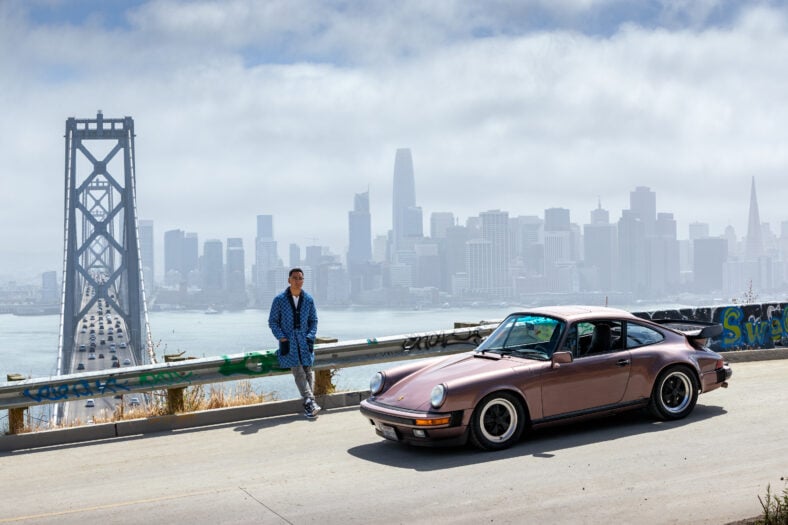
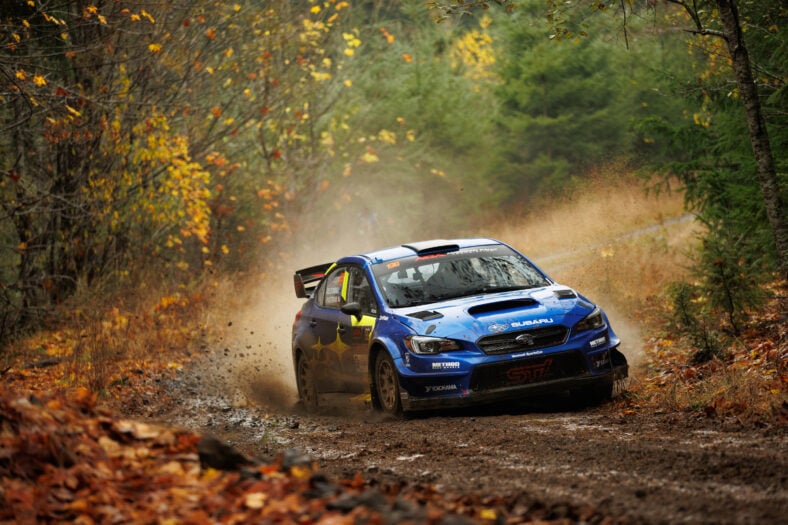
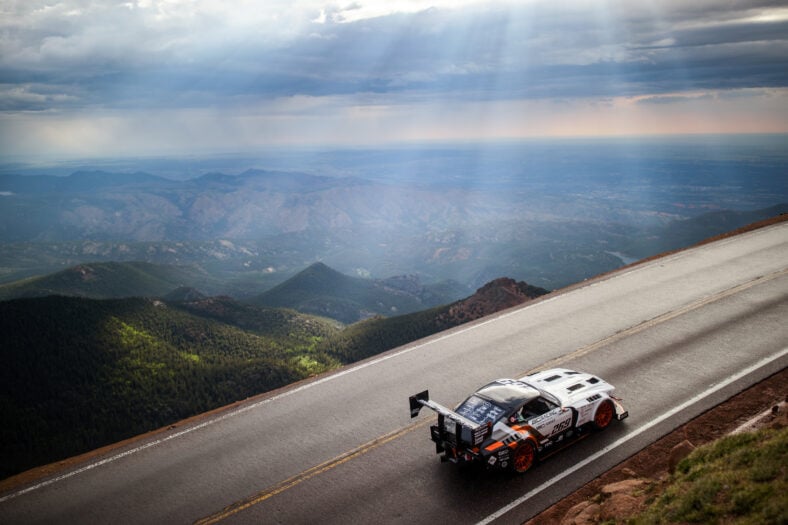
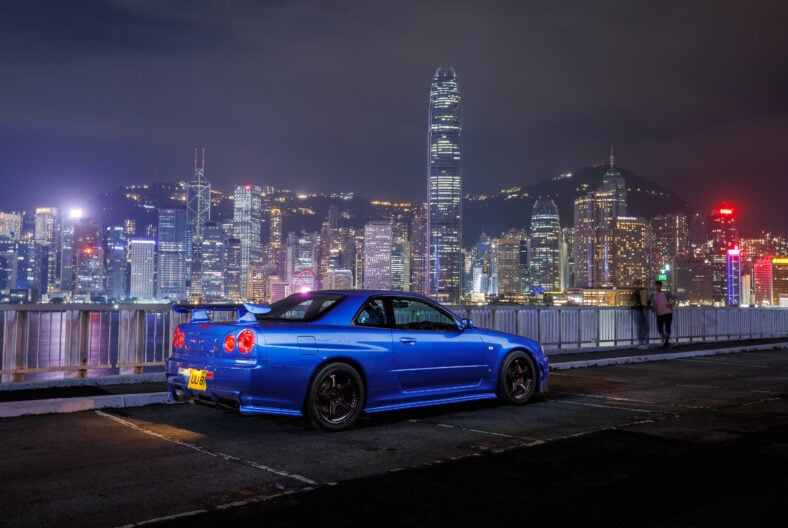


How did you get into cars and photography? What’s the origin story?
It really came naturally growing up in Southern California; it is something that you’re just surrounded by. I actually fell in love with driving and the culture aspect of it, the community aspect, making friends that have the same hobby. So much of it just comes from Southern California culture in general, right? Because you have to have a car to move around the city to have freedom, and I just fell in love with that aspect. I also fell in love with driving on racetracks going fast, but in order for me to be in the industry, I had to be exceptional at a certain skill to stand out. And for me, I knew how to take pictures, so I figured, you know what? Let me try taking pictures of these vehicles and see if this is the way I can be in the industry, along for the ride—without being a mechanic, driver, builder, somebody in marketing or PR. My whole goal was just to take pictures of cars and the culture surrounding it. And 21 years later, it seems like it’s worked. I’ve been very lucky for it to work.
What was your first international trip, and how did exploring global car cultures become a pillar in your work?
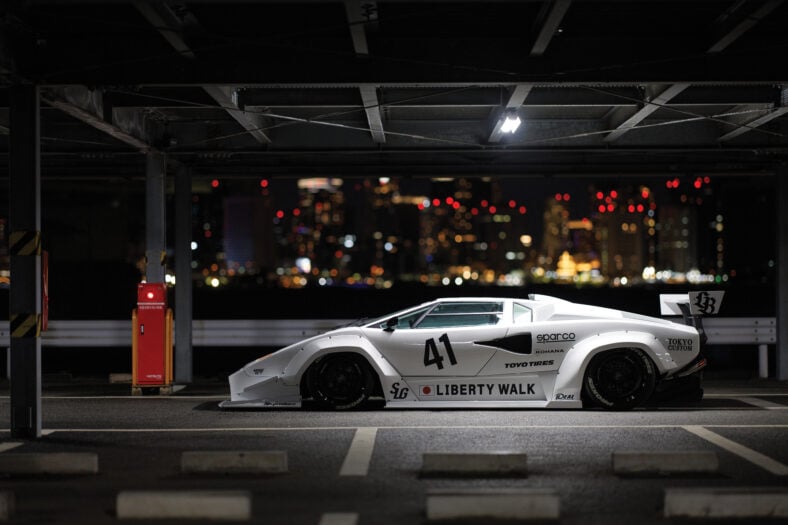
I think my first big trip overseas was to Japan. I saved up my money to be able to afford it. It was the 2007 Tokyo Auto Salon show [in] January, 2007, and it was my first exploration into that side of the culture. It’s something we grew up with, just watching all of these dubbed videos, DVDs, VHSs, and I wanted to see it for myself in person. I was shooting video, shooting photos, doing everything I could to get as much content as possible and just go for that full experience. Right off the bat, I started selling so much of the stuff that I had, and I did my best to make as much money as I could to pursue this. I was going to Europe, other parts of Asia, like China. I even went to South Africa in 2007 to shoot drifting and car shows. It was really the early internet, and internet’s early car scene, which allowed me to do this. It all led me to my next venture, which was doing stuff with Speedhunters—a website owned by Electronic Arts. That really opened up the world for me, because all of a sudden, I actually had a budget to shoot whichever race, event, or anything I wanted to shoot in the world. There was no limit.

How did Speedhunters find you, and what did that mean for you professionally?
I knew this sort of position existed because they started around 2008, and it was funded by the biggest video game company in the world at the time. And they just existed to promote this video game, which is Need For Speed. And so they didn’t have to answer really to anybody in terms of how much money they’re spending, because this game was selling millions and millions and millions of copies worldwide. I wouldn’t say unlimited budget, but we had a very healthy budget to be able to capture what was happening in the car world. And it was a pretty big team. So I just needed to knock on the door and get noticed.
I was friends with some of the people that were on the team, and over time as I was trying to contribute, I was making friends with these people, making introductions, showing that I had the passion and the drive to join the team. They finally let me join the team fulltime in 2010. And from then, I pretty much never looked back. I just used it not so much as a full-time gig, but as a platform to be able to showcase my work. And that brought me pretty much all the way up until 2018 as having that as an extra platform on the side. I was still shooting other things: commercial jobs, video. I was doing anything I could to earn a living. 2018 is kind of when I transitioned to my Hoonigan era, when I was doing a lot more work with them, doing photography for Ken Block. I actually started shooting with Ken in 2012, and I’ve been on set with him for most of the Gymkhanas since then, my start being Gymkhana 4. I was very lucky to be able to work with him over the years, including Electrikhana in Las Vegas and also Electrikhana TWO in Mexico City, which were filmed shortly before he passed away. So from 2018 I transitioned pretty much fully to Hoonigan, and that’s when I started my YouTube channel. And honestly, that was a big turning point for me in terms of being able to spread my wings and tell my story through video as well as stills.
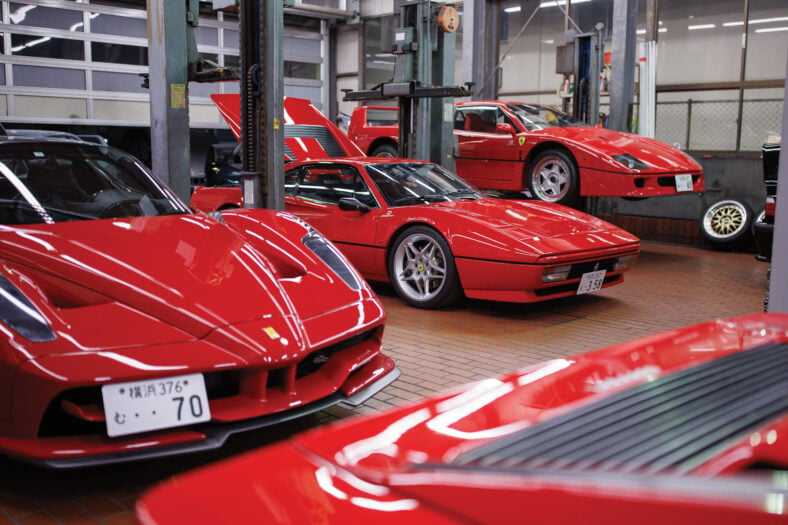
Automotive shots are a tough gig. People just think you show up and take a picture, but cars are very hard to light, frame, and photograph. When did you find your technique and ascend from amateur to pro?
I think it’s pretty gradual. Life at Shutter Speed is a good snapshot of my career. And traditionally, if you’re going looking at a photography book, especially if it’s somebody’s life’s work, it’ll start with the earliest work and then it’ll get all the way back to their later work. I did it completely backwards because I wanted to show my best work, which is my most recent work from 2024, and it goes all the way back to 2004. And the reason why is because I just want to showcase my best work early, because that’s what you first see when you open the book. And then over time, you get to see a deconstruction of my style, what I shoot, what interests me, and what stories I can uncover.
You can kind of see that over time, I actually did develop my skill. It wasn’t just like one day all of a sudden, oh, I just got better. No, it was baby steps—every single day I picked up a camera, I learned something new. I had some other kind of experience when it comes to relation of color or shapes, or certain spots at racetracks that I didn’t know about, or certain shooting locations that I didn’t know. I’m still learning to this day, and I’m still going to be shooting for as long as I am able to carry a camera.
“I want to inspire the next generation of automotive content creators to take the torch and just run with it.”
How’s the response been to Life at Shutter Speed, and how long did it take to put together?
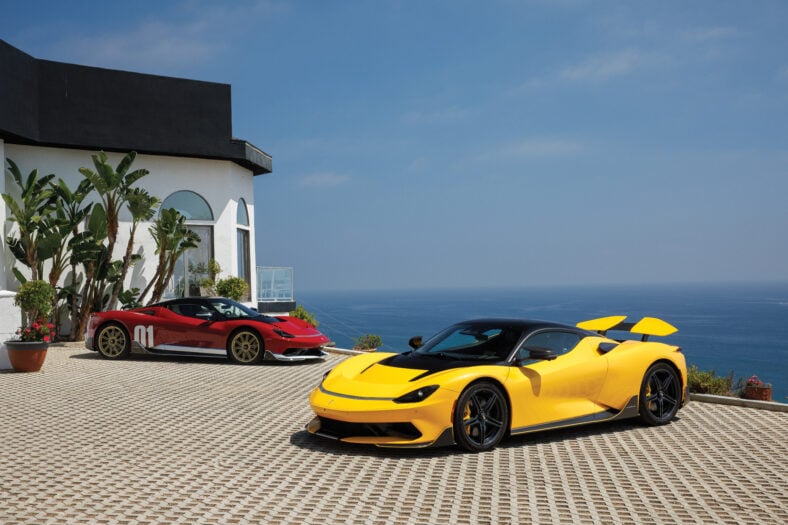
The book has taken almost exactly a year to produce, and it’s been going really well. It’s No. 1 on Amazon in terms of all automotive books, new releases, which is great. We’re almost out of stock of our initial run. We are just very, very happy with how it’s received. And for me, my whole goal was to bring value to the buyer. If they got this eight-pound monster in their hands, I wanted them to look at it, and I wanted there to be enough stories in it where it would engage somebody for a long time. And I feel like I did a pretty good job along with [publisher] Ryan [ZumMallen]. I think we made a fun yearbook for car culture of this era, of this generation, of this 20 years. I’ve sent out a personal challenge to people to bring this book to their favorite drivers, creators, builders, and personalities, because I’ve encountered so many people across this world that we love so much.
They can go up to any of them and they can ask them to sign their page in the book. It could be somebody like [Hoonigan’s Brian] Scotto, it could be a racing driver of some sort, Rod Millen or Patrick Long, or whomever. The point is that I did my absolute best to just showcase car culture for this time period. And I feel like the book is a good representation of that. It’s also something that I would’ve loved to see as a kid; I feel like it would’ve inspired me. And that’s what I want to do now—I want to inspire the next generation of automotive content creators to take the torch and just run with it.
How are you adjusting to the new media landscape that can be very difficult on photographers?
Yeah, that’s a great question. If somebody came up to me today and asked either to work for me or how get in this industry, I would tell them that anything is possible right now. A lot of people don’t believe me when I say this: We are lacking real talent and real hard workers in this industry. We are struggling right now just to keep up. We are getting so much work, we’re not able to take it because of the fact that there’s not enough people to create consistent and good work. The reason why this is a problem right now is because of how fast people are consuming this content. We cannot make content fast enough because the rate at which people are consuming is unbelievable. It’s beyond what was imaginable at one point, and I’m sure you can agree with me—when we were growing up, when we were looking at cars and car culture and we were looking for this material, there was a point where we could consume all of it.
But that’s not the case anymore; there are so many eyeballs for all of this incredible content. And time and time again, I tell people, there’s room for you whether you want to do TikToks all day, whether you want to just do Instagram, whether you want to do social media content or high-end, high-fashion or commercial photography, there’s room for you. But there’s a caveat: You have to be able to work hard and put in the hours. And most of the people that say they want to do it are not willing to make that sacrifice. They’re not willing to sacrifice literally everything else for their passion.
Follow Deputy Editor Nicolas Stecher on Instagram at @nickstecher and @boozeoftheday.
This article originally appeared in Maxim’s Winter 2025 issue.