







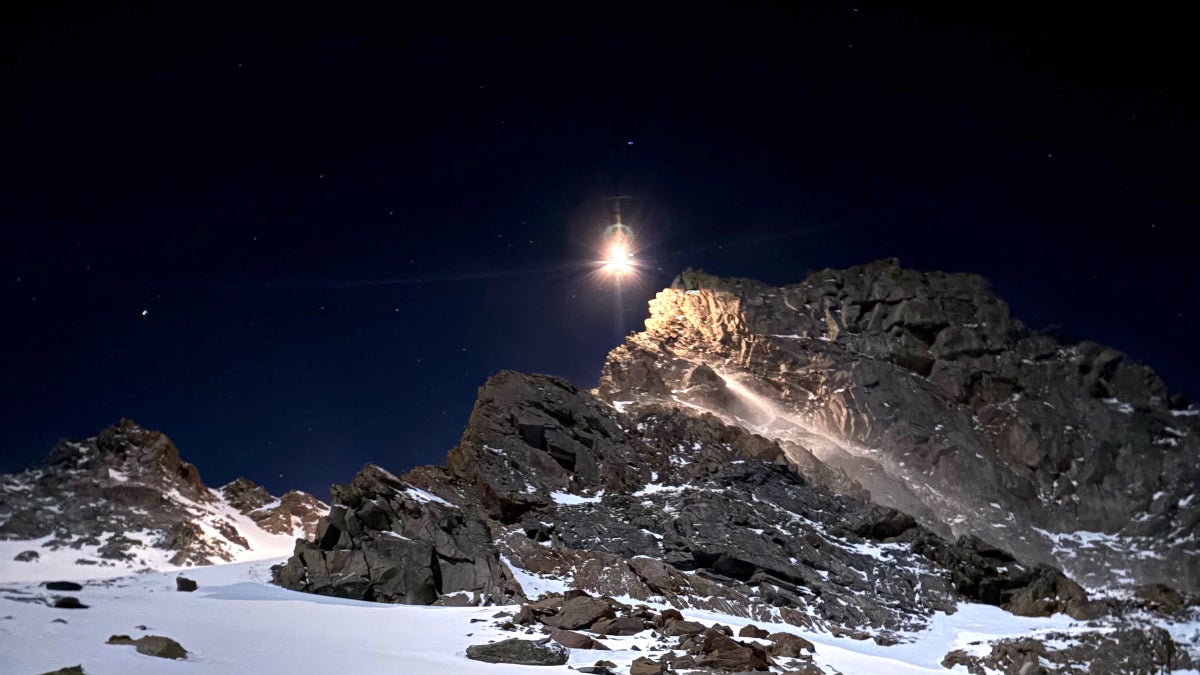
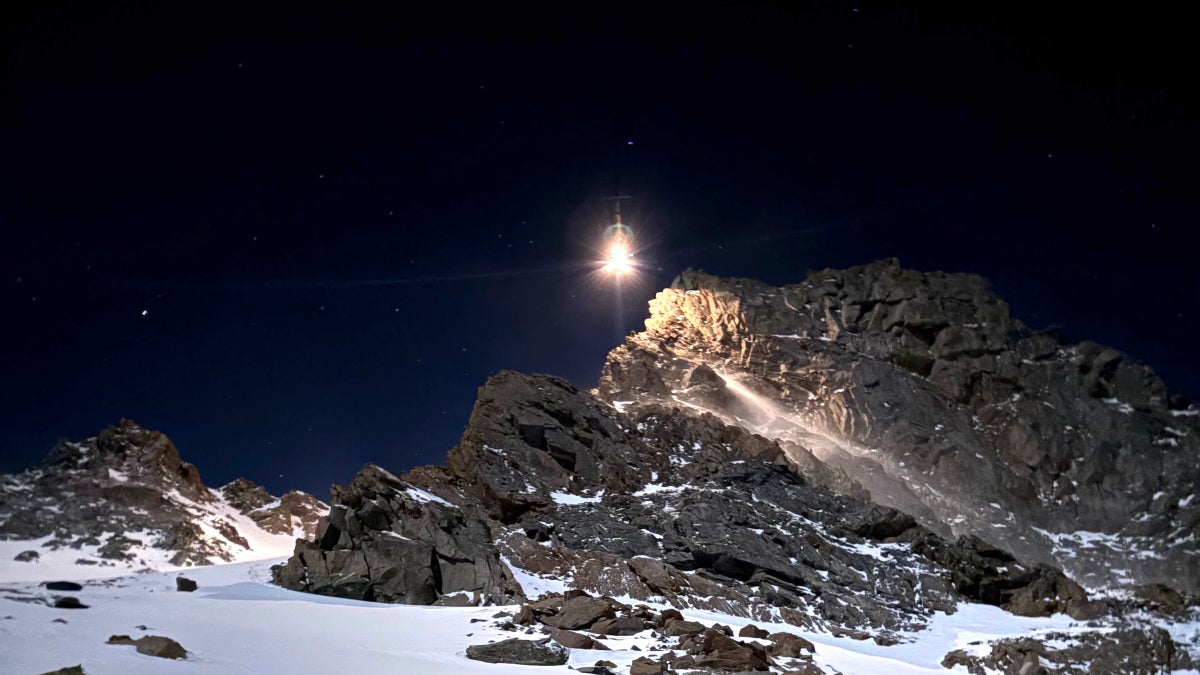
A New Year’s Eve climb turned deadly atop Colorado’s Citadel, a 13,295-foot peak located an hour east of Denver, after a couple set out to summit the famed 13er.
During the descent, the male climber fell several hundred feet into the basin below the ridge and died. The accident prompted a search and rescue mission to save the deceased man’s female partner.
She would spend several harrowing hours trapped in a precarious position on a rocky ridgeline before being rescued by helicopter after nightfall.
Authorities have not released the identities of the two climbers, but told Outside that the pair were experienced and well-equipped.
Steve Wilson, public information officer for the responding service, Alpine Rescue Team, told Outside that the woman called 911 at approximately 2 P.M. on December 31, 2025. She and her partner had started the climb by scrambling up a popular, non-technical route that begins at the Herman Gulch Trailhead and ascends the east ridge. At the time of the incident, the two climbers were near their original route, but on an alternate, more technical one.
After her partner’s fall, the woman called dispatchers, saying she was left stranded on the ridgeline between 12,800 and 13,000 feet.
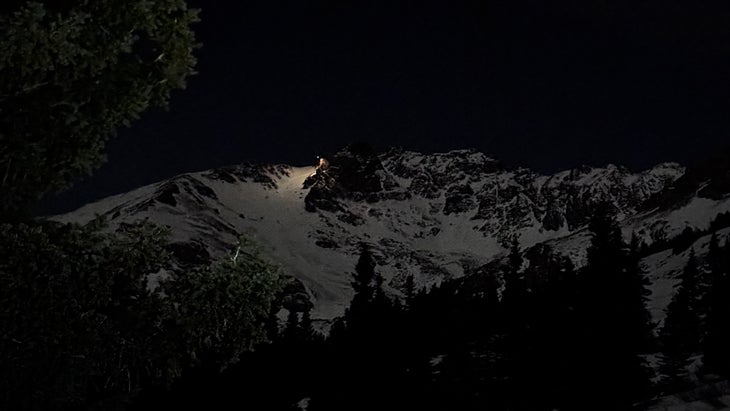
The Alpine Rescue Team deployed to the mountain, attempting to reach the surviving climber both on foot from Herman Gulch and by helicopter. But the winds were extremely high, and helicopter access was impossible.
“The wind conditions at the time prevented the helicopter from landing near the scene,” said Wilson, “but rescuers and crew on board were able to pinpoint the locations of both parties in the daylight.”
The team then called for assistance from the Colorado National Guard (CNG), which sent a UH-60 Black Hawk helicopter equipped with a hoist to the scene. The special, military-grade chopper carried three members of the Colorado Hoist Rescue Team, a highly trained outfit that specializes in lowering rescuers on cables to pluck victims from difficult-to-access alpine locations, such as cliffs, mountaintops, and ridgelines. The Hoist Rescue Team is a collaboration between the CNG, Alpine Rescue Team, and three other search and rescue organizations.
“The CNG Blackhawk was able to lower two of the rescue techs down to the fallen climber, at which time it was determined that he had not survived the fall,” Wilson said.
By the time the helicopter reached the scene, it was dark, and the stranded, surviving climber used a headlamp to help the Black Hawk’s hoist operator keep an eye on her location. Using the light as a guide, he then lowered a third rescuer down on a cable to reach her. With their help, the stranded woman “was able to be safely rescued from her precarious position and brought to the incident command post,” Wilson said.
Before leaving, the helicopter picked up the two remaining rescuers, who had stayed with the body of the fallen climber. In all, the rescue mission took seven hours and concluded at about 9 P.M.
Authorities aren’t entirely clear what caused the climber to fall.
“At the time of the fall, they were not roped together; that’s the best info we have. The nature of the hoist made it impossible to do any real investigation of the scene of the fall,” said Wilson.
The post After a Climber Fell to His Death, Rescuers Battled High Winds to Save His Partner appeared first on Outside Online.