






We’ve highlighted some pretty incredible light displays this holiday season, like the Winterfest Wildlife Light Display at Great Smoky National Park’s Tennessee entrance, and Garvan Woodland Gardens Holiday Lights in Hot Springs National Park in Arkansas.
But these were nothing compared to nature’s own light displays and the ways Mother Earth showed off this year. Unlike planned events, we can’t always count on catching a glimpse of the ways our planet shines, but when we do, we never forget it.
Here are a few natural light sources we’ve been spoiled to witness, and epic photos to share with those who haven’t.
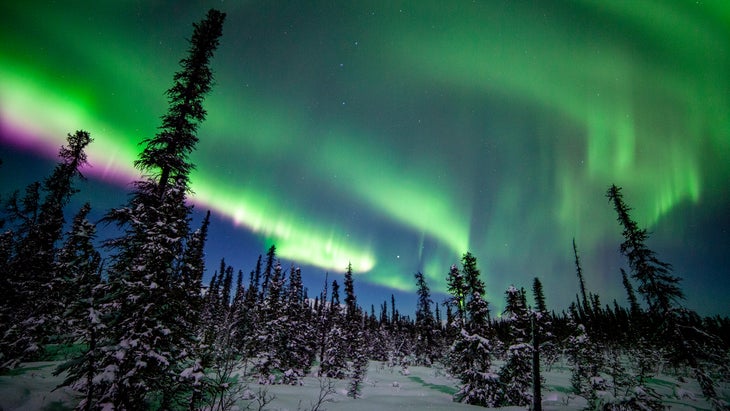
The Northern Lights
I grew up in Alaska, close to the North Magnetic Pole, where the auroras were visible most winter nights. It wasn’t until I moved to Washington State that I realized how rare that was. In North America, farther away from the magnetic poles, the northern lights can sometimes be seen from March to November if the conditions are perfect for viewing. Things like dark skies, long nights, and strong geomagnetic activity (storms) have to align for the best chance of catching them. And those chances are greater in September and March due to the equinox effect.
We’re currently in Solar Cycle 25, the end of an 11-year-long solar cycle. Because of the Sun’s transition from calm to stormy, scientists predict that 2026 will be the most incredible time for viewing the northern lights. After this peak, the auroras will become weaker as that cycle resets.
In 2025, we witnessed the northern lights light up the night sky from San Diego to Maine.
How to see them for yourself: You can track the aurora borealis forecast on the NOAA site all year.
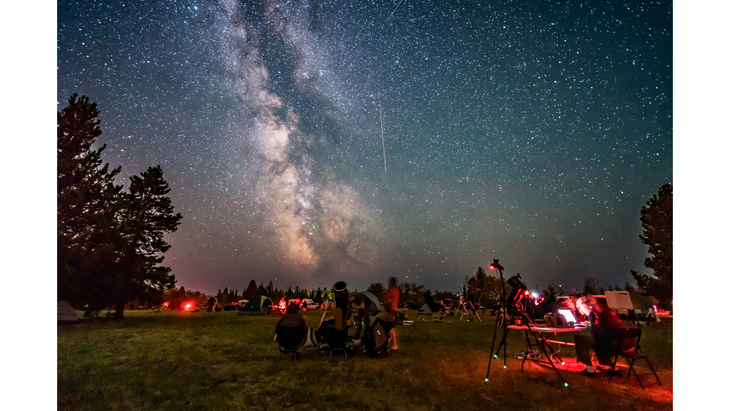
Meteor Showers in Dark Sky Parks
Most meteor showers are the by-products of comets, except for the Geminids, which is a by-product of an asteroid. And if you’ve ever wondered how meteor showers get their names, they’re named after the star or constellation they’re closest to when they appear. There are around 30 visible meteor showers each year, but only a few are good enough for viewing. The next expected showing is in early January, the Quadrantids, considered to be one of the best annual meteor showers there is, according to NASA.
Most meteor showers have a two-day peak, which is why many head to dark sky parks for the night to catch them. The darker the skies, the better the show. Follow Outside’s tips by using a light pollution map or by browsing through DarkSky International’s list of certified places to find a minimally lit viewpoint.
How to see them for yourself: You can track the 2026 meteor showers through the American Meteor Society’s interactive page.
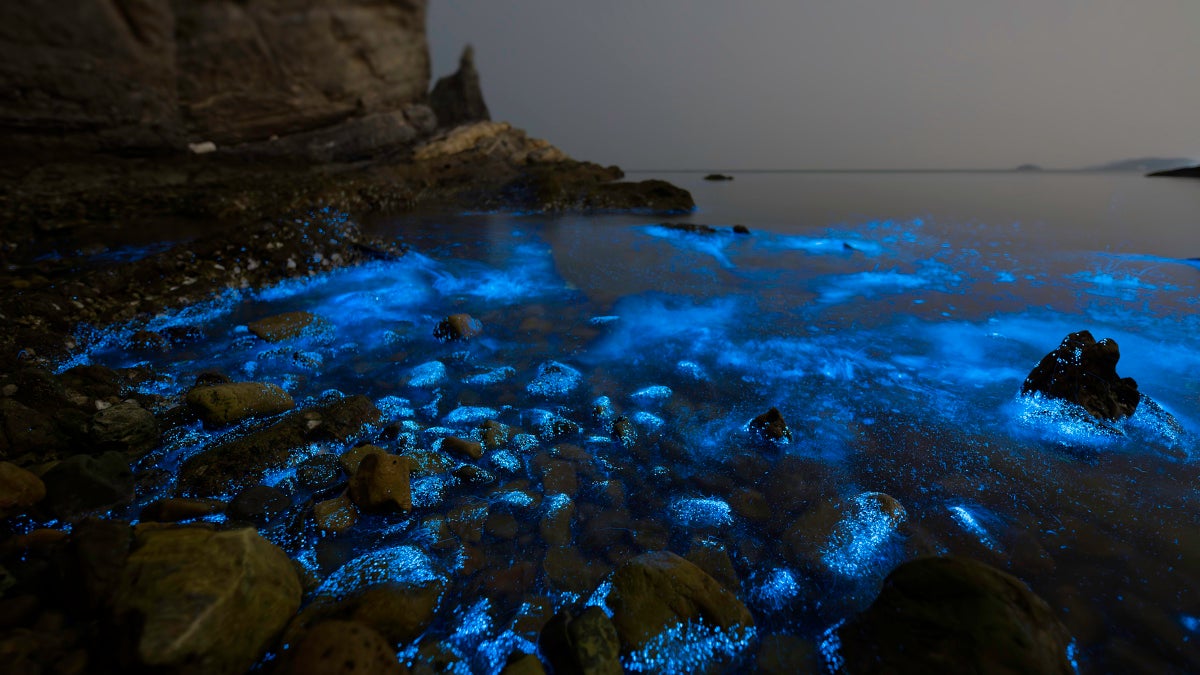
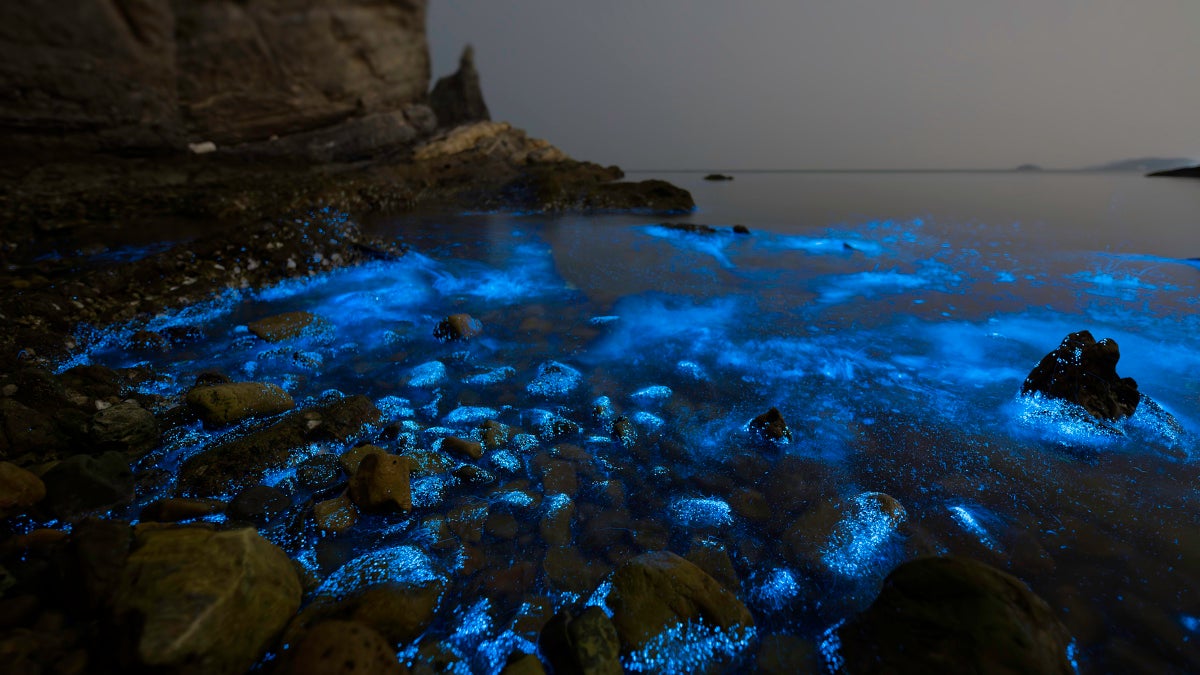
Bioluminescent Waves
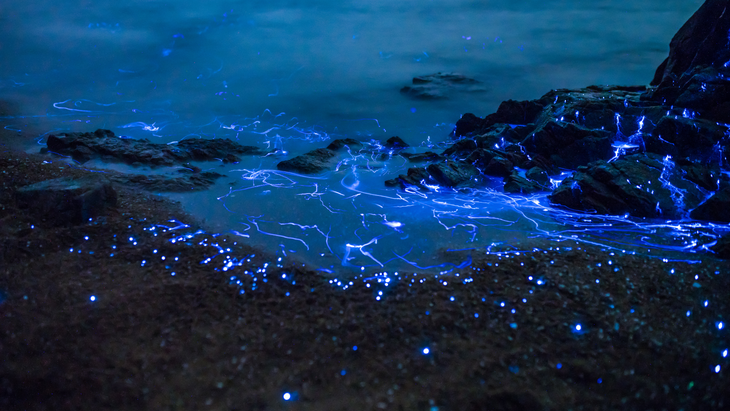
Bioluminescence emerged as a vital form of communication in the open ocean, Outside previously reported. Alexandre Gillespie writes that, where there were no rocks or reefs to hide behind, animals adapted by diving into deeper waters during the day and rising to the surface at night to feed. This daily vertical migration left them in near-total darkness, creating evolutionary pressure to develop new ways to communicate and be seen. Self-sourced light became an incredibly common tool.
Bioluminescence, simply put, is a “chemical reaction like when you break a light stick… where the chemicals are made by the animals themselves,” Dr. Edith Widder, a marine biologist who has dedicated her career to bioluminescence, and author of Below the Edge of Darkness: A Memoir of Exploring Light and Life in the Deep Sea, told Gillespie. “In the open ocean environment, approximately 75 percent of the animals make light.”
Read more: Learn more from this incredible, in-depth piece, which dives into the best bioluminescence tours in the world.
When holiday lights are put away, nature’s displays are here to stay. The team at Outside wishes you the best of luck in catching at least one of them this year.
Have any viewing tips? We’d love for you to share them in the comments.
The post The Most Stunning Natural Light Shows appeared first on Outside Online.