









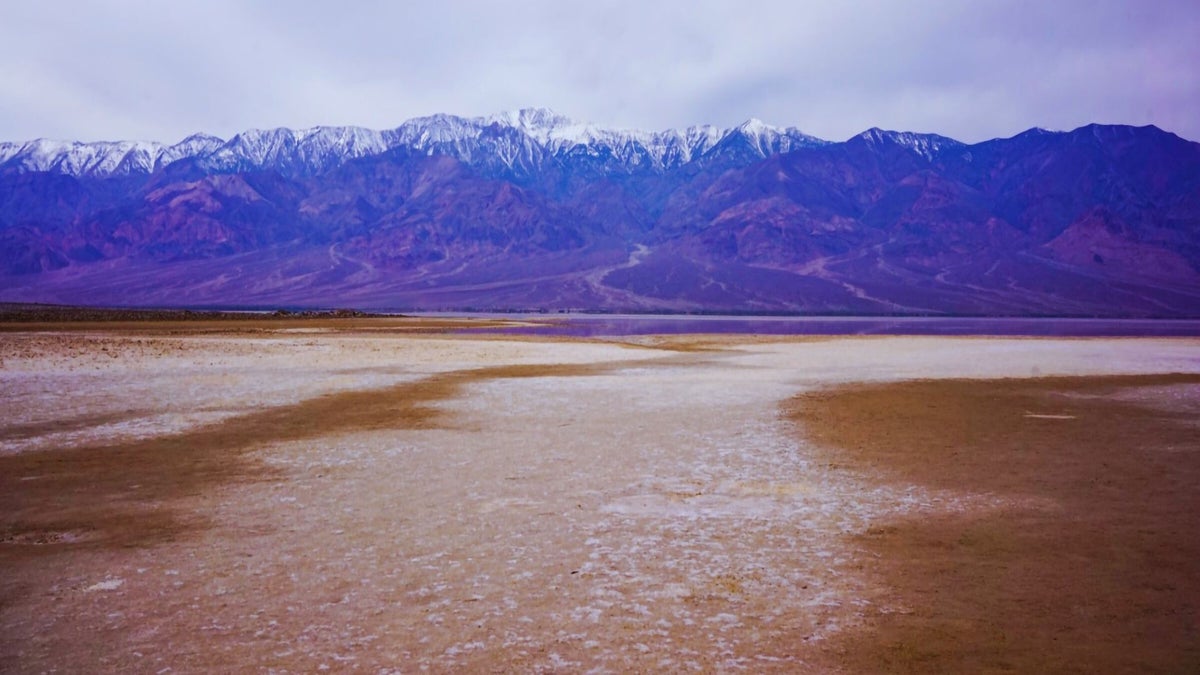
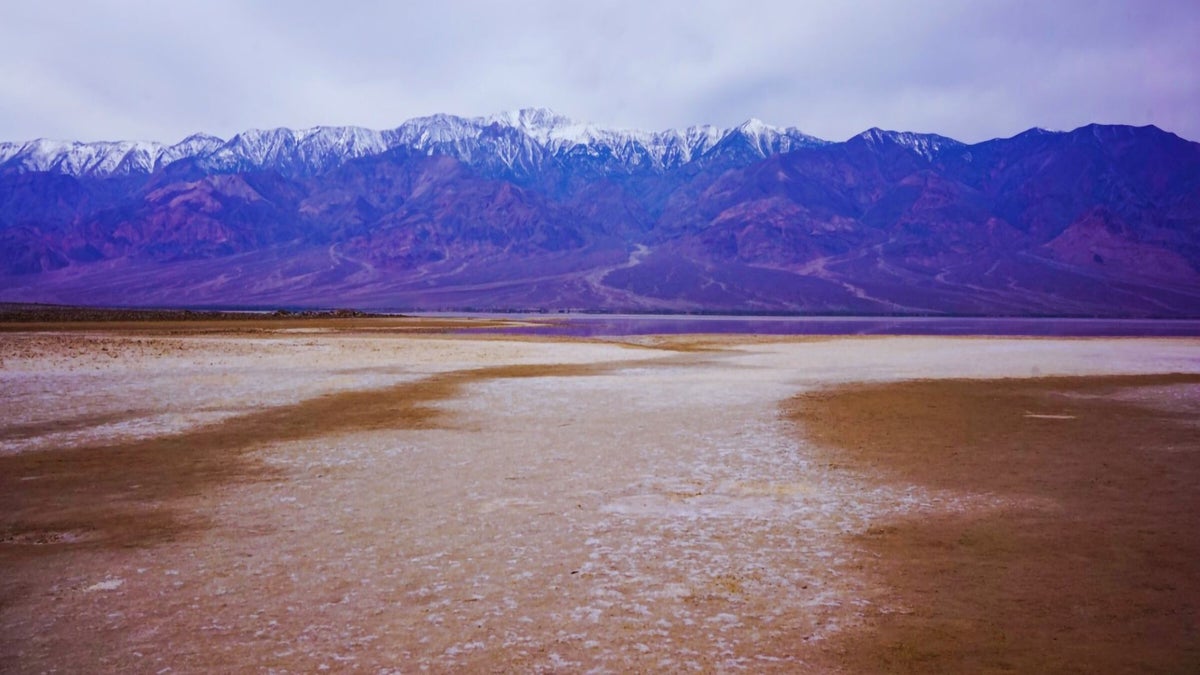
At 282 feet below sea level, Badwater Basin marks the lowest point in North America. Where once there was an ancient body of water named Lake Manly, today, the region is characterized by 200 square miles of salt flats spreading across Death Valley.
That is, until record rainfall hit the southern California desert this month.
While much of the western United States grapples with catastrophic flooding caused by an atmospheric river, severe rainstorms have brought back the ancient lake. According to the National Park Service (NPS), fall storms dumped more rain than the region typically sees in an entire year—about 2.5 inches between September and November.
Although the record-setting precipitation is abnormally high for the arid region, NPS writes that the water in most places around the so-called lake would not rise above the tops of your shoes. And no, shallow-water lake boating in the area is not allowed.
During the Ice Age, it’s estimated that Lake Manly reached depths down to 700 feet, filling a basin that stretched nearly 100 miles long and up to 11 miles wide. The prehistoric lake formed during the Pleistocene glacial period and was fed primarily by glacial meltwater from the nearby Sierra Nevada mountain range.
A shifting climate, with higher heat and lower humidity, eventually dried up the lake, which now fills only during extreme weather. The last time Lake Manly had water in it was during Hurricane Hilary in 2024.
“The lake had no outlet, leading to the accumulation of sediment and salt over time. When the lake eventually evaporated, concentrated salt deposits were left behind,” writes NPS. “Today, fascinating geometric salt polygons form on the flats as groundwater rises up through these deposits and evaporates.”
As rain continues to pound the western U.S., the agency warns visitors of numerous road closures throughout Death Valley National Park. Some of these roads are covered in debris and are currently impassible.
“Visitors should be aware that unpaved roads may be impassable due to storm damage. If traveling on backcountry roads, visitors should proceed with caution. Be prepared to self-rescue and always check current conditions before visiting,” says NPS.
For the most up-to-date information on road status and park access, click here.
The post At the Lowest Point in North America, Record Rainfall Just Revived an Ancient Lake appeared first on Outside Online.