









What You Should Know:
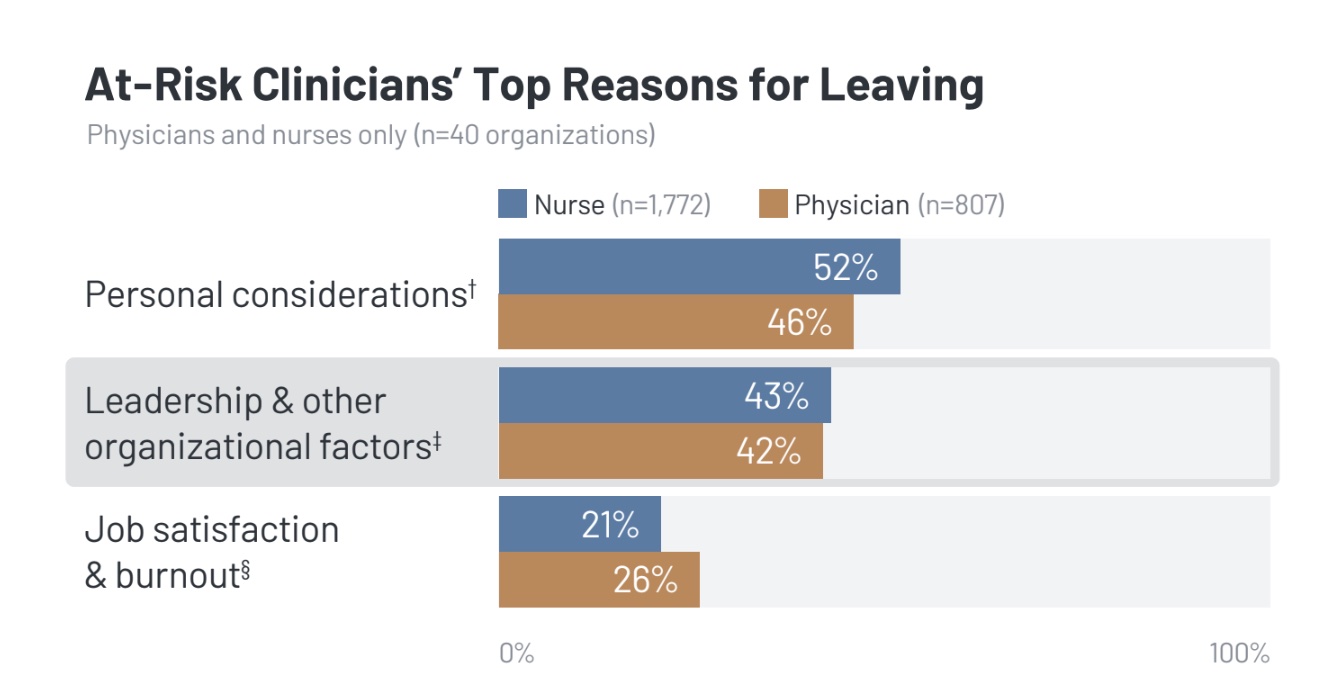
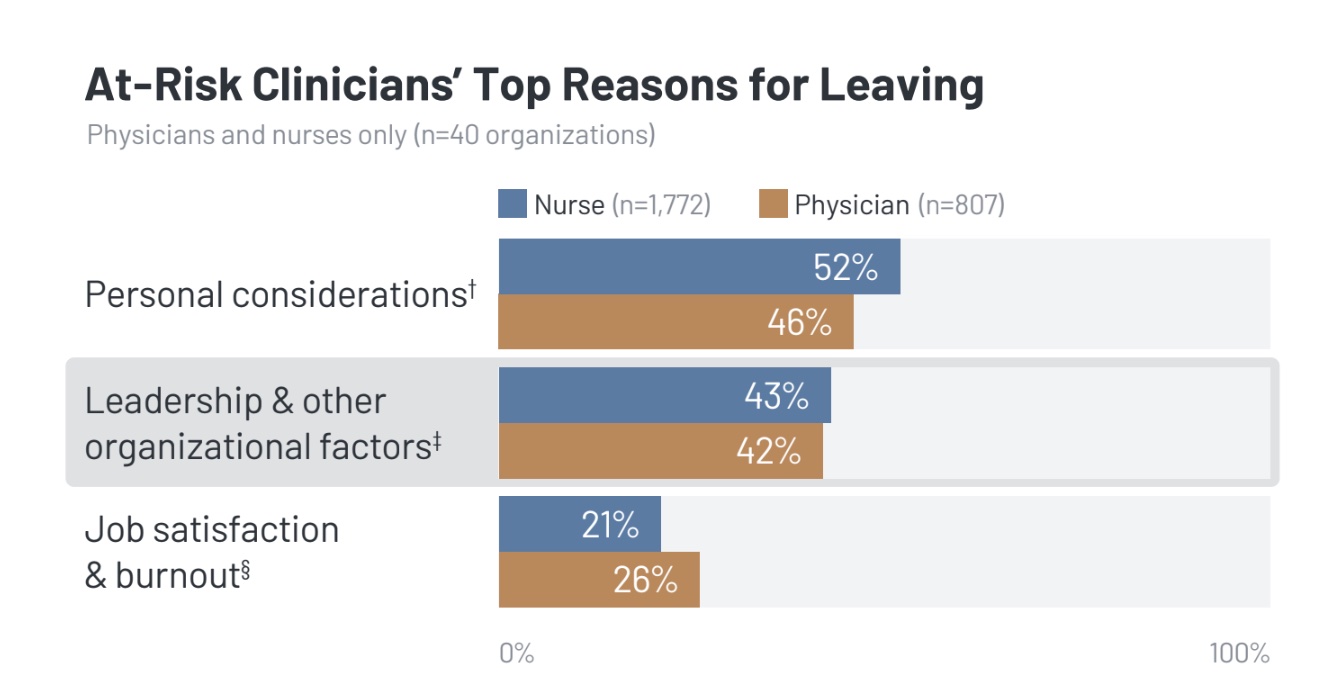
– A new report from the KLAS Arch Collaborative finds that dissatisfaction with organizational leadership is the primary non-personal reason at-risk clinicians plan to leave their jobs.
– The dissatisfaction is strongly correlated with a poor EHR experience , meaning IT investment is now a critical leadership strategy for reducing costly clinician turnover. Healthcare organizations face significant financial risk, as losing a physician can cost up to $1M.
The True Cost of Neglect: EHR Dissatisfaction Translates to Leadership Failure
Workforce instability is the single biggest threat to a healthcare organization’s mission, impacting patient experience, clinical care, and financial performance. Despite a modest decline in burnout rates since the pandemic’s peak, the healthcare industry is still projected to face a global shortage of 11 million health workers by 2030. The cycle is self-perpetuating: burnout leads to turnover, causing staffing shortages, which then fuels greater burnout.
The latest KLAS Arch Collaborative report, Clinician Turnover 2025, delves deeper into this crisis, revealing a disturbing truth: outside of personal considerations like retirement, dissatisfaction with organizational leadership is the number-one cause of clinician turnover.
The Alarming Financial Risk of Discontent
This dissatisfaction is more than an HR problem; it is a critical financial risk. The organizational cost of losing a nurse is estimated at $52,350 (2024 study), while losing a physician can cost up to $1,000,000 (2017 study).
Clinicians, particularly nurses, report feeling insufficiently supported in the expanded responsibilities that have fallen to them due to staffing shortages, including tasks beyond the scope of direct patient care. For at-risk clinicians, these grievances manifest as a profound lack of shared values and inconsistent, poor communication from administration.
Physicians, too, express deep alienation, feeling their input is ignored and that leadership is overly focused on control and the “bottom dollar,” viewing them as “hamsters on a wheel”.
The EHR Is the Litmus Test for Leadership
The report establishes a critical link between technology and leadership perception: dissatisfaction with the EHR often manifests as dissatisfaction with leadership.
Among at-risk clinicians, those who cite misalignment with leadership as the primary reason for leaving are the most dissatisfied with their EHR experience. At-risk physicians who plan to leave the organization show an average Net EHR Experience Score (NEES) of just 7.7 (on a -100 to 100 point scale).
When leadership fails to provide a fast, reliable EHR experience, bolstered by strong support and education, clinicians don’t just feel inefficient—they feel that leadership has failed them, prompting them to make plans to leave.
The Imperative: Investing in EHR Experience is a Retention Strategy
While improving culture or increasing reimbursement can be slow or financially unfeasible, investing in the EHR experience is a concrete, actionable method that leaders must use to align with clinicians.
The urgency is paramount: Arch Collaborative data shows that clinicians who plan to leave the healthcare industry entirely have significantly lower EHR satisfaction scores than those who plan to stay.
The good news is that focused investment can reverse this trend:
- Positive Turnaround: Over the last two years, 288 clinicians who reported plans to leave when initially surveyed now say they plan to stay.
- Key Improvements: 73% of these clinicians cite EHR improvements, with the majority pointing to workflow efficiency , better technology (like macros and ambient speech) , and enhanced clinical communication tools.
- Beyond Functionality: The success of these advancements is tied not just to new technology, but to pairing those changes with ongoing education and effective support to help clinicians integrate new tools into their workflows.
Clinicians who have successfully been retained want leaders to involve them as key players in improving clinical workflows and optimizing EHR functionality. As one CMIO stated, the strategy is clear: use technology to make the organization the place where people would want to come and work. Prioritizing the EHR experience drives measurable ROI, not just in improved staff morale and trust, but in measurable workforce stability.