








America is in for an astronomical treat. Early on the morning of March 3, sky-watchers in all 50 states can observe as a total lunar eclipse paints our moon crimson—an ethereal sight known as a blood moon.
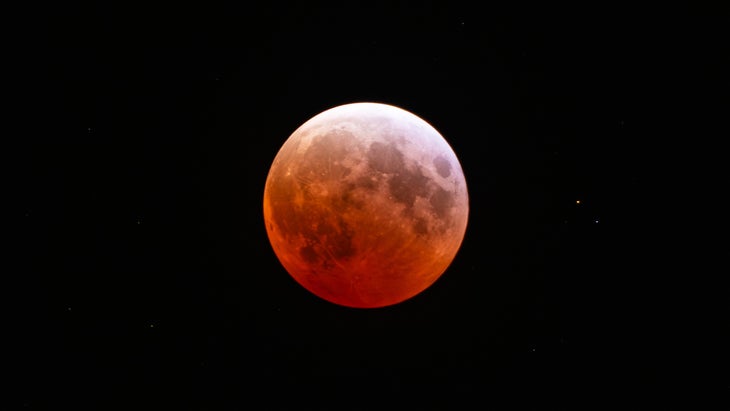
During a total lunar eclipse, the full moon moves between our planet and the sun. Earth’s shadow blocks direct sunshine from reaching the moon. Some red light does indirectly reach it after passing through Earth’s atmosphere; this is what gives our lunar neighbor that surreal saffron tinge.
Unlike a total solar eclipse, which is only visible along a narrow track known as the path of totality, this phenomenon can entertain anyone on the night side of Earth, weather-permitting. This March, that includes stargazers in all 50 states. Even better: you don’t need dark skies to enjoy it, although that can intensify the view. (Case in point: I enjoyed last year’s blood moon from my backyard in light-polluted Cleveland, Ohio.)
But not all eclipse views are the same. In this lunar-eclipse guide, I’ll share when, where, and how to enjoy the blood moon, no matter your coordinates.
When to See the 2026 Total Lunar Eclipse
A total lunar eclipse runs through several phases, and the blood moon is the crescendo. The action gets noticeable during the partial phase, when the moon looks like there’s a nibble missing. (That’s Earth’s shadow covering its outer edge.) That bite grows over the course of around 90 minutes until our shadow fully envelops the orb.
Enter the blood moon, the phase not to miss. Totality lasts for about one hour before it transitions to a partial eclipse again.
According to NASA, the March 3 lunar eclipse timeframes are:
- Partial eclipse begins at 4:50 A.M. EST
- Total eclipse starts at 6:04 A.M. EST
- Totality ends and partial eclipse begins at 7:03 A.M. EST
- Partial eclipse ends at 8:17 A.M. EST
This timing is best for stargazers in America’s western half; you’ll see the moon relatively high in the sky all night. East coasters will need to get strategic about their vantage points, as the moon will be close to setting, and therefore near the west horizon, when totality commences. This does present an opportunity: watching the rosy moon on the horizon, where it appears larger than normal due to an optical effect known as the moon illusion.
Since moonset timing varies by location, it’s best to check resources like Time and Date or stargazing apps like SkySafari to determine hours in your town.
How to Watch the Blood Moon
You don’t need inky skies to enjoy a total lunar eclipse. The moon is bright enough to admire through light pollution, even when it’s in Earth’s shadow. Of course, traveling to a dark-sky getaway will help you see other space marvels while you’re out there, such as galaxies and star clusters.
One non-negotiable is clear, or at least partly clear, skies. I use Windy.com to determine cloud-cover forecasts. If the early morning on March 3 looks socked in, consider traveling to a clearer spot or enjoy the view via Time and Date’s eclipse livestream.
Just like the normal moon, you can admire a total lunar eclipse easily with the naked eye. To enhance the view, use binoculars to peer closer at the orb’s crater-pocked surface. (I use the Nikon Monarch M7 8×42; here’s my full stargazing gear kit.)
How Can I Photograph a Total Lunar Eclipse?
As anyone who’s photographed our space rock knows, it’s tough to take a picture of the moon with a smartphone. That’s because our iPhone cameras capture wide-angle images, which make the moon appear like a tiny dot—not the majestic red sphere you see with the naked eye.
To fix that, zoom in for a closer angle. On an iPhone, do this via the dial at the bottom of your camera instead of pinching and zooming; the former retains more quality.
A tripod can also aid total lunar eclipse smartphone photography. Here’s a hack if you don’t have one: make a stabilizer by propping your phone in the back of your shoe.
Where Can I Watch This Year’s Total Lunar Eclipse?
You can watch the total lunar eclipse throughout the U.S. this month, but some destinations will get especially dramatic. Here are five blood moon getaways, broken out by region.
Northeast: Buffalo Waterfront, New York
With west-facing views across Lake Erie, Buffalo is a prime spot to watch the blood moon sink into the water. Snag your eclipse view anywhere along the waterfront, such as the Greenway Nature Trail or Woodlawn Beach State Park (entrance from $7). Buffalo will enjoy 45 minutes of totality before the moon sets at 6:50 A.M.
Midwest: Badlands National Park, South Dakota
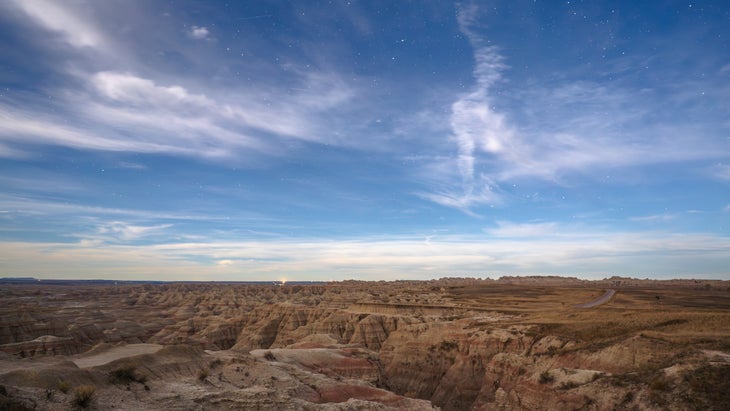
Heading to the western stretch of the Midwest will gift you more hours of blood-moon darkness, and few venues set the stage for it like otherworldly Badlands National Park in South Dakota. This sea of sharp buttes and sky-high pinnacles offers numerous west-facing vantage points. Think: Bigfoot Pass Overlook or the White River Valley Overlook. The ultra-flat Prairie Wind Overlook provides clear horizon views, too. This area will enjoy nearly 60 minutes of totality before the moon sets at 7:11 A.M. local time. (Park entrance from $15)
Western U.S.: Arches National Park, Utah
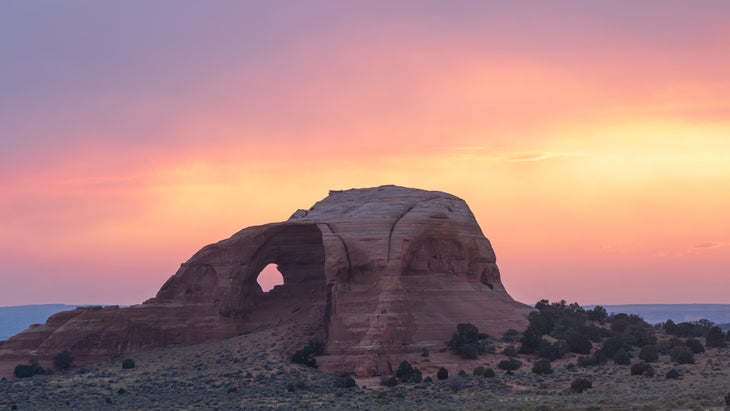
Arches provides another lunar landscape for March’s blood-moon marvel, and even better: the park is open all hours, which is critical given the total lunar eclipse appears in the pre-dawn hours out west. Totality begins at 4:04 A.M. local time. Since the moon is higher in the sky in Utah, you don’t have to stress as much about clear horizon views. Instead, try an easily reachable viewpoint, such as The Windows section. Park entrance from $15.
West Coast: Sonoma Coast State Park, California
Marvel as the blood moon shines above the Pacific from Sonoma Coast State Park, located 70 miles north of San Francisco. The patchwork of craggy shores and tide pools spans 17 miles from Bodega Bay to the Russian River. Even better for California stargazers: the park stays open after dark, which is important since the partial eclipse begins at 1:50 A.M. local time, and the full blood moon occurs around 3 A.M. If the forecast calls for fog, change your plans and head to California’s sunny south, where lookouts like Redondo Beach Pier in LA County stay open all night. (Sonoma Coast State Park entrance from $10)
The South: Greater Big Bend International Dark Sky Reserve, Texas
Watch the blood moon dance above the Chihuahuan Desert in Greater Big Bend International Dark Sky Reserve. This region, which includes Big Bend State Park and Big Bend National Park, is one of the inkiest getaways in the country. That means other night-sky sights, such as the Milky Way core, will join the eclipse. While your stargazing views run the gamut, try hitting the trail in Chisos Basin’s Windows Trail or go overnight in a stargazing dome at the Summit at Big Bend to watch the luminous moon from bed. Totality lasts for nearly an hour here, starting at 5:04 A.M. local time. (National park entrance from $15)
The post A Total Lunar Eclipse Will Be Visible in All 50 States This Week appeared first on Outside Online.