









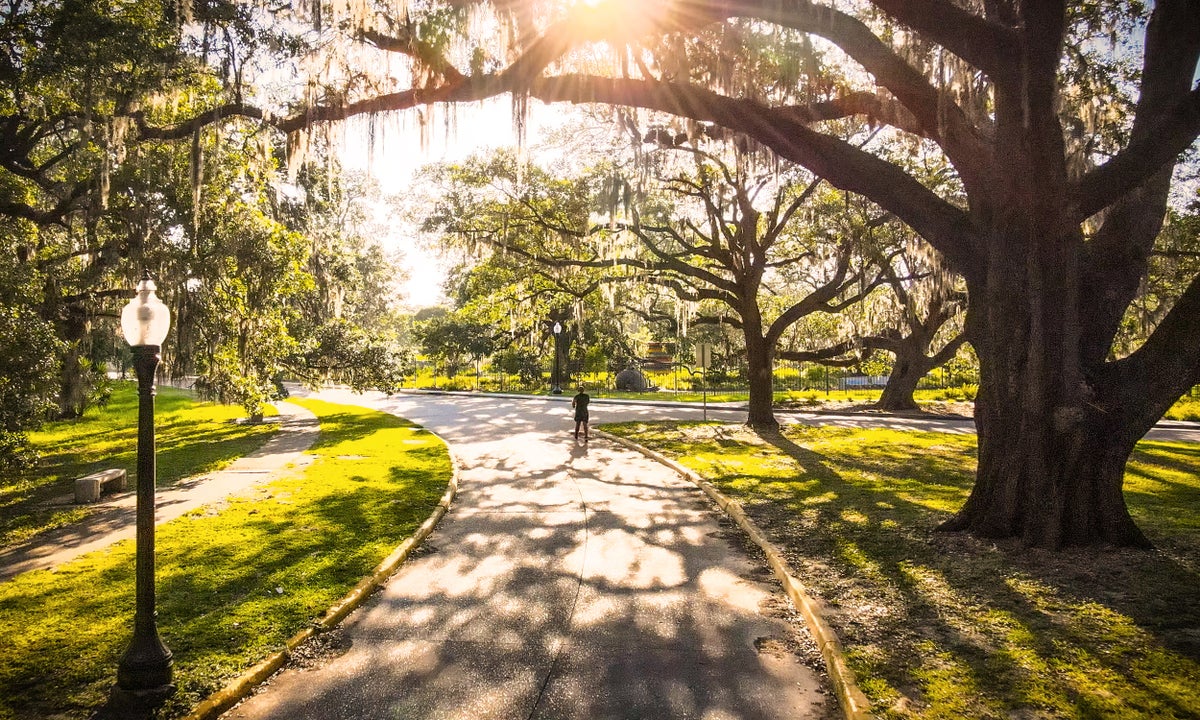
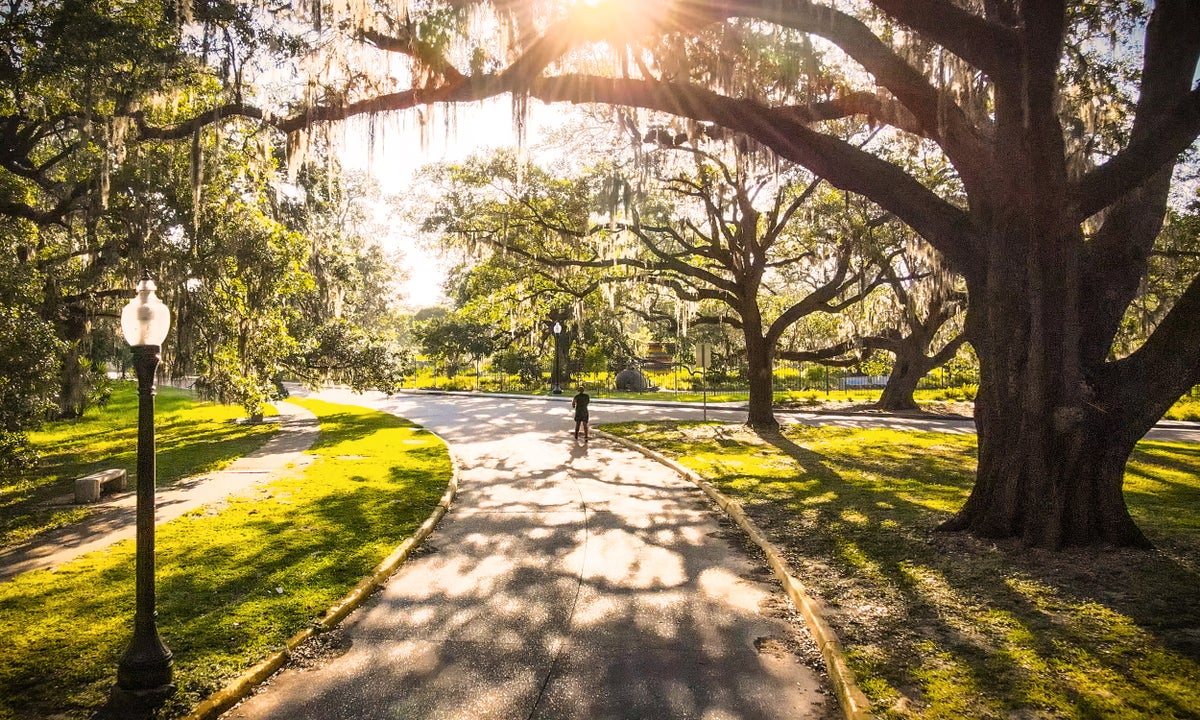
WE KNOW. YOU don’t go to New Orleans to be outside. Except you do. Bear with me.
Tourists love our open container laws. They’re not just here to drink; they’re here to drink outdoors between bars. The bachelorette party that came down during winter? They’re not just snapping selfies during dinner; they’re doing it outside, because y’all flew down from Chicago or New York or Atlanta or some other Northern igloo (everything north of I-10 might as well be the tundra), and the average March high here is 73 degrees.
“But drinking and selfies aren’t the point of being outside,”you say. I say: the point of being outside is being outside, and the weather here is pleasant enough, the local cityscape lush and green enough, that New Orleanians, hedonists to the core, make a point of living life al fresco.
We are sensory people, and said senses come alive outdoors, under the shade of live oaks that seem to emerge from the Jurassic, or within the shadow of elephant ear plants that are sometimes bigger than an actual elephant’s ear. Besides, life aggressively follows you everywhere here—ask any homeowner about their termite contract! Note the tree roots dismembering our sidewalks!—so we go outside, where we thrive, to face it head-on.
Here’s a local’s guide to where to paddle, peddle, and peel crawfish in New Orleans.
Parks and Trails
City Park
“You might wanna watch your dog bro. There’s a gator chillin’ up ahead.” That was the terse warning a jogger once gave us while walking our dog in City Park, and in many ways, it encapsulates (some of) the experience of exploring New Orleans’ biggest green space. Not that alligators are ubiquitous in the park’s 1300 acres (1.5 times bigger than Central Park, for the record); rather, so much of the park feels like an unfettered, Spanish Moss-draped basket of South Louisiana outdoors space: marsh, swamp, woods, and the largest collection of mature live oak trees in the country. Scout Island, on the north side of the park, is particularly riven through with odd trails and random stick deadfalls.
While a good chunk of the park is given over to golfing, other more manicured areas are still fascinating to wander around, including the grounds of the Sydney and Walda Besthoff Sculpture Garden, adjacent to the New Orleans Museum of Art; the live oak groves that hug Marconi Drive; and the bracken-stuffed trails that web around the frisbee golf course, where I once stumbled on a makeshift voudon shrine built into the base of a Tupelo.
Couturie Forest
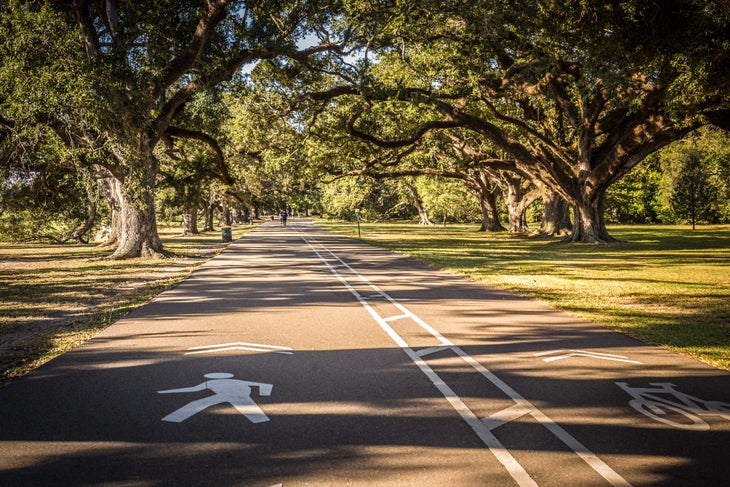
Couturie Forest is technically part of City Park, but it deserves its own entry, if only because it contains the highest point of elevation in the city of New Orleans: Laborde Mountain. Towering a colossal 27 feet above the surrounding forest, the mountain, which can take a full minute to ascend, was formed by that most New Orleanian of tectonic processes (i.e. it’s ditch fill from the construction of I-610). On top of the mountain is an engraved, stone map of New Orleans; stretching around is Couturie Forest itself, some 60 acres of mixed hardwoods and waterways. It’s the most accessible dedicated arboreal space in the city, an easy spot to drown out the city or take the kids.
Audubon Louisiana Nature Center
New Orleans East makes up 65% of the area of the city of New Orleans, while only accounting for around 20% of her population. The result: a sprawling neighborhood where the empty lots seem to outnumber the housing developments, and the roadkill is as often an alligator as a deer. But amidst said lots and open spaces are acres of marsh and flooded forests, and the Audubon Louisiana Nature Center stands apart as a place to interpret all this fecundity. Boardwalk trails zig to a marsh overlook, zagging back to a museum that pleasantly distracts the kids. As nature centers go, it’s smallish, but the nature it educates on occupies enormous swathes of the largest neighborhood in New Orleans proper.
Audubon Park
Audubon Park covers about 300 acres—less than a quarter of the size of City Park— yet it is arguably the more recognizable New Orleans park, at least to outsiders. Partly, this is because the park encompasses Audubon Zoo (popular with families) and is adjacent to Loyola and Tulane Universities (popular with kids from the coasts). Partly, it’s because the park is bounded by the iconic St Charles Avenue streetcar, which truly may be the most romantic (if not terribly efficient) mass transit system in the USA. Either way: it’s a nice park. You can throw a 1.8 mile loop around the park, spotting Ochsner Island on the way, a vital rookery for wading birds, toddle down to the Tree of Life, a 300-year old live oak that feels mystical in its dimensions, or just flaneur slowly past some of the most beautiful mansions in the American South.
Bayou St John
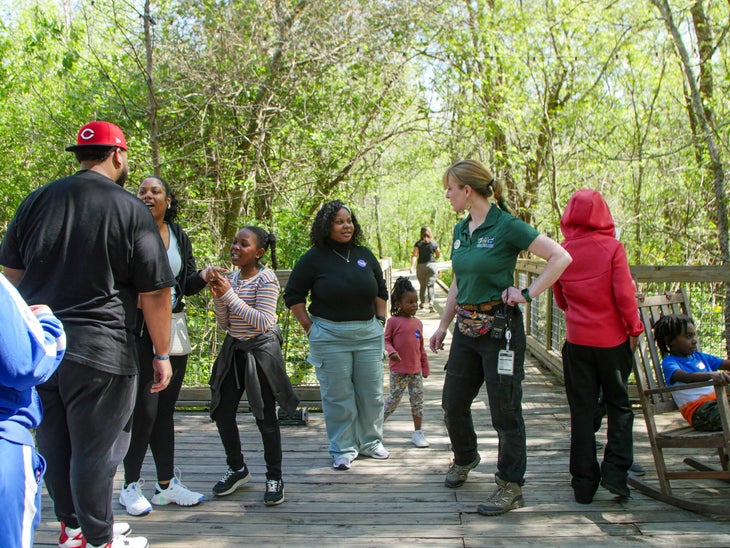
If you’re imagining a cypress swamp bayou out of a Cajun children’s book, Bayou St John may disappoint. If you want a pleasant body of water surrounded by picturesque homes and a thin membrane of grass threaded by a walking trail, you’re in luck. Bayou St John has been a vital slice of the city’s geography since before there was a New Orleans, and Native Americans congregated in a spot known as Bulbancha (Choctaw for, roughly, “place of many languages”). A portage here connected the Mississippi River to lake Pontchartrain, and the bayou itself was the site of public rituals performed by vodoun priestess Marie Laveau. These days, the rituals conducted here are music festivals or picnics (it helps that there’s an excellent po-boy spot nearby). Work off the carbs with some waterside yoga or by renting a kayak.
Sankofa Wetland Trail
It’s been 20 years since Hurricane Katrina devastated New Orleans, washing away acres of the Lower 9th Ward, among other neighborhoods. The storm was particularly damaging thanks to the erosion of the buffer of wetlands that has traditionally protected the city from rising tides. Sankofa Community Development Corporation has taken 40 acres of once blighted land, scarred by blight and neglect, and turned it into both an outdoors resource for Lower 9 residents, and a new wetland addition to the city’s flood armor. Sankofa Wetland Trail runs through here, in a space so far removed from the city’s urban core it can feel, at its best, like a time warp back to the days when all this was marsh and creek, tidal flat and cypress grove.
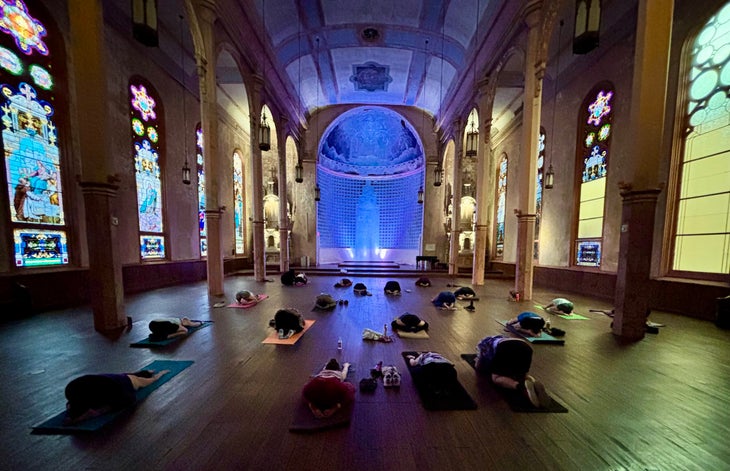
Community-Based Fitness
Move Ya Brass
If you’re gonna exercise here, do it right and shake a tailfeather while you’re burning calories. There’s fitness classes, and then there’s fitness classes that go all out to ‘90s hip-hop and bounce music at Crescent Park while ships steam up the Mississippi River. The folks at Move Ya Brass have married dance fitness to particularly New Orleanian dance genres (don’t work up a sweat; twerk up a sweat) and an even more particularly New Orleanian approach to exercise: have fun, smile, and always, come as you are.
Crescent City Riders
You’re out, at night, here in New Orleans, and then a small army of bicycles rolls by, the bikes decked out in enough glowing lights to dim the Vegas strip, while a rider straps on a stereo blasting 5th Ward Weebie. Yeah, it’s just another night in New Orleans, but it’s also an evening with the Crescent City Riders, a group of biking enthusiasts who also embrace other quintessentially New Orleanian qualities like having fun, dressing their ride in funky drip, and topping it all off with a drink after. The Riders meet on Thursday evenings at 8pm at Walter ‘Wolfman’ Washington Park (Esplanade and Mystery St); check their socials for more details.

New Orleans Boulder Lounge
Coming to New Orleans for rock climbing might feel like going to Ireland for sunny weather, but the New Orleans Boulder Lounge has, through quiet persistence and good community outreach, risen to become one of the region’s most beloved training gyms. An embrace of all levels of skill and all categories of identity, plus a corresponding tiered pricing system, has ensured this lounge has gone from an oddity to an institution on St Claude Avenue.
The Fly
In between the Audubon Zoo and the Mississippi River is a thin strip of walking paths and athletic fields dubbed ‘The Fly’ by, like, everyone. It’s probably the best place to watch the sunset in Uptown New Orleans, and a fantastic spot for having a picnic or just watching local athletics clubs get their sports on. Bring a bicycle; the Fly is an easy access point for the Mississippi River Trail, a cycling path that follows the levees that loom by North America’s biggest river.
Food and Fuel
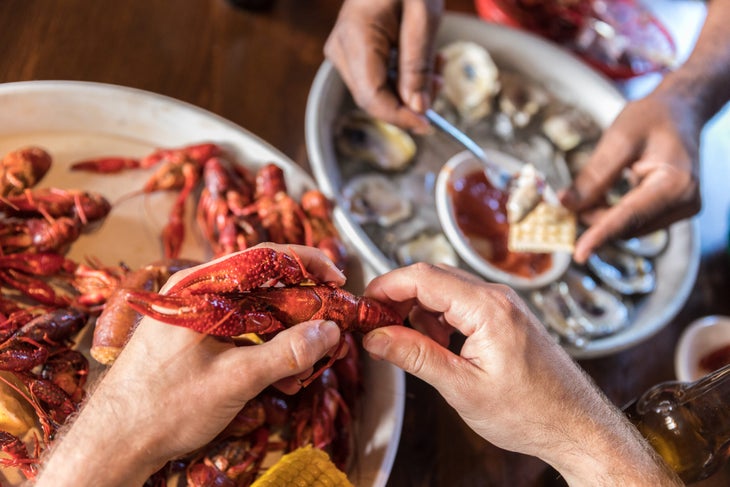
Oysters
New Orleans may not boast the wealth of cold water oysters you can find up north, but it is home to some of the best raw bars in the country. Come winter, locals flock into spots like Casamento’s, exchanging laughs and slurping dozens of oysters. But the ultimate shellfish hedonism is Pascal’s Manale, an old school bar/Italian restaurant oozing Godfather vibes, where you can knock back drinks and, during happy hour, a dozen fresh shucked oysters for $15.
Crawfish
The humble mudbug is Louisiana’s iconic crustacean, the source of much communal joy in spring. You can buy them by the pound from iconic corner spots like Cajun Seafood or Porgy’s, then enjoy them on the banks of Bayou St John or The Fly. Or head to Frankie & Johnny’s, which first opened in 1942 and, as far as we can tell, hasn’t updated its interior since. No worries; the crawfish are delicious and the vibe is pure friendly old school New Orleans.
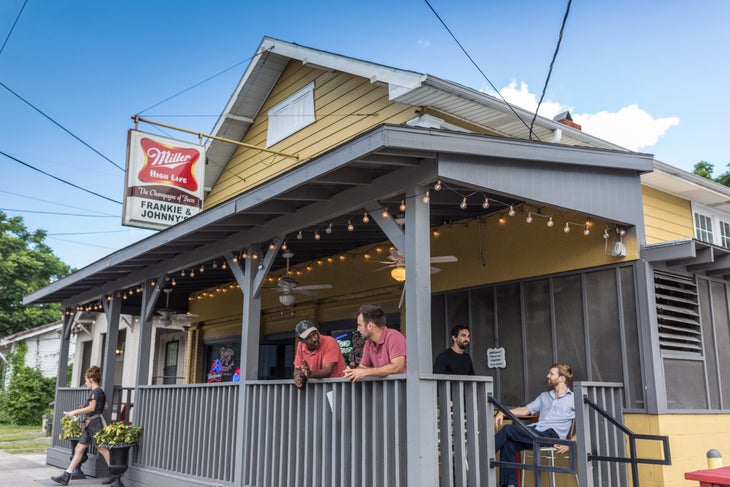
Bar Food
We all know New Orleans has excellent bars; what tourists often don’t realize is how much locals like to eat well while throwing a drink back. Revel is gaining justifiable fame for throwing together some very fine cocktails served alongside one of the most legendary burgers in the city. Need something lighter? Head to Anna’s, which straddles the line between bohemian arts enclave and hipster hangout, and take a tour through a menu of delicious small plates.
Ice Cream
It gets hot here. If you’ve worked up that sweat, relieve yourself with some cold goodness. And yes, the iconic frozen New Orleans dessert is the snowball, but we want to give some love to local ice cream parlors that are as much a cherished memory for generations of Crescent city kids. Lucy Boone brings the chill with small batch flavors including their unsurpassable Key Lime Pie, while Creole Creamery wows with fantastically innovative seasonal menus – their Popeye’s fried chicken and biscuit cone may sound strange, but it sells out quickly for a reason.
Where to Stay in New Orleans
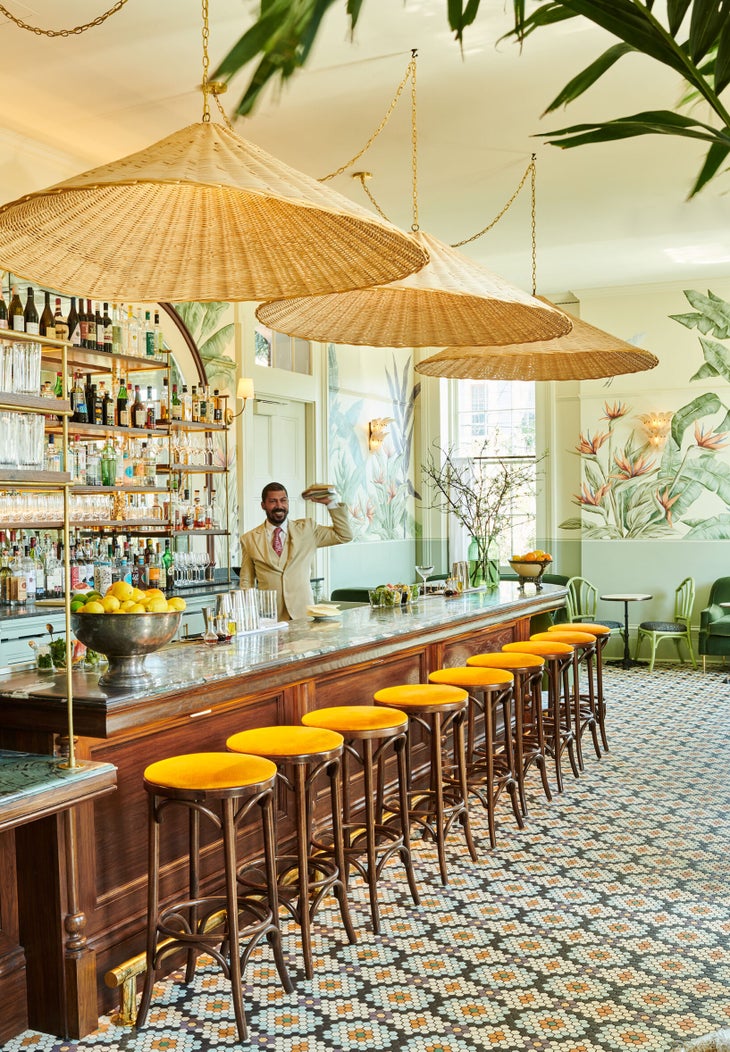
Hotel St Vincent
Straddling that fine line between luxe-light and artist colony, Hotel St Vincent bounces with all the controlled chaos and creativity of the best New Orleans institutions. Weekend flea markets for local artisans and a pool that attracts all the pretty folks are set near an art-deco-meets-art-gallery interior and rooms that are a positive riot of rainbow palettes.
The Pontchartrain
History towers over history at this Garden District Hotel, 14 floors of flapper era stateliness adjacent to St Charles Avenue, itself one of the most beautiful streets in the country, all live oaks and Oz-emerald streetcars. The Pontchartrain building dates back to 1927, but there’s all the standard contemporary hotel amenities, plus a jazz bar, a hotel rooftop bar, and a well-regarded restaurant dripping with framed pictures and contemporary takes on NOLA gastronomy.
The post Beyond Bourbon Street, a Local’s Guide to Outdoor Adventure in New Orleans appeared first on Outside Online.