









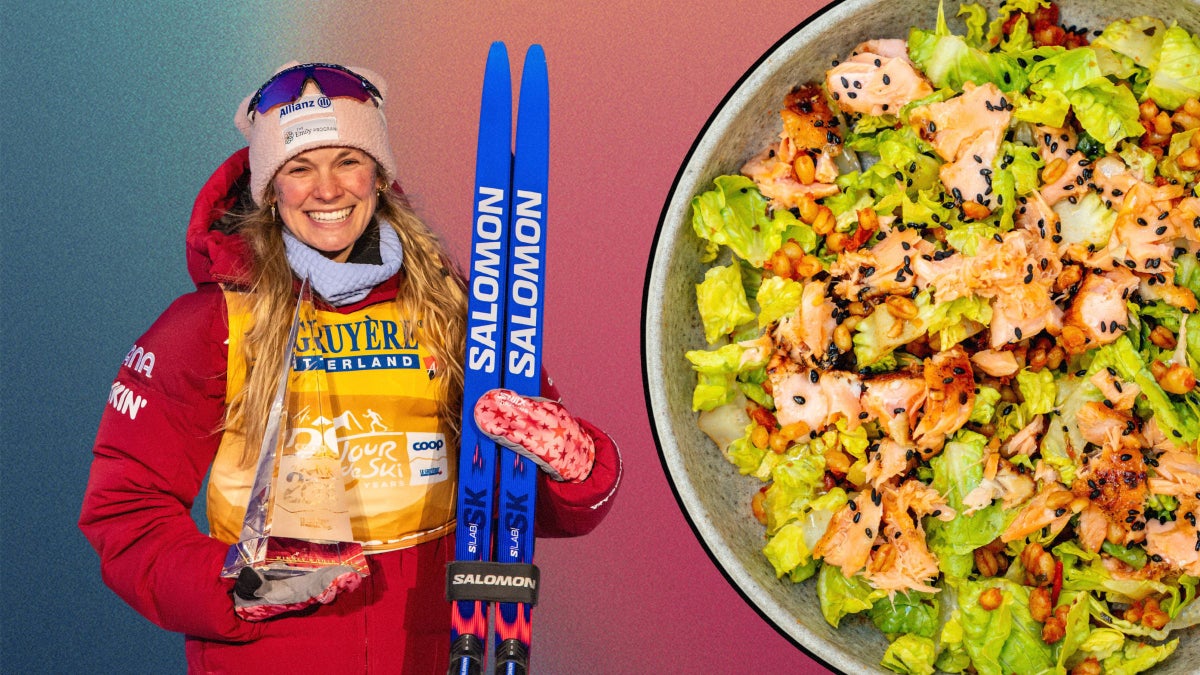
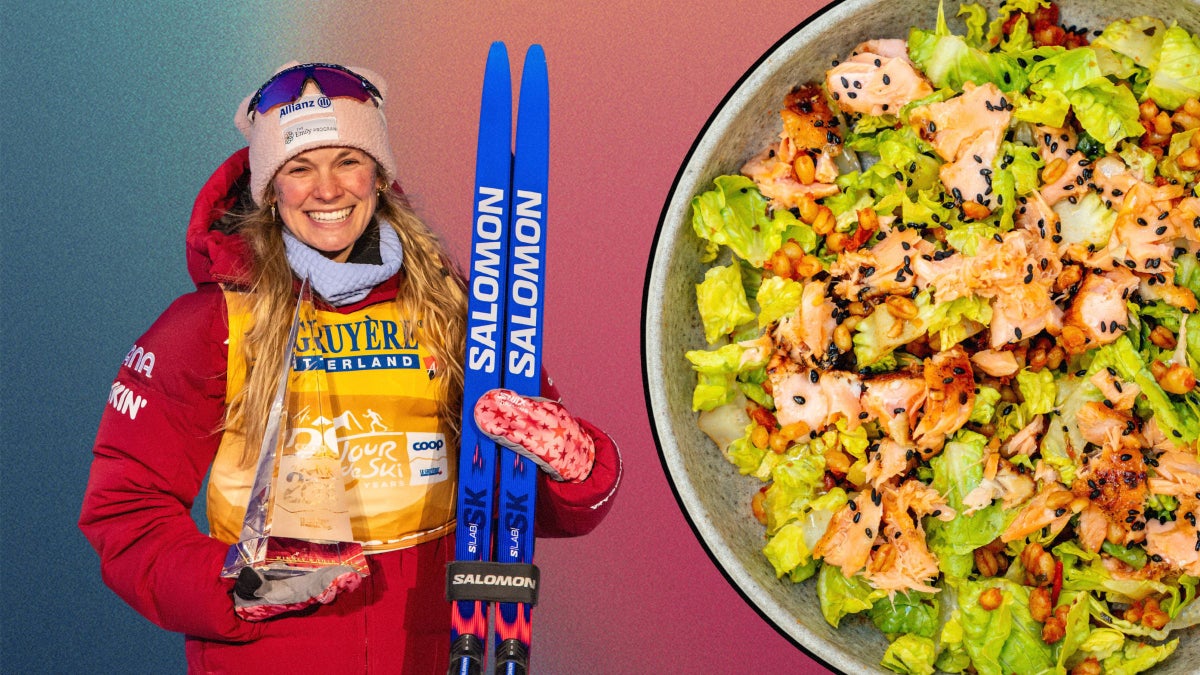
Jessie Diggins started skiing at age three. Her early interest in the sport paid off as she’s now considered the best cross-country skier in the world. Her talents have earned her three Olympic and seven World Championship medals.
She came in eighth place in the women’s 20-kilometer skiathlon event this past Saturday, February 7, at the Milano-Cortina Winter Olympics—her final Games before she retires.
However, her work is not done yet. She’ll be back at it again on Tuesday, February 10, for the women’s cross-country skiing event.
Considering just how much time and effort it takes to be the best, I was curious about what she eats to stay energized and ready. I learned that, after intense workouts, she prioritizes recovery and typically returns to a single dinner.
How Jessie Diggins Refuels and Recovers
Her training schedule has been intense.
“I’m training twice a day, six days a week. It’s super fun, but it’s also really demanding,” Diggins told Outside. “And for cross-country skiing, the name of the game is getting enough fuel and nutrients in your body.”
Several times a week, Diggins heats up her oven to make what she calls miso salmon. She gravitates toward this dish because she’s a self-proclaimed “big seafood person” and says the omega-3 oils in the salmon help her feel good.
The recipe is simple and fast. She makes a glaze—made of honey, Dijon mustard, white miso paste, and butter—to brush over the fish. The oven broiler handles the rest, caramelizing the sauce while the salmon cooks.
To build her bowl, Diggins adds whichever vegetables happen to be in her kitchen. During our interview, her garden was still producing plenty of broccoli and kale, so she tossed those in. She also adds farro, her favorite grain, and whisks up a vinaigrette with olive oil and maple syrup. Anything else lingering in the fridge or pantry, like pumpkin seeds, sun-dried tomatoes, and goat cheese, might get added too.
“I try to see food as not just fuel, but also as fun,” says Diggins.
And I couldn’t agree more. Miso ranks high on my own list of fun ingredients. The fermented Japanese paste appears regularly in my cooking, whether stirred into a cacio e pepe sauce or melted into chicken soup. So I couldn’t wait to try Diggins’ salmon grain bowl. More importantly, I wanted to see if this recovery meal could help fuel my own efforts to spend more time outdoors and move with more energy.
I also reached out to a few nutrition experts to weigh in on the meal’s recovery potential. Read on for their thoughts, and my honest take on the taste of this dish.
How to Make Jessie Diggins’ Miso Salmon Grain Bowl
I turned my oven to broil and gave the recipe a go.
Serving: 1
Salmon and Glaze Ingredients
- 1 (6-ounce) skin-on or skinless salmon fillet, patted dry
- 1 tablespoon white miso paste
- 1 tablespoon honey
- 1 tablespoon Dijon mustard
- 1 tablespoon butter, softened
Maple Vinaigrette Ingredients
- 2 tablespoons olive oil
- 1 tablespoon maple syrup
- 1 teaspoon apple cider vinegar
- 1 teaspoon lemon juice
- Salt and pepper, to taste
Salad Mix-ins
- Pre-cooked farro
- Crunchy salad greens
- Seasonal vegetables (optional)
- Nuts or seeds (optional)
Recipe
- Preheat your oven to the broil setting.
- Pat the salmon filet dry with a paper towel. This will help the glaze stick.
- Make the glaze: In a small bowl, mix together the white miso paste, honey, Dijon mustard, and softened butter until smooth.
- Spread the glaze evenly over the top of the salmon using your hands or a silicone brush. Place the filet skin-side down on a parchment-lined sheet pan.
- Broil the salmon and, depending on the filet’s thickness, check it at the five-minute mark. (You’re aiming for an internal temperature of 125 degrees Fahrenheit for medium-rare, and to be on the safe side, the USDA recommends an internal temperature of 145 degrees Fahenheit for fish.)
- Remove the cooked salmon from the oven and let it rest for a few minutes.
- Make the vinaigrette: In a mason jar, combine the olive oil, maple syrup, apple cider vinegar, lemon juice, salt, and pepper. Shake well.
- Assemble your bowl: In a serving bowl, layer one cup of salad greens, one cup of cooked farro, and an optional topping of seasonal veggies or seeds and nuts. Top the grain bowl with the salmon filet, either whole or flaked into pieces. Then drizzle the salad with the vinaigrette and enjoy.
The Verdict: Earthy and Energizing
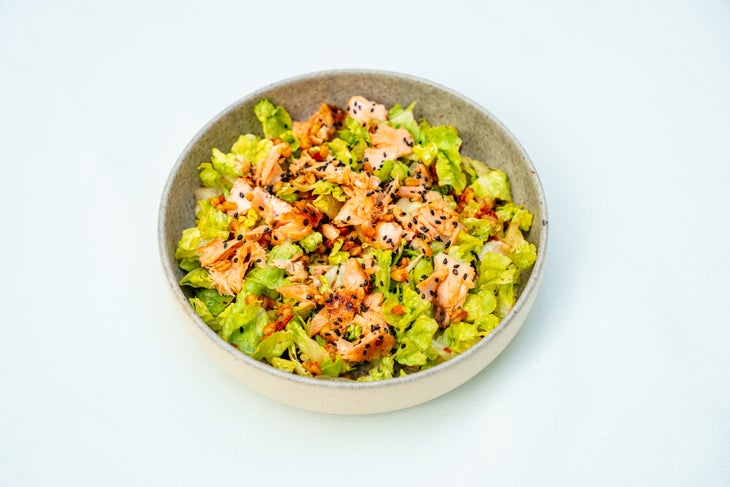
Let’s start with the flavor. The miso hits a sweet, salty, and earthy balance that complements the rich, buttery salmon. The texture was hearty, and the variety of flavors kept each bite interesting. I tossed in some romaine I had sitting in the fridge, which added a crisp, refreshing crunch. For the grains, I played around (and saved time) with microwaveable farro and found a beet-and-spinach farro at my grocery store.
After eating this miso salmon grain bowl, I woke up feeling energized and ready to take on my daily walks by the beach.
How to Get the Most Out of This Meal, According to Nutritionists
“I often encourage the active clients I work with to view dinner as part of their recovery, especially after an intense training session,” Leisan Echols, a registered dietitian and exercise physiologist based in New York City, New York, told Outside. A grain bowl like this provides the right balance of nutrients to support muscle repair and replenish glycogen after exercise, says Echols.
Starting with the farro, this grain is a powerhouse, says Echols. This ancient grain is rich in protein, fiber, and vitamins (such as magnesium), which can aid digestion and support heart health.
“The salad greens add phytonutrients and antioxidants, while the olive oil vinaigrette adds heart-healthy fats,” Claire Rifkin, a registered dietitian based in New York City, said to Outside.
And the salmon? In just one filet, you’ll get around 40 grams of protein, a nutrient crucial for muscle growth and repair. The omega-3 oil it contains offers anti-inflammatory benefits, which may help reduce post-exercise soreness and keep you moving, day after day, says Echols.
The meal already strikes a balance, but for athletes focused on maximizing recovery, adding a source of calcium and vitamin D (like a yogurt-based sauce or a fortified beverage such as soy or oat milk) can offer extra benefits, says Rifkin. “Vitamin D in particular supports muscle strength and contraction speed, and deficiency is pretty common in the U.S., so it’s especially important for athletes to make sure they’re getting enough through food or supplementation,” she says.
For endurance athletes, these details can significantly affect how well the body recovers and performs in back-to-back sessions, says Echols. “The best recovery meals are the ones that match the effort and evolve with your training, not apart from it.
Are you planning to watch the cross-country ski event? If so, let us know in the comments and tell us what you think of this recipe.
The post Olympic Cross-Country Skier Jessie Diggins Shares Her Favorite Recovery Meal appeared first on Outside Online.