








In the chaos of 2020, Minneapolis got angry and brave and tired and jittery (Was that shots or fireworks? Unclear, check the Signal chat). Many of us got comfortable with the idea of direct giving (Just, like, to a Venmo account? Yep. How do you deduct it? Can’t). Under nightly curfews and circling helicopters, the city was flooded with cortisol, and residents began to organize themselves in small groups to try to stay safe, register dissent, and figure out what the hell was going on.
Again in 2026, Minneapolis is the stitch in the center of the bullseye.
Again in 2026, Minneapolis is the stitch in the center of the bullseye—the focal point of national conversations about the unchecked use of force by state agents and the swells of protests against it. The enormous resistance that the city has mounted against Immigration and Customs Enforcement’s Operation Metro Surge was built on those foundations laid after the murder of George Floyd.
I grew up in South Minneapolis. I travel a lot as a touring musician, but still stay in a rented apartment in Uptown, not too far from where George Floyd, Renée Good, and Alex Pretti were killed. As the footage from the ground went around the world, friends and I received words of encouragement from Northern Ireland, Turkey, and Iran—keep marching, keep fighting. Before falling asleep at night, I got verklempt watching protesters in other American cities name-check Minnesota on their signs and in their chants, as a model to emulate. In that spirit, here is a short list of best practices to help your town respond quickly, should the need arise. It’s not exhaustive or absolute, and it’s definitely just not mine, but the product of a collective intelligence that’s coalesced in a city under duress.
The Minneapolis Model
Actionable steps today to be ready to resist tomorrow:
1. Mutual aid networks are made of neighbors who know each other. Ask to borrow a screwdriver from the new family in the apartment down the hall—find any excuse to meet your neighbors and trade numbers.
These will be the people in the encrypted chat.
2. Small businesses don’t have shareholders to answer to or boards to consult, so they can act on conscience quickly. Shop local when you can; visit immigrant-owned restaurants; chat at the register.
These will be the drop sites for food and supplies.
3. In a crisis, information must be shared quickly. Curate your online feeds now by following at least a few local non-profits, neighborhood groups, activists, and local reporters.
These will be your trusted sources to mobilize protests quickly and warn of new dangers to avoid.
4. Consider how the role you play in daily life can be useful in a crisis. Graphic designers can share signs to post in windows. Cooks can make soup to warm protesters. People with minivans can take cans to the food drive and children to school. The brewer’s empty beer boxes can be collapsed to make signs for the march. The affluent can donate money and ask their friends to do the same. Take stock of your personal skillset and assets.
These will be the resources that you can leverage without instruction.
5. Your community includes the people that you don’t like. Engage in conflict responsibly. Keep public arguments issues-focused, avoid trolling. The pay-what-you-can vegan cafe might not have much to say to the gun club during ordinary circumstances, yet find themselves partnered in exceptional times.
These will be the members of your coalition, even if they are not your friends.
6. The circumstances that call for a surge of public resistance are necessarily confusing, infuriating, painful, and surreal. You will be working tired, texting with shaking hands, possibly crying in the car. It’s easy to get spun up past the point of being useful to anybody. Check in on people you’re closest to—including yourself. Eat a vegetable, stretch your hamstrings, maybe get together with the crew for a few small beers.
This will be the rule that is most impossible to follow.
Because it all comes in too quickly to be filed in the mind. The local reporter will be tear gassed, a fellow musician will be tear gassed, a baby will be tear gassed. A Somali friend tells of rumors of denaturalization, wherein citizenship will be revoked. The mayor says agents have started going door to door, asking where the Asian people live. Cars are left running on the streets after their drivers have been pulled out and detained. Volunteers delivering food to families in hiding will be told not to use their phones to navigate—better to write the addresses on paper and if pulled over, eat it. There will be a video. And then another. There will be a pink jacket and a rabbit-eared hat.
Your nervous system feels like a toaster dropped into the bath.
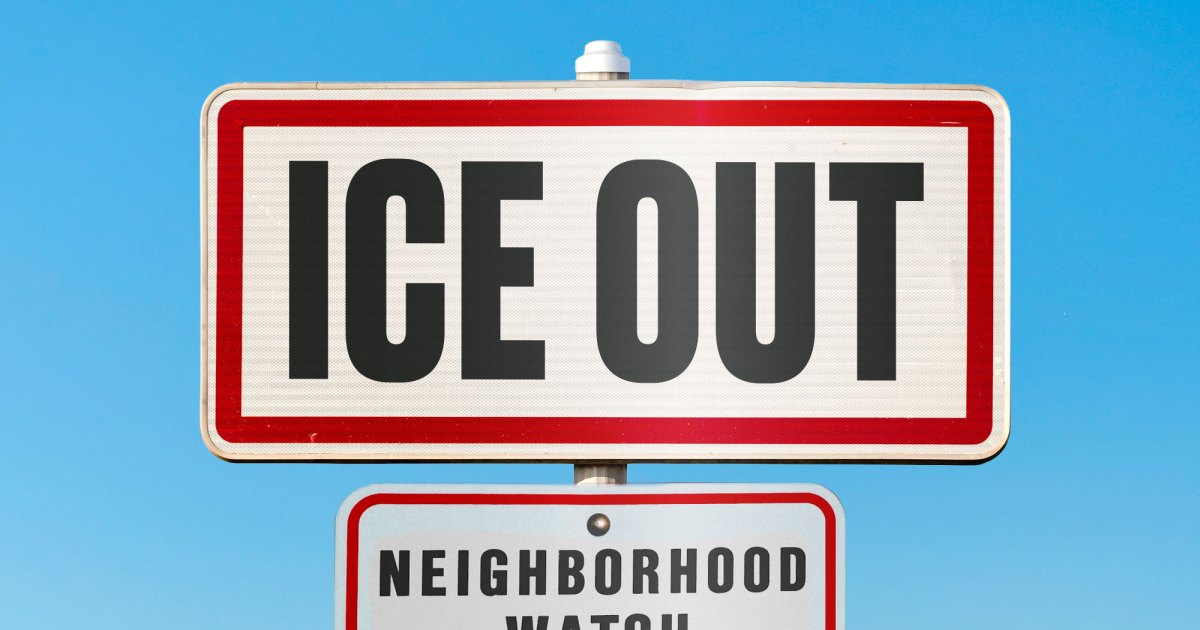
So everyone gets a whistle to bring to the gun fight. They’re 3-D printed now and people wear them around their necks. At the big march, a man’s eyelashes freeze together. Friends volunteer to watch strangers’ kids. The sex shop receives so many donations on the sales floor that employees refer to it as Diaper Mountain. People place candles on the frozen surface of Lake Nokomis to spell ICE OUT in the flight path into MSP.
Yours may be the easiest part to play—blue passport, light skin, some folding money in your pocket. Still, your nervous system feels like a toaster dropped into the bath. The loud dinging says you’ve forgotten to buckle your seatbelt again and this is no time for unforced errors—everyone must cultivate fortitude alongside their resolve. At home, your pee is much too yellow, so you drink a full glass of water standing at the sink. Brush your teeth, you need to keep those. Go to bed without your phone beside you on the pillow. But then a remembered errand has you up again and putting on your shoes to return the screwdriver to the neighbor down the hall; your knuckles hit the door and your heart knocks against your sternum, hoping there is still someone safe inside to hear it.
The arc of history is not self-bending, but mittened hands with simple tools are working on the moral side.