







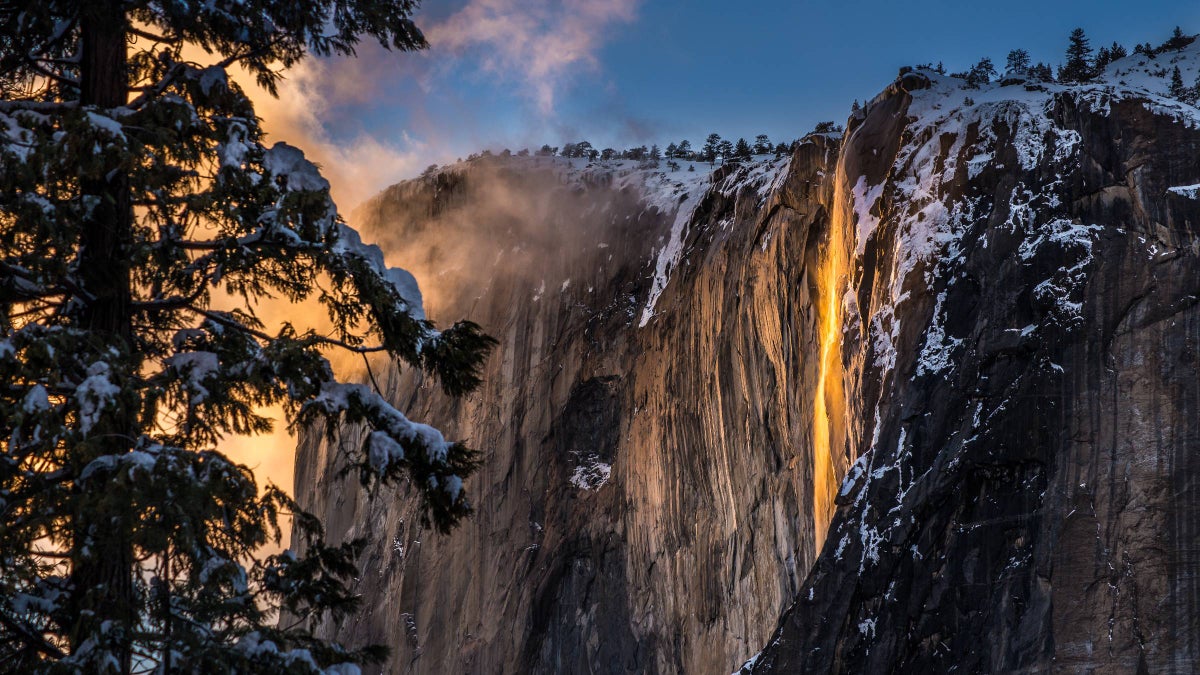
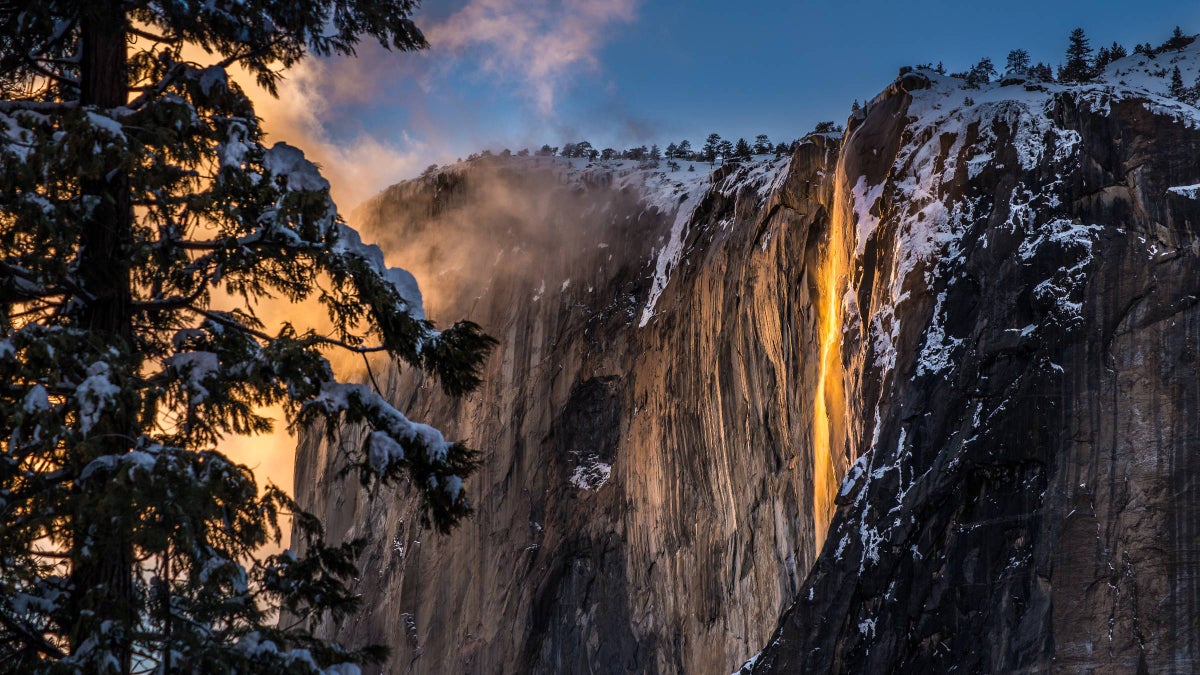
Timing is everything. Just ask anyone who invested in Apple in the ’70s, or the photographer who wakes up before dawn to catch a glimpse of an elk meandering through a meadow before the sun gets too high in the sky. Any visit to a national park can be memorable, but there are certain adventures inside our parks that can only be experienced if you have impeccable timing. Conditions have to align perfectly for these experiences, whether it’s the sun setting at just the right angle against a massive rock wall to create the illusion of fire, or the perfect storm of heavy snowfall followed by warm spring temperatures to bring on the tumultuous character of a certain river.
Here are eight bucket list adventures inside our national parks that can only be experienced during a brief window each year. Get out your calendar and plot your next trip.
See Wolves in the Wild in Yellowstone National Park
When to Go: February
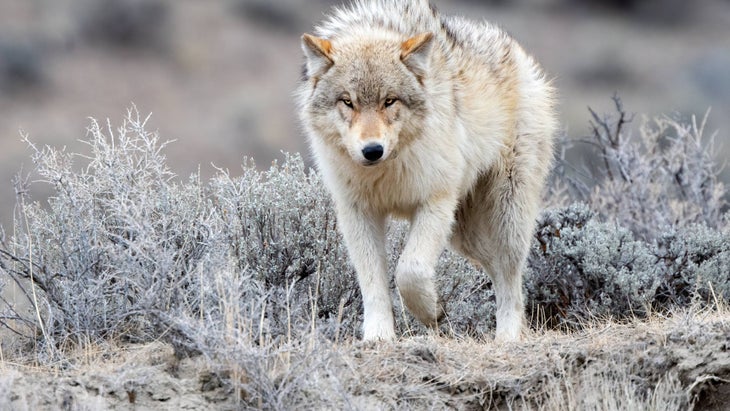
Seeing one of the park system’s iconic wild animals, such as a bear or an elk, is exciting. but seeing a gray wolf in the wild is next level. There are roughly 100 of these elusive canines living inside the 2.2-million-acre Yellowstone National Park. That might sound like you’re searching for a needle in a hay stack, but the park offers wildlife-lovers one of the best opportunities to see wolves in the wild. Your chances increase drastically in the winter, when the colder temperatures allow the wolves to hunt the valleys of the park during the day, instead of just at dawn or dusk.
In February, your chances of seeing wolves here increase even more because these canines will be particularly active as they seek each other out during their mating season. Also, Yellowstone’s snowy landscape makes it easier to spot the wolves in the distance, as their darker fur contrasts with the white backdrop. Yellowstone’s Lamar Valley, which has been dubbed “America’s Serengeti” due to its prevalence of wildlife, is your best bet for spotting wolves, regardless of the time of year. If you want the best chances, sign up for a multi-day wildlife safari, designed specifically for capturing a sight of the wolves in Yellowstone’s vast backcountry.
Catch a Waterfall on Fire in Yosemite National Park
When to Go: February
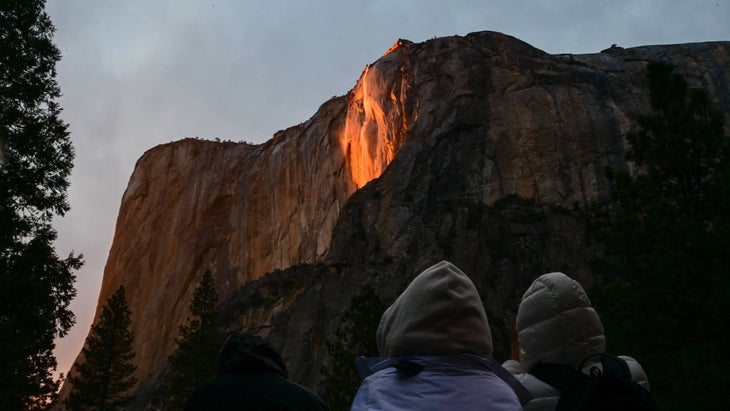
Yosemite National Park is known for its vast granite domes and lush waterfalls. For 50 weeks of the year, Horsetail Falls is not the most robust or photogenic of the lot. It’s tall, dropping 2,100 feet over the face of El Capitan, but there are more tumultuous waterfalls that attract bigger crowds. For two weeks during the middle of February every year, Horsetail Falls turns into an absolute spectacle, as the setting sun bounces light off of El Capitan, reflecting in the falling water at the end of each day, giving off the impression that the waterfall is on fire. The phenomenon is known as “Firefall,” and it draws thousands of visitors every winter. The quality of the Firefall is dependent on certain conditions—plenty of snow to feed the waterfall, but also warm daytime temperatures to melt the snow. During good winters, the waterfall begins to glow about 15 minutes before the sun sets each day. Park at the Yosemite Falls parking area and walk 1.5 miles to the El Capitan viewing area. For the fist time since 2021, you no longer need to grab a reservation if you want to see the Firefall on a weekend. Expect a lot of crowds and heavy traffic though.
Bike Going-to-the-Sun Road Without Cars in Glacier National Park
When to Go: Late Spring
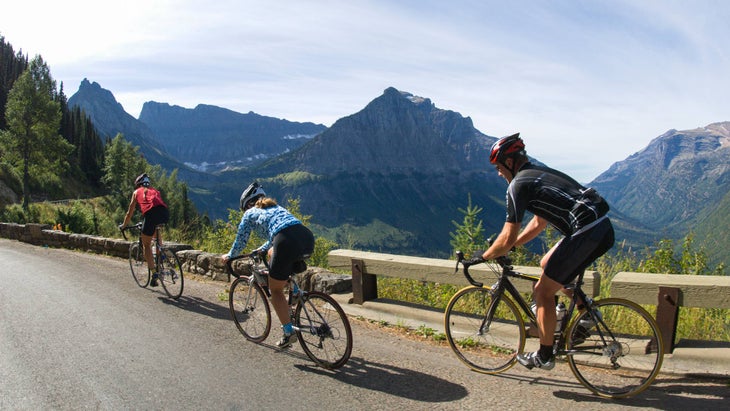
Going-to-the-Sun Road, inside Glacier National Park, is one of the most stunning scenic highways in the entire national park system. The 50-mile long two-lane blacktop was built specifically to take in the views of Glacier National Park, offering long-range peaks at glaciers, craggy summits, and valleys full of wildflower-choked meadows. It’s not just the long range views that are dramatic. Stone arches allow the road to traverse seasonal streams and waterfalls, which are typically robust during late spring with the snowmelt. The Weeping Wall, where waterfalls drop directly to the side of the road, is the most famous of these seasonal delights.
Going-to-the-Sun is so popular that visitors now need a reservation to drive the road during the busy summer months (although, they are reconsidering doing away with the vehicle reservation system). Peddling Going-to-the-Sun is also a bucket list adventure for road cyclists looking to tackle the 3,000-foot climb while soaking up the views. Technically, you can still peddle this scenic route during the summer, but it’s a climb that’s rife with non-stop traffic. Instead, cycle Going-to-the-Sun during a brief window in late spring, when the west side of the road is closed to vehicles while crews plow snow along the road.
While no cars are allowed on the road during this time, cyclists and hikers are given access during a window that usually lasts for a few weeks starting in late May. It’s a 30-mile ride to the peak of the road at Logan Pass that gains 3,000 feet of elevation. Have a picnic, enjoy the view, then turn around and enjoy a 30-mile descent back to the entrance gate.
Paddle the Biggest Whitewater in Canyonlands National Park
When to Go: Late Spring
Most visitors enjoy Canyonlands National Park’s signature canyons on foot, but paddling the Colorado River gives you a chance to experience some of the most remote chasms inside the park in solitude. Cataract Canyon, a 14-mile long gorge that sits below the junction where the Green River meets the Colorado, is the signature whitewater experience inside Canyonlands. Rafters typically put in outside of the park and paddle through the mild water of Meander Canyon until the Colorado River joins the Green River to form Cataract Canyon proper. Boaters spend the better part of two days navigating this stretch of river, which offers one of the most scenic backcountry whitewater rafting adventures in the entire national park system. The majority of boaters raft Cataract Canyon in late summer or fall, when the water is more mild, bumping through technical class III rapids between exposed rocks. But if you’re looking for the wildest adventure possible, time your rafting trip to coincide with peak snowmelt flows, which typically pick up in late May and only last for a few weeks.
During this brief window, Cataract Canyon offers some of the biggest whitewater in the entire Southwest U.S., with massive class IV-V waves stretching for miles at a time. Keep an eye on the Colorado Basin River Forecast Center, which forecasts flows year round. Unless you’re experienced in backcountry whitewater, go with a guide, which will eliminate all of the logistical questions, like where to camp and how to access breathtaking hikes.
See Synchronous Fireflies in Great Smoky Mountains National Park
When to Go: May and June
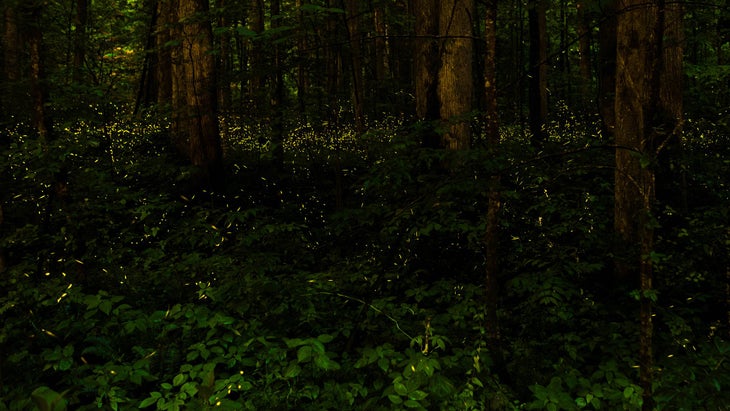
Fireflies are one of the most charming aspects of summer in the South. I can remember chasing their pinpoints of light when I was a kid growing up in Georgia. The beetles light up their abdomens as part of their annual mating ritual. You can find the bioluminescent creatures throughout the Eastern U.S., but there’s a species of the beetle that lives in Great Smoky Mountains National Park that actually synchronize their light show.
Imagine thousands of lightning bugs shining at the same time, emitting a pattern of five to eight flashes followed by a pause for several seconds before the flashing starts again. It’s a phenomenon that can only be seen in a few places across the globe. The largest concentration of these synchronous fireflies is found in Elkmont, a broad valley that used to be the site of a logging community and is now home to a large campground. Mating season for fireflies typically lasts two to three weeks a year in May and June. Scientists believe environmental factors like weather influence the timing of the display, so the exact dates change every year.
Keep an eye on GSMNP’s dedicated page for synchronous fireflies to find out the dates for 2026. You’ll also need to sign up for a lottery for your chance to see these creatures inside the park. The immense popularity of the phenomenon has led the park to close Elkmont to outside traffic and run shuttles into the area during peak firefly mating season.
Watch Fat Bears in Katmai National Park
When to Go: July
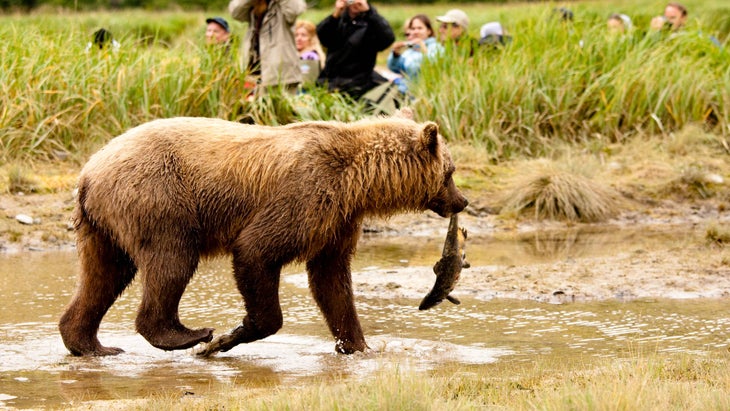
Brown bears are the largest, most recognizable species found in our national park system, and Katmai National Park, in Alaska, is ground zero for the massive mammals. The large bears thrive inside the four-million-acre park because the landscape is rife with salmon-rich waters. More than 2,000 bears are estimated to be living and hunting inside Katmai, making it one of the best places to spot the creatures in the entire world. Show up in July, during the bears’ peak salmon-fishing season when they’re fattening up for winter, and you’ll have a great chance of seeing the bears hunting the park’s rivers.
Brooks Falls, a river-wide drop along the Brooks River between Brooks Lake and Naknek Lake, often attracts the highest concentration of bears during this time of year. The large animals can be seen standing at the head of the falls, catching the migrating salmon in their mouths as the fish leap upstream. The spot has proven to be so successful for wildlife watchers, that a webcam has been set up so everyone can capture the action from the safety of their homes. But there’s nothing like seeing a large predator in person—from a safe distance. Brooks Camp has viewing platforms that offer a great view from a safe perch.
Climb an Iconic Peak in Grand Teton National Park
When to Go: Late Summer
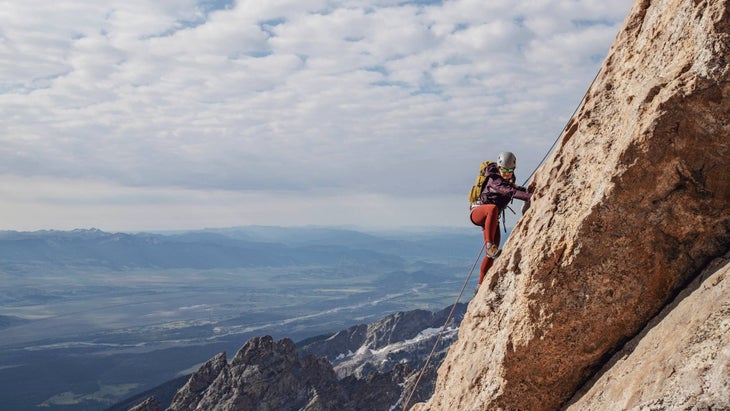
Grant Teton (aka The Grand) isn’t the tallest mountain in the U.S. by any means, but it is one of the most striking, and it has held a place in American alpinism for decades. The 13,775-foot Grand Teton, which sits inside Grand Teton National Park, has served as the proving ground for many of our most prolific mountaineers. There are people who summit Grand Teton in the winter, but I’m not one of them. My group got turned around one pitch shy of the summit in October because the ice was too sketchy. That’s the trick with summiting a mountain; even a relatively accessible one like the sub-14K Grand Teton requires perfect timing. Climbing The Grand is an adventure that begins with a seven-mile approach hike that gains more than 4,000 feet to the saddle below the summit. And then the fun really begins.
From the saddle, you have another two mile push to the peak that gains 2,700 more feet and requires technical climbing and gear. To maximize your chances for success, you have to time your summit bid for July or August, when the snow and ice from the previous winter has melted, but before temperatures start to drop in September and fresh snow begins to fall. Summiting The Grand in a day is definitely a thing, but you’ll need to start in the dark and you’ll likely finish in the dark too. Most mortals consider this a two to three day excursion. You’ll need a backcountry permit for camping, and as with any technical endeavor, going with a guide is always a good idea.
Hunt for Gold in North Cascades National Park
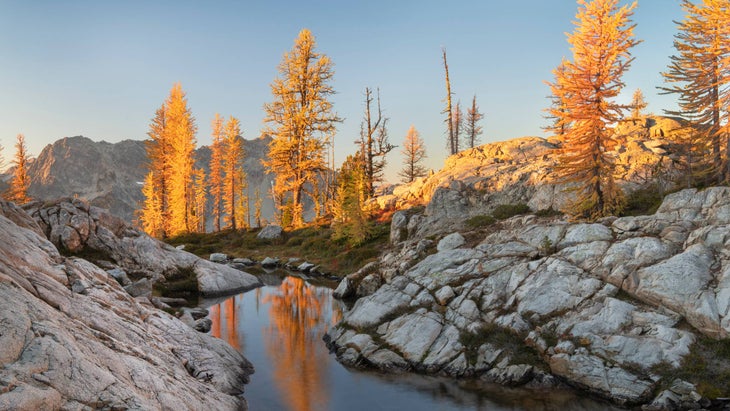
When to Go: Late September
Fall foliage is spectacular in large part because it’s fleeting. The sense of success I feel when I time an adventure for peak fall foliage is overwhelming. And that’s just when the oaks are popping in my local forest. Larch season is on a whole different level. The larch, sometimes called tamarack, is the only deciduous conifer that changes color in the fall. It looks like an evergreen with soft green needles most of the year, but towards the end of September, it turns to a shimmering shade of gold unlike anything else in the forest.
The Canadian Rockies are ground zero for larch, and Banff has an entire valley named after the tree, but you don’t have to leave the U.S. to strike gold. North Cascades National Park has vast stands of these trees, which pop brightly against the park’s palate of dark evergreen forest and snowcapped peaks. You can see them from the comfort of your car at Washington Pass Overlook, along the North Cascades Highway, with a view of a narrow valley that’s covered in the trees, turning gold at the higher elevations of the slopes first. Or hike Blue Lake Trail, a 4.5-mile out and back that leads to a forest of larch surrounding the aforementioned lake. Keep an eye out for mountain goats, too.
Graham Averill is Outside magazine’s national parks columnist. He often dreams of cycling iconic national park scenic highways without traffic. He recently wrote about the best hot springs near winter adventures.
The post Bucket List National Park Adventures That Require Impeccable Timing appeared first on Outside Online.