








What You Should Know
- The Report: Humana’s newly released Value-Based Care By the Numbers Report, reveals that Medicare Advantage members in value-based care (VBC) arrangements are seeing significantly better outcomes than those in traditional models.
- The Data: The impact is measurable and massive: VBC patients experienced 24.3% fewer hospital admissions and 13.4% fewer emergency room visits in 2024.
- The Shift: The report validates the industry’s transition from “reactive” fee-for-service medicine to “proactive” team-based care, proving that more time with primary care doctors leads to less time in the hospital.
The Death of the “Reactive” Model
The core philosophy of Value-Based Care (VBC) is shifting the clinician’s role from reactive to proactive. Instead of waiting for a catastrophic event, care teams are incentivized to manage health holistically.
According to Dr. Alex Ding, Humana’s Deputy Chief Medical Officer, this model allows doctors to “see the whole patient — not just the chart.” The report highlights that this structural shift solves the “hamster wheel” problem of clinician burnout. By prioritizing patient health outcomes over patient volume, VBC improves practice sustainability and allows doctors to spend more time with patients—a critical factor in effective preventive care.
“Value-based care is no longer an aspiration – it’s a necessity,” said George Renaudin, Humana’s Insurance President. “Insurers, providers and clinicians must work together to accelerate adoption.”
24.3% Fewer Admissions
The most compelling argument in Humana’s report is the “Hospital Exodus.”
When care is proactive, the need for acute intervention collapses. Humana’s 2024 analysis compared Medicare Advantage members in VBC arrangements against benchmarks, revealing:
- 24.3% fewer inpatient admissions compared to Original Medicare.
- 13.4% fewer emergency department visits compared to non-VBC Medicare Advantage members.
- 7.6% fewer admissions generally for those treated by value-based clinicians.
This data suggests that VBC acts as a firewall against the most expensive components of healthcare. By catching chronic issues early—through increased eye exams for diabetics and higher statin adherence for cardiovascular patients—the system avoids the crash.
The “Senior-Focused” Engine
The engine driving these results appears to be a reimagined primary care relationship. Research cited by Humana indicates that seniors in these arrangements aren’t seeing their doctors less; they are seeing them more. Patients with senior-focused primary care providers experienced 20% more primary care visits per year and 6% more regularly scheduled visits.
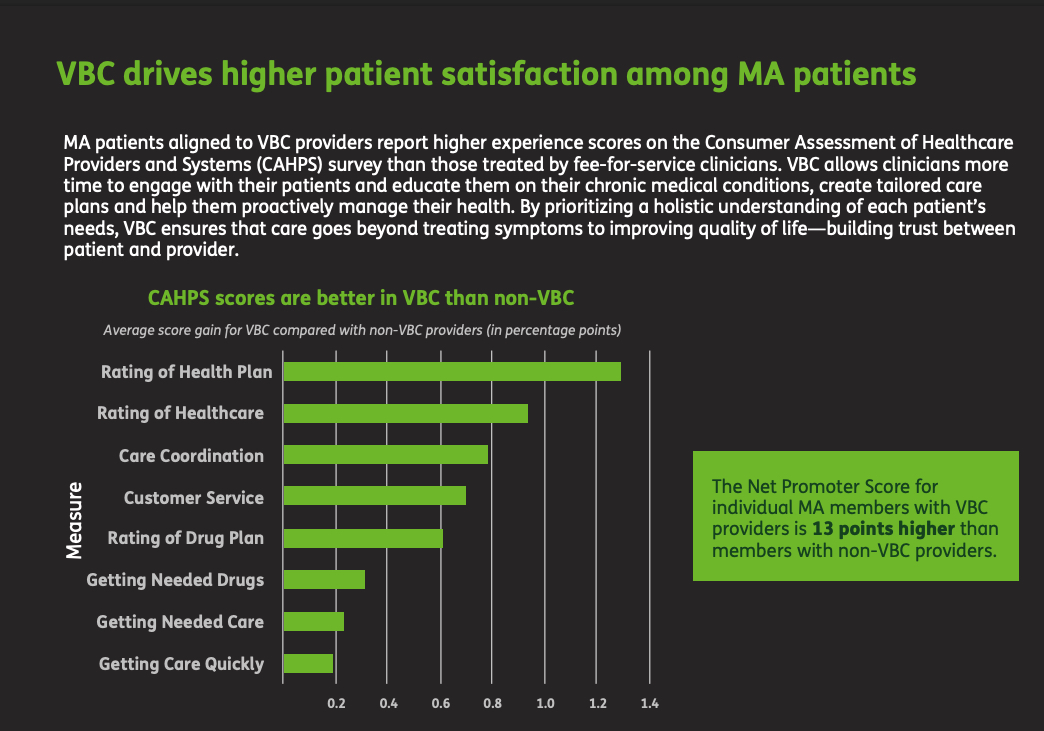
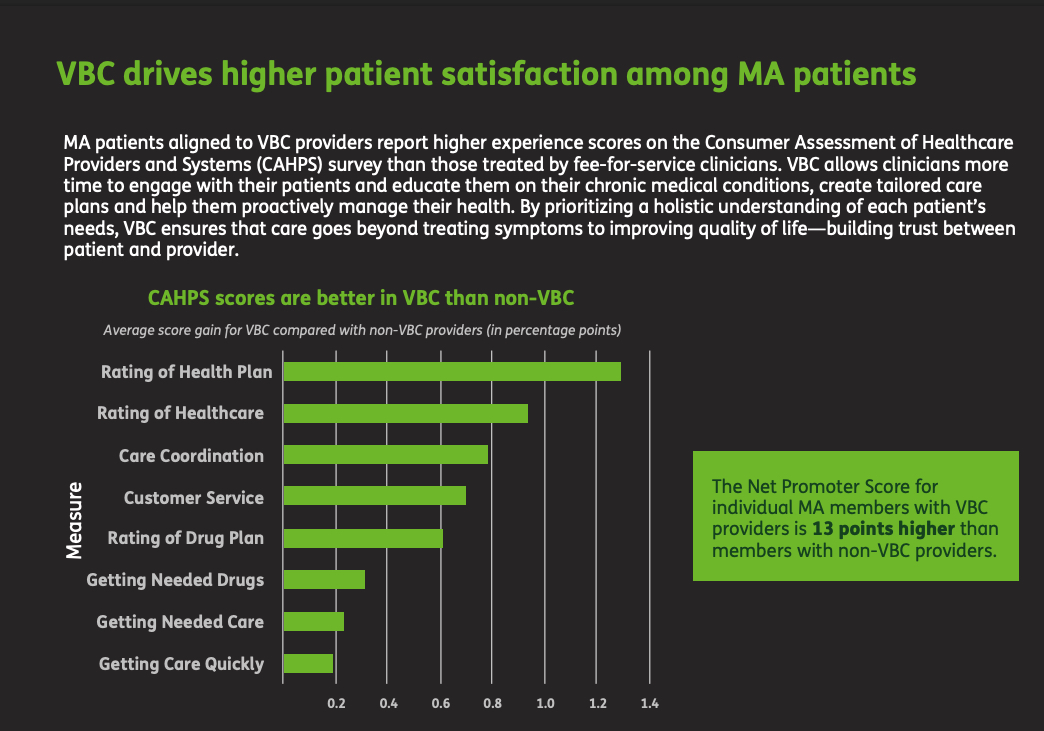
This creates a high-touch environment where continuity of care rises to 75% (vs. 55% in FFS). The result? A Net Promoter Score (NPS) that is 13 points higher than traditional fee-for-service providers. Seniors are not only healthier; they are happier with their care.
Dying Economics of Fee-For-Service?
With the company now expanding VBC into specialty care (such as heart failure management) and investing in interoperability partnerships—like the recent data exchange initiative with Providence—the infrastructure for this new model is hardening. The question for health systems is no longer if they should adopt VBC, but how quickly they can escape the dying economics of fee-for-service.