







Even in the Trumpian corner of New Jersey, where I chose to witness Melania, the $75 million Amazon-produced film about the first lady, I predicted that I would be watching alone. This is, after all, a historically bad time for theatrical releases, and initial forecasts for Melania‘s opening weekend had been dismal. Yet there they were, at least a dozen attendees at a 10 a.m. screening on a frigid Saturday morning. I appeared to be the only one who required breakfast wine for what was about to unfold.
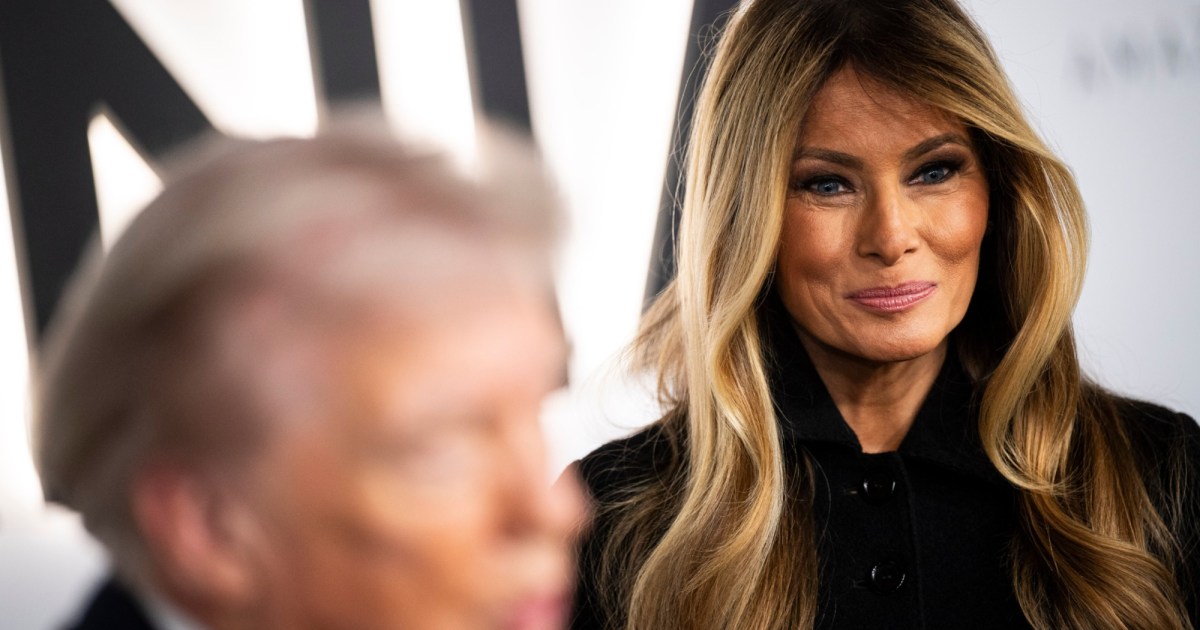
What flashed across the screen over the next hour and 48 minutes can best be described as an interminable slog of airbrushed nothingness. After all, only so much entertainment can be wrung out of footage of a woman in snakeskin Louboutins traveling from Mar-a-Lago to New York and back again in the lead-up to the inauguration. And yet, for nearly two hours, the film turns on the premise that its subject is some kind of fashion genius, resulting in some of the most stultifying scenes I have ever seen committed to film. What other way is there to describe extended, drawn-out shows of Melania getting fitted for her inauguration wardrobe, only to be followed by scenes of her walking across gilded ballrooms in that very wardrobe? A few other pre-inauguration scenes follow, including a meeting between Melania and Brigitte Macron over Zoom. But they all appear brief, choreographed, and wooden. Throughout, Melania claims to have a leading role in the preparations for her husband’s inauguration, but there is scant evidence of actual decision-making by the first lady.
What an obscenity to hear this woman employ the language of shared humanity, as the Trump administration kills Americans and systematically kidnaps immigrants and their kids.
But Melania is more revelatory in its world-historical vapidness than it might seem. Consider that Melania appears to go out of her way to foreground her journey from Slovenian immigrant to American first lady, a story she says serves as “a reminder of why I respect this nation so deeply.” Similarly, the film gives rare space to the immigrants in Melania’s inner circle, including her chief interior designer, Tham Kannalikham, who opens up about her journey from Laos to now decorating the White House, as well as Melania’s father, who is seen beaming with pride in his American daughter. Absent in Viktor Knavs’ film debut is the context of the “chain migration” pathway through which he and his late wife became US citizens, the very same policy targeted by their son-in-law.
“Everyone should do what they can to protect our individual rights,” Melania says at one point. “Never take them for granted, because in the end, no matter where we come from, we are bound by the same humanity.”
What an obscenity to hear this woman employ the language of shared humanity, as the Trump administration kills Americans and systematically kidnaps immigrants and their children. But as galling as they were, the remarks were instructive of both how Melania views her American story and the same anti-immigrant sentiments with which some, in order to prove that they belong here, yank the ladder up from newcomers seeking the same opportunities. Such immigrants, like Melania, cast themselves as the “good immigrant” who came here the “right way.” But the first lady appears to do this despite reports, including our own, that she may have initially been working here without a visa. In other words, she may have violated immigration law. Meanwhile, the immigrants Melania now surrounds herself with, like Tham, are props for that very narrative—with zero mention of her husband’s endless cruelty. But why would there be in a piece of abject propaganda—backed by one of the richest men in the world as he prepares to gut the Washington Post—that many crew members asked not to be credited on?
As a purely cinematic experience, Melania, a ghastly parade of fun-house mirror herstory, will certainly be relegated to the footnotes of her family’s deeper atrocities. I would have asked what my fellow attendees thought, but not even a plastic cup of wine could help me stomach the film in its entirety. I left 15 minutes before the credits rolled in, incomplete as they were.