








This story was originally published by Canary Media and is reproduced here as part of the Climate Desk collaboration.
The Double Island Volunteer Fire Department in Yancey County, North Carolina, is the beating heart of this remote community in the shadow of Mount Mitchell, about 50 miles northeast of Asheville. Once home to a schoolhouse that doubled as a church, the red-roofed building still hosts weddings, parties, and other events.
“It was built to serve as a community center,” said Dan Buchanan, whose family has lived in the area since 1747 and whose mother attended the school as a young girl. “A place to gather.”
Sixteen months ago, when Hurricane Helene hit this rugged corner of countryside with catastrophic floods, Double Island’s fire department was where locals turned for help.
“This is [our] ‘downtown,’” said Buchanan, who serves as the assistant fire chief. “In the wake of the storm, people were like, ‘Let’s get to the fire station.’ That was the goal of everybody.”
“We aren’t only preparing for a disaster; we’re also helping utility diversification, cost savings, and normalization of the technology.”
Fresh out of retirement and living back in his hometown to care for his ailing mother, Buchanan drew on his long career in emergency response to spring into action. With the station, powered by generators, serving as their command center, he and his neighbors gathered and distributed food, water, and other provisions to those in need. They hacked through downed limbs and sent out search teams.
“By the end of the fourth day, we had accounted for all the residents of the Double Island community,” Buchanan said. And while no one in the enclave died because of the hurricane, some suffered while they waited for medications like insulin.
A lack of drinking water and limited forms of communication were also huge obstacles. “When we finally got the roads cleared, and people could get in here, we were literally writing down our needs on a notepad and giving it to whomever, and then they would ferry supplies,” Buchanan said. “A carrier pigeon would have been nice.”
Helene was a “once in 10 lifetimes” storm, Buchanan said, with devastation he and the community hope to never see again. But more extreme weather events are all but certain thanks to climate change, and today Double Island is better prepared.
The station is equipped with a microgrid of 32 solar panels and a pair of four-hour batteries. The donated equipment will shave about $100 off the fire department’s monthly electric bill, meaningful savings for an organization with an annual operating budget of just $51,000.
When storms inevitably hit, felling trees and downing power lines, the self-sustaining microgrid can provide some electricity and an internet signal.
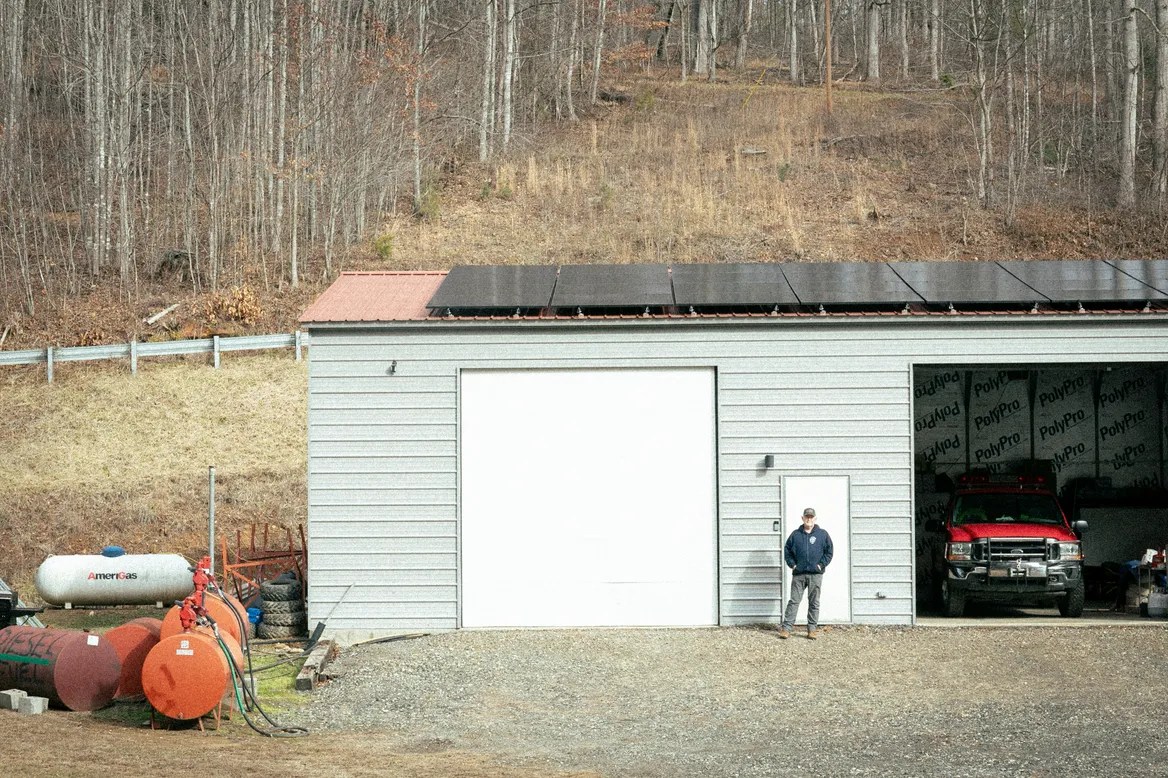
“We’ll have at least a way to run our radio equipment, run our well and basic lighting and refrigeration,” Buchanan said, adding that the latter was vital for medication. “It may not seem like much—but that’s the Willy Wonka golden ticket.”
Communication, he stressed, was key. “If you can’t communicate, you can’t get the help you need.”
The microgrid project, called a resilience hub, was made possible by a network of government and nonprofit groups that came together after Helene to help fire departments like Double Island and other community centers with long-term recovery. Now, a state grant program is injecting a burst of funds into their efforts. Using both public and private time, know-how, and money, the program aims to create a model for resilience that can be replicated nationwide.
“We aren’t only preparing for a disaster; we’re also helping utility diversification, cost savings, and normalization of the technology,” said Jamie Trowbridge, a senior program manager at Footprint Project, a leading nonprofit in the initiative. Those benefits aren’t unique to Yancey County, he said. “We’d like to see this be a pilot for us on what scalable microgrid technology could be across all of western North Carolina—and maybe the country.”
The Double Island experience was common in the immediate aftermath of Helene. Across the region, communities isolated by closed roads and mountainous terrain turned to their fire departments for help.
That’s part of how Kristin Stroup got involved in the resilience hub effort. Based in Black Mountain, a popular tourist destination 15 miles east of Asheville, Stroup helped start a corps of volunteers who gathered at the town’s visitor center. In coordination with an emergency operations center based at Black Mountain’s main fire station, she led over 200 volunteers in doing whatever they could, from cooking and doling out food to making the country roads passable.
“People [were] just driving around the town with chain saws,” said Stroup, today a senior manager in energy and climate resilience with the nonprofit Appalachian Voices. The weekend after Helene hit, she said, “Footprint rolled into town with a bunch of solar panels. I became an instant part of their family.”
With founders who cut their teeth in international aid, the New Orleans–based Footprint Project had teamed up with the North Carolina Sustainable Energy Association, Greentech Renewables Raleigh, and others to pool donations of batteries, solar panels, and other equipment to deploy microgrids to dozens of sites in the region before the end of 2024. From Lake Junaluska to Linville Falls, recipients included fire stations such as the one in Double Island and an art collective in West Asheville.
By February 2025, Footprint had hired Trowbridge and another staff person to work in the area permanently. Footprint continued to cycle microgrid equipment throughout the region from its base of operations in Mars Hill, a tiny college town 20 miles north of Asheville that was virtually untouched by Helene. It launched the WNC Free Store, which donates solar panels and other supplies to residents still far from recovery—like those living out of RVs and school buses after losing their homes.
From the outset, Footprint had a critical local ally in Sara Nichols, the energy and economic development manager at the Land of Sky Regional Council, a local government partnership encompassing four counties that stretch from Tennessee to South Carolina.
“A lot of the other organizations we saw come through in the same way Footprint did, most of them did not stay. They leverage resources to do really important work, and when that work feels done, they go home,” Nichols said. “The fact that Footprint is working thoughtfully to figure out how our recovery and resiliency can be taken care of—while also thinking about their own organizational strategic growth—means a lot to me. They’ve been incredible partners.”
To be sure, assistance and rebuilding in the region are ongoing, and many systemic inequities exacerbated by the storm can’t be solved with a solar panel. But the power is back on. The cell towers are functioning. The roads are open. Piles of debris, from fallen limbs to moldy furniture, have been cleared. In relief parlance, western North Carolina is beginning to see “blue skies.”
That’s why it’s all the more important that Footprint, Appalachian Voices, and other local collaborators haven’t let up in their efforts. The web of organizations involved is thick and, seemingly, ever expanding. Last fall, the network announced it was deploying five resilience hubs around the region, including the Double Island project and a permanent microgrid at a community center in Yancey County.
“These projects, driven by a small group of determined partners, have accelerated Appalachia’s long-term resilience and preparedness,” Invest Appalachia, another nonprofit partner, said in a news release.
Now, the local public-private effort is getting a boost from the state of North Carolina. Under the administration of Gov. Josh Stein, a Democrat who has made Helene recovery a centerpiece of his first-term agenda, the State Energy Office will deploy $5 million from the Biden-era Bipartisan Infrastructure Law to install up to 24 microgrids across six western counties impacted by Helene.
The money will also go to two mobile aid units for rural counties on either end of state—one in the east and one in the west. Dubbed “Beehives” by Footprint, these solar-powered portable units will be full of equipment that can be deployed to purify water, set up temporary microgrids, and otherwise respond to storms and extreme weather.
Expected recipients of the stationary microgrids could include first responders like the Double Island Fire Department and second responders like community centers. Peer-to-peer facilities and small businesses are also encouraged to apply.
Land of Sky and other stakeholders are choosing grantees on a rolling basis through next summer. There’s already been an inundation of applicants, and six grantees have been selected, including a community center about a dozen miles up the road from Double Island in Mitchell County. But organizers say they need more interest from outside the Land of Sky region, especially in Avery County, north of Yancey on the Tennessee border; and Rutherford County, east of Asheville, which includes Chimney Rock, a village that was infamously devastated by Helene and is slowly rebuilding.
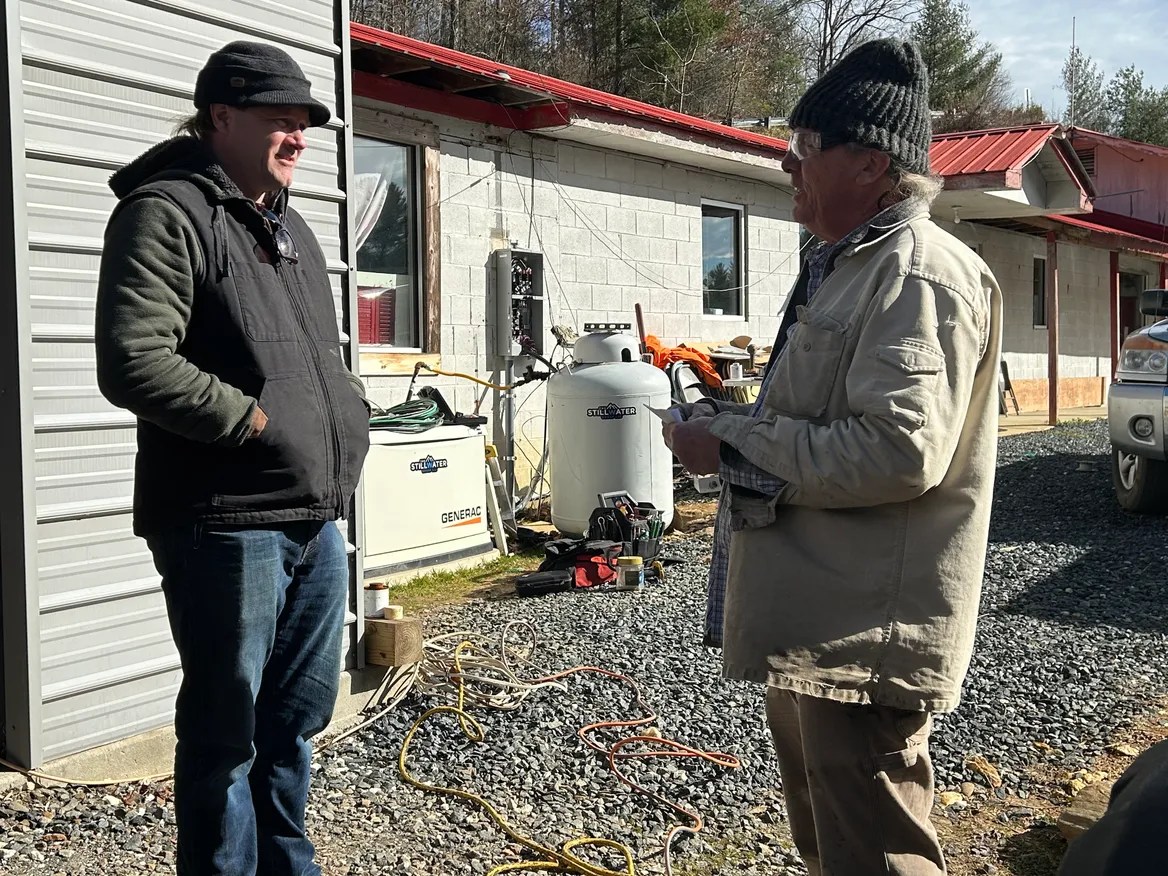
Geographic distribution isn’t the only problem organizers have faced. Some entities—while undoubtedly deserving of assistance—aren’t appropriate for the government grant because they are located in areas at risk of future flooding.
“A battery underwater is not that useful,” Trowbridge said, “so if your site is in a floodplain, maybe this isn’t the right fit for you. But we definitely want you to know about the Beehive.”
Above all, organizers like Nichols, a passionate promoter of the Appalachian Region, are determined to ensure that the state’s effort is not the be-all and end-all of resilience.
“What we’re being tasked with as recipients of this money is to try and figure out how we make this a much bigger project,” she said. “That means we’ve brought in other partners like Invest Appalachia. We’ve been seeking other kinds of money. We’re using this state money to successfully build what could be a much more comprehensive resiliency hub model.”
She added that communities across the country—even if they think they’re safe from extreme weather and climate disaster—could take cues from the western North Carolina example.
“We were a place that was not supposed to get a storm,” Nichols said. “We were a climate haven.”