







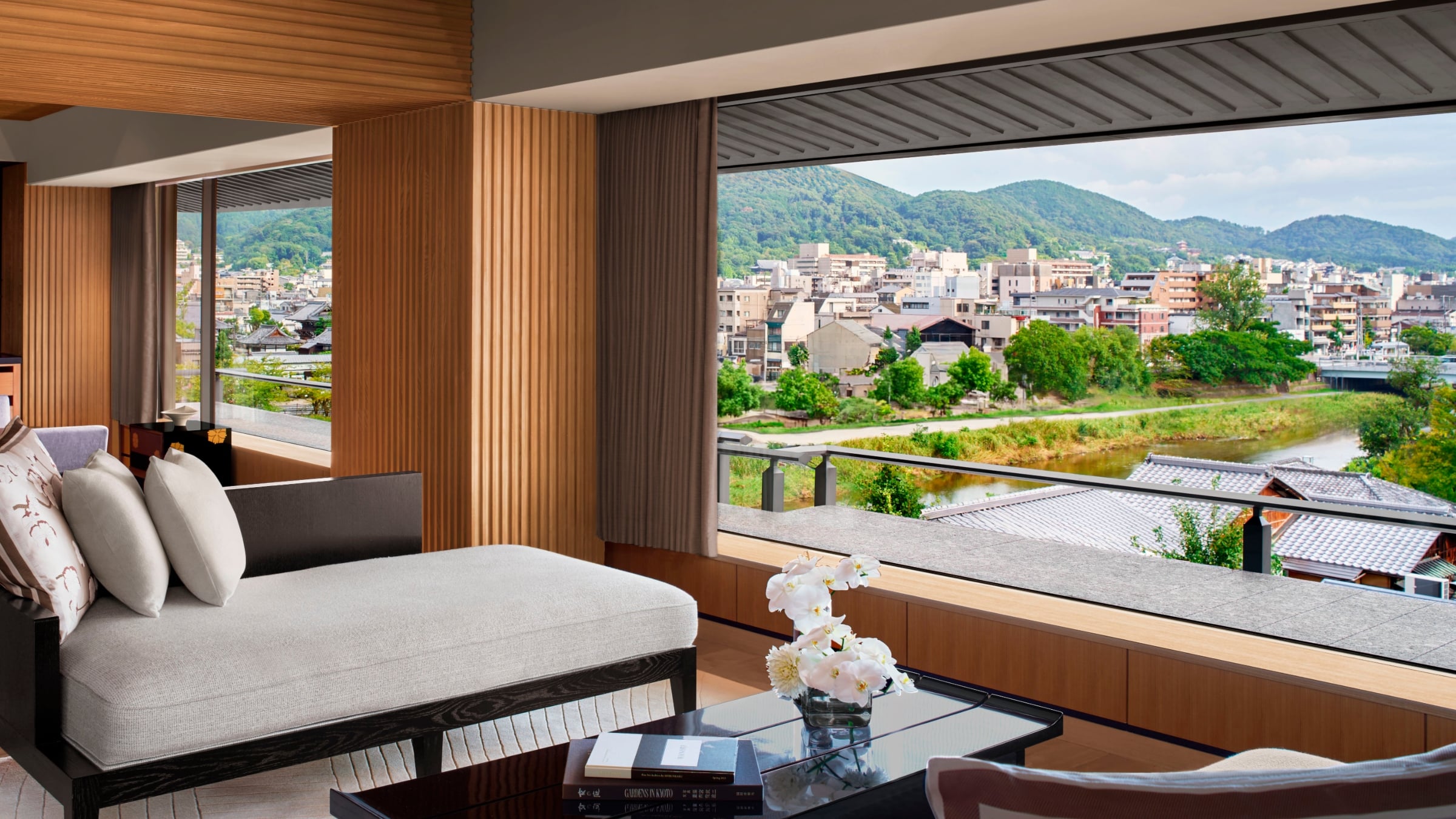
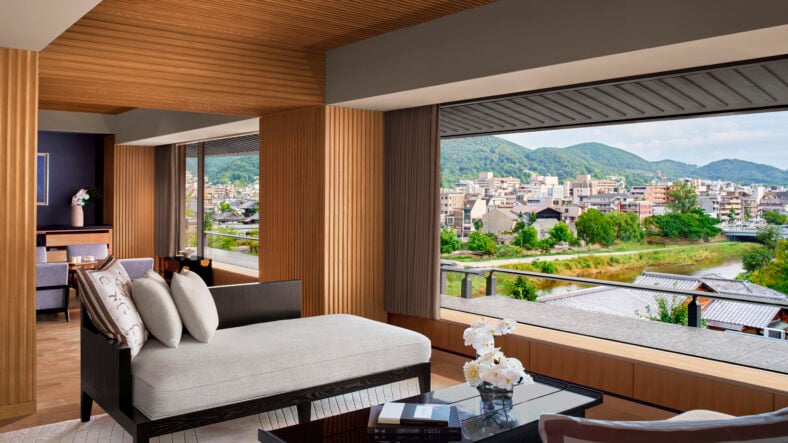
The Ritz-Carlton, Kyoto became the ancient city’s first “super-luxury” hotel when it opened in 2014. Others have since joined the city’s five-star properties, but none that can top the Ritz-Carlton’s blend of central location, tranquil design, and refined service. On a recent trip to Japan, it served as the perfect base for a 48-hour visit to the historic city, allowing me to explore Kyoto’s major sights easily, while still being a calm retreat from the crowds.
Located on the banks of the Kamo River in central Kyoto, the hotel’s design and water features make it seem like it emerged from the river itself. Service is next level, even by the standards of a country where service at luxury hotels is already in its own class. Kyoto is a city that can be hectic when you’re taking in the more popular Shinto shrines and Buddhist temples of the historic districts, or walking the narrow Nishiki Market, so staying in a place with the atmosphere of a Zen garden offers a perfect balance.

Getting There From Tokyo
Getting to Kyoto from the capital is easy from the major train stations. Our accommodation in Tokyo was the Prince Sakura Tower Hotel, part of the Autograph Collection. It’s just a few minutes’ walk from Shinagawa station, which has direct Shinkansen (bullet train) service to Kyoto leaving about every ten minutes. There’s an English menu option on the automated ticket kiosks, and they’re easy to use. You want the Nozomi express train that gets you there with the fewest stops in a little over two hours. (Pro tip, if you book row E on the Kyoto-bound route, you’ll be on the window side for a chance to see Mount Fuji.)
There’s no food or drinks for purchase on the train, but you can bring anything on that you want—even your favorite Japanese Whisky or beer. We bought wagyu steak bento boxes and frosty canned Japanese whisky highballs in the station for the ride, which gave me a serious case of public transportation envy, getting to wash down wagyu with Suntory along with a view of Mount Fuji whipping by at 200-miles-per-hour. We arrived in Kyoto in a heavy rain. The taxi stand was busy, but we got lucky, and within a few minutes we were on our way to the Ritz-Carlton, a property that I’d been stalking online for weeks and was eager to see in person.
A Walk In The Rain

After getting out of the cab in the hotel garage, Guest Relations led us directly to our room, where we checked in at a table by the floor-to-ceiling window overlooking the river. We were eager to explore the city, and as we left the lobby, someone on staff chased us down with umbrellas before we even had a chance to ask for them. We found a Portland-inspired coffeeshop called School Bus Coffee a few blocks away, then I picked up a bottle of White Oak Whisky at a bottle shop, and then we took a rain walk back to the hotel along the waterfront.
Our kids ran ahead to splash in the puddles on a path that was empty of its usual walkers and joggers. It was the kind of day that makes Japan so great. Not trying to check some “sight” off your list, just being on a rain walk in a city with its own rhythm that could not care less whether are there or not. It’s a destination that doesn’t feel like it’s just standing around waiting to sell you something.
The Kamo river divides Kyoto architecturally as well as geographically, with the historic areas on one side and the more modern development on the other. Staying on the river gives you access to both of Kyoto’s distinct personalities. It’s also just a beautiful backdrop, and to watch a crane stalking fish in the current at sunset was like a Japanese Nihonga painting come to life. Between the view from our window and the glass wall overlooking a water feature, that both the restaurant and the indoor pool share, I was never in any rush to leave the hotel to find beauty elsewhere.
Dining Kaieseke-Style

Kyoto is known for its Kaiseki cuisine, traditional Japanese fine dining that involves a multi-course seasonal meal with origins in 16th century Buddhist tea ceremonies. We experienced it at Mizuki, the flagship restaurant inside the hotel. Course after course paired with wine and sake, it incorporated different elements of Japanese cuisine, like tempura prawns, nigiri sushi, and wagyu steak that came out sizzling on its own tiny grill. The restaurant’s wall of windows looks onto a water feature that creates the feeling that you’re dining inside the Kamo river itself. Breakfast the next morning at La Locanda, also inside the hotel, is worth getting an early start for. You can choose a full Japanese breakfast portioned in a bento box, or a buffet plus their a la carte versions of Western classics like eggs benedict, which won’t taste like any benedict you’ve ever had before, which I mean as a compliment.
Nishiki Market And Teramachi Street
You will hear that Nishiki Market is not to be missed during a visit to Kyoto, but I found it to be skippable, or at least not a place to sink too much time. In three trips to Japan, it’s the only place where I’ve felt like a mark for being a tourist. Nearby Teramachi Street, on the other hand, is a great shopping area to spend some time. Some highlights are the locally made watches at KUOE, where you can customize your own watch, and the Sukajan jackets at BSC Gallery—a mashup of American baseball jackets embroidered with cool Japanese iconography like dragons and tigers.
Temples On A Hill

Exploring the narrow streets of Gion, aka the Geisha District, and seeing the temples and shrines of the Higashiyama Ward is essential. But prepare yourself for crowds. Because we only had two days in the city, I didn’t want to just wander aimlessly. So, I linked up with a popular Japan travel YouTuber named Abby from PicTour. She’s an American expat who became a Japanese dual citizen, and over the course of a four-hour tour, she enlightened us with mix of cultural insight—wearing a Geisha outfit is ok for a Westerner, but wearing white Geisha makeup is NOT ok, etc.—and history—shrines are Shinto, temples are Buddhist, and here’s how to tell them apart. Kyoto is a big city, so having someone to help guide us through the key sights was worth it.
After the tour, we managed to flag down a highly coveted cab for a ride to the new TeamLab Biovortex, which has been described since opening in late 2025 as “an experience worth visiting Japan for.” TeamLab is a series of different experiential art exhibitions with locations throughout Asia and beyond, and Kyoto is the newest location. You have to book tickets in advance. We chose the last time slot of the night, where it can tend to be less crowded. From swirling, psychedelic worlds that adapt to your movements and are never the same twice, to jumping across a room on springy neon-lit balls, to creating art and watching it come alive on a wall, it was a mind-bending and visually stunning experience not to be missed. (Not-so-pro tip: The Wagyu Burger spot around the corner is fantastic for a pre- or post-TeamLab meal, and they offer a nice selection of Japanese Whiskies)
Final Thoughts
The Ritz-Carlton, Kyoto is a hotel that can’t be summed up by amenities or expressed with a word as broad as luxury. Like the best hotels in the world, it has its own personality, and if you resonate with it, you will always want to get back there.
The typical advice for any traveler to Japan is not to worry too much about your hotel room because you won’t be in it that much anyway. For me, this hotel was the counterargument for that theory. As much as I loved exploring the city, and I did, I was always ready to get back to that room (or to the heated indoor pool downstairs). The room’s lacquered drawers and wood paneling made the it feel like sleeping in a life-size bento box, and the wall of glass overlooking the river was a view that I could have spent hours watching and been perfectly happy––preferably while sipping Japanese Whisky. And in a city whose original name was the “Capital of Peace and Tranquility,” there’s more than one definition.