






I never visit national parks on federal holidays. Crowds and long lines over a three-day weekend can make for a less-than-enjoyable experience. So, in 2025, when the Trump Administration rescinded the privilege of free admission on Juneteenth and the birthday of Dr. Martin Luther King Jr., I wasn’t immediately alarmed. Like many Americans, I assumed the change would have little impact on my own access to public land.
As a lifelong supporter of the National Park System, I understand the value of an annual admission pass. For me, and probably you, a couple fewer free entry days each year likely wouldn’t change how often we visit places like Yellowstone, Yosemite, or the Grand Canyon. But I’ve come to believe that my ability to enjoy these spaces is inseparable from a crucial principle: these places must be accessible to everyone, even if only for a couple of days each year. When access is restricted, even symbolically, it has consequences that reach far beyond the entry gate.
In the late 1950s, while traveling through Texas, Dr. King and his family were denied overnight accommodations at the Chisos Mountains Lodge, the primary place for hospitality serving Big Bend National Park. Although the land itself was federally managed, the lodge was operated by a private concessionaire that continued to enforce Jim Crow-era racial discrimination. Despite the National Park Service having officially removed its segregation policies in 1945, King, a Black American and one of the nation’s most prominent moral leaders, was effectively barred from fully experiencing the park in the same way white visitors could.
This may not have been the most egregious indignity King endured in his lifetime, but it cuts to the heart of the ideals that define the National Park System. His treatment revealed a painful contradiction: public land set aside “for the benefit and enjoyment of the people,” to quote the famed Roosevelt Arch at Yellowstone, was not, in practice, available to everyone. Policies of racial discrimination denied Black Americans the basic right to experience the natural world on land that was supposed to belong to everyone.
When we deny even symbolic gestures of inclusion, we risk minimizing and ultimately erasing their significance from our national consciousness.
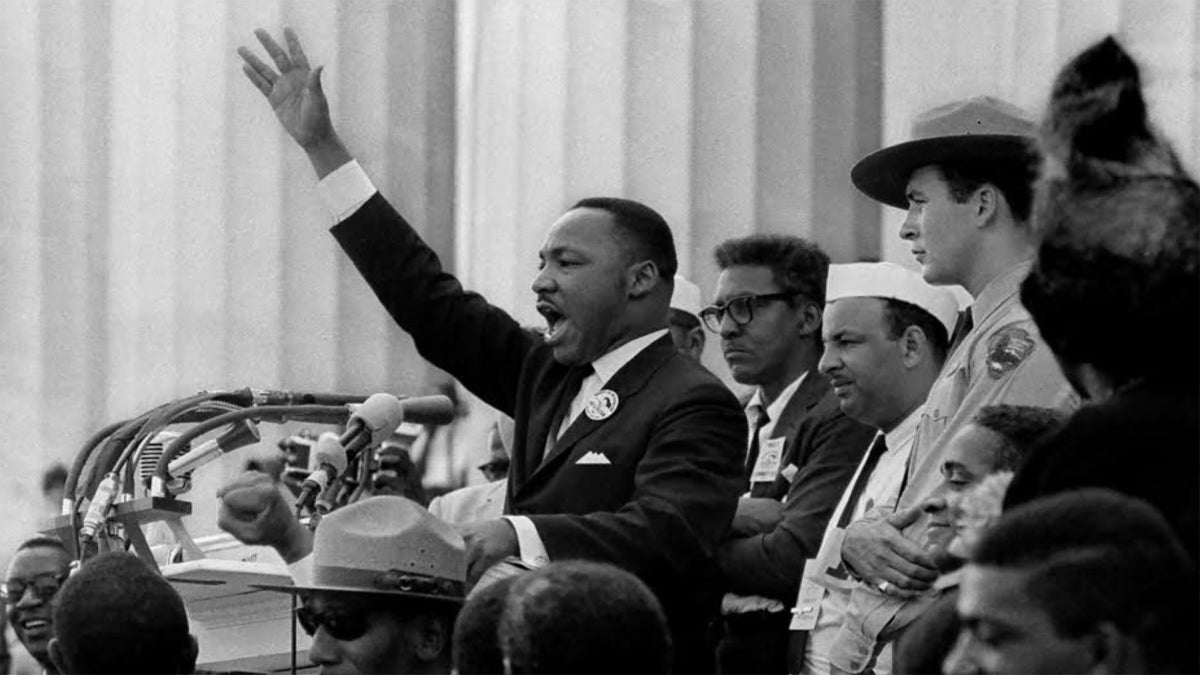
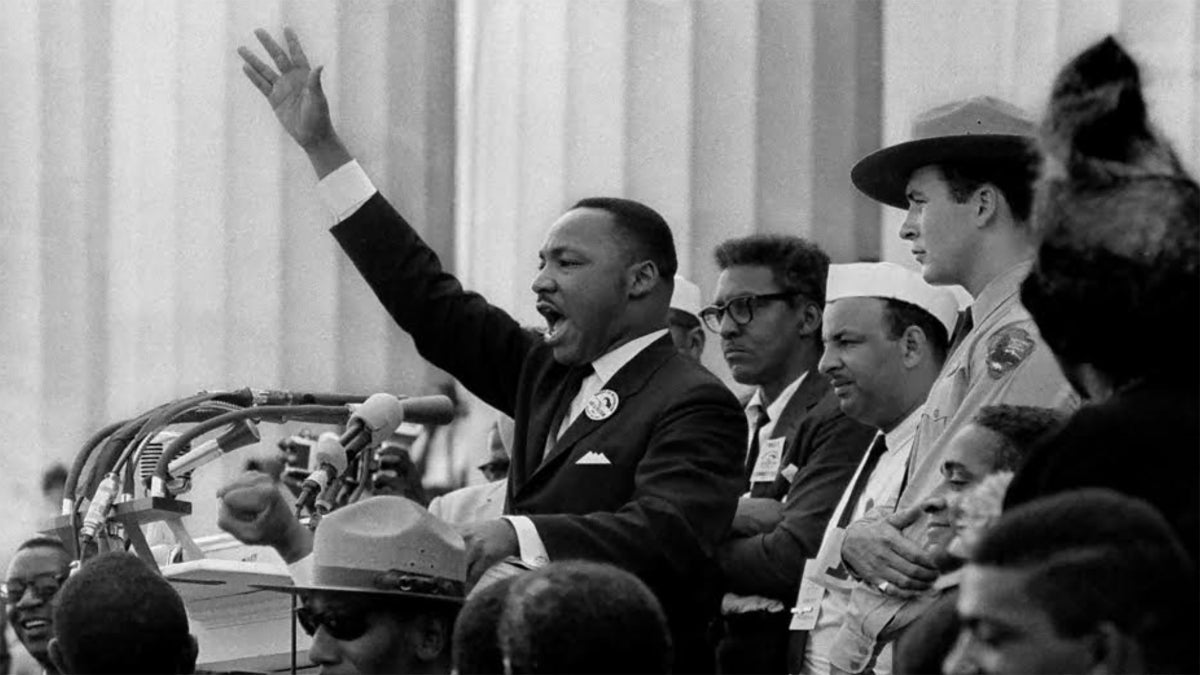
Access to nature was not incidental to the Civil Rights Movement. It was fundamental. On August 28, 1963, at the March on Washington for Jobs and Justice, King stood on the steps of the Lincoln Memorial and declared, “From every mountainside, let freedom ring. And if America is to be a great nation, this must become true.” He invoked the landscapes of the nation itself. He envisioned the mountains of New York, the Rockies of Colorado, the slopes of California, Stone Mountain in Georgia, and Lookout Mountain in Tennessee. He called upon the geography of America as both metaphor and mandate.

Less than a year later, that vision took on a powerful literal form. On July 9, 1964, Dr. Charles Madison Crenchaw became the first Black climber to summit Denali, the highest peak in North America. His ascent came just seven days after the signing of the Civil Rights Act of 1964. Together, these moments signaled a turning point: access to public accommodations and public lands was no longer merely aspirational. It was now protected under federal law.
Yet today, the decision to eliminate free national park admission on the only two federal holidays that commemorate the advancement of civil liberties for Black Americans carries a troubling consequence. In the 110 years since its founding in 1916, the National Park Service has struggled to reconcile the contradiction between its democratic ideals and its exclusionary past. Restricting access on these days risks reinforcing the notion that the history of struggle and sacrifice that made these lands accessible is somehow less worthy of recognition.
Free admission is the clearest expression of welcome. On days when entrance fees are waived, we affirm our shared heritage and collective responsibility. On Independence Day, we celebrate the birth of the nation. On Veterans Day and Memorial Day, we honor those who fought and died for its preservation. On Labor Day, we recognize the contributions of working people. Even on Thanksgiving, despite its complicated history regarding the continued oppression of Native Americans, we pause to acknowledge gratitude for what has endured.
But in 2026, as we observe the birthday of Dr. King, that gesture of welcome will be absent. Despite the many historic sites managed by the National Park Service that honor his life and legacy, visitors will not be granted free entry in his name. When we deny even symbolic gestures of inclusion, we risk minimizing and ultimately erasing their significance from our national consciousness.
The same is true of Juneteenth. To overlook June 19, 1865, the effective end of legal slavery in the United States, is an omission we cannot accept. Juneteenth marks the extension of civil rights to all Americans, regardless of race or national origin. The Reconstruction Amendments that followed the Civil War secured birthright citizenship and equal protection under the law, finally codifying principles that had been proclaimed but not fully realized at the nation’s founding.
It was during the Civil War, amid this struggle to define who counted as fully human under the law, that the federal government set aside land “for public use, resort, and recreation, and shall be inalienable for all time.” The Yosemite Grant Act of 1864, signed into law by President Abraham Lincoln, established a precedent for protecting natural spaces as a public trust. More than 180,000 Black men served in the Union Army, fighting not only to preserve the nation, but to secure the freedoms that would one day allow all citizens to enjoy these lands equally.
A century later, the Civil Rights Act of 1964 finally removed legal barriers that had long restricted Black Americans’ access to public accommodations and federally protected land. That achievement alone is worthy of commemoration. Honoring it with free access to our national parks is not merely symbolic. It is a reaffirmation of the values these places were created to represent.
In 2025, I had the privilege of moderating a panel discussion at the Outside Festival in Denver titled “For the Love of Parks.” As we spoke about access and belonging, former National Park Service Director Charles Sams shared a moment from his swearing-in ceremony on the steps of the Lincoln Memorial. After administering the oath, Interior Secretary Deb Haaland asked him to look down. At his feet were the engraved words of Dr. King: “I Have a Dream.”
“You and I,” she told him, “are the embodiment of Dr. King’s dream. Our charge now is to keep that dream alive.” Sams reflected on what that responsibility means: to tell America’s stories fiercely, to ensure that our parks reflect who we are as a nation, and that every American can see themselves and their history within them. Our national parks, he said, are nothing less than the democratization of who we are as Americans.
That dream endures only if we continue to honor it, not just in words, but with action. Free admission to our national parks notwithstanding, the memory of Dr. King and the legacy of Juneteenth must be celebrated for generations yet come.
The post National Parks Are No Longer Free on MLK Day. Here’s Why That Hurts. appeared first on Outside Online.