









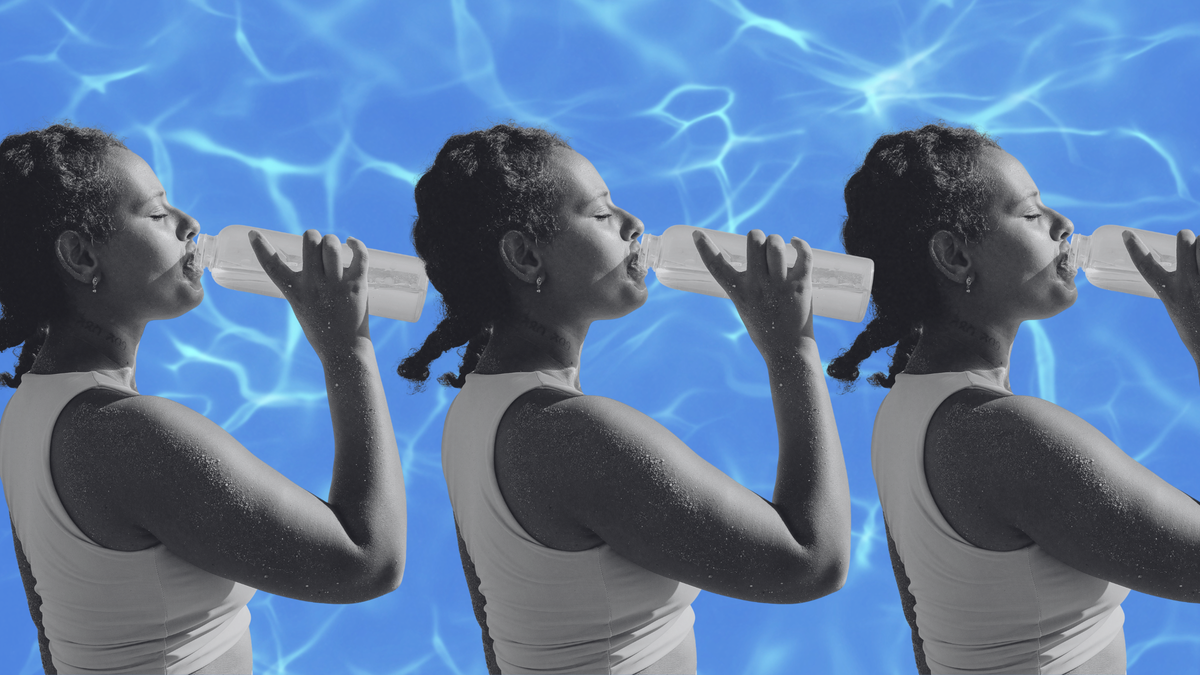
You think you’ve done everything right, like carrying water on your long runs or walks and hydrating post-workout, but you’re still always thirsty throughout the day. So what gives?
Hydration isn’t as simple as the old-school rule that you should drink eight 8-ounce glasses of water per day—it’s a lot more nuanced than that. Your constant feeling of thirst could have a few causes, including the timing of your water intake, the climate you’re in, and the elevation you live at.
And if you are running, there’s even more to factor in. Often, we don’t hydrate properly in the time period surrounding workouts—especially before and during efforts, Alex Larson, a sports dietitian, explains. “If you are hydrating consistently in your training, it can solve a lot of problems,” she says. “Then you’re not going into the rest of the day feeling thirsty.”
Reasons Why You’re Always Thirsty
Gabriela Barreto, a nutritionist, says she often hears the sentiment from runners and athletes that they have a hard time quenching their thirst. That’s because thirst is about not only your body’s need for hydration but also electrolyte balance, she explains.
“Our body is well-equipped to sense changes and send signals to tell us what to do in response,” Baretto says, and our thirst mechanism is quite sensitive. Here’s why you might feel like water alone isn’t cutting it.
You’re Losing Electrolytes
Sweat contains sodium, potassium, magnesium, and chloride. Even if you don’t see visible sweat, you’re still losing electrolytes during your workouts, which can signal your body’s thirst reaction. This is true in heat, cold, and at altitude, Barreto says.
Electrolytes dissolve in water, and your body loses water through sweat, evaporation when breathing, and waste elimination. When any of these things happen, you’re losing water and electrolytes, which can trigger dehydration.
Hot or Cold Climates Can Affect Thirst Sensation
If you live somewhere that is hot and humid, you’ll likely feel thirsty since that weather triggers increased sweat loss, Barreto explains.
On the flip side, if you’re training in a cold climate or cooler temperatures, research has found this can mute your thirst sensation by up to 40 percent, meaning you won’t have the same noticeable feelings of thirst that you might have during warmer weather. Of course, the need for hydration is still there. If you’re training in the cold, you should be mentally prepared to drink, even if you aren’t thirsty.
“I always tell ultrarunners or triathletes I work with, ‘You’re going to drink before you’re thirsty, you’re going to eat before you’re hungry so you can stay ahead of it.’” Larson says. “Once you get dehydrated on, for example, a long run, it’s really hard to get caught back up.”
High Elevation Can Increase Thirst
If you’re at a high altitude, you’ll be in drier air, which can increase your hydration needs. And research has found that your body will have reduced feelings of thirst at a higher altitude, meaning you won’t get those thirst cues right away. If you don’t drink, you’ll become dehydrated and feel thirsty later.
The high altitude can affect someone traveling for a race, but it can also affect people who live or train at elevation. While your body will adapt to the elevation, you’re still losing fluids at a pretty quick rate, which you might not realize. (Even if you aren’t sweating, you can lose fluid when breathing, Barreto adds.)
You Might Just Sweat A lot
How much you sweat is very personal. Ever noticed you’re soaked with sweat while your running buddy doesn’t even have so much as a sheen? Genetics, hormones, fitness level, and even medications affect this, Barreto explains, and how much you sweat directly affects your hydration (and thus thirst) levels. Your sweat rate can also vary based on—you guessed it—climate and elevation.
Additionally, hydration needs may shift across the menstrual cycle. Testing your sweat rate with a simple at-home method—step on the scale before your workout, avoid drinking during, then weigh yourself again after—can give you an idea of how much fluid you’re losing and how much you need to replenish properly.
Dietary Factors Impact Thirst
Hydration doesn’t just come from your water. You can also support your fluid intake with things like your morning coffee or noshing on watermelon on a hot day. However, a very low-sodium diet, high caffeine intake, or not eating enough carbohydrate-rich foods can all make hydration feel less effective, Barreto says.
While eating salty foods increases thirst, you don’t want to decrease sodium intake too much to avoid this. The body relies on electrolytes (such as sodium) to help restore fluids, especially after prolonged sweating, according to the American Heart Association.
Why Some People Crave a Sugary Beverage After Intense Workouts or Runs
You’ve hit the halfway point in your long run, and suddenly all you can think about is what sugary beverage awaits you at your post-run gas station refueling stop. What’s that about?
During exercise, your muscles rely heavily on glucose for energy, and your brain is wired to drive cravings for quick-digesting carbs (like sugar).
“That’s why a sports drink can feel so satisfying—it’s delivering both hydration and fast energy,” Barreto says. But not all sugar sources are created equal.
And keep in mind, sugar alone won’t quench thirst—and too much at once can cause stomach upset, diarrhea, or dry mouth. The best hydration solutions combine carbohydrates, electrolytes, and water, which work together to optimize absorption and prevent GI distress, according to Barreto.
How to Quench Your Thirst
Larson also recommends adding in electrolytes, but cautions against using packets with a lot of sodium. We already get that intake through our diet, and it can contribute to that never-ending thirsty feeling. She recommends having a couple of electrolyte packets throughout the day that have lower sodium, around 200 to 300 mg, to help with rehydration.
If your pee is clear, this means you’re getting too much water, and it’s not actually hydrating you; instead, it’s diluting the electrolytes in your body. (On the flip side, darker yellow urine is a sign you need to up your fluid intake.)
Hydration Training
If you aren’t hydrating properly during training and then hit every aid station during a race, you’ll increase the chances of feeling all that liquid sloshing around, which could cause problems for your stomach. Instead, by focusing on higher volumes of hydration in training, you can prime your gut to tolerate higher volumes of fluid, Larson explains.
After you calculate your sweat rate and how much water you want to replace during your run, you can further break it down by how often you drink to simplify rehydration. Ideally, you’ll want to replace 75 percent of fluids lost. (If you try to replace 100 percent, you often end up drinking more than your stomach can process.)
Larsen explains that if you lose one liter of sweat an hour, for example, then over the course of a 90-minute run, you can take four to six big gulps—roughly 2 ounces per gulp—every 15 minutes. Research shows that after just six training sessions of practicing fluid replacement, runners reported better stomach comfort. That means if you’re heading into a hot race or one at high elevation, rehearsing your hydration strategy in training can pay off on race day. “If you are hydrating consistently in your training better, and then you’re also not kind of going into the rest of the day feeling thirsty.”
Want more Outside health stories? Sign up for the Bodywork newsletter. And to get your new year off to a great start, sign up for the Winter Warrior Challenge; all you need to do is log 20 hours of workouts, and you’ll earn an exclusive challenge badge.
The post Can’t Quench Your Thirst? Experts Explain Why It’s Happening and How to Fix It. appeared first on Outside Online.