







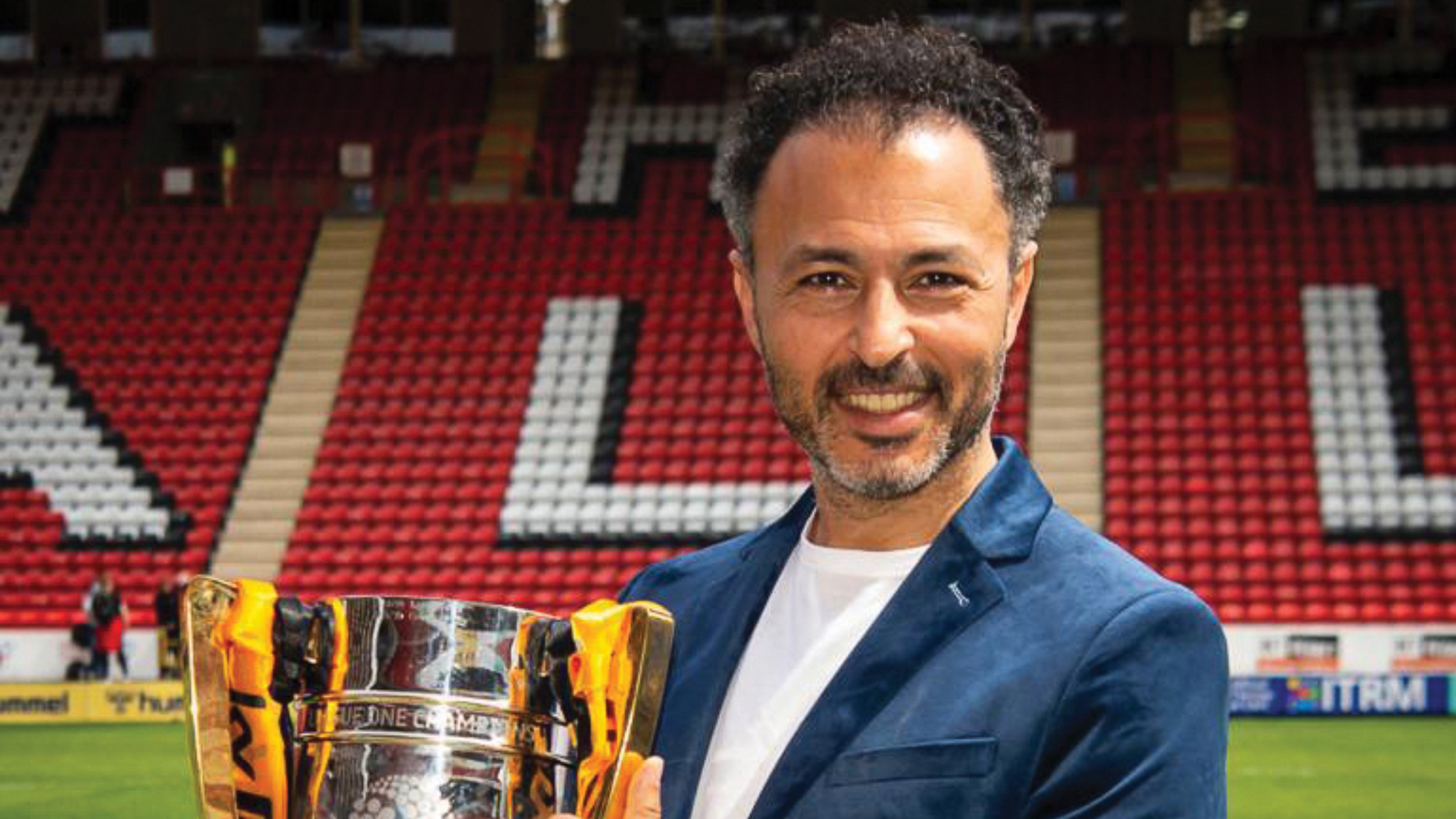

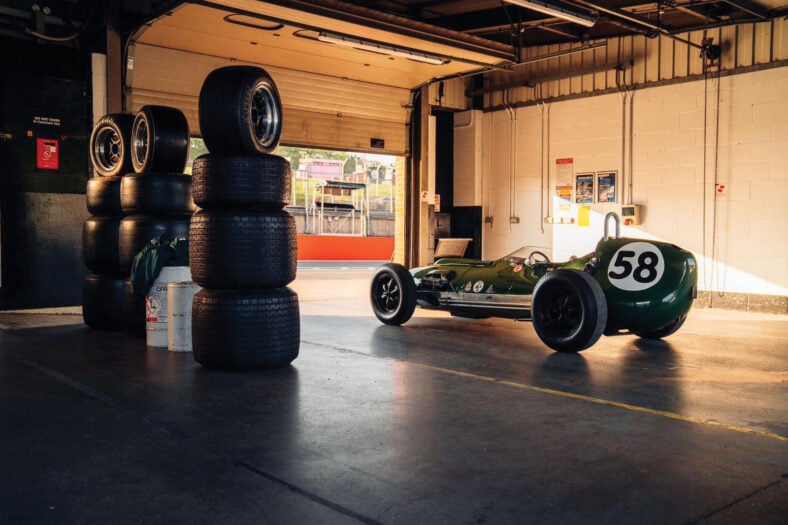
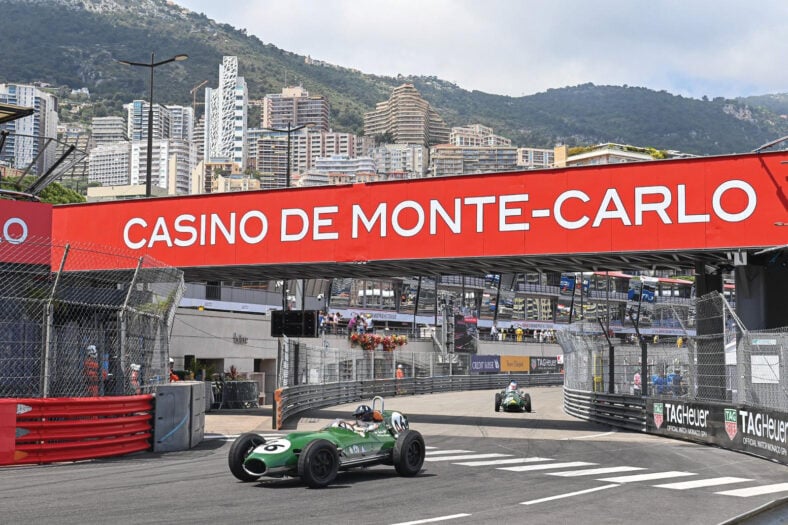
Ehab Allam’s fascination with machines began when he was eight years old, tinkering with the engine on his first motorbike. Today, that obsession has evolved into what he calls Parc Fermé, a private collection of historic Formula One cars spanning from the 1950s through the 1990s. Some of the cars in his garage include a 1958 Lotus once driven by Graham Hill and a 1991 Benetton piloted by both Nelson Piquet and Michael Schumacher.
For Allam, it’s not just about owning the cars; it’s the thrill of seeing them back on the track at Masters Historic events across Europe, where his team has won the F1 Stewart class championship for the past three years. “For me it’s the memories, the nostalgia, the noise, the smell—and Formula One has lost a little bit of that, to be honest,” he says.
When Allam isn’t buying classic cars, he’s investing in the businesses of the future. As Managing Director of his family business, Allamhouse Limited, he helped grow their generator firm into a global player, stepped in to save Hull City Football Club from collapse, and today is backing Zero Petroleum, a startup developing carbon-neutral fuels that could power F1 cars and the next generation of transportation. Here, he talks about what makes a car worthy of his collection, how his family pulled off a Ted Lasso–style turnaround with Hull City, and why he’s never actually gotten behind the wheel himself.
When did your love of cars and motorsports begin?
I started following Formula One from a fairly young age. I was a fan of Lotus in the JPS era, and my biggest hero was James Hunt. I had my first motorbike at eight years old and was taught how to rebuild engines from a young age. By 12, I had a go-kart. That’s really where it all started.
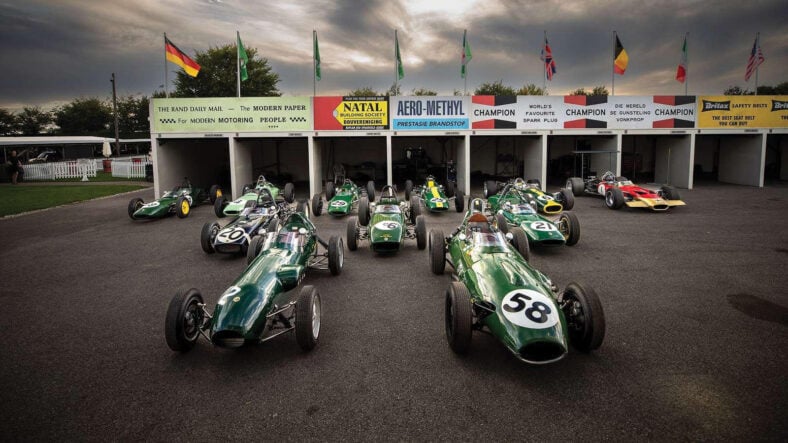
You now have a rare collection of historic F1 cars you call Parc Fermé. What does it include?
At the moment I have four cars, ranging from 1958 to 1991. There’s a Lotus 16, ex-Graham Hill. I have a Surtees TS9 from 1971, which actually had its first outing on the day I was born. I have a McLaren from the same year, ex-Jody Scheckter. And the latest is the Benetton B191, which was driven by Nelson Piquet and then Michael Schumacher in his first few races. That chassis also won the Canadian Grand Prix.
What makes a car worthy of being in your collection?
For me, it’s about the story and the history of each individual chassis, not just the model. The Benetton, for example, was raced by two world champions, and Schumacher at the very start of his career. That kind of history is what attracts me.
How do you usually find these cars?
That’s what I enjoy the most. I love researching the cars and their history. Sometimes I buy cars that haven’t run for a while. We recommission them, restore them, and get them racing again. I’ll often rotate cars, selling one to move on to the next project.
Do you race them yourself?
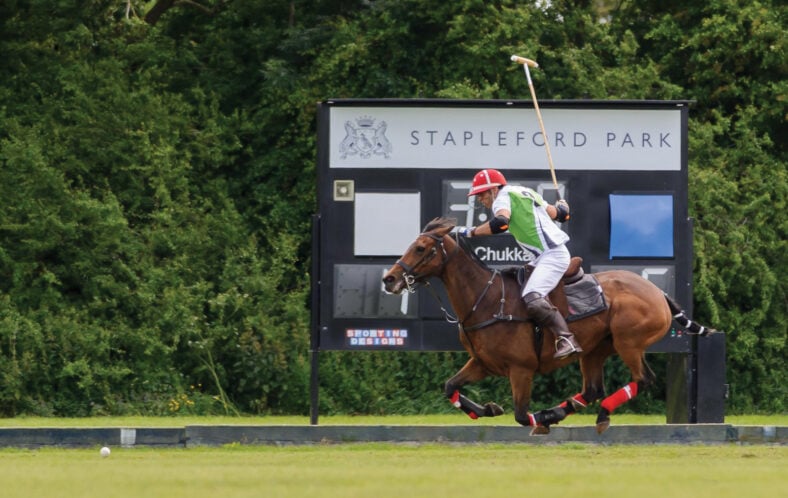
No, strangely I’ve never driven any of my cars, even though I’ve owned seven or eight. I have a professional driver. I love the ownership experience, the history, the smell, the nostalgia—but I’m not interested in the actual driving. I play polo, so I think that’s where I get my competitive kicks.
Do you have a favorite car?
Probably the Surtees. When I first went to see the other cars, I had to walk past this little red one. It was so pretty that I couldn’t stop thinking about it. I told the dealer I’d only buy three if that one was included. At first they said, “That’s the owner’s favorite, it’s not for sale.” I said then it’s no deal. In the end they came back and agreed, and only afterward did I learn its first outing was on the day I was born. That’s why it’s my favorite.
What’s the appeal of F1 to you?
The glamour. It’s the peak of innovation, and it has global reach. I love the memories, the nostalgia, the noise, the smell. Formula One today has lost a little bit of that, but historic racing keeps it alive.
At one point your family nearly bought an F1 team instead of a football club.
That’s true. Around the time we bought Hull City, Braun Racing had just won their first world championship with Jenson Button and was up for sale for a similar price. I said to my father, “Let’s buy the Formula One team instead.” That was probably my only chance.

But your family ended up buying Hull City Football Club in 2010. Why?
The family’s been very philanthropic, and that’s something passed down from my father. The club was in dire straits and had a winding-up petition. The local business community approached us to rescue it, which we did. From that moment, we got promoted to the Premier League within two and a half years. We reached the FA Cup Final for the first time in the club’s history and even played in Europe. It was the most successful period the club ever had.
Your father was an immigrant from Egypt and truly a self-made man. What can you tell us about him?
As a student in Egypt, he was outspoken politically. He was flogged in public and persecuted by the regime at the time, and he suffered with a bad back for the rest of his life as a consequence. He was told they were coming back for him, so he left the country with my mother and sisters. He rebuilt his life in the UK. He had been a merchant banker and an accountant, then moved into the generator industry. Eventually he bought the business from the bank and grew it into Allam Marine.
What did you learn from your father?
To have decent, traditional values. To build self-respect and integrity, and to uphold them. That was always his foundation.

You’re also investing in synthetic fuels with Zero Petroleum. How did that come about?
Because of our generator business, I wanted to future-proof it. Generators normally run on diesel, which doesn’t have a very good connotation these days. So I invested in Zero Petroleum. I’m the largest single investor and a non-executive director. The company extracts carbon from the air and hydrogen from water, then puts it through a process called Fischer–Tropsch. With that chemistry we can make jet fuel, petrol, diesel, even racing fuels.
Where is the technology today?
We have an engineering-scale plant right now, and we’re raising money for a full-scale production plant. It’s modular, so each containerized unit produces 500 to 1,000 liters a day. At the moment, low volumes mean a higher price, so the first customers will likely be Formula One, NASCAR, and high-end automotive brands.
This article originally appeared in Maxim’s Winter 2025 issue.