









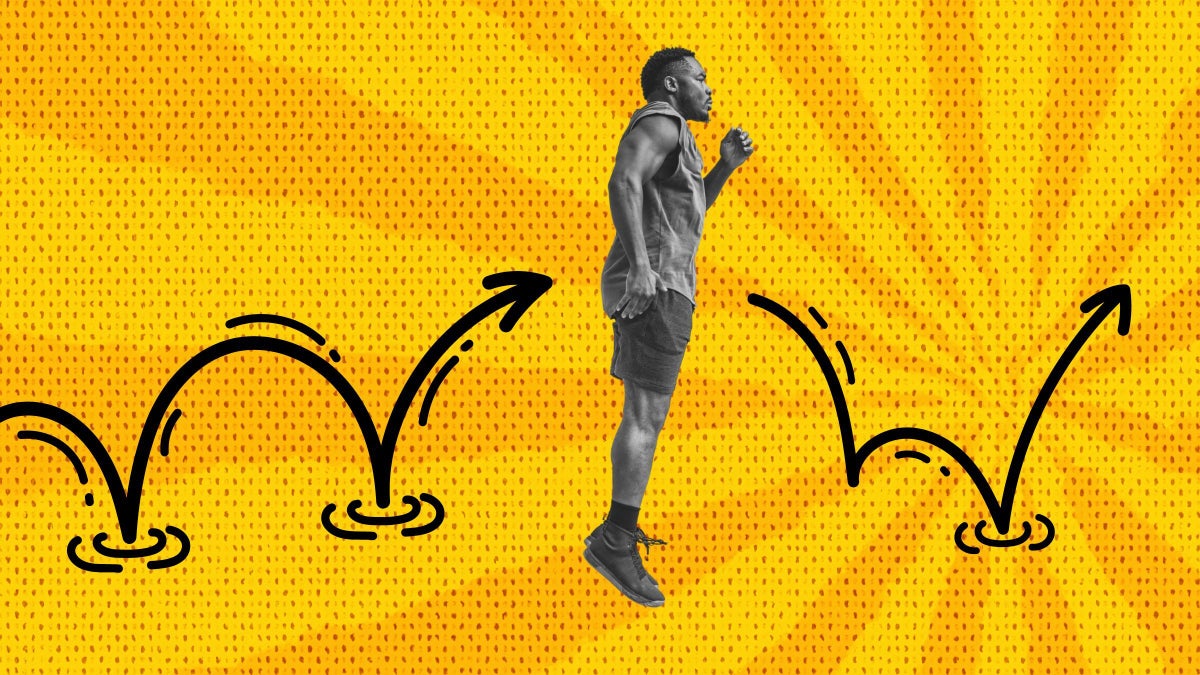
You’ve tried everything to feel more awake in the mornings—caffeine, sunlight, water, stretching—but no matter what, you still feel groggy and unready to face the day. There’s one thing you probably haven’t tried that’s taking social media by storm: jumping.
There are hundreds of TikTok videos, some which have garnered more than 600K likes, of people singing the praises of jumping 50 times each morning when they get out of bed. The purported perks? More energy, better mood, and less bloating and inflammation.
@brightly.elevated I decided to try something simple: 50 jumps every morning. No timer, no workout plan, just… jump. I was skeptical 50 gentle jumps would make a difference, but… After one week, here’s what I noticed:
Surprisingly, my legs feel rested when I GO to bed, not restless.
Definitely going to continue for the whole month and see how it goes. Want to join?!? #50jumps #MorningMovement #jumpinthemorning #MobilityMatters #FeelGoodFitness
But is there actual science to back up these health-boosting benefits? We chatted with a fitness expert and tapped the latest research to find out.
The Benefits of Jumping in the Morning
Interested in trying out this trend for yourself? Here are a few of the perks.
1. It Builds Bone Density
High-impact exercise, like jumping, improves the density of your bones, which is a measure of how many minerals (mainly calcium) are in your bones. The higher the mineral content, the stronger your bones, which helps prevent fractures and bone loss.
“High-impact loading, including jumping, can improve or preserve bone density, particularly at the hip, when done consistently over weeks or months,” says Grayson Wickham, DPT, CSCS, founder of Stretch Mode. “The benefit comes from high-impact, high-strain-rate loading with good landings, not casual, bouncy hops.”
Research backs this up. A 2023 systematic review and meta-analysis in the Journal of Sports Sciences suggests that jump training—in this case, 50 jumps four times a week—improves bone density on a part of the hip called the femoral neck in younger and older adults.
Additionally, a 2023 systematic review in Cureus found that high-intensity and high-impact exercises are effective in maintaining or improving bone density in the lumbar spine and femur in postmenopausal people.
2. It Builds Muscle
Not only does having strong muscles help you do the activities you love, but it also helps you with everyday tasks like being able to carry all your grocery bags from your car into your house, lift a heavy couch during a move, or pick up your pets and kids with ease. Plus, working your muscles on the regular can lower your risk of heart disease and other chronic conditions.
As it turns out, plyometric training, like jumping, can increase muscle size. A 2022 systematic review and meta-analysis in Frontiers in Physiology confirms the fact that plyometric jump training can boost muscle hypertrophy (size), regardless of age and sex. The more frequently you jump, the greater this effect is, according to the study.
While plyometric training typically requires more intense jumps than you would in your bedroom first thing in the A.M., a small 2025 study in Sports suggests jumping rope—a type of hopping more akin to this viral trend—can also improve muscular strength
3. It Promotes Lymphatic Drainage
Lymphatic drainage is a wellness buzzword that sounds hokey but is a real thing: It’s essentially your body’s waste management and recycling system. When blood delivers nutrients to your tissues, some fluid, called lymph, gets left behind. The lymphatic system picks up the lymph (and other bacteria, waste, and toxins) and carries it away to be cleaned and recycled to prevent your body from swelling.
In fact, exercise that stimulates muscle contraction and breathing, like jumping, “can promote lymphatic flow, and potentially decreases fluid accumulation in tissues,”when done twice a day in the morning and at night, according to a 2023 study in Frontiers in Cardiovascular Medicine.
4. It Improves Circulation
Circulation refers to the continuous flow of blood throughout your body. While the delivery of blood to your organs, tissues, and muscles is already tightly regulated, exercise, like jumping, can increase this, according to Wickham.
“When you contract your muscles repeatedly, you turn on the ‘muscle pump,’ which helps venous return,” he says. (The term “venous return” refers to the amount of blood flowing from your veins back to your heart.)
Without proper circulation, your cells wouldn’t get enough oxygen and nutrients, leading to things like health issues and/or organ dysfunction, according to the Cleveland Clinic.
While exercise at any time of day can improve circulation, some research suggests morning exercise has an added benefit. For instance, a 2019 study in the Journal of Applied Physiology showed working out in the A.M. promoted blood flow to the brain.
5. It Wakes You Up
Jumping 50 times is enough to make you feel alert, Wickham says. Indeed, exercise in general improves fatigue, energy, and vitality, according to research, so getting in some movement first thing in the morning can do all that.
Not to mention, a small 2025 study in Nature suggests that exercising in the morning advances the sleep-wake cycle, thus helping you wake up. Plus, morning exercise has been shown to improve attention and decision-making skills.
“When it comes to boosting energy and mood lift, a brief bout of movement can absolutely make you feel more awake, more energized, and in a better mood,” Wickham says.
Who Should Skip the Jumping
You might want to think twice about participating in this trend if you have a weak pelvic floor, significant knee, hip, ankle, or foot pain, Achilles tendinopathy, plantar fasciitis, recent sprains, a history of stress fractures, or balance issues, Wickham says.
If this is you, you can still reap the trend’s benefits with a lower-impact morning routine, like five minutes of a mobility flow, which also improves blood flow, alertness, and mood, according to Wickham.
To get the most out of your jumps, jump 50 times in place at a rapid, consistent speed, making sure to drive through the balls of your feet and land softly on the balls of your feet. You don’t necessarily need to jump as high as you can, but doing so adds bone- and muscle-strengthening benefits. For a less-intense option, take breaks in between your jumps, don’t jump as high, or do fewer than 50 jumps.
The number 50 is a habit-friendly, round number that feels like a challenge, but you can see benefits with lower rep counts, according to Wickham.
The post Can Jumping 50 Times Each Morning Actually Improve Your Health? appeared first on Outside Online.