








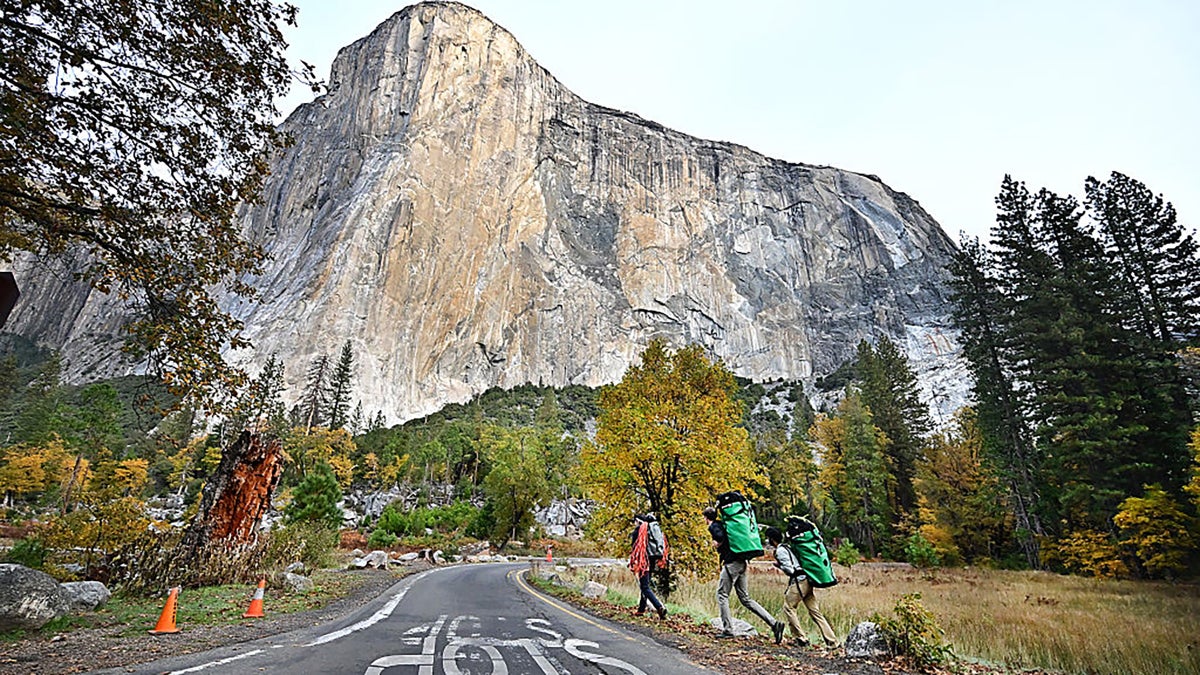
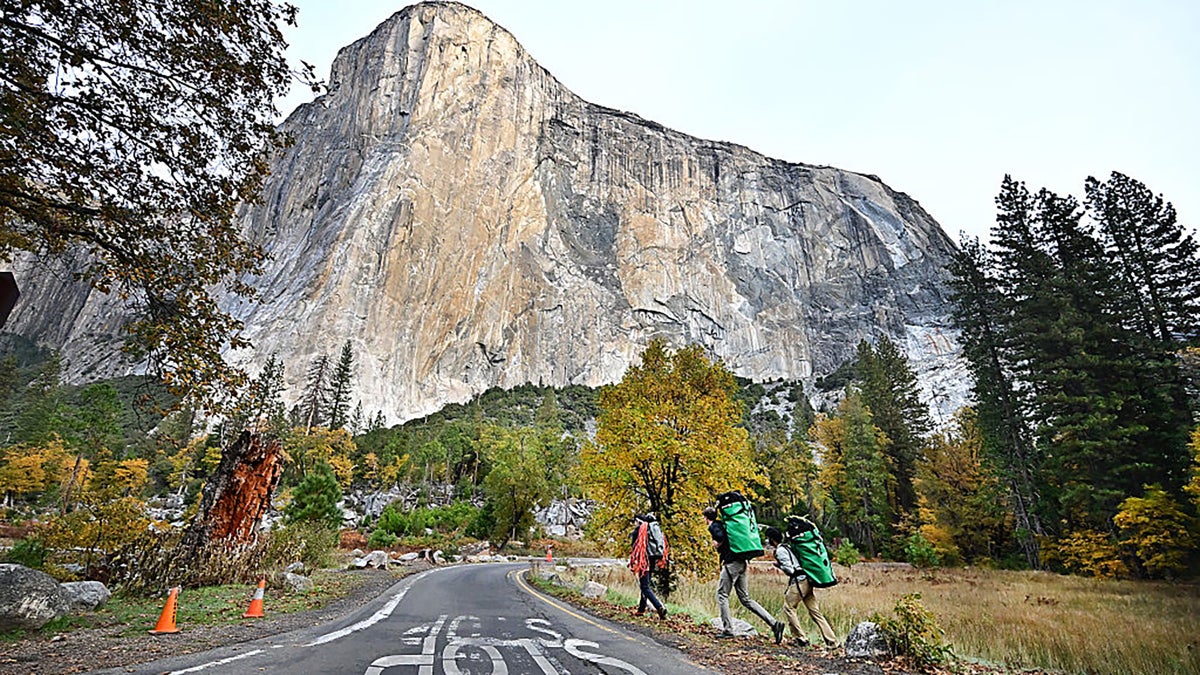
This past September, some members of the Yosemite National Park Search and Rescue on-site team met at the base of El Capitan, clad from head to toe in their climbing gear. Due to the nature of their work, SAR Siters, as the group is called, must be capable of ascending sheer cliffs like El Capitan to perform rescues on famed climbing routes around the valley.
The SAR Siters weren’t at El Cap for a rescue—they were going to climb the famed route The Nose in one daylong push for fun. Due to a lack of SAR calls, the team had more than enough free time for the adventure.
“I think we went almost a month without a SAR,” Katy Stockton, a 2025 Valley SAR Siter, told Outside. “We were wondering what to do and hadn’t been paged in a long time.”
The long stretch of inactivity came during a period of national interest in YOSAR. In August, the website Politico published a story about how the federal cuts to the National Park Service were impacting Yosemite. After filing a public records request, Politico found out that search and rescue missions were up 40 percent in Yosemite between the months of January and July, when compared to 2024 numbers.
The report came as a surprise to Stockton and other members of the YOSAR community.
“Those statistics are always so interesting,” Stockton told Outside. “Because there are so many things that should be taken into consideration that just aren’t.”
Outside spoke to Stockton, other members of YOSAR, and a park spokesperson to dig into the statistics, and to try to understand why rescues were up in 2025. It was an odd season—busy in the spring, a late-summer lull, then October saw three rescues on El Capitan in two weeks. These sources helped us parse the statistics, and also presented explanations for why the uptick in SAR calls could continue to increase for the foreseeable future.
The SAR Uptick Continues
Outside reached out to the National Park Service to comment on the story, and the agency provided updated metrics on rescues. As of November 12, Yosemite has conducted 235 SAR events in 2025. That’s the most since 2018.
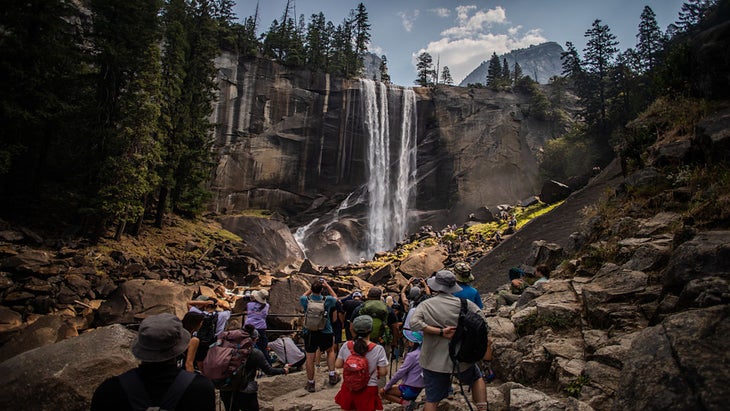
In 2024, there were a total of 194 SAR missions—21 percent fewer than this year. Here’s a breakdown of rescues versus visits over the last several years:
- 2018: 235 SAR calls, 4,161,087 visitors
- 2019: 225 SAR calls, 4,586,463 visitors
- 2020 (*COVID): 112 SAR calls, 2,360,812 visitors
- 2021: 214 SAR calls, 3,343,988 visitors
- 2022: 196 SAR calls, 3,812,316 visitors
- 2023: 178 SAR calls, 4,057,237 visitors
- 2024: 194 SAR calls, 4,285,729 visitors
An NPS representative attributed the uptick in SAR activity to Yosemite’s busy year. According to current estimates, the park saw between 4.4 and 4.5 million visitors in 2025, making it the sixth most-visited NPS site in the country.
“This year is likely to be the park’s second-busiest on record,” a park representative wrote in an email. “As visitation increases, the number of SARs tends to rise proportionally. Several factors may contribute to this trend, including expanded access, improved visitor reservation systems, and perhaps broader use of personal technology.”
The NPS spokesperson did not cite the events of the government shutdown, which lasted for 43 days, the longest in history. National news reports circulated amid the shutdown about Yosemite’s apparent lawlessness: busy climbing routes, BASE jumpers, and meadow squatting.
However, a source within Yosemite EMS told Outside that the total number of SAR calls did not increase noticeably during the shutdown when compared to 2024 numbers. According to numbers provided by the source, there were 16 SARs between October 1 to November 6—the same as in 2024.
“Yosemite’s search and rescue operations remained fully operational during the shutdown,” an NPS spokesperson told Outside. “Yosemite National Park sees base jumping activity every year, and law enforcement rangers are responding to incidents as they normally would. Some media reports have overstated routine issues that occur in a busy park.”
A Busy 2025 Inside the Park
In addition to the uptick in visitation, sources told Outside that other changes may have contributed to the high number of SAR calls.
In 2024, one of the park’s main arteries, Tioga Road, which runs through Yosemite’s High Country and Tuolumne Meadows, was under construction. That made it challenging for climbers, hikers, and campers to find parking, which discouraged scores of them from venturing into Yosemite’s High Country.
“During construction, Tioga was so hard to drive on,” Stockton told Outside. “And you couldn’t park at any of the trailheads, so no one was up there.”
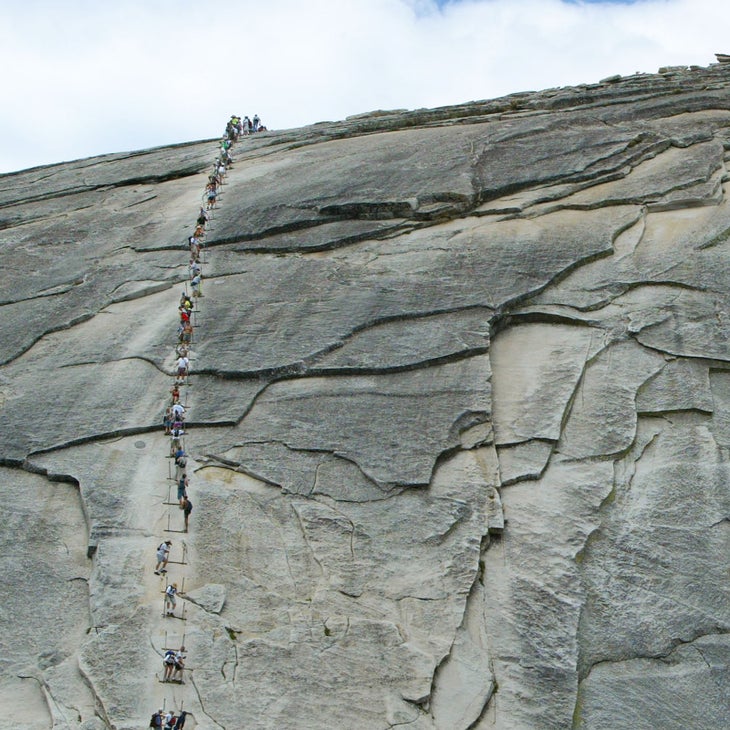
Additionally, the campground, store, and Tuolumne SAR Site didn’t open last year, making it even less likely that many people recreated there. This year, construction was completed. More visitors traveled to Tuolumne Meadows and into the backcountry.
Other sources told Outside that the uptick in smartphones, smartwatches, and other devices with SOS technology may have also contributed to the rise in SAR calls.
“I do think SARs could be trending upward because there’s something to the satellite-capable iPhones and inReach devices,” a SAR Siter team member said. “That’s a huge deal. It means that people have easier access to dialing 911. Almost everybody who spends time in the backcountry now has an InReach.”
Other Reasons for the Uptick in SAR Calls
Despite the uptick in calls for backcountry SAR teams, general emergency calls—those accessed by roads—were down, a source within Yosemite’s emergency medical services told Outside. The drop in emergency calls—from fires, to accidents, to law enforcement needs—adds another wrinkle to the SAR statistics
“I think every season has a theme,” Stockton added. “Three years ago, it was the year of the searches—just endless searches that lasted months. And we didn’t have a single search that I know of this year. Last year was the year of the body recovery, lots of fatalities. This year it was the year of the tech rescue.”
An NPS spokesperson told Outside that technical rescues—those involving helicopters, rope systems, and rigging—were up in 2025 compared to 2024.
“In 2025, Yosemite conducted 19 short-haul missions, five operational heli-rappels, and three operational hoists,” the NPS spokesperson wrote. “All three hoist missions and at least six short hauls were for climbers. Climbing-related rescues remain a major component of the park’s helicopter SAR operations.”
Perhaps larger than the SAR count, 2025 was singular in that Yosemite EMS workers were asked to do more, even at times for free. Many seasonal NPS employees in 2025 were casualties of DOGE cuts at the beginning of their seasons, and the season ended in the middle of the government shutdown.
“No one had any idea if they had a job at the beginning of the season,” Stockton told Outside. “But people showed up and worked anyway, hoping that they would get back paid. Then the season ended, with everybody losing their jobs again due to the government shutdown.”
When resources were at their thinnest in 2025, nonprofits like Yosemite Conservancy and Friends of YOSAR donated money to ensure that the SAR Site, established in the sixties, continued to exist in 2025. And backcountry and front country employees banded together—on their own time—to teach each other their jobs, with the medics teaching aid to the SAR Siters, and SAR Siters teaching rigging and rappelling to medics.
“We trained each other because we couldn’t be sure about how resources were going to be allocated during emergencies this year. In a time of stress, people came together to make it better than it had been before. People care, and it really showed this season.”
The post Rescues Were Way Up in Yosemite National Park this Year. We Dug Into the Numbers. appeared first on Outside Online.