








You can see it poking out from the back of beanies at bouldering crags. Under helmets on cycling routes and mountain bike trails. At climbing gyms, usually accessorized with a mustache and without a shirt. The mullet is back, and it’s inescapable.
“It’s the rebellion haircut of our time,” said Sam Jobek, a hairstylist based in Los Angeles, California, who specializes in mullet cuts.
So maybe it’s obvious why the controversial look has always appealed to climbers, dirtbags, cyclists, mountain bikers, and other outdoor enthusiasts who see themselves as rebuking traditional society and balancing on the edges of it.
“Mullets are pretty OG dirtbag culture,” mulleted boulderer Keenan Takahashi said. “A lot of the OG legends in Yosemite had mullets.” Takahashi originally got his to honor his friend John Bolte, who died from rockfall in El Chaltén in 2022 and sported a truly impressive curly mullet. Takahashi’s kept it for three years now, carrying on the tradition of mulleted Yosemite climbers.
Wolfgang Güllich, the great German climber who first free soloed the quintessential Yosemite roof climb Separate Reality in 1986, is pictured shirtless in red-and-white striped leggings, ripped as all hell, his shaggy mullet and mustache upgrading the photo to unforgettable. After topping out the iconic El Cap route Iron Hawk in 1984, Russ Walling’s grown-out hair is unmistakably mullet-like—it’s the same with his friend, Yosemite legend Scott Cosgrove. The androgynous cut was also popular with women climbers like Lynn Hill in the eighties.
“You can really let it go. A bad mullet is still a good mullet.”
But the current and former mullet-havers I spoke with admitted the same thing: it didn’t start as a statement. It first came because they got lazy, and it’s hard to find a barber when you are spending most of your time on the wall, in the mountains, or on a bike.
“I like having longer hair,” Squamish-based boulder Ethan Salvo said. “It keeps me a bit warm and looks cool when it gets dirty, and I don’t shower for weeks. But long hair in your face when you’re climbing sucks.”
The mullet is functional and low-maintenance. “You can really let it go. A bad mullet is still a good mullet.” Canadian climber Connor Runge, who has worn the controversial hairstyle for two years, said.
Climbing isn’t the only sport strewn with it’s-so-bad-it’s-good mullets. The hairstyle makes an appearance in the 2006 film Klunkers, a documentary on the birth of mountain biking. Surfers mostly dodged the mullet, Jack Serong wrote in a 2017 article for Surfing World, though the four-time World Champion surfer Mark Richards briefly wore the shaggy style in the late 70s. And while eighties ski suits are back on the slopes, the mullet largely isn’t, except on a sign banning it on Lake Tahoe’s Mount Rose.
But cycling is where mullets solidified their reputation as the unofficial uniform for sports contrarians. In 1991, Dutch Gert-Jan Theunisse sported one of the pioneering mullets in the sport. Combined with a polka-dot jersey, a gold earring, and a neon yellow bike, he made a list of “most rakish cyclists in history.”
“The mullet, hairstyle of the gods!”
Then, in 1997, came Laurent Brochard, a Frenchman who won a stage of the Tour de France with business in the front, party in the back in tow. As a shy, introverted junior on the tour, the mullet drew media attention he never would have gotten on charisma alone, according to him.
“It was something that was a little innovative,” he said in French. It even earned him the nickname the Yearling from his sports director because he had the temperament of a young horse and looked like he had a horse’s mane. But Brochard didn’t end his career with a mullet. In 2003, the Tour de France started requiring helmets, setting the stage for it to become the standard for all professional races.
“People didn’t recognize me anymore,” he said. So with the helmet concealing the locks, Brochard saw no reason to keep them and cut the mullet off.
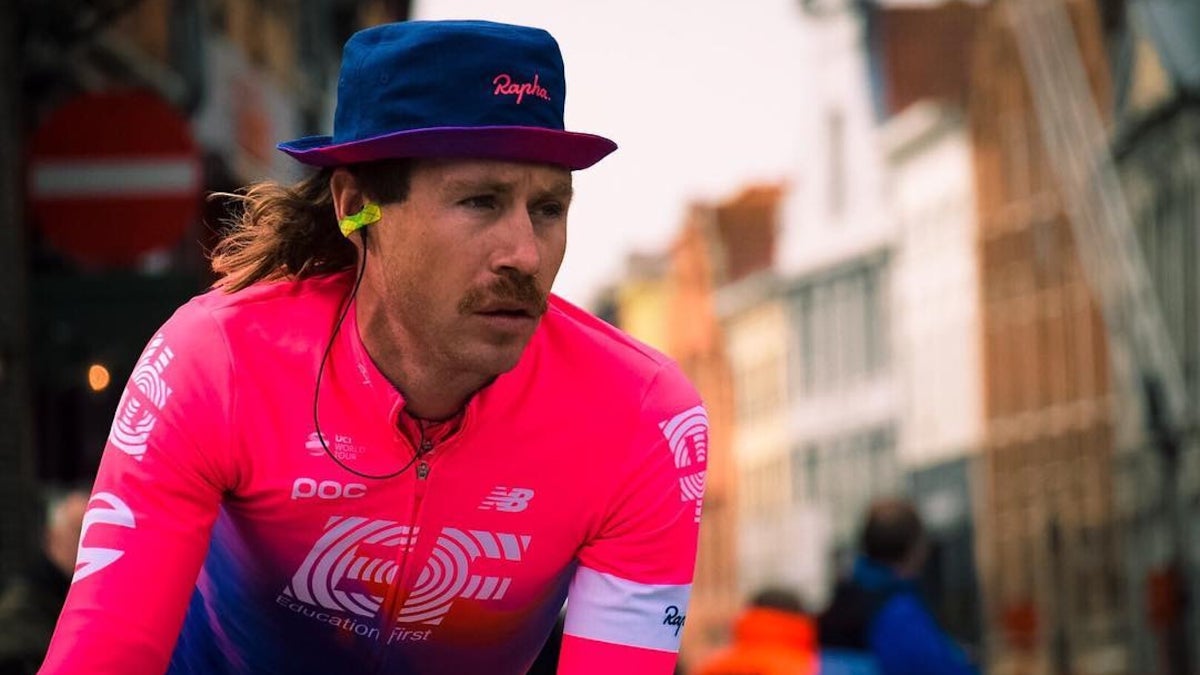
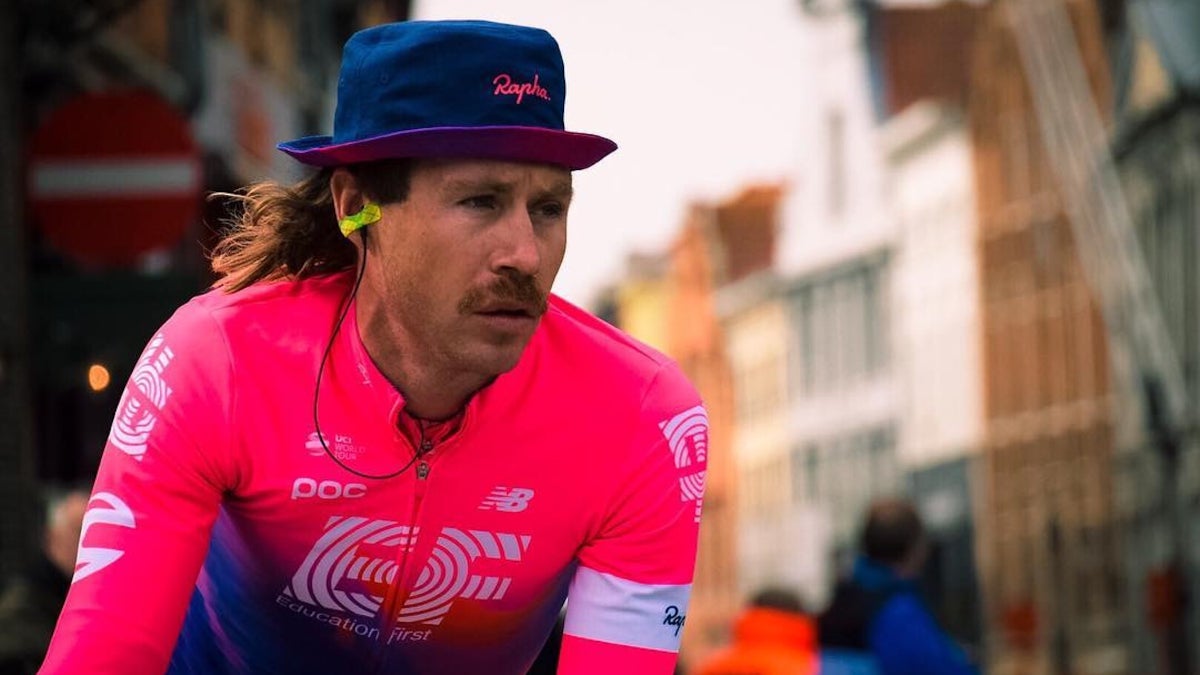
But for the next generation, even just the tuff at the back was enough to stand out. In the early 2000s, Vladimir Karpets, an eccentric Russian cyclist, wore a mullet under his helmet—inspiring those coming up behind him, like Mitch Docker and Shane “the kiwi flying mullet” Archbold, to wear one too.
“I feel like pro cyclists sometimes struggle to show their personality,” Docker said, the Australian who first wore a mullet during the 2007 Tour of Java in Indonesia. “I was always trying to change something in the kit. And the mullet was a bit of that.”
“Most riders do look alike,” Archbold told Outside. “It’s a very clean-shaven, traditional sport. For people at home watching me race, it was useful to see the mullet, which was one very small reason to keep it.”
There are other practical reasons for it in cycling, too. According to Docker, the flow at the back protected his neck from developing the zebra stripe sunburns that come from spending hours in a cricked position on the bike.
The same shade protection is as true on the wall as it is on a bike. On a 2024 UK Climbing forum, a poster also wrote that he saw a video where the mullet was called “the best haircut for climbing. The party at the back keeps your neck shaded from the sun, while business at the front doesn’t get in your eyes while you climb.”
“Anything that’s not conventionally fashionable is cool in my book.”
But for climbers, maybe the true advantage is that it just makes you send harder. A 2008 post on the popular forum Mountain Project asked one of the sport’s toughest questions: What’s the best hairstyle for climbing? Commenters sang its praises: “The mullet is the most hardcore climber haircut ever. Wear it without a shirt, and you’ll easily redpoint your sickest 14d proj, brah.” and “The Mullet is for sending!!” and “The mullet, hairstyle of the gods!”
It’s true that some of the hardest climbers have always let it grow long. Joe Kinder, the controversial 45-year-old professional climber, rocked one for years. In 2012, when the former bouldering national champion Natasha Barnes got her mullet, she was keeping alive the lineage of badass female mullets. And Kelly Cordes, a climber, alpinist, and author, had a photo of his mullet during an ice climbing competition end up in the New York Times in 2012.
“Anything that’s not conventionally fashionable is cool in my book,” Cordes said.
Today, the look has become mainstream enough that the rock climbing, dirtbagging influencer and filmmaker Beau Martino can amass a following off of it. Martino creates sketches about the mulleted, mustachioed outdoor lothario who somehow always ruins your life. I am clearly in his algorithm’s target demo as my last three crushes all sported the trendy soft mullet look (a climber, a mountain biker, and a musician, in case you were wondering).
But now that Jacob Elordi, Harry Styles, and the average Bay Area guy have the cut, it can’t be considered rebellious for much longer. It will drift back to standard outdoor accoutrement.
“I was in before the trend,” Martino said of his mullet cut. “I’ve lived the trend, and as the trend is going out, I’m lasting longer than it.”
Long live the dirtbag mullet.
The post The Colorful History of the Outdoor Mullet appeared first on Outside Online.