








Moose and moths may seem like an unlikely pair, but in the northeastern United States, the duo has developed a special sort of relationship.
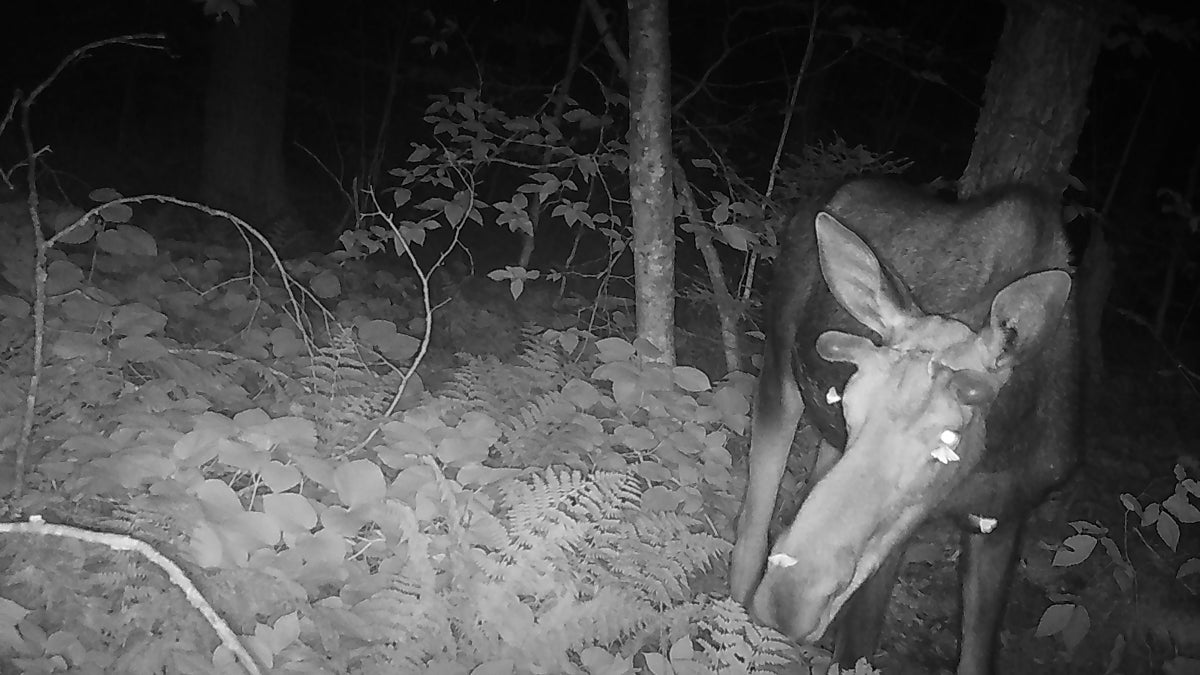
For the first time, scientists have observed insects feeding on a moose’s tears. In what researchers call an “unusual behavior,” trail cam photos present the first documentation of moths visiting the eyes of a bull moose in Vermont‘s Green Mountain National Forest.
Moths and their more charismatic cousins, butterflies, use a straw-like proboscis, or elongated sucking mouth, to feed on nectar in flowers. Sometimes the insects will also do what’s known as “puddling,” slurping minerals and nutrients from soil, feces, and even human sweat.
Until now, though, moths have not been known to drink the tears of North American moose.
Study author Laurence Clarfeld is a researcher at the University of Vermont’s Cooperative Fish and Wildlife Research Unit. While scrolling through trail cam photos captured in New England, he noticed something strange about the nighttime clips.
One four-legged ungulate had a special two-winged friend.
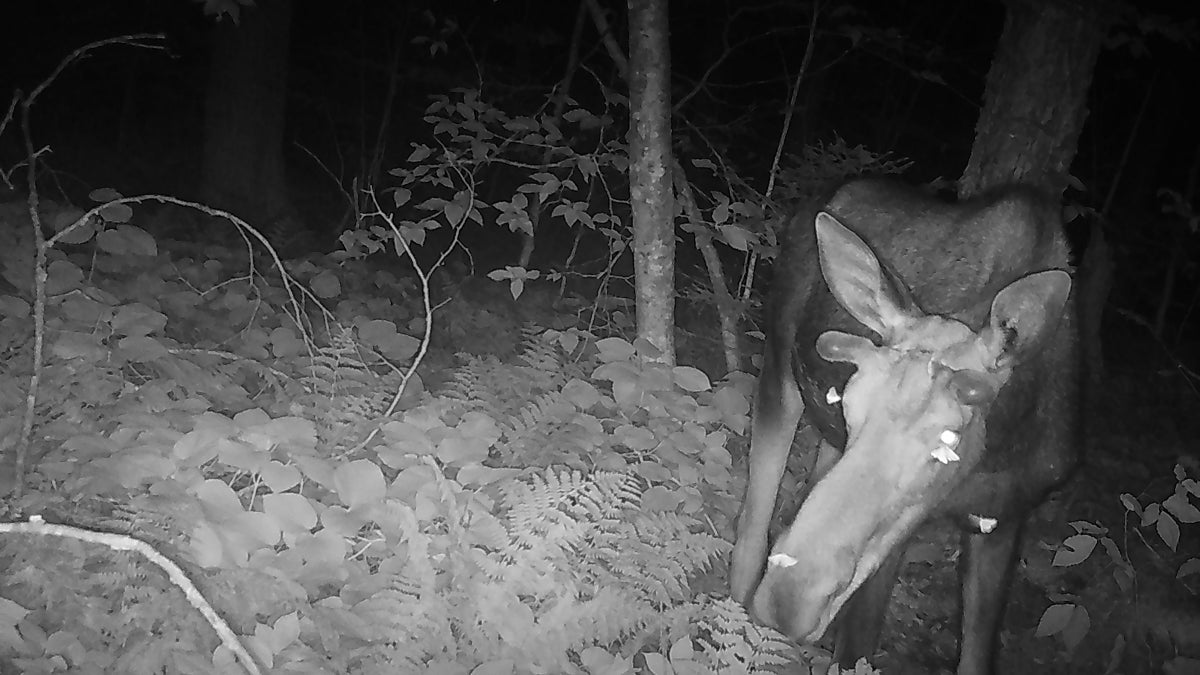
A closer examination of the images indicated that the moths were drinking tears from the moose. It’s an incredibly rare behavior—or, at the very least, rarely captured on camera. Until now, it’s only ever been seen in tropical areas.
And aside from a moth seen drinking the tears of a horse in Arkansas, researchers say records outside of the tropics have been scant.
Moose tears may sound like the perfect après-ski cocktail, but Clarfeld says there is a very reasonable explanation for the behavior.
“The moths are likely seeking minerals like sodium or nutrients that are deficient in their environment,” he told Outside. “I don’t think drinking tears, specifically, is a learned behavior. Rather, I’d speculate that the moths are detecting whatever mineral/nutrient they are seeking, the source of which, in this case, just happens to be moose tears.”
So, he set out to do what any scientist would—document and compile the data, and then publish it in a peer-reviewed study.
“I was even more shocked to find this particular species interaction had never been documented in the scientific literature,” Clarfeld says.
In all, Clarfeld looked through 247,000 images across 476 sites in the northeastern U.S. He regularly uses technology such as trail cameras and acoustic recorders to study wildlife, and says that this is a perfect instance of where artificial intelligence and machine learning can help process data quickly in ways humans have not been able to before.
“It’s an exciting time to do research in the field,” he says. “I look forward to future collaborations and helping wildlife biologists maximize the potential of these tools and technologies in their research.”
Clarfeld notes that there is still so much scientists don’t understand about how species interact with each other. This is especially true at night when direct observation can be challenging. “There are a lot of new discoveries still waiting to be made, and with careful observation, it is possible for almost anyone to make one,” he adds.
The post Wildlife Cameras Reveal an Unusual Feeding Habit Between a Moth and a Moose appeared first on Outside Online.