







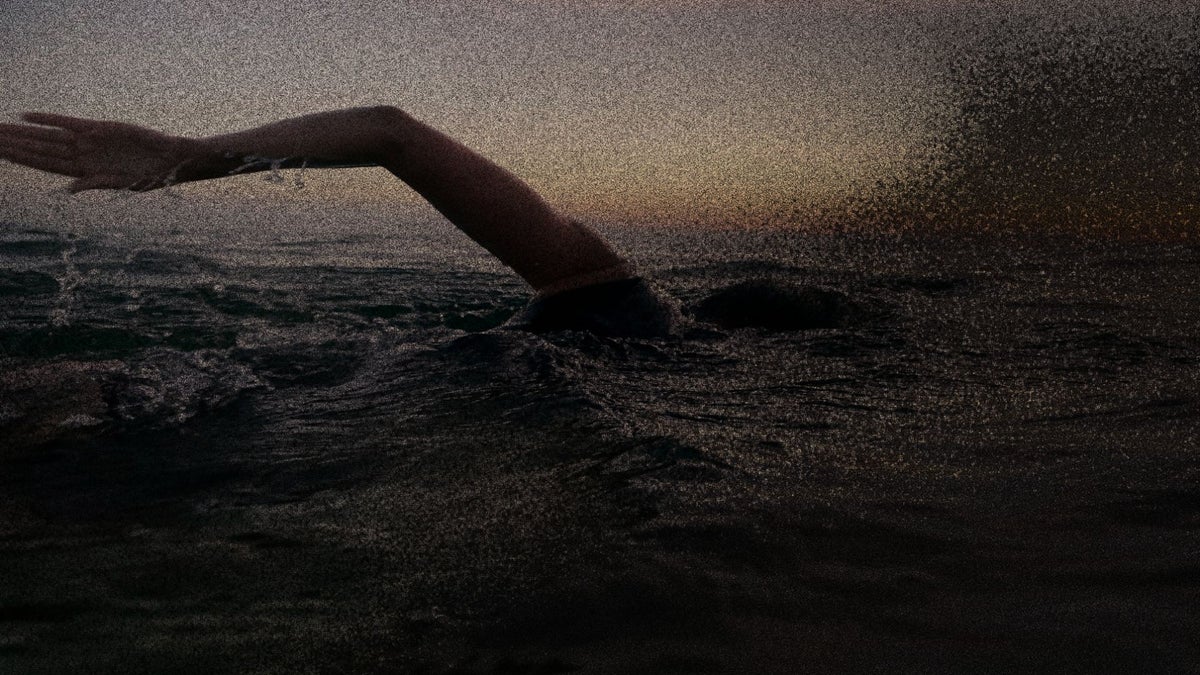
Erica Fox, 55, was an avid swimmer and triathlete who, for the last 20 years, had spent nearly every Sunday swimming in the Pacific Ocean off the coast of California. On December 21, however, she went missing while swimming. Now, rescue personnel have called off the search after a fleet of boats, helicopters, and dive teams spent two days scouring the surrounding waters and shoreline.
“The decision to suspend the search was made following a total of more than 15 hours of search operations covering an area of more than 84 square nautical miles,” said the U.S. Coast Guard in a news statement.
On the morning of Sunday, December 21, Fox was swimming in the ocean at a local beach called Lovers Point near Monterey Bay, when she disappeared. First responders were called at around noon, according to a joint media release published later that day by the U.S. Coast Guard and the towns of Pacific Grove and Monterey. At least two witnesses believed she had encountered a shark.
Sara Rubin, a longtime friend and member of the same swim club, was in the water with Fox when the attack happened. Rubin, editor of the local media outlet Monterey County Weekly, remembered Fox in a written piece as a triathlete and longtime ocean swimmer. Fox was the co-founder of a local ocean swimming club, the Kelp Krawlers, and was swimming with about 15 others at the time of her disappearance.
“Like the other swimmers, I was unaware that a tragedy was happening, with only the sounds of my own strokes splashing,” Rubin wrote. “I got out of the water to greet my fellow swimmers who’d already returned to shore, surprised to see a gaggle of fluorescent-vested firefighters standing among them.”
Firefighters arrived at the beach after a man driving by onshore called 911 to report a shark sighting. Responders evacuated everyone from the water, checking to make sure all swimmers were accounted for.
That’s when Rubin realized Fox didn’t make it back to shore.
“Before today, if I was trying to make sense of a senseless loss of life in the ocean, I would have called Erica Fox to talk it through,” Rubin said. “She would be calm and reasoned; she understood the risk of swimming in an ocean habitat that is home to white sharks, and she understood the risk in context. I think she would be horrified to see the frenzied news coverage of this incident.”
Rubin added that she believed her friend would even disagree with those who characterize her death as the result of an attack.
“She would urge us to instead call it an incident,” Rubin wrote. “An animal’s behavior is just that. I have found myself searching for something to be angry at in facing this loss, and then feeling a little confused when I can come up with nothing—it is unreasonable to be angry at a shark. In the absence of anyone or anything to direct anger toward, I’m left just with sadness.”
It’s not the first shark encounter the California swim team has experienced recently. Another Krawler was bitten by a shark at Lovers Point in 2022. He survived with severe injuries.
Should Ocean Swimmers Be Concerned About Shark Attacks?
While Fox’s disappearance has shaken the community, data suggests such incidents remain rare. According to the website Tracking Sharks, Fox’s attack, if confirmed, would mark the fourth overall shark attack in California this year, and the 27th in the country.
Data published by the Florida Museum of Natural History offers a slightly more discerning analysis by distinguishing between provoked and unprovoked attacks. Provoked attacks, according to the organization’s International Shark Attack File (ISAF), are those that result from some form of human interaction with a shark. These may include divers, spearfishermen, or people who come into contact with sharks, or bites occurring while removing sharks caught as bycatch.
Unprovoked attacks, on the other hand, are those where “a bite on a live human occurs in the shark’s natural habitat with no human provocation of the shark.”
On average, there have been around 64 unprovoked shark attacks annually in recent years, and 47 unprovoked attacks in 2024. The United States leads the world in documented unprovoked shark bites, with Florida having significantly more bites than any other state, followed by Hawaii, Texas, and then California. Still, the risk of being bitten by a shark “remains extremely low.”
The Investigation Continues
Officials involved in the search for Fox clarified that just because the formal search efforts have been called off, the investigation into her disappearance isn’t over.
“While coordinated search operations have concluded, detectives will continue to investigate the circumstances surrounding the disappearance,” said Brian Anderson, a commander in the Pacific Grove Police Department, in the agency’s media release. “We remain committed to determining what happened and following every available lead.”
As the community waits for answers, the coast remains quiet. Multiple beaches in the area have been closed to the public due to the suspected attack.
The post Erica Fox Spent Decades Swimming off the Coast of California. Now, Authorities Believe A Shark Killed Her. appeared first on Outside Online.