







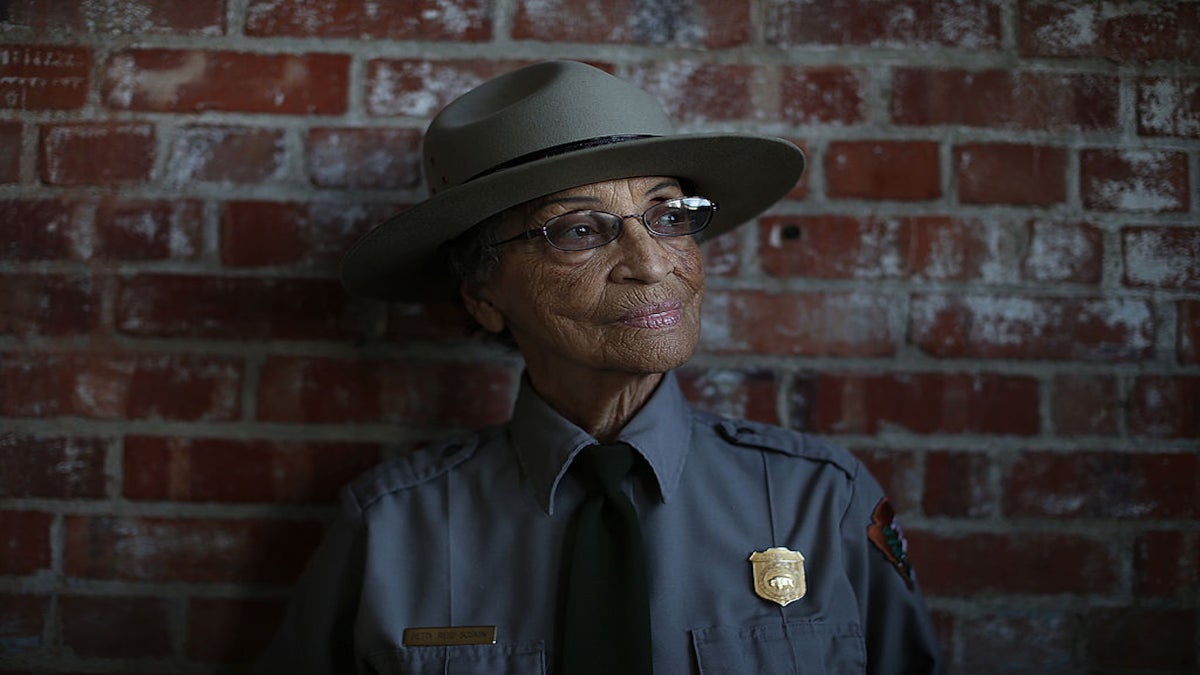
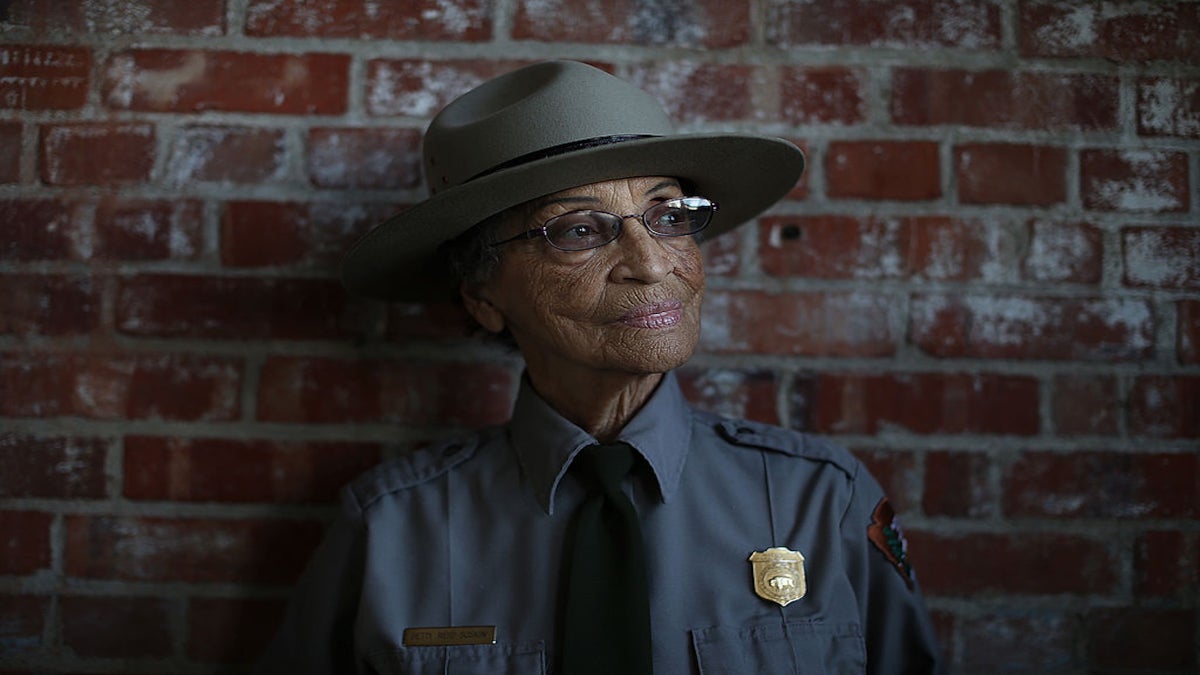
Betty Reid Soskin, the country’s oldest retired National Park Service ranger, has died at age 104.
She passed away on the morning of December 21, at her home in Richmond, California, her son, Bob Reid, said on Facebook.
“Betty was hired by the National Park Service (NPS) as a park ranger at the age of 85 and served until her retirement at 100 in 2022,” wrote Reid. “Throughout her remarkable life, Betty was a mother, daughter, musician, author, political activist, wife, record store owner, songwriter, painter, grandmother, great-grandmother, prolific blogger, and more.”
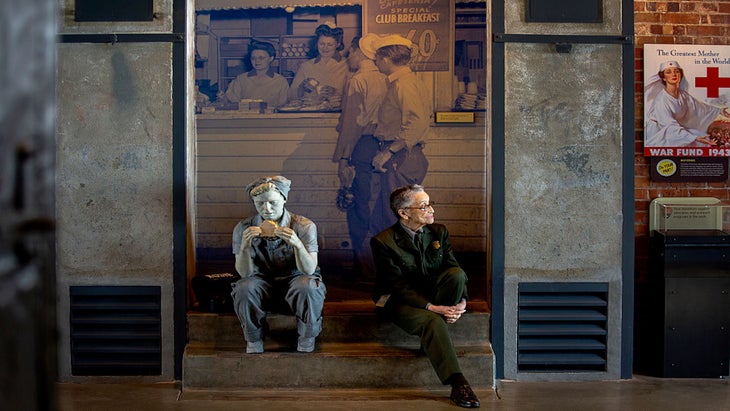
As a civil rights activist, Soskin led a life centered around public service. At an age when most people are in retirement, she returned to work in 2007 as a park ranger at Rosie the Riveter WWII Home Front National Historical Park in Richmond, California. The NPS site honors the efforts of home-front workers, particularly women, during the war.
For 15 years, Soskin gave historical talks and led tours of the exhibits. When she retired in 2019, Soskin was the oldest park ranger in American history.
“She was a powerful voice for sharing her personal experiences, highlighting untold stories, and honoring the contributions of women from diverse backgrounds who worked on the World War II Home Front,” the NPS wrote in a tribute on Facebook.
Soskin empathized with “the importance of representation in preserving our nation’s history,” said The Sierra Club. In 2016, the conservation group awarded Soskin its Trailblazer Award in recognition of her “remarkable life.”
“In her life, Betty witnessed America’s grand historical sweep, from the dark days of lynching and gender biases to the triumphs of civil rights and the election of an African-American president,” the nonprofit wrote on social media. “More than a witness, she actively shaped the nation, breaking racial boundaries and challenging prejudices.”
Soskin was invited to the White House for the 2015 National Christmas Tree Lighting Ceremony, where then-President Barack Obama presented her with a commemorative presidential coin. His foundation publicly remembered Soskin on Facebook after her death.
“The American story is told more completely, our history is known more fully, and our understanding of the experiences of Black women is richer because of Betty Reid Soskin,” the foundation wrote. “Reid Soskin dedicated her life to making sure stories that might otherwise go untold were lifted up.”
Early Life
Soskin was born Betty Charbonnet in September 1921 in Detroit, Michigan, and spent her early childhood in New Orleans, Louisiana. When the Charbonnet family home was destroyed in the Great Mississippi Flood of 1927, they moved to the San Francisco Bay Area, where Soskin lived for the rest of her life.
During the Second World War, she worked as a file clerk for a segregated boilermakers trade union. In 1945, with her first husband, Mel Reid, she opened Reid’s Records in Berkeley. It became a fixture in the community and, at the time of its closure in 2019, was the oldest record store in California.
In addition to raising four children, Soskin was active in the Unitarian Universalist church, volunteered extensively in her community, and was a leading member of the Civil Rights and anti-Vietnam War movements, particularly as a songwriter.
She wrote and performed alongside prominent singer-songwriters of the era, like Ric Masten, Malvina Reynolds, and Pete Seeger.
A Late-in-Life Dedication to Public Lands
Later in life, Soskin worked as a field representative for California’s 14th Assembly District. It was in this role that she became active in the planning for Rosie the Riveter WWII Home Front National Historical Park. She was initially hired as a consultant during the park’s planning stages, due to her experiences both working on the home front during the war and facing racial discrimination.
In addition to her role as a ranger, Soskin was a prolific writer who often addressed issues of race and social justice. Her memoir, Sign My Name to Freedom, was published in 2022. A documentary film about her life, which shares the same title, is also in the works.
Soskin was named Glamour magazine’s “Woman of the Year” in 2018 when she was 96. In the accompanying profile, she remarked that, throughout her near-century of life, she’d witnessed great hardship, injustice, and tragedy, but firmly believed that, in the long run, justice always comes out on top.
“Democracy has been experiencing these periods of chaos since 1776. They come and go,” Soskin said, “and it’s in those periods that democracy is redefined.”
“History has been written by people who got it wrong,” she added, “but the people who are always trying to get it right have prevailed. If that were not true, I would still be a slave like my great-grandmother.”
Reid’s family has suggested that in place of flowers, supporters can donate to help finish the film.
The post Betty Soskin, Oldest National Park Ranger and Pioneering Activist, Dies at 104 appeared first on Outside Online.