








President Donald Trump has suspended a diversity green-card lottery program after authorities said that the suspected gunman in the Brown University and MIT shootings used the program to gain entrance to the United States.
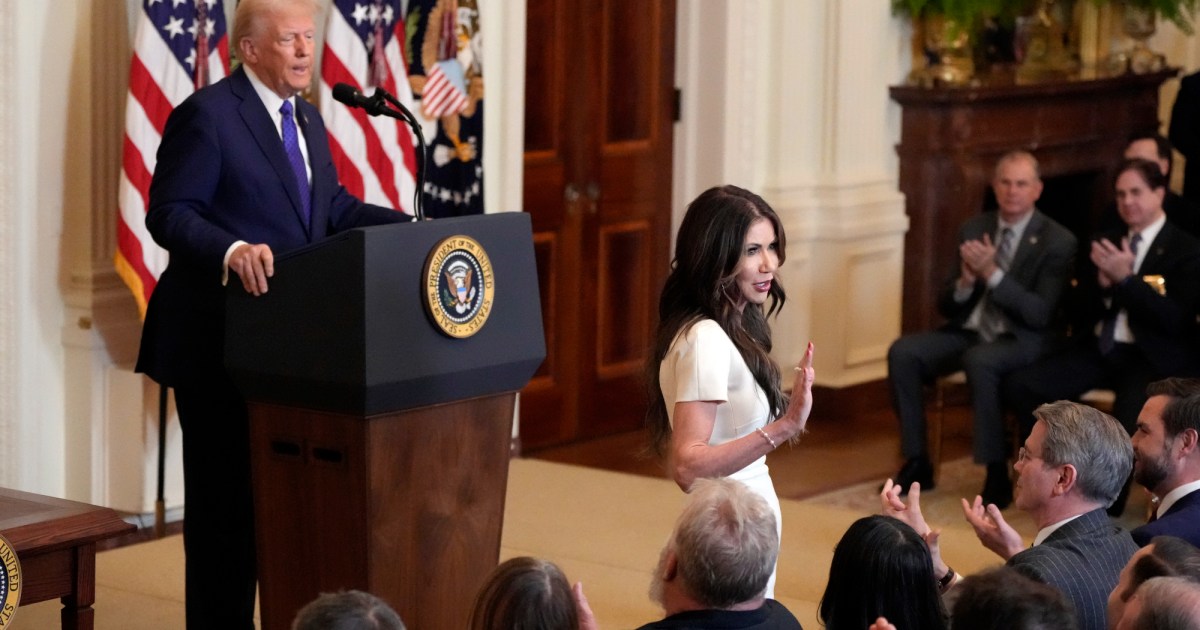
Homeland Security Secretary Kristi Noem announced the move Thursday on social media. “This heinous individual should never have been allowed in our country,” Noem said on X. “I am immediately directing USCIS to pause the DV1 program to ensure no more Americans are harmed by this disastrous program.”
According to police, Claudio Manuel Neves Valente, a 48-year-old former Brown University graduate student, is the man behind two shootings in New England that killed Brown students Ella Cook and Mukhammad Aziz Umurzokov and MIT physics professor Nuno F.G. Loureiro. After a multi-day search for a suspect, authorities found him dead in a Salem, New Hampshire, storage unit. Valente was born in Portugal and was a legal permanent resident of the United States. He first arrived in the country in August 2000 as a graduate student at Brown under an F-1 visa for international students, before later returning in May 2017 under the “Diversity Visa.”
The program’s suspension has long been a goal for the president. In 2017, Trump attempted to push Congress to halt the same visa program after another recipient, Sayfullo Saipov of Uzbekistan, killed eight people and injured 18 others in Lower Manhattan in a terrorist attack.
Established over two decades ago in 1990, the lottery program offers 50,000 visas per year to people from countries with relatively low rates of immigration to the US. According to the State Department, for the 2026 lottery, 20,822,624 “qualified entries” were received during the 37-day application period this fall. Visa candidates must have at least a high school education or two years of work experience in a field that requires training. Those who make it to the application process are required to undergo a vetting process and an interview before getting a visa.
This isn’t the first time the Trump administration has used an act of violence by one immigrant to enact collective punishment for immigrants at large, documented or not. As Isabela Dias wrote last week, shortly after Rahmanullah Lakanwal, a 29-year-old Afghan national, was identified as the suspect in the shooting that killed one West Virginia National Guard member and injured another in late November, “the Trump administration moved fast, stopping the issuance of visas and asylum for nationals of Afghanistan.”
“Then,” Dias continued, “it went a step further: indefinitely halting all asylum decisions, regardless of nationality, ‘pending a comprehensive review.’ The Trump administration also paused the processing of immigration benefits for people from 19 countries targeted by the June travel ban.”
Trump justified that ban, which targeted citizens from 12 mainly African and Middle Eastern countries from traveling to the US, in part by referencing Mohamed Sabry Soliman, a 45-year-old Egyptian national, the suspect in an antisemitic attack in Boulder, Colorado that happened days earlier.
Egypt, however, was not one of the countries included in Trump’s ban.
While it’s not unusual for government leaders to push for legislative changes following violent acts, the continued response to restrict entire immigration systems points to a larger political project to decimate legal ways to be in this country, while painting immigrants as “drug lords,” or “from mental institutions” or “rapists” or people “poisoning the blood of our country.”