







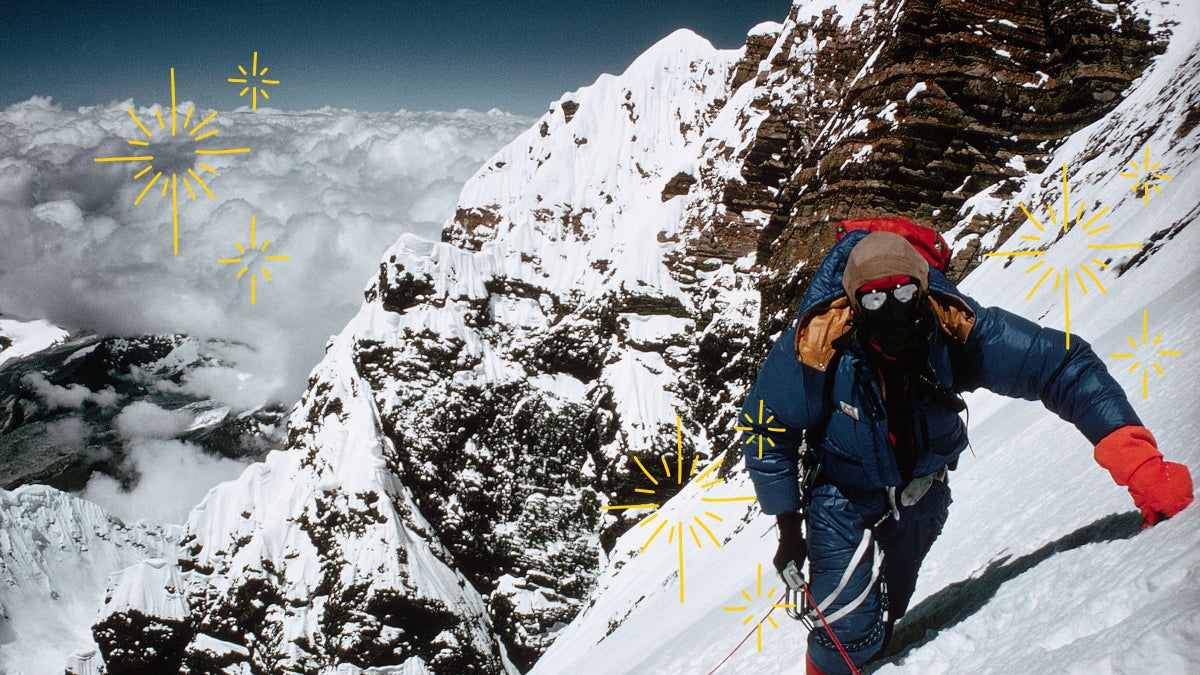
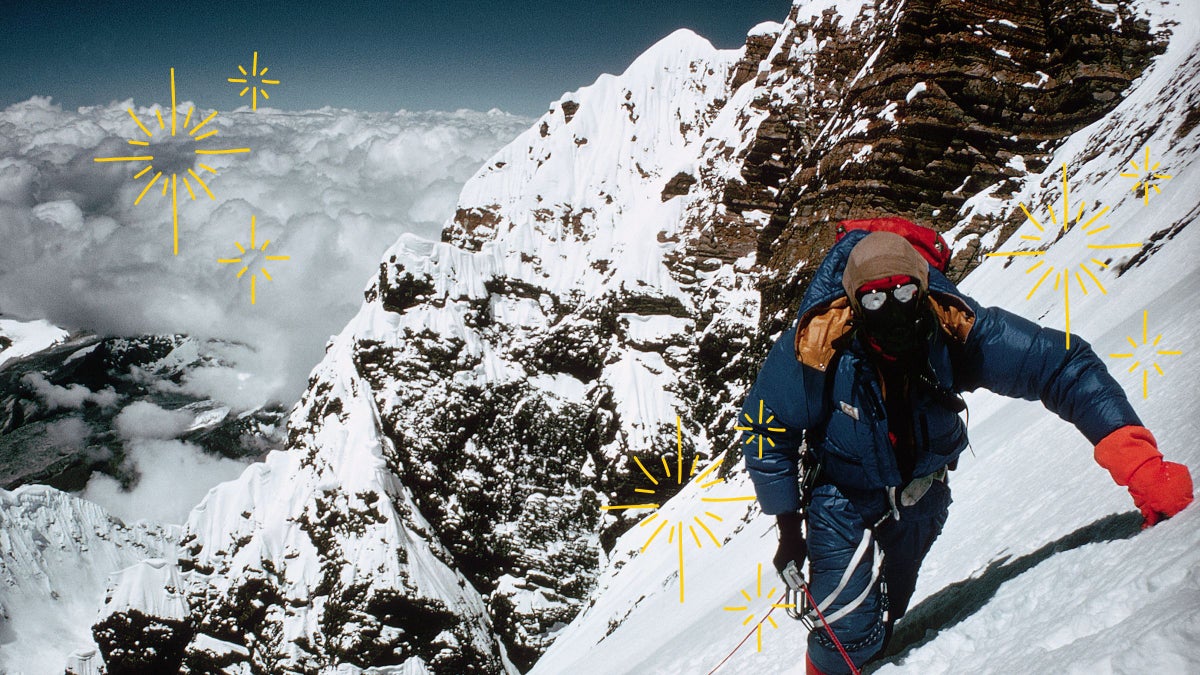
Working the world’s highest mountain is a game of ticking clocks and high stakes—and the players are some of the biggest personalities on the planet. Every May, hundreds of people line up at Mount Everest (Chomolungma) Base Camp to vie for just a few short weather windows. Many have tick lists, social media followings, and big money on the line. It’s the guide’s job to keep these people both happy and alive—even when the client seems to find the two mutually exclusive.
But managing type-A influencers and business tycoons is only part of the job. The heavy loads, pre-dawn wake-ups, and constant travel take a toll on a guide’s body—and on their relationships. Many have a hard time finding a partner who can handle the long absences. Those who do have families endure guilt and criticism for leaving their children behind.
Then there are the hazards of the mountain. Storms buffet the higher reaches and avalanches rip open the slopes, hurling debris at camps and villages, often without warning. The air is thin, and the cold is killer. On average, about six people die on the mountain every year. Some are clients. Some are porters and guides.
High-altitude guiding is a tenuous gig. It’s a job without benefits or a retirement plan, a mistress that will consume you while you’re young and spurn you as soon as your gait slows and your hair goes gray. People drop out, age out, and burn out. And yet, many of the guides who stick with the work say they couldn’t imagine doing anything else. There’s a magic, a sacredness to the mountain, even under its layered grief and tattered prayer flags. The Sherpa call Chomolungma a deity. The Westerners don’t have to ask why.
One longtime guide caught up with us between expeditions to give us a sense of what this work is really like—and why some kinds of magic are worth the risk.
The Gig at a Glance
Job: High-altitude mountain guide and guiding outfit owner
Age: Early fifties
Years in the Business: 20
Salary: $200,000 as a business owner ($60,000 as an independent guide)
Is Guiding Everest as Glamorous as It Sounds?
It’s such a unique combination of work and adventure. You have so much freedom as a guide. You don’t have to worry about what day of the week it is, you get to travel, and your year is always exciting because you’re combining various trips, plans, and locations.
But it’s like any job. Parts of it get to you. After a while, the travel isn’t as fun as it used to be. The only way to make more money as a guide is to spend more time in the field, and if you’re ambitious that means you’re constantly on the go, moving time zones and spending time in tents. There are difficult clients. There are people who don’t tip. There are mornings when you’re at Camp 3 on an 8,000-meter peak, and it’s cold, and you have to wake up at 5:00 A.M. and start stoves. When you’re young and gung-ho, you just drink a coffee and start rocking and rolling. It’s harder now to find that motivation, but you still have to get up and do it.
How Many Trips Per Year Does It Take to Make a Living?
It depends. Right now, I make around $40,000 per Everest trip on average, but that can be as much as $80,000 depending on the group size. That said, I’m the owner of the business. If you’re an average American guide, you might be making roughly $20,000 per Everest trip.
Most people piece together a few summits per year—maybe Everest for one company, and then some Aconcagua or Denali work in the off-season. Some guides do just one or two big trips and live in a cabin in Talkeetna the rest of the time. Others add in some Rainier summits or other guiding and take home $50,000 to $60,000 per year.
What’s the Biggest Tip You’ve Ever Gotten?
A Western guide may get anywhere from $2,000 per Everest trip to as much as $10,000 for a one-on-one guided outing where the client is really happy. The most I’ve ever made on a single Everest trip, though, is probably $5,000.
How Do You Handle the Crowding on Everest?
The crowding tends to be worse for local services than for the big Western services. What’s happening is that in India and China, there’s a rising middle class getting into things like climbing, and for them, Nepal is in their backyard. They hear that they can climb in the Himalaya and have a Sherpa do everything for them. So they get the impression that that’s how climbing is, rather than learning in the American or European style, where you take courses and learn glacier skills and then level up to bigger mountains.
So, the local services are getting lots of new people without a strong skills foundation. Some accommodate the demand by hiring everyone’s brother or cousin just to have the manpower. You end up with a less-skilled client on difficult terrain guided by a person who may be able to carry a big backpack but who isn’t a guide. If that client gets stuck, everyone is behind them waiting. So, I wouldn’t say there are conga lines, but there are bottlenecks.
Is Everest Getting More Dangerous?
As long as you manage your group, the crowding doesn’t add inherent risk. A lot of the Western guide services are good at waiting out the big local groups and going during the next weather window, where we don’t have to deal with the crowds.
Does Seeing Bodies or Deaths on Everest Impact You?
There are only a few bodies on Everest that can’t be removed for whatever reason. I just think of it as a down suit and try not to pay attention. Maybe I’m a little desensitized, but if you see a body without context, it just doesn’t impact you as much. It’s worse when you’re in a rescue scenario.
I’ve seen people die in avalanches. I’ve given people CPR and had them not make it. It’s like being an ER doctor—in the moment, you don’t think. You just go into action and do what you can. It doesn’t sink in until the next day when you’re drinking coffee, and you’re like oh my god, that was crazy.
You Were a First Responder in the 2015 Earthquake. What Was That Like?
I was in Base Camp with my team. We’d just come back from an acclimatization rotation, and we were eating lunch when the earthquake hit. At first, we were laughingly scared—it was so bad you could feel everything shaking, but nothing had happened yet. Then a few minutes later, the big collapse happened.
We heard calls and yells coming from below our camp. My staff and I grabbed our first aid gear and ran. We’d only been moving for 25 meters when we started seeing people who’d been hit by debris and thrown into rocks. There was a head trauma patient with almost half their head open. People had dislocations, broken teeth, and everything you can imagine from being thrown by the force of the avalanche. Worse, the doctors’ tent had been destroyed, so we had to use a dining tent as a makeshift hospital. We spent the next four or five hours doing triage. It was pretty traumatic.
Do the Deaths Ever Make You Think About Quitting?
No. The upsides outweigh any of the challenges. In general, my team is really good at managing risk and we have some really amazing clients. It’s like any job. There are downsides, but I’ve never wanted to stop doing it.
Does Guiding Make it Hard to Hold Down a Relationship?
It was hard to have a relationship when I was young because I traveled all the time. Sometimes you end up with a partner who understands the job. They don’t like it, but they accept it. I had that for a while. But now I don’t travel as much as I used to, and it’s much easier. I have a fiancé now, and they worry about the risks, but they’re quite understanding.
Who’s the Worst Client You’ve Ever Had?
We have one client who did a trip with us years ago and still complains about it on social media. Basically, they had a pretty specific artistic vision, and we weren’t able to get the content they wanted on that expedition. There are some places where you can’t take pictures because we have to be roped up or because the weather doesn’t allow us to safely spend tons of time on random photo shoots.
They also had very specific needs around food and had a lot of complaints about the menu. So, they’re still commenting on the internet, spreading those complaints around. Most guide services have one or two people who hold a grudge like that.
What Are Your Biggest Base Camp Pet Peeves?
Probably people who try to poach your clients. Most guides are pretty above-board. But some will come up to your client and say, “Hey, where’s your next mountain? You should go with us.”
Is There Any Other Base Camp Drama?
For the most part, it’s a cool atmosphere. You befriend the people you groove with and then you have this funny seasonal friendship—you see them in Argentina, and when you leave, you know you’ll see them in Kathmandu in a month.
There are also characters everyone jokes about. Maybe someone who’s hitting on their clients or on other guides, or who’s always at the center of some new soap opera. It’s not like the Olympic village or anything. There’s not as much of that as one might think in the mountaineering world, and usually not on trips. But there are stories of things happening on long expeditions—or at the after parties.
If Everest Isn’t Your Favorite Mountain to Guide, What Is?
I like Mount Vinson in Antarctica. It’s very exotic, hard to get to, and special to be able to guide on, but it’s not super long or difficult. Going to Denali is really hard. It’s three weeks, tons of work, and heavy loads. But Vinson is like a mini Denali—more remote, but way easier. And really beautiful.
Quotes have been edited for length and clarity, as well as to preserve the source’s anonymity.
The post I’ve Been Guiding Mount Everest for a Decade. Here’s What It’s Really Like. appeared first on Outside Online.