








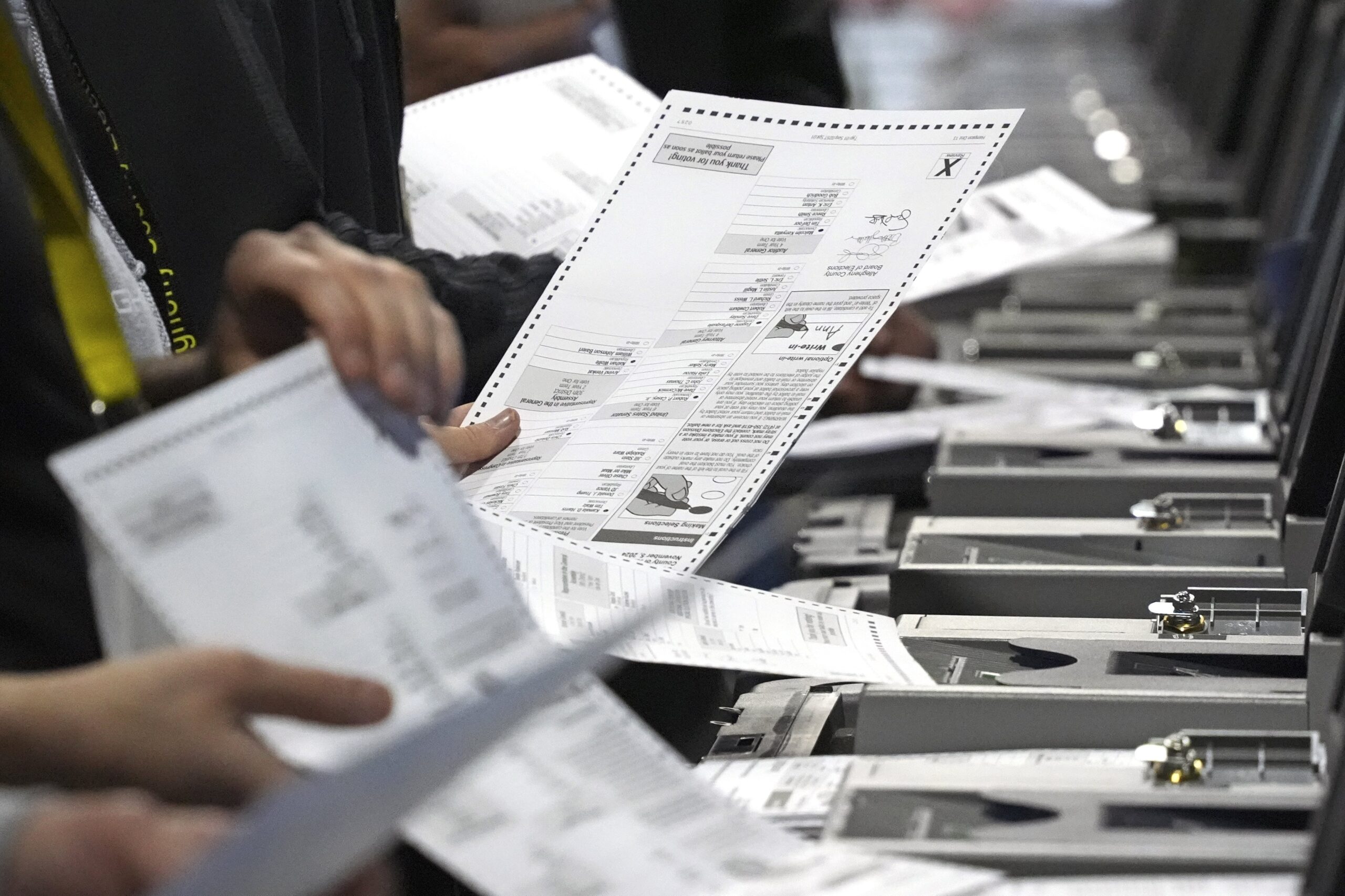
Republicans are making mail-in voting a core part of their midterm battle plans — a sharp contrast with President Donald Trump’s efforts to abolish the practice as they scramble to turn out his base.
In Wisconsin, the state party is preparing a full-court press of mailers, emails, phone banks, door knocks and digital ads to get voters to sign up for mail ballots.
In Michigan, the Monroe County GOP ran a social media campaign ahead of the fall election urging voters to utilize permanent absentee ballots and is planning an even bigger push next year.
In Pennsylvania, where Republicans poured $16 million into boosting the number of GOP voters using mail ballots in 2024, the state party chair called it “a priority” for 2026. The nonprofit Citizens Alliance, which aided efforts to get Republicans to return their mail ballots in Pennsylvania last year, is planning to knock 750,000 doors ahead of the midterms to encourage infrequent voters to embrace the practice.
And the Republican National Committee intends to build on the aggressive early mail and in-person voting campaign it ran successfully in 2024, after shying away from the practice in 2020, while also supporting election security efforts including stopping ballots from being counted after Election Day, according to a person granted anonymity to describe the committee’s plans.
“Democrats have built a pretty massive structural advantage in early voting for a long, long time. And we just can’t keep going into election night 100,000 votes down and expect to make it up in 12 hours,” Wisconsin GOP Chair Brian Schimming said in an interview. “Treating early voting as optional, or something Democrats do, is a losing gamble.”
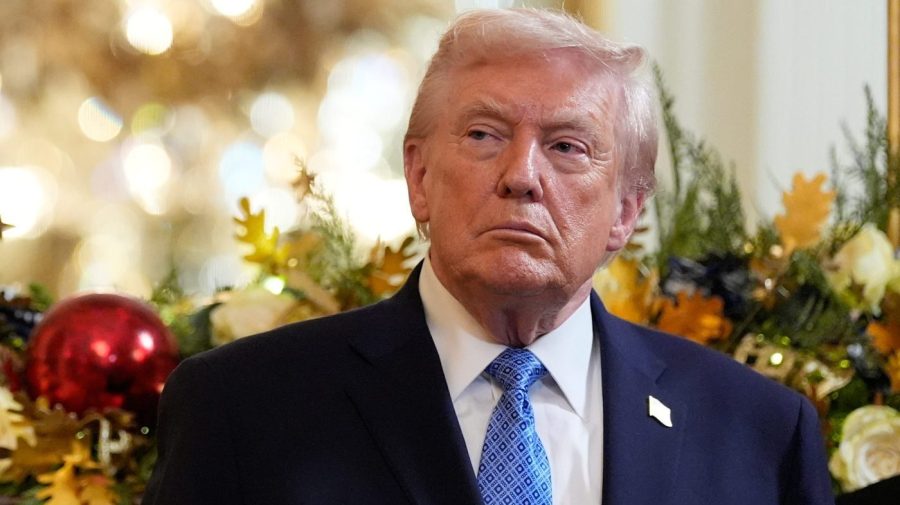
Trump has long falsely decried mail voting as rife with fraud. Over the summer, he vowed that Republicans “are going to do everything possible [to] get rid of mail-in ballots.” In November, and again this week, he called on Senate Republicans to eliminate the filibuster and pass a law to ban mail-in voting.
But, as has been the case for several years, he and his party are out of sync.
Rattled by electoral losses across the country this year and fearing a turnout slump in 2026 when control of Congress is on the line, Republican party chairs and operatives in battleground states Trump flipped by razor-thin margins in 2024 are turning to mail-in voting to keep lower-propensity voters engaged when he’s not on the ballot. They’re redoubling the 2024 efforts they ran successfully despite Trump alternating between promoting and railing against the practice — a turnabout after his vilification of mail ballots contributed to GOP losses in 2020.
Now, back in office, Trump is escalating his war against mail ballots. He signed an executive order in March that attempted to bar states from counting ballots that arrive after Election Day, along with other election-system overhauls. Judges have blocked most of the order, and the Supreme Court is set to decide whether federal law prohibits states from counting late-arriving ballots postmarked by Election Day.
Despite pledging to “lead a movement” to eliminate “corrupt” voting by mail ahead of the midterms, Trump has yet to issue another executive order on it. State courts have upheld vote-by-mail programs expanded during the pandemic. And presidents have little authority over state-run elections, whose rules are guided by federal and state law rather than presidential decree.
State and local Republicans, seeing few paths to overturning mail voting programs, are forging ahead — swallowing their own misgivings about ballot security in an effort to cut into a Democratic advantage as early voting options turn Election Day into election season.
Pressed about their mission appearing antithetical to Trump’s rhetoric, Republican operatives uniformly insisted they’re simply trying to play by the rules they’ve been given and that they support the president trying to change them — even if they’re unsure he’ll succeed.
“In Michigan, that’s the law of the land unless we can find a U.S. constitutional override, which I doubt that’s going to happen,” said Jim Runestad, a state senator who chairs the Michigan Republican Party. So, he said, “we’ll be fully engaged in early and absentee voting — we have to be.”
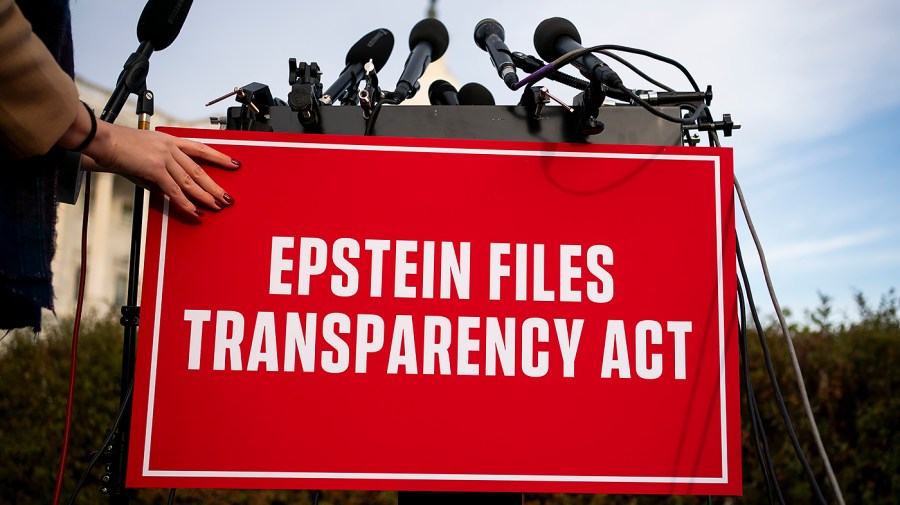
Still, the renewed dispute between Trump and his party over mail-in voting is the latest evidence of cracks forming in the ordinarily unified Republican Party. GOP lawmakers throughout the country, from New Hampshire to Indiana, have been rebuffing the president’s push for an aggressive redistricting effort to shore up his party’s chances of keeping its slim House advantage next year. Democrats need to net just three seats in order to seize control over the lower chamber. And several members of Trump’s base, namely departing Rep. Marjorie Taylor Greene of Georgia, bucked him on the yet-to-be-released Jeffrey Epstein files.
The White House did not respond to a request for comment for this story.
Republicans have already shown some success in convincing their voters to embrace mail voting. In Pennsylvania — where now-Sen. Dave McCormick’s campaign, party committees and outside groups spent millions promoting the practice — GOP voters cast 32.4 percent of mail ballots in 2024, up from 23.7 percent four years earlier, helping Trump narrowly flip the state. Roughly one in five Republican voters who cast ballots in the state that year had not participated in any elections since 2020, suggesting the method worked for some low-propensity voters who the party has to work harder to turn out.
Nationally, roughly three in 10 ballots in the 2024 general election were cast by mail, according to a U.S. Election Assistance Commission report from June. That was down from 43 percent in 2020, at the pandemic’s peak, but higher than pre-Covid, according to the report.
“We have to encourage people to embrace mail-in voting and early voting,” Pennsylvania GOP Chair Greg Rothman said in an interview. “That has to be a priority for us in 2026.”
Rothman won’t be alone in that fight. Citizens Alliance, the nonprofit founded by Pennsylvania-based conservative activist Cliff Maloney that hired over 100 people to chase ballots across roughly 500,000 doors in 2024, is gearing up to knock 750,000 in 2026. The Republican State Leadership Committee, which helped fund mail-ballot programs in Pennsylvania last year, put more than $2 million behind turnout efforts in New Jersey and Virginia this year and said it’s “doubling down” on the program in 2026.
“Without Trump on the ballot, the low-propensity problem is an epidemic” and “Republicans have to adapt or die,” Maloney said. “The blessing here is that there’s a solution — and the solution is to actually put dollars, cents, time and energy into the same tactics that the left uses to target low-propensity voters.”
State and county parties in Wisconsin and Michigan are planning similarly aggressive efforts, though they, like other Republican officials interviewed for this story, declined to share details or put price tags on strategies still taking shape. In Michigan, where voters can sign up for a permanent mail ballot list, Monroe County GOP Chair Todd Gillman sees it as a way to get more people engaged in more under-the-radar local elections.
But even as they try to make inroads with mail voting, Republicans in other states are attempting to follow Trump in restricting the practice. Ohio’s GOP-controlled Legislature last month passed a bill that would invalidate nearly all ballots received after Election Day that were postmarked prior to the deadline. The state’s Republican governor, Mike DeWine, is now weighing whether to sign it. Utah GOP Gov. Spencer Cox signed a similar bill earlier this year. Republican-led Kansas Legislature overrode Democratic Gov. Laura Kelly’s veto of another bill eliminating the grace period, which is being challenged in court.
And Republicans pushing mail-in voting remain somewhat hamstrung by their standard bearer’s scaremongering, which has sown a deep distrust among GOP voters that party officials and activists say they’re still working to reverse.
Trump made baseless claims of mail-voting fraud the basis for his constellation of stolen-election conspiracy theories in 2020. He piled on in 2024, suggesting scores of Pennsylvania ballots were fraudulent and accusing postal workers of “purposefully” losing some mail ballots — even as his campaign, the RNC and GOP-aligned groups prioritized early voting initiatives. Last month, as Californians voted to approve mid-decade redistricting in response to a GOP-led redraw in Texas, Trump threatened legal action that never materialized over ballots cast by mail in a state that sends one to every voter.
GOP operatives have a script for that, insisting to wary Republicans that they’ve made voting by mail more secure and informing them of the various options they have to ensure their ballots reach election offices, including hand delivery.
“We don’t necessarily like early voting or absentee ballots,” Gillman said. “But those are the rules we have to play by.”
Jessica Piper contributed to this report.