









What You Should Know:
– Horizon Health Network, operating across New Brunswick, Canada, has partnered with global health tech leader Qure.ai to implement a comprehensive AI suite for lung cancer care.
– The strategic collaboration is designed to prepare the health system for a province-wide screening program while simultaneously deploying AI to detect “incidental” lung nodules in routine X-rays and CT scans. By integrating tools for detection, quantification, and patient tracking, the initiative aims to catch lung cancer at Stage I, significantly boosting survival rates.
Improving Survival Rates: Horizon Health Prepares for Provincial Screening with Qure.ai’s Class III Medical AI
Lung cancer remains the leading cause of cancer death in North America, a statistic driven largely by the stealthy nature of the disease; by the time symptoms appear, it is often too late. Today, Horizon Health Network (Horizon) announced a strategic move to shift those odds, entering a partnership with Qure.ai to deploy an end-to-end Artificial Intelligence (AI) suite across its 12 hospitals and 100+ medical facilities in New Brunswick.
This partnership is not merely a software upgrade; it is a fundamental restructuring of how a health system watches over its patients. By integrating Qure.ai’s solutions, Horizon is building the digital infrastructure necessary for a massive, province-wide low-dose CT lung cancer screening program, while simultaneously addressing the critical gap of “incidental” detection.
Beyond the Screening Program: The Power of Incidental Findings
While organized screening programs are vital for high-risk patients (such as long-term smokers), they only cover a specific slice of the population. The true technological differentiator in this partnership is the ability to use AI to patrol the thousands of routine scans performed for other reasons.
Jim Mercadante, Chief Commercial Officer at Qure.ai, describes this as “casting a wider net.”
“Proactive CT-based lung cancer screening strategies are a giant step forward, but only one part of the battle against lung cancer,” says Mercadante. “AI has the power… to identify small lung nodules that can be indicative of early-stage lung cancer on routine CT and X-rays that may be obtained for other indications. This can include pre-operative examinations or trauma-related admissions.”
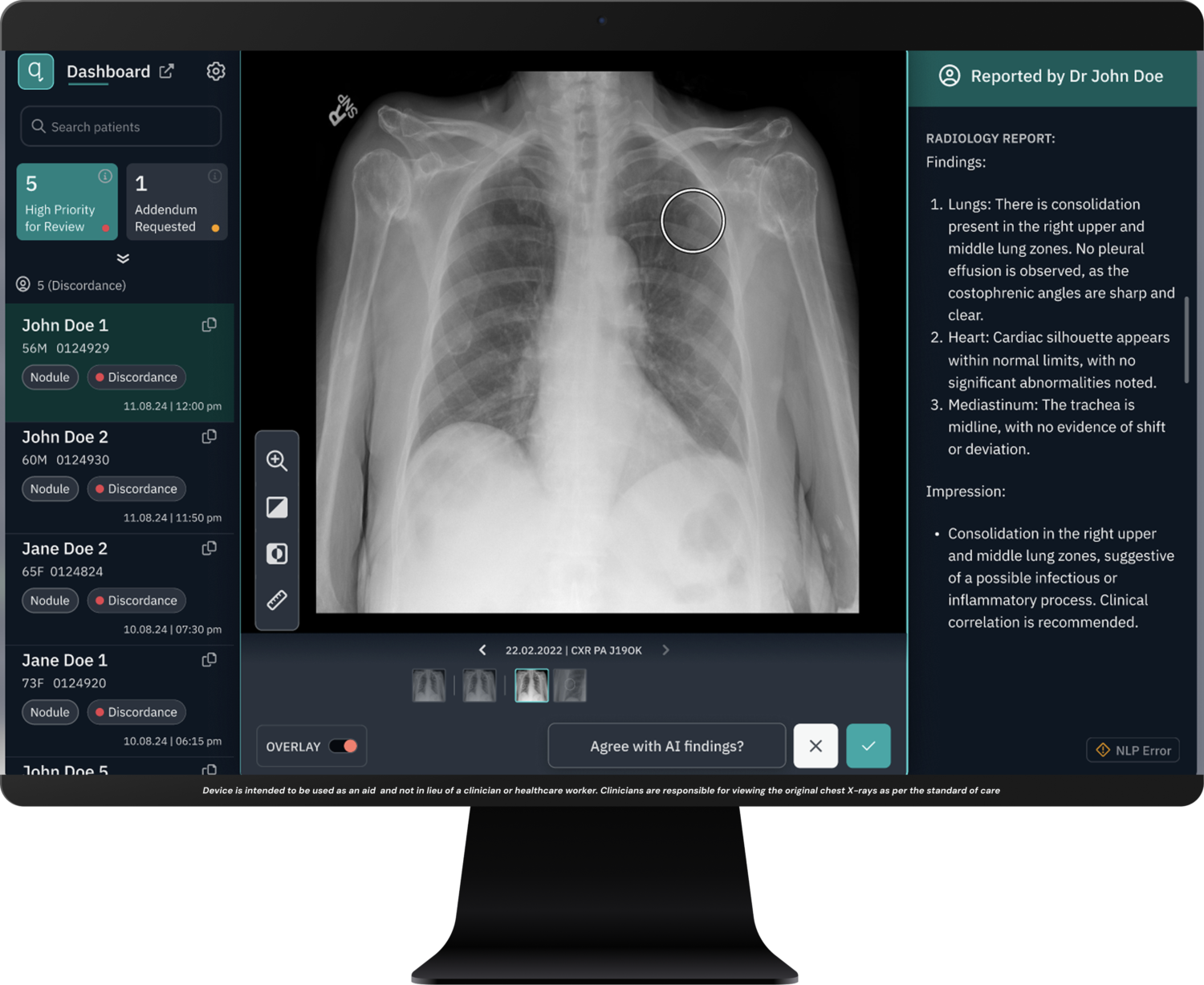
In layman’s terms: a patient might enter the ER with a broken rib or pneumonia. The AI analyzes their chest X-ray for the trauma but also quietly scans for lung nodules that a human radiologist, focused on the bone fracture, might overlook. This “incidental” detection can identify cancer at Stage I, where survival rates are exponentially higher than at Stage III or IV.
Building the Digital Infrastructure
For Zach Kilburn, Chief Digital Officer at Horizon Health Network, the partnership is about establishing clinical confidence and workflow capability before the floodgates of a provincial screening program open.
“This agreement with Qure.ai reflects our commitment to innovation and advancing patient care through rigorous evaluation of emerging technologies,” Kilburn stated. “By building this infrastructure now, we’re positioning our clinicians to support high-quality, coordinated lung cancer care across the health care ecosystem.”
The integration involves a sophisticated suite of tools that have garnered Health Canada Class III medical device license approval and FDA clearance. The suite addresses three distinct phases of the care continuum:
- Detection (qXR-LN): Identifying incidental nodules on standard chest X-rays.
- Quantification (qCT-Quant): Assessing the volume and size of nodules on CT scans to determine risk.
- Management (qTrack): A workflow tool that ensures patients with identified nodules don’t fall through the cracks, coordinating care for nurse navigators and lung nodule clinics.