








There is a specific kind of silence that comes with wearing a heavy wool coat. You know the feeling. It’s the silence of a library in winter, or the dampening hush of a luxury car door thudding shut. It restricts your movement just enough to make you stand a little straighter, a little more deliberate. It tells your nervous system: Slow down. You have arrived.
I’ve been thinking about that silence a lot while looking at the new Team USA uniforms for the 2026 Winter Olympics in Milan-Cortina.
Every Olympics, we participate in a strange sartorial ritual where we take our most futuristic, high-performance humans—people who live most of their waking hours in aerodynamically tested spandex and carbon fiber—and we swaddle them in a vision of Americana that feels less like 2026 and more like a Wes Anderson character on holiday in 1974.
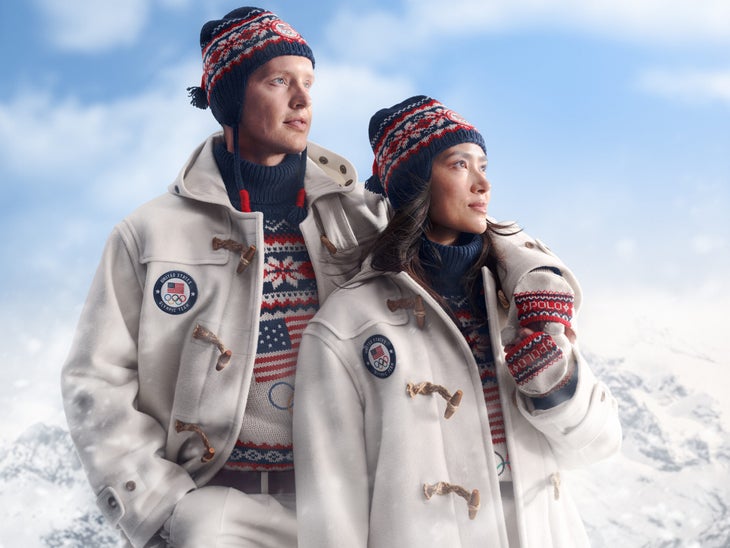
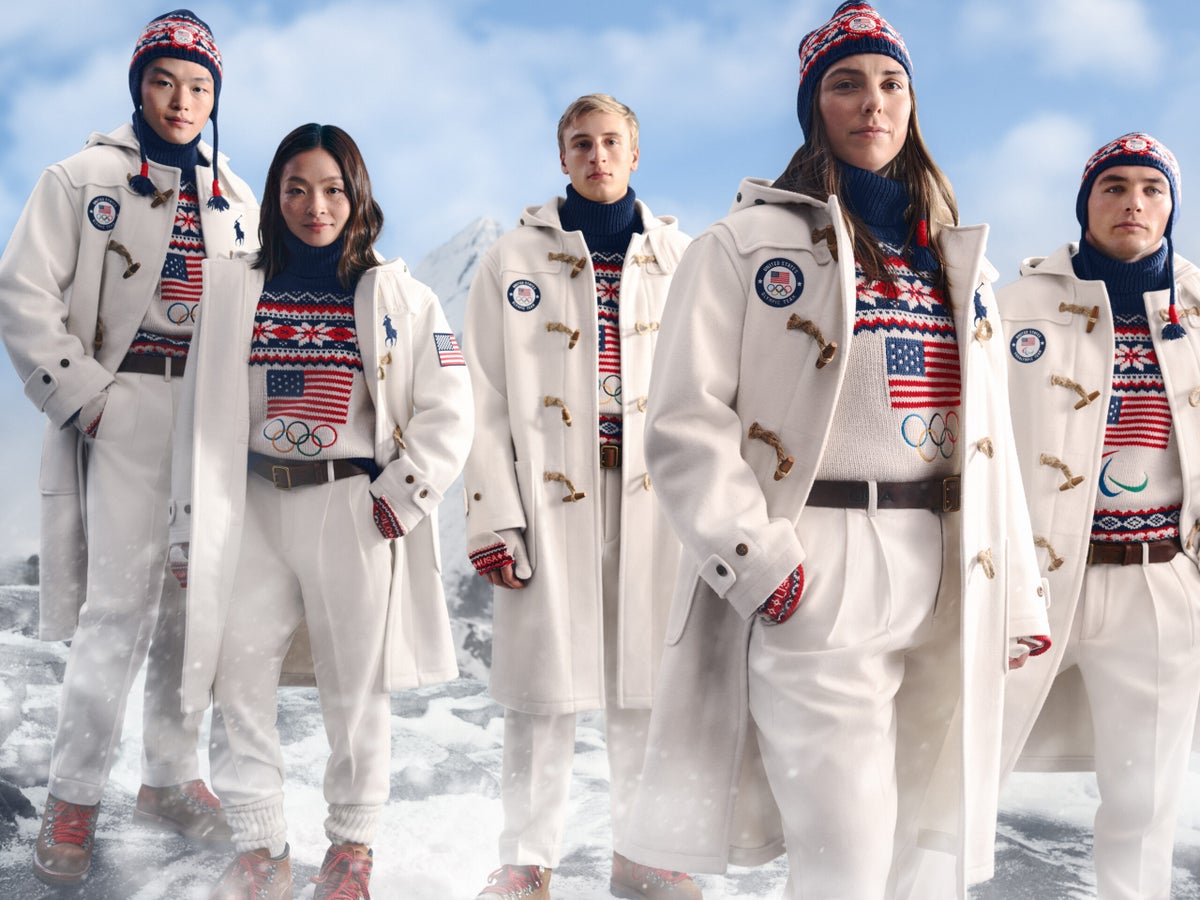
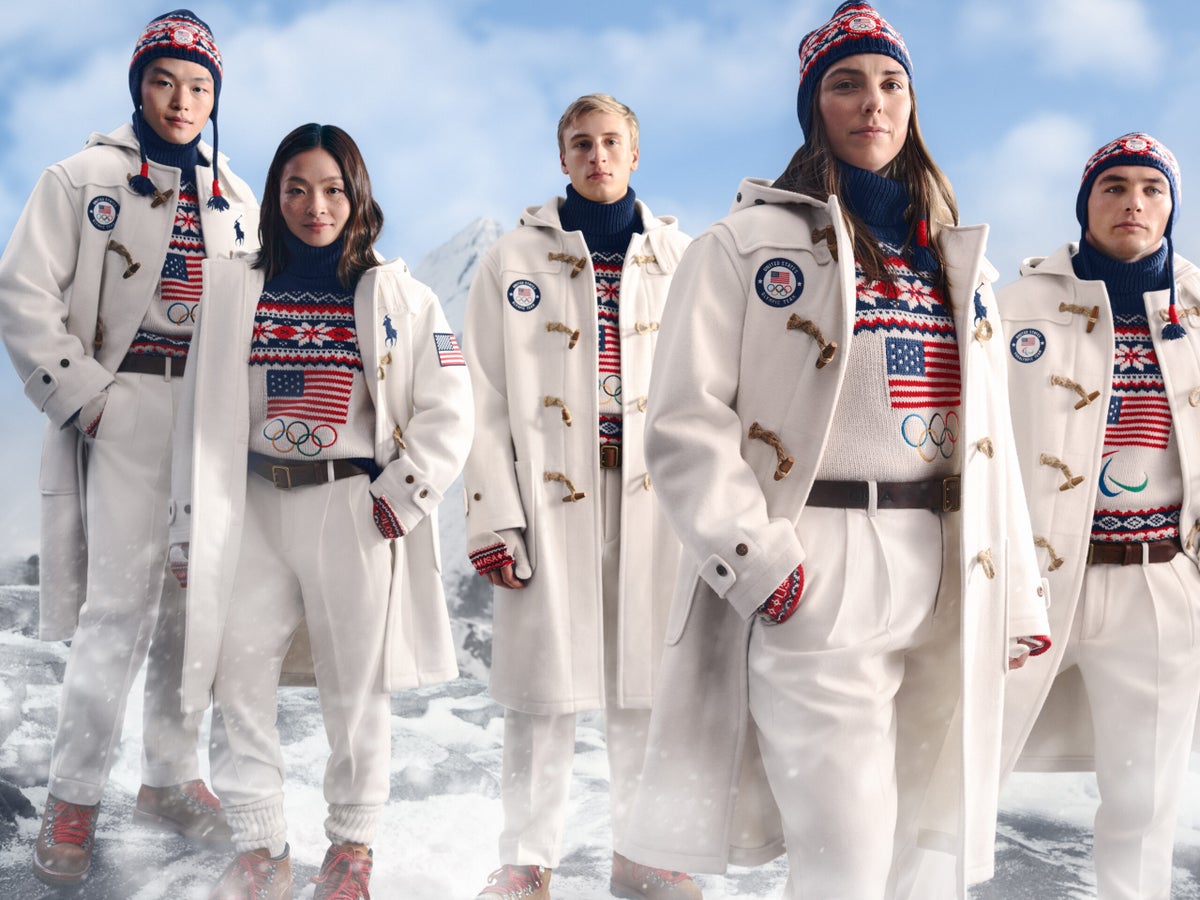
Ralph Lauren has, since 2008, been tasked with dressing the team, delivering a collection that doubles down on a specific, high-gloss vision of Americana. It is the “country club aesthetic” transported to the Dolomites—polished, heritage-heavy, and undeniably sharp. Yet, there remains a wonderful dissonance to the tableau. Suddenly, a snowboarder from Mammoth Lakes, who typically lives in oversized Gore-Tex, looks like they are about to close a deal on a ski lodge in Vermont.
But here is the thing about the Olympics, particularly the Opening Ceremony: It isn’t sports. Not really. Not just yet, at least. It’s theater. And if you’re going to walk onto the world’s biggest stage in Milan—the literal capital of looking cool while doing absolutely nothing—you better have a costume that speaks louder than your vertical leap.
When the games descend on Milan and Cortina d’Ampezzo, our athletes are walking into the lion’s den of style. Milan is a city where a puffy jacket is worn not because it is cold, but because it frames the jawline correctly. It is a place where sprezzatura—the art of studied carelessness—is the local religion. To show up there in a shapeless polyester tracksuit would be a diplomatic incident. It would be bringing a Solo cup to a wine tasting.
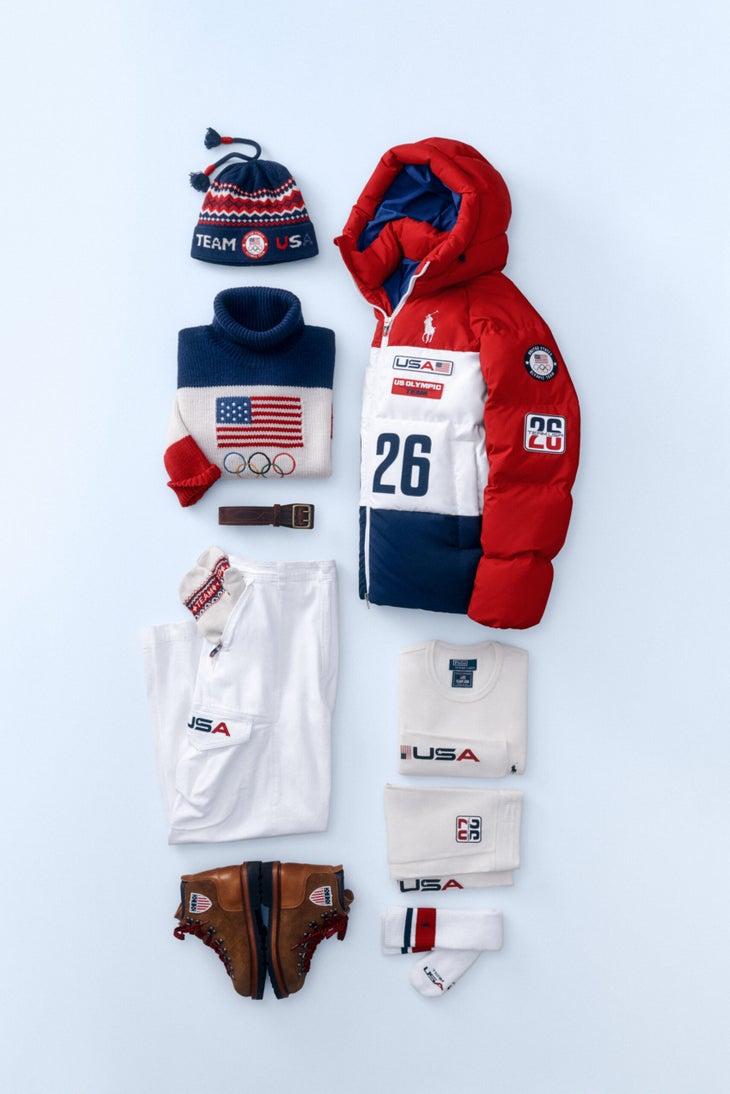
So, yes, the new collection is fashionable. The Closing Ceremony puffy jackets, with their moto-inspired quilting and vintage ski-racer vibes, are clearly designed to nod to the Italians and say, “We can do business, but we can also order the Nebbiolo.” They are pretty rad, objectively.
But if you look past the branding and the viral potential of the “Villagewear,” something more soulful is happening here.
Consider the reality of the athlete. For four years, they have existed in a state of high-velocity anxiety. They live by milliseconds. They measure their self-worth in fractions of a rotation or tenths of a degree. What they train and compete in is purely functional—synthetic skinsuits designed to eliminate drag, boots meant to lock ankles in place, helmets engineered to prevent traumatic brain injury. Everything they wear is fine-tuned to make them disappear into the physics of their sport.
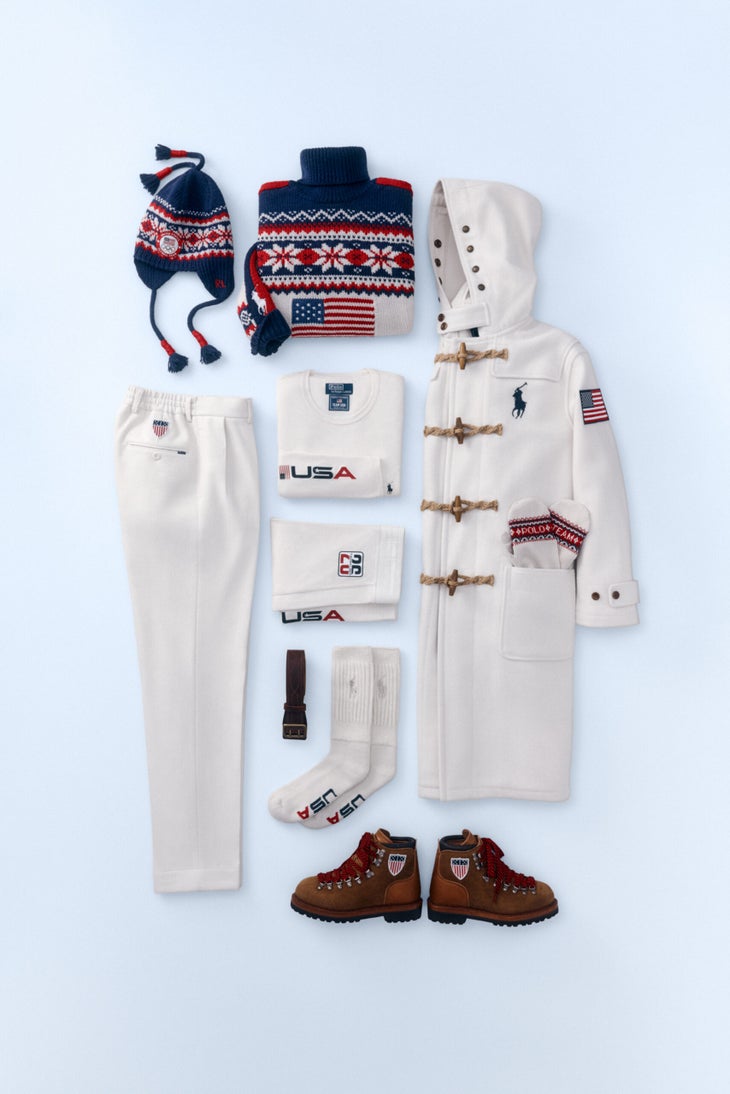
The Opening Ceremony uniform does the opposite. It makes them hyper-visible.
When an athlete puts on that heavy intarsia-knit sweater or that structured wool duffle coat, they are stepping out of the zone and into the moment. This is “slow fashion” in the most literal sense. The toggles, the heavy gauge of the knit, the tactile roughness of the wool—these are grounding forces.
I suspect that for the 22 -year-old standing in the tunnel of San Siro Stadium, shaking with the adrenaline of a lifetime of training, that weight is a gift. It is physical armor. It protects them not from the cold, but from the crushing immensity of the occasion.
It’s easy to be cynical about the “Ralph” vision of America—it is polished, privileged, and undeniably retro. But in this context, that heritage serves a function. It connects a modern athlete to a lineage that goes back to Lake Placid in 1932 or Squaw Valley in 1960. It tells the wearer: You are not just a data point. You are part of a story.
I remember speaking to a chef once about why he still wore a heavy, starched white jacket in a kitchen that was 100 degrees. He told me that when he put it on, the chaos of the prep line disappeared. He wasn’t just a guy sweating over onions anymore; he was a Chef. The jacket did the work of organizing his mind before he even picked up a knife.
These uniforms are doing the same heavy lifting. Does a slopestyle skier need a tailored trouser? Nah. Do they need to feel like a superhero when they walk out in front of three billion television viewers? For sure.
Whether or not you dig the prep-school vibes or the crested blazers doesn’t actually matter. Because when you see Team USA march into Milan, just look at their faces. They won’t look like they’re worrying about their split times. They will look like they belong there. They will be wearing an outfit that says, essentially, “I have trained my entire life for this, and I have the coat to prove it.”
And really, isn’t that a reward before the competition even begins? To stop moving for just one second, stand in the cold Italian air, and feel the weight of exactly who you are. You’ve made it.
The post Why Team USA’s Heavy Wool Uniforms Are Actually A Competitive Advantage appeared first on Outside Online.