








The route between Mount Everest Base Camp and the summit is one of the most inhospitable places on the planet, and over the years, hundreds of climbers have died along the trail. But in 2025, just three climbers perished above Base Camp. This number was down from eight in 2024 and 18 in 2023. One factor for the declining death toll: Himalayan helicopter rescue pilots.
Throughout the climbing season, aviators plucked debilitated climbers from high on the peak’s flanks and flew them back to lower elevation. I watched several dozen of these missions occur during the month I spent at Base Camp.
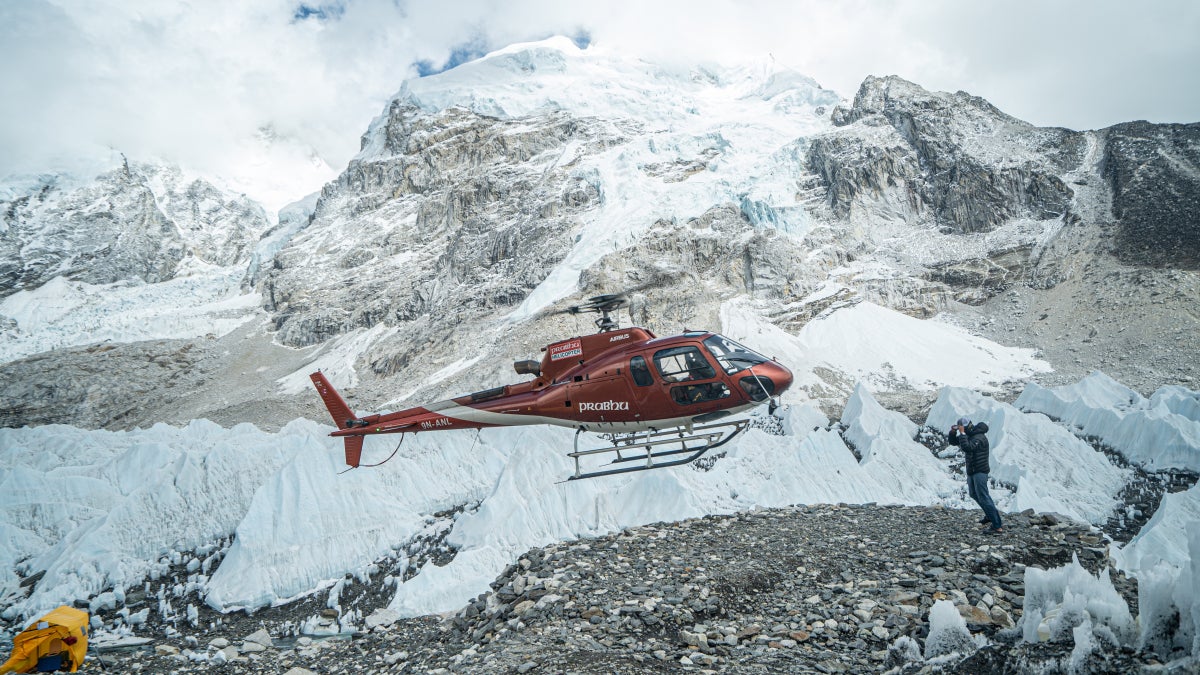
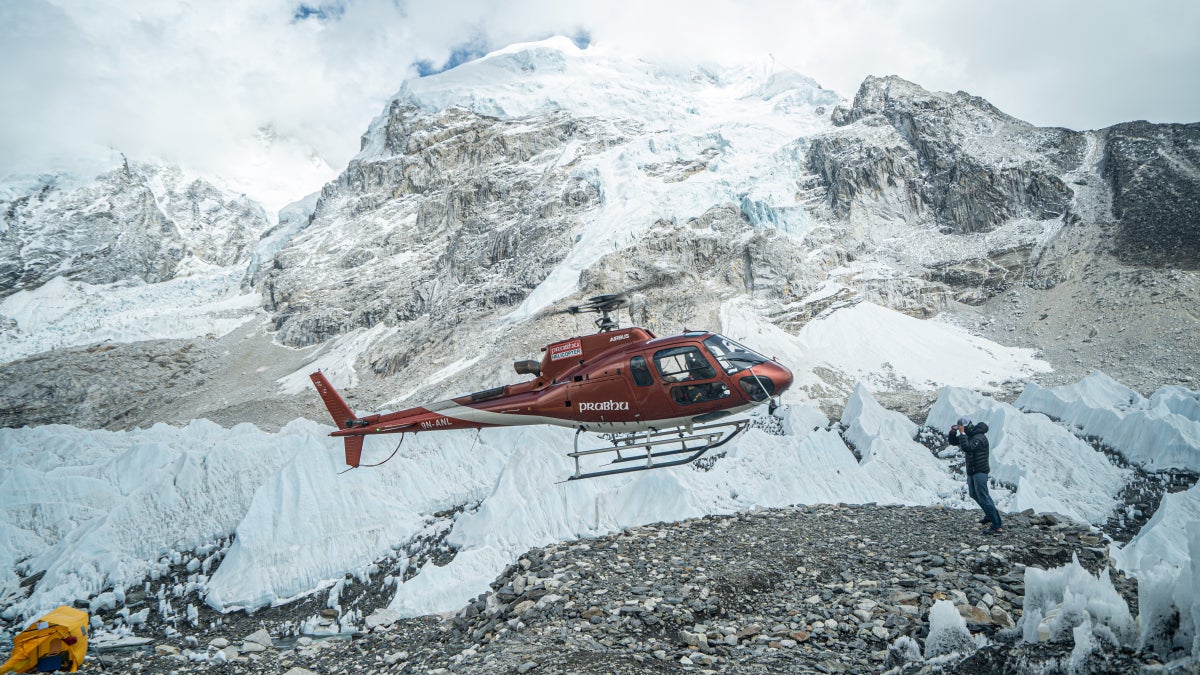
The tight-knit community of pilots includes foreigners and Nepalis, and much of their time is spent ferrying climbers and supplies to Base Camp and on to higher camps. Increasingly, they are also being asked to carry out rescues high on mountainsides. Sobit Gauchan, a senior captain and instructor pilot with Prabhu Helicopter, told Outside that he performed 20 high-mountain rescues this season and estimates more than 200 took place overall.
These missions are dangerous for everyone involved. Air is thinner at extreme altitudes, providing less lift for a helicopter’s rotors. Add in sudden storms, rocky terrain, the lack of radar or instrument guidance, and every mission is a test of a pilot’s skill and nerve. Himalayan pilots often repeat the saying: “All the clouds in Nepal have rocks in them.”
Gauchan said that the helicopter’s instrument panel provides a color-coded safety scale of green, yellow, and red. “During rescues, we are in the yellow zone 90 percent of the time,” he said. “The other ten percent, we’re in the red.”
Perhaps the most famous flyer in this community is Italian guide and pilot Maurizio Folini. In 2025, he performed 25 long-line rescues across Nepal’s peaks. During the tricky maneuver, a pilot must hover above the mountain slope while rescuers tie a stricken climber to a rope dangling from the aircraft.
With razor-thin safety margins, it’s critical that the helicopter is as light as possible. Folini takes off with just 80 kilograms of fuel—a typical helicopter will burn one kilogram every second. “We also take out extra seats, fire extinguishers, everything. Sometimes we even remove the door,” Folini told Outside.
But the limited fuel onboard means the pilots only have one shot at success. “If we are not successful the first time, it’s normally not possible,” he continued.
In 2025, Folini had to make a life-threatening decision: whether or not to fly above his helicopter’s elevation limit to rescue an ailing climber at 23,000 feet. After securing special permission from the Nepali government, he performed the rescue and saved the climber’s life. Doctors at Base Camp wrote Folini a letter after the mission. “Without helicopter intervention, it would have been impossible for the patient to survive,” he said.
Demand for high-altitude rescues is likely to increase as Mount Everest and other Himalayan peaks grow busier and more commercialized (there were nearly 800 summits in 2025 alone). This will bring more risk to the pilots who are already pushing the envelope.
The post The Helicopter Crews Rewriting Everest’s Odds appeared first on Outside Online.