










In my 15 years working in the outdoor industry and backpacking in all sorts of weather, I have become a fairly prolific gear tester. With this comes great privilege—I’ve reviewed some of the nicest (and most expensive!) gear and apparel on the market. From 1,000-fill sleeping bags to hardshells that cost as much as a month’s rent to a baffling $300 water bottle, I don’t take this for granted.
But I like to stay objective, and always consider whether or not I’d actually spend the money on the gear I’m testing. I’ve tested dozens of products in every category, which allows me to analyze comfort, durability, and performance across a range of price points. What I’ve found, with few exceptions, is that you do not need to buy the most expensive item in the lineup. Or even close to the most expensive item: Most budget-friendly or midrange products offer the same longevity, comfort, and performance for hiking and backpacking, marketing jargon be damned.
Want to learn to pick and choose your layers more effectively? I’ve compiled several hiking apparel categories where you can save money, plus where it’s best to splurge.
Down Jackets
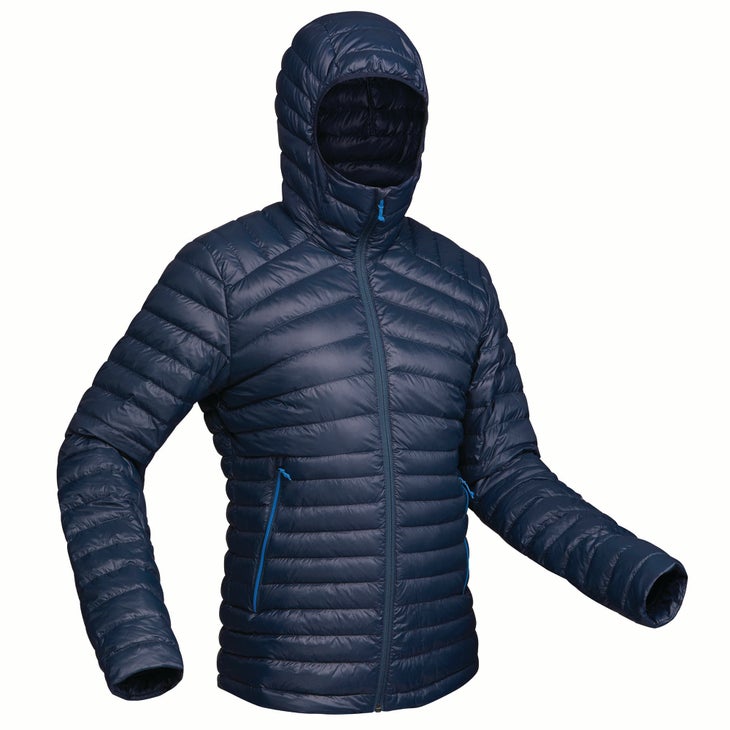
An insulation layer is nonnegotiable for me, and I usually opt for down over synthetic for better warmth-to-weight and packability. Brand names aside, the cost of a down-insulated jacket mostly reflects fill power. Less expensive jackets use lower fill power like 600 or 650, while higher-end jackets start around 800 and go up from there. As a refresher, fill power refers to how much space one ounce of the down occupies when fully lofted. Ie, one ounce of 850-fill down occupies about 850 cubic inches. The higher the fill power, the loftier the down, the more warmth you get for less weight. For weight weenies, a more expensive jacket means less space taken up in the pack while providing similar warmth as a heavier, less expensive model. Some higher-end jackets have nicer shell material, like Pertex Quantum’s robust strength-to-weight ratio and decent weatherproofing properties.
That’s about where the performance differences end though. A down jacket is a simple piece of apparel, so while ultralighters might want to splurge, it’s not critical for comfort and performance. Decathlon makes an excellent down jacket for less than $100, sized nicely for layering and packs down reasonably small. Cheaper down jackets like this feel just as warm, they’ll just weigh a little more and might not compress as well.
Verdict: Ultralighters splurge. Otherwise save.
Midlayer
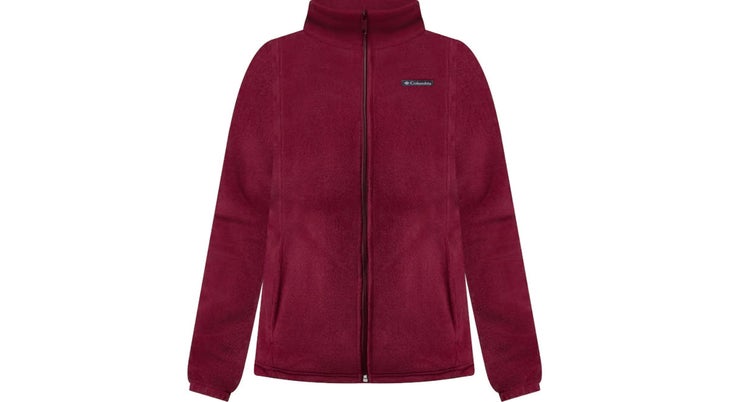
Midlayers run the gamut in weight, styles, and material—I wear everything from merino pullovers to high-pile fleeces and alpaca-fiber hoodies. While I do wear my midlayer for colder days on trail, it’s mostly the one I throw on for cold mornings, or for sitting around camp after dark. If I’m foregoing camp clothes, I might also sleep in it. I’d still consider this a performance piece, but unless you’re dedicated to a fancy name brand, most hikers will be fine with a lightweight fleece from the discount rack at your local sports store.
Overall, synthetic fleeces are less expensive than natural fibers, plus they dry faster if they get wet. A synthetic midlayer doesn’t have the same odor-resistant properties as one made with natural fibers, but when the difference is a $45 fleece or a $180 merino-blend, the performance difference probably isn’t enough to justify the cost. The weight of your midlayer should match expected hiking conditions, but the actual material is personal preference. I prefer synthetic fleece for its drying properties, and I’ve hiked in everything from a bargain basement $15 fleece to the $200 Arc’teryx Kyanite Hoody. Believe me when I say most people will be just fine with the $15 fleece.
Verdict: Save
Raingear
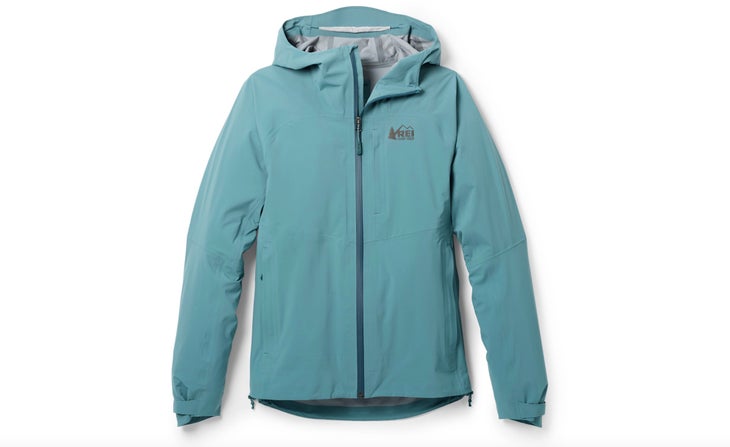
If you’re going to splurge in any category, this should be it: Raingear is a category where the price levels reflect the technology, and therefore the performance. There’s a world of difference between a two-layer laminate and a three-layer waterproof-breathable membrane. Cheaper rain gear is often made with two or 2.5 layers: a DWR-treated nylon shell with a polyurethane laminate. They all claim to be breathable, but this is a lie. The laminate has a plasticky feel and isn’t as durable as an ePE membrane. I wore a $100 Marmot Minimalist during my first thru-hike, and the lining was cracked and peeling by the time I dragged myself, sodden, through the mid-Atlantic.
If you’re serious about rain protection, look for a three-layer jacket with a waterproof, breathable membrane. I recommend Gore-Tex’s PFC-free ePE membrane for maximum breathability and protection, but proprietary options like Patagonia’s H2No or REI’s HydroWall offer similar performance. Aside from more comfort during high-output activity, a more premium rain jacket will last longer, vent moisture better, and feel less clammy. Ultralighters will likely stick to thinner options like the Outdoor Research Helium, but I’ve found the lack of breathability and subpar waterproofing isn’t worth it for me. As always, you can save on the higher-end raingear by shopping at the end of the season as stores are changing over for winter items, or look at the retailer site for last year’s colorway.
Verdict: Splurge
Hiking Layers
I have a closet stuffed with ridiculously expensive hiking shirts, sun hoodies, and shorts from a veritable alphabet soup of brands. Each $80 hiking shirt or pair of shorts promises a magic combination of odor resistance, wicking, sun protection, or the perfect fit, but I’ve found them to all be pretty much the same as a synthetic Costco tee shirt or the $20 two-pack of shorts I bought at a TJ Maxx when I ran out of clothes on a road trip.
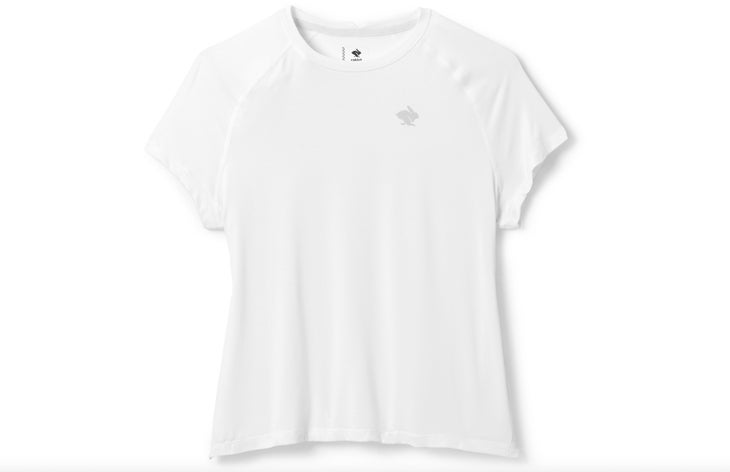
Most synthetic hiking layers are a simple blend of wicking polyester with a touch of elastane for shape retention and stretch. There isn’t much you can do to make them fancier unless you opt for a tencel-merino blend top, but even then, I haven’t found the performance difference to be enough to justify the cost. Some of my favorite compression shorts and long-sleeve shirts come from Baleaf, a budget-friendly athletic apparel company with predictably good fit and durable materials. If you love one specific pair or shorts or hiking shirt, by all means, go for it! The Rabbit EZ T-Shirt is one of the best-fitting hiking shirts I’ve tested, but I also know I probably wouldn’t pay $48 for it.
Verdict: Save
The post The Only Piece of Hiking Clothing Worth Splurging on (And What I Buy Cheap Instead) appeared first on Outside Online.