









To me, there’s nothing better than embarking on a long hike with my dog Ollie. But I work full-time and live in a city, which means that climbing a mountain every day isn’t possible. If I want to get my exercise fix during the work week, I need to jump on my Peloton or head to the gym.
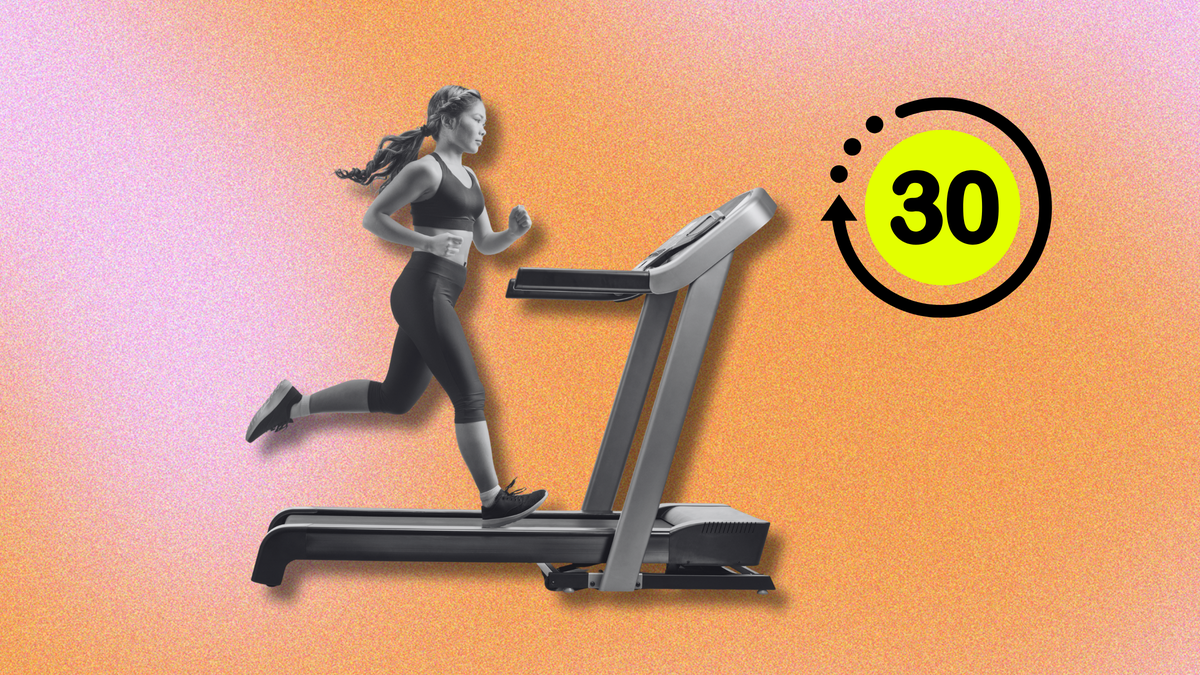
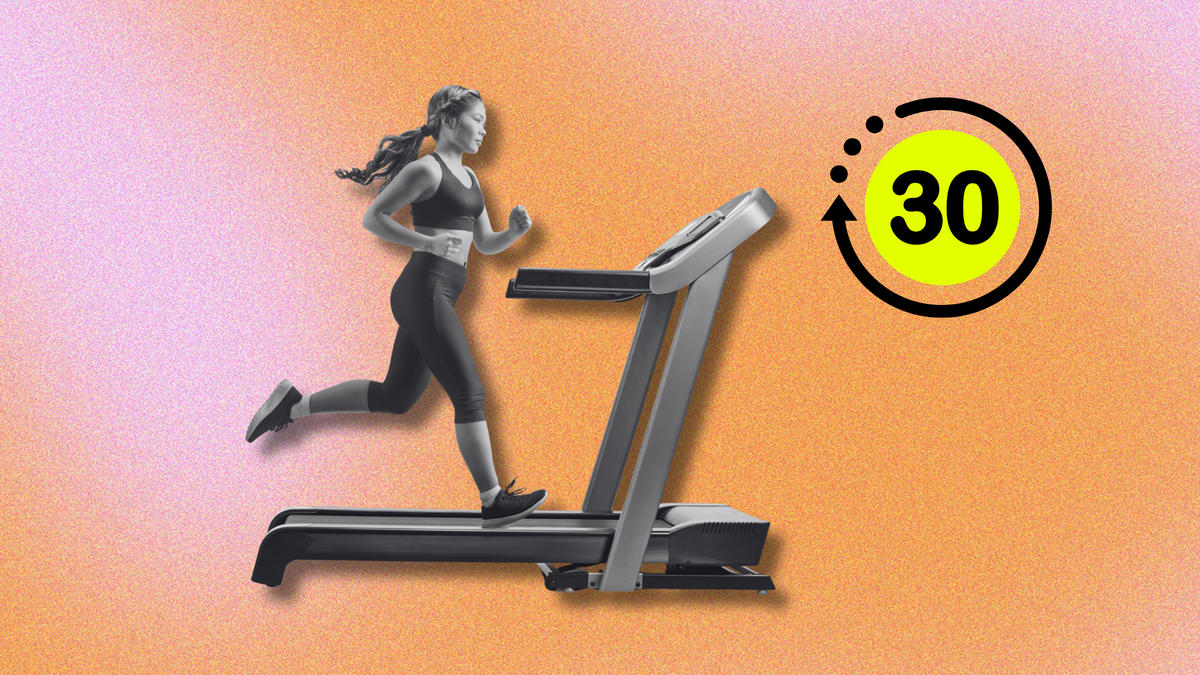
I genuinely love running on the treadmill, but for most of my life, I’ve stuck to the same routine: a three- to five-mile jog at roughly 9 miles per hour (mph). But a recent trend caught my eye: the 12-3-30 walking workout, which involves setting your treadmill to a 12 percent incline and walking at 3 mph for 30 minutes.
The 12-3-30 workout was created by health and beauty influencer Lauren Giraldo, who claims it helped her reach her goal of losing 30 pounds. (Watch her fitness journey in the video below.)
@laurengiraldo Game changer honestly
I was curious whether this workout would be as effective as my treadmill runs and, if so, how often I’d need to do it to build strength and maintain my cardiovascular fitness. Here’s what I learned.
Just How Effective Is the 12-3-30 Walking Workout?
Dr. Constance Chu, a sports medicine physician at Stanford Medicine, told me the 12-3-30 workout is a great idea, especially for people who don’t enjoy running or can’t run due to an injury. Why? Weight-bearing exercises, or activities where you work against gravity, are known to improve physical and mental health, she says.
Even better: the 12-3-30 workout is low-impact, so you aren’t going to pound your joints as you would while running on a hard surface, making it an effective workout for beginners and seasoned athletes alike, says Joe Hribick, a physical therapist and clinical assistant professor of physical therapy at Lebanon Valley College.
When you walk uphill, your body experiences a broader range of motion, increased joint movement, and greater lower-limb muscle activity. Your lower extremities—specifically, your quadriceps, hamstrings, and triceps surae muscles (a group of muscles located in your calf)—light up, which is why incline treadmill walking can be an effective way to strengthen your lower limb muscles. “The steeper the incline, the more that these muscles have to work to propel you forward,” says Hribick, adding that these muscles are often undertrained and could benefit from the special attention.
To fully reap the benefits, proper posture is key. By leaning forward, your abdominal muscles will work harder to keep you stable, according to Hribick. “With good form, this increases core activation and helps improve postural control,” he says. Then, swinging your arms will propel you into forward motion.
How Often Should You Do the 12-3-30 Workout for Maximum Benefits?
As is the case with all things, there isn’t a one-size-fits-all solution. In general, most people should aim for roughly 150 minutes of moderate-intensity exercise—meaning you’re breathing harder, your heart’s beating faster than usual, and you’re sweating—a week, and the 12-3-30 workout can certainly contribute to that effort, says Hribrick.
To boost leg endurance, muscular strength, and cardiovascular capacity, Hribick recommends that beginners start with one or two sessions a week, and intermediate exercisers can go with three to four sessions a week. If you’re new to the gym, start at a pace and incline at which you can carry out a conversation without becoming breathless, advises Chu. As your cardiovascular fitness improves, you can gradually increase the speed, duration, and incline on the treadmill until you reach the 12-3-30 ratio, she adds.
Finally, don’t forget to carve out time to rest. Recovery days are crucial because posterior chain muscles—your glutes, hamstrings, and calves—can fatigue quickly at higher inclines, says Hribick.
Can the 12-3-30 Workout Replace More Traditional Cardio?
The truth: it depends. Chu explains, the 12-3-30 workout will definitely boost their heart rate enough to count as cardio. “But for more fit people, it won’t.” Even if it gets your heart pumping, it’s worth doing other types of cardio—like cycling, swimming, the elliptical, or brisk outdoor walking—as well to avoid overuse injuries and achieve well-rounded fitness, says Hribick.
In a recent study, 16 participants completed both the 12-3-30 workout and a self-paced run. To accurately compare the two workouts, the duration of the 12-3-30 workout was adjusted to match the energy expenditure—the amount of energy it takes your body to move—of the self-paced run. This meant that participants had to extend their 12-3-30 workout past the 30 minutes to match the number of calories burned from their self-paced run.
This means that to burn the same amount of calories, you would need to do the 12-3-30 workout longer than a self-paced run, which isn’t the best option if you want to burn a lot of calories and don’t want to be in the gym for longer than 30 minutes. Keep in mind that burning calories isn’t the end-all be-all of workout, sometimes it just feels good to get body moving.
If you have a knee injury, ankle pain, low back issues, or struggle with sustained uphill walking, walking on a flat surface or a lower incline may be a better plan, says Hribick.
Those with knee issues who can tackle inclines can make a few adjustments. Here’s what Hribick suggests:
- Lower the incline to below 3 percent
- Decrease the speed to less than 3 mph
- Shorten your stride length so you’re taking more steps
- Break up the workout into intervals (do 3 to 5 minutes at an incline, for example, then 3 to 5 minutes of flat recovery)
Also, if your hips or ankles are tight, make a point of regularly stretching your calves and hip flexors before and after working out. The reason: having a limited range of motion in these areas can put even more stress on your knees and lower back, which can lead to an injury, warns Hribick.
Overall, Hribick likens the 12-3-30 to a half-hour hike. “You get a strong training effect without the repetitive impact forces that occur with running,” he says. To me, the 12-3-30 is a win-win: I still get to squeeze in some hiking even if I can’t get to an actual mountain.
Want more Outside health stories? Sign up for the Bodywork newsletter. Ready to push yourself? Enter MapMyRun’s You vs. the Year 2025 running challenge.
The post How Effective Is the 12-3-30 Walking Workout Trend? Experts Weigh In. appeared first on Outside Online.