






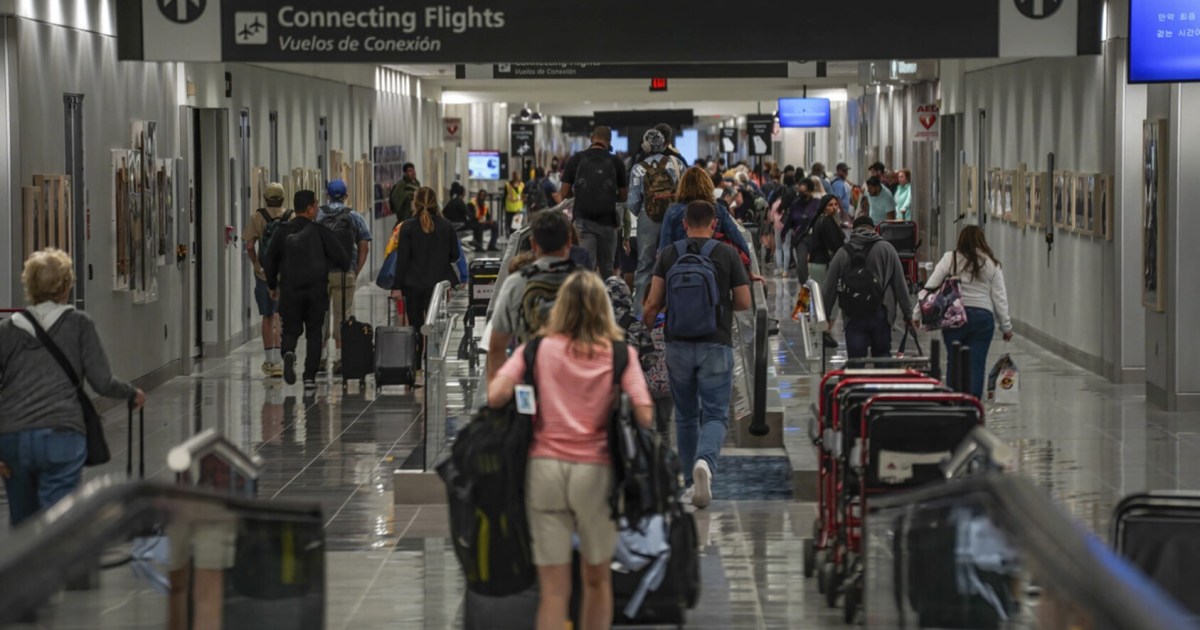
The United States Department of Homeland Security’s Customs and Border Protection is planning to require visitors from countries on the Visa Waiver Program to provide up to five years of their social media history, along with other personal data, according to a CBP proposal posted to the Federal Register. The move could significantly increase the barrier to entry into the country and risks stifling potential tourism.
Countries a part of the waiver program include Australia, Chile, France, Germany, Ireland, Israel, Japan, and the United Kingdom, amongst many others. The program allows visitors to travel to the United States for tourism or business stays of 90 days or less without obtaining a visa, if they meet certain requirements.
Sophia Cope, a senior staff attorney for the digital rights group Electronic Frontier Foundation told the New York Times that, should this proposal be enacted, it would “exacerbate civil liberties harms.”
“It has not proven effective at finding terrorists and other bad guys,” Cope said, adding that these kinds of policies have “chilled the free speech and invaded the privacy of innocent travelers, along with that of their American family, friends and colleagues.”
The CBP stated that it is introducing these changes to comply with President Donald Trump’s January 2025 executive order, entitled “Protecting the United States From Foreign Terrorists and Other National Security and Public Safety Threats.”
This new proposal from CBP suggests adding social media as a “mandatory data element” for an Electronic System for Travel Authorization (ESTA) application, which all visitors to this program must submit. Also, “when feasible,” it hopes to require other sensitive data from travelers, like personal and business phone numbers used in the last five years, personal and business email addresses from the last ten years, IP addresses and metadata from electronically submitted photos, biometrics data like face, fingerprint, DNA, and iris scans, and the names, phone numbers, dates of birth, places of birth, and residencies of parents, spouse, siblings, and children.
These “High Value Data Elements” would be required in addition to what is already expected under the current system. Right now, applicants from visa waiver countries must enroll in the ESTA program, pay $40, and submit an email address, home address, phone number and emergency contact information. Then, the authorization is good for two years.
Just last week, the State Department instructed its staff “to reject visa applications from people who worked on fact-checking, content moderation or other activities” the administration considers “censorship” of Americans’ speech, per reporting from NPR. The department also announced that H-1B visa applicants and their dependents would be required to set their social media profiles to “public” so they can be reviewed by US officials.
That move, Trump’s January order, and the CBP’s latest ask allow the US government to have an immense amount of power in deciding what online speech supports, as the president puts it in his order, “the overthrow or replacement of the culture on which our constitutional Republic stands.” They also grant leeway to deny entrance to those who support groups the administration has deemed dangerous—like pro-Palestinian student activists, who Trump and his administration have repeatedly sought to deport.
According to CBP, the proposal is open for a 60-day public comment period.