









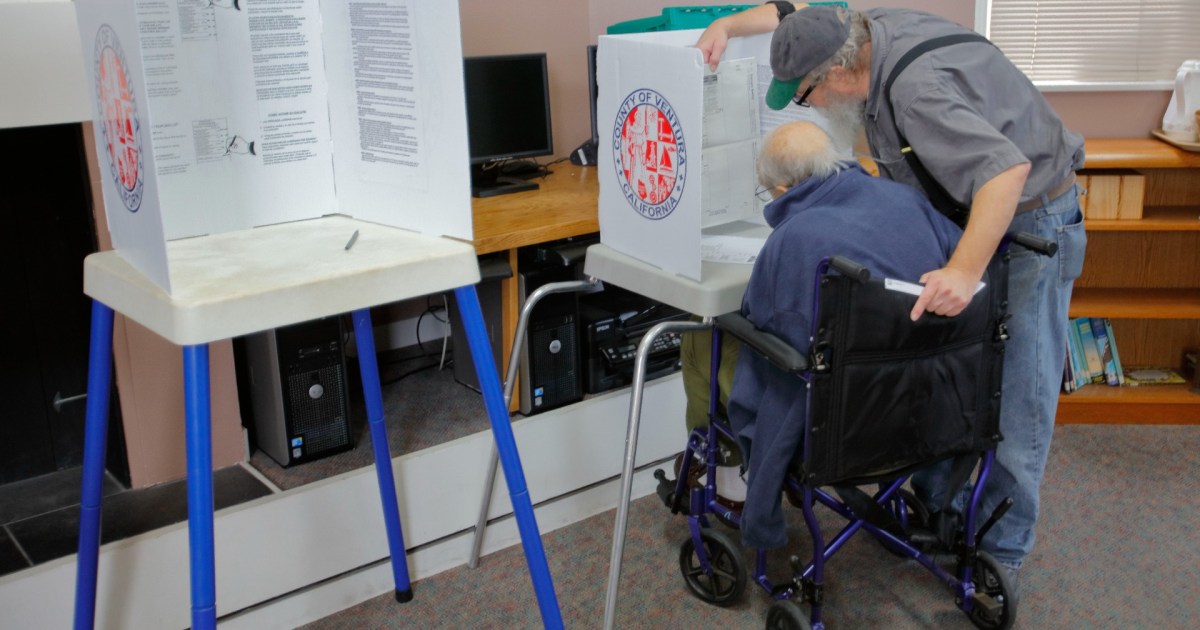
Three South Carolina voters with disabilities, represented by the NAACP, filed a lawsuit on Friday against the state’s election commission and Republican attorney general Alan Wilson to challenge rules that limit how disabled voters can receive voting assistance, and who is eligible.
South Carolina only allows voters “who are unable to read or write or who are physically unable or incapacitated from preparing a ballot” to receive ballot assistance, limiting that assistance to an immediate family member or “authorized representative”—and imposes felony penalties on any individual who helps more than five voters by either requesting or returning an absentee ballot.
The three voters challenging the law currently live in nursing homes, where many residents rely on staff members they trust to help them vote.
They contend that South Carolina’s draconian voting restrictions violate Section 208 of the Voting Rights Act, which commits to protecting the right for “any voter who requires assistance to vote by reason of blindness, disability, or inability to read or write” to receive such assistance from a person they choose.
The Voting Rights Act has come under consistent attack by GOP-governed states, particularly in the wake of Republican upset losses and near-losses; those attacks have largely been upheld by the Supreme Court under the leadership of Chief Justice John Roberts, which has gutted some of the act’s crucial provisions and opened the door for an unprecedented wave of anti-voter state statutes.
The new suit calls for the court to permanently block South Carolina from enforcing these limits and order the state’s election commission to oversee the revision of voter guidance to comply with the VRA.
The South Carolina attorney general’s office did not respond to a request for comment; the state’s election commission said that it does not comment “on active legal matters.”
As my colleague Julia Métraux wrote last year, polling stations are failing disabled and chronically ill voters in both Democratic- and Republican-leaning areas: “What may be accessible to some disabled people may not be for others. That’s why it’s crucial to move towards more accessible options.”