








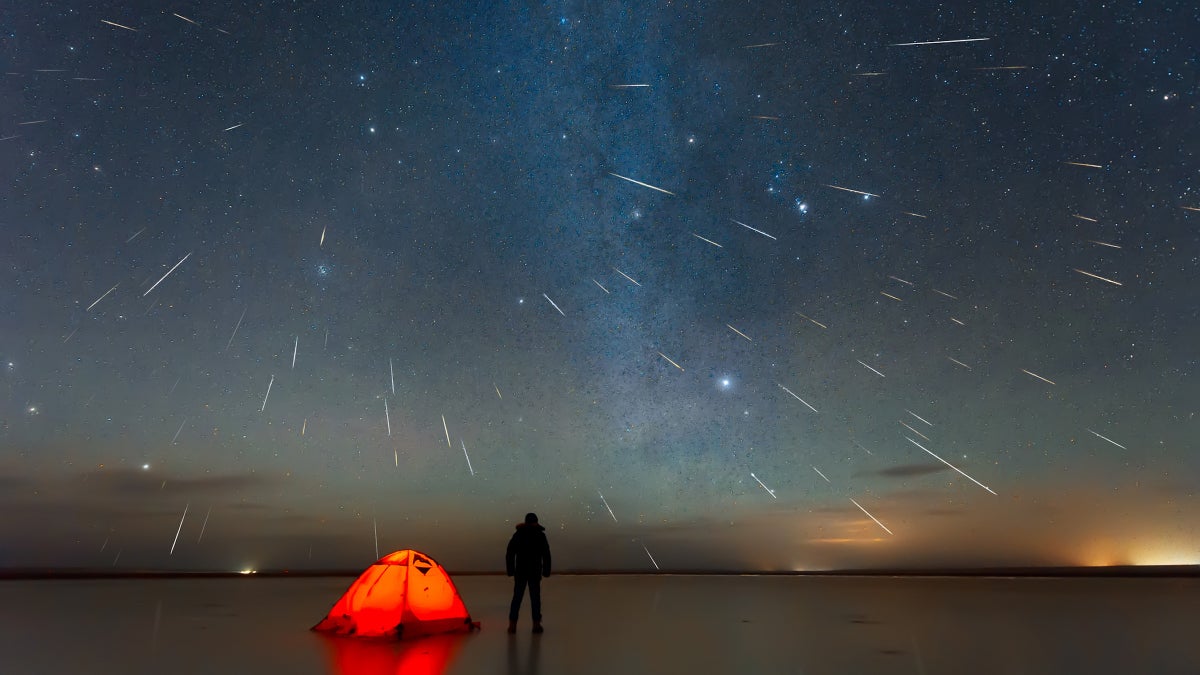
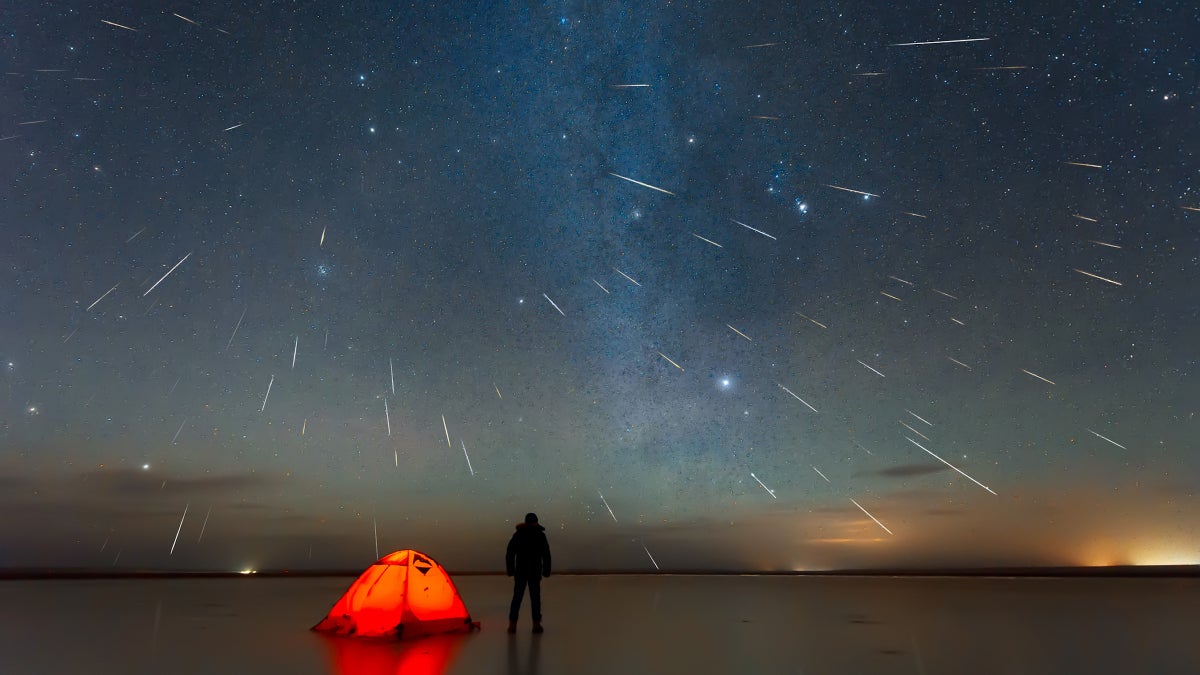
If there’s one meteor shower astrotourists have been waiting for this year, it’s the Geminids—and it’s about to peak. That means you could see between 60 to 120 shooting stars per hour under pristine conditions. Weather-permitting, this weekend’s setup, on December 13 and 14, is about as perfect as it gets.
The best viewing starts around 10 P.M.; the waning crescent moon doesn’t rise until 2 A.M., so you have four moonlight-free hours to spot the year’s brightest sky confetti. According to NASA, the Geminid meteor shower is among the most powerful and reliable spectacles of its kind. It’s known for luminous, yellow-tinged streaks, as well as especially vivid meteors known as fireballs. With no moon, you can even see the dimmer shooting stars. But you can’t just step outside and hope for magic.
Catching the best Geminid meteor shower display requires planning, patience, and weather monitoring. Here’s where, when, and how to see the marvel for yourself, plus dark-sky getaways to make the most of the show.
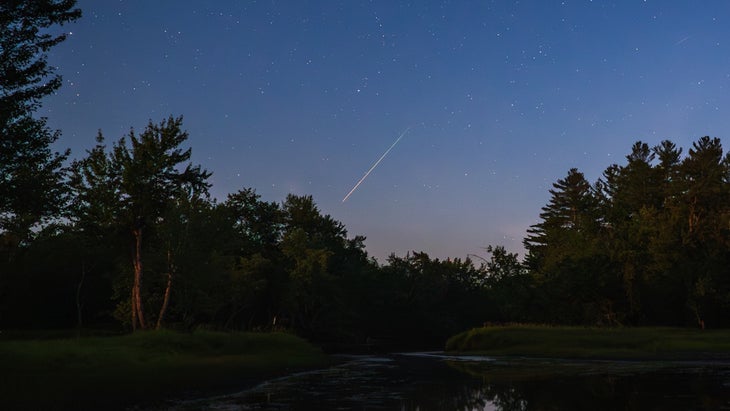
When Can I See the Geminid Meteor Shower Peak?
The full Geminid meteor shower, triggered when Earth passes through rocky debris from asteroid 3200 Phaethon, runs from around December 1 to 21. You could catch streaking stars any night of this stretch, either from the Geminids or the Ursid meteor shower, which spikes from December 21 to 22.
If you only have one night, prioritize the peak, when the Geminids burst like fireworks overnight from December 13 to 14. And you don’t have to skip a night of sleep. The Geminids are most visible from around 10 P.M. onwards; this year, the hours between 10 P.M. and 2 A.M. could be especially lucky since the moon won’t rise until the latter. But night owls can still enjoy the magic into the wee hours of the morning; at just 30 percent illuminated, the waning crescent moon won’t drown out too much of the action.
Where Will the Geminids Appear in the Sky?
Meteor showers are usually named after the constellation they seem to roughly originate from, known as the radiant. In this case, that’s Gemini. To locate it, look for gleaming Jupiter, which rises and travels alongside Gemini on the shower’s peak night.
The radiant tells us when it’s best to watch the show. The action largely kicks off when it’s above the horizon (around 10 P.M.), then builds the higher it climbs in the sky.
For the best view, point your eyes about 45 degrees off from the radiant in either direction, according to EarthSky.org. This covers a large swath of the sky; that means you need a wide-open view to up those 120-hourly-meteor odds.
Where to Watch the Geminid Meteor Shower
The darker the skies, the better the show. Use a light pollution map or DarkSky International’s list of certified places to find a minimally lit Geminids viewpoint.
And download an app like Windy to monitor the weather. I use their cloud-cover maps to track the hour-by-hour forecast for clear skies. When the clouds look relentless, I reroute myself for better viewing.
A final tip: Give your eyes time to adjust to twilight. It can take our eyes up to 30 minutes to recalibrate after exposure to bright light. I typically bring a red-light headlamp to stay safe while retaining night vision. Once I’ve reached my viewpoint, I set up my camera and let it snap away on intervalometer mode as I sit back and watch the show myself.
10 Top Spots to Watch the Geminid Meteor Shower
Unfortunately, many of us live in and around light-polluted cities and suburbs. The artificial glow hides virtually all but the brightest sky streamers from us. (That said, do keep an eye out if you’re outside. I’ve witnessed Geminid meteor shower fireballs while taking my dog for a night stroll near my home in Cleveland, Ohio.)
For the best view, head to a dark locale with wide-open sky views and late-night hours. Here are ten U.S. stargazing getaways to consider.
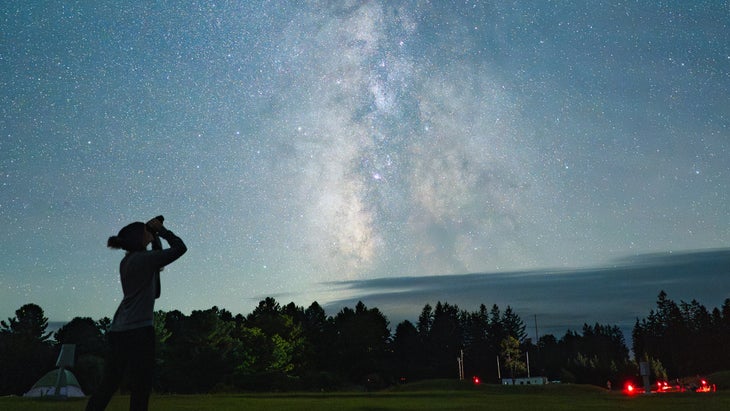
1. Cherry Springs State Park: Coudersport, Pennsylvania
It’s tough to find pristine sky views in the densely populated northeast, but Cherry Springs State Park in Pennsylvania, roughly 280 miles northeast of New York City, is an anomaly. It’s a top-tier dark-sky park that stays open for late-night stargazing, whether it’s in the expansive public viewing lawn or the Overnight Astronomy Observation Field, which comes with strict red-light regulations.
2. Big Cypress National Preserve: Ochopee, Florida
Big Cypress National Preserve, another DarkSky-certified space, treats stargazers to jet-black nightscapes with a surreal nocturnal soundtrack from the surrounding swamp. Watch for shooting stars throughout the park, including the grassy area outside the Nathaniel P. Reed Visitor Center or the less-trodden Fire Prairie Trail in the preserve’s sawgrass prairie.
3. Cape Lookout National Seashore: Outer Banks, North Carolina
Watch stars rocket above the endless sea at Cape Lookout National Seashore, one of the South’s top sky-watching spots. Much of this DarkSky-certified Outer Banks shoreline stays open late for sky-watching. For an accessible Geminids viewpoint, try the Harkers Visitor Center parking lot, where lights stay shuttered after dark. Or, get away from it all by camping on the North Core or South Core Banks.
4. Saguaro National Park: Tucson, Arizona
Imagine watching shooting stars zip above gargantuan cacti. In DarkSky-certified Saguaro National Park, this fantasy becomes reality. The getaway, which bookends Tucson with its Saguaro East and Saguaro West parks, allures with inky nightscapes and numerous open-late trails. For an easily reachable perch, try the Ridge View Trail on the eastern side or the Visitor Center Trail in the park’s mountainous western half.
5. Geauga Observatory Park: Montville, Ohio
The 1,100-acre Geauga Observatory Park, located 50 miles east of Cleveland, stays open until 11 P.M. during the Geminid meteor shower peak. From the park’s panoramic field, you can sky-watch in virtually every direction. Look for meteors on your own, or join a free and guided astronomy night to learn more about the overhead wonder.
6. Headlands International Dark Sky Park: Mackinaw City, Michigan
Astrotourists flock to Michigan’s Headlands for lower-48 northern lights shows, but this DarkSky-certified destination is great for spotting Geminids this December, too. It’s open 24 hours, with sweeping vistas across Lake Michigan. Don’t forget to watch the northern horizon for an especially lucky pairing: streaking stars and the aurora borealis.
7. The Adirondacks: Upstate New York
Light pollution is rarely a problem in New York’s Adirondack mountains, especially once you’re outside the main towns. For prime Geminid-watching, hit up Tupper Lake, Saranac Lake, or Plattsburgh City Beach. All three are easy to reach and packed with sky-watching lookouts.
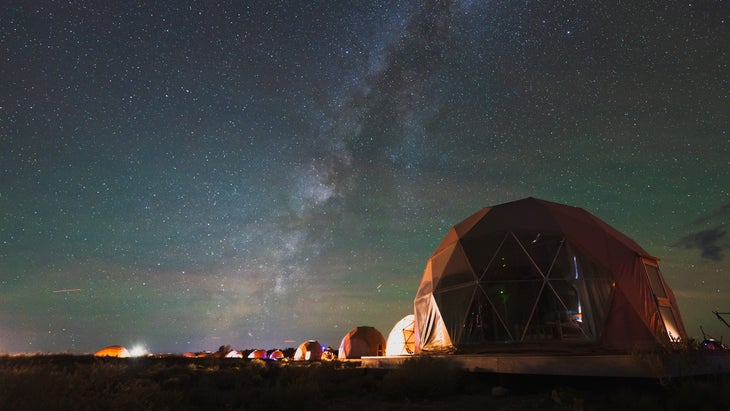
8. Grand Canyon National Park: Tusayan, Arizona
The Grand Canyon’s South Rim has the perfect recipe for Geminids watching: sprawling views, inky skies, and around-the-clock accessibility. Try the Rim Trail, away from Grand Canyon Village, for a jaw-dropping perch. Or, stay nearby in a Clear Sky Resorts dome to watch for shooting stars from bed.
9. Badlands National Park: Wall, South Dakota
The Badlands’ striated slopes and hoodoos feel especially otherworldly when meteors swim above them. Even better: the park, a 60-mile drive southeast of Rapid City, stays open all night. Try hiking out on the Door Trail for dramatic peeks across the crag, or enjoy right-off-the-road scenic lookouts like Pinnacles Overlook and Panorama Point.
10. Death Valley National Park: Furnace Creek, California
With unspoiled nightscapes and a playground of topography, Death Valley is a dream spot for stargazers. It’s one of the darkest escapes in the country, and winter’s cooler temperatures make a Geminids-timed visit quite pleasant. The lookout options abound. Try Zabriskie Point, the Mesquite Flat Sand Dunes, or Badwater Basin’s hexagonal salt flats, which look pulled from another planet.
The post The Best Meteor Shower of the Year Is Peaking This Weekend. Here’s How to See It. appeared first on Outside Online.