







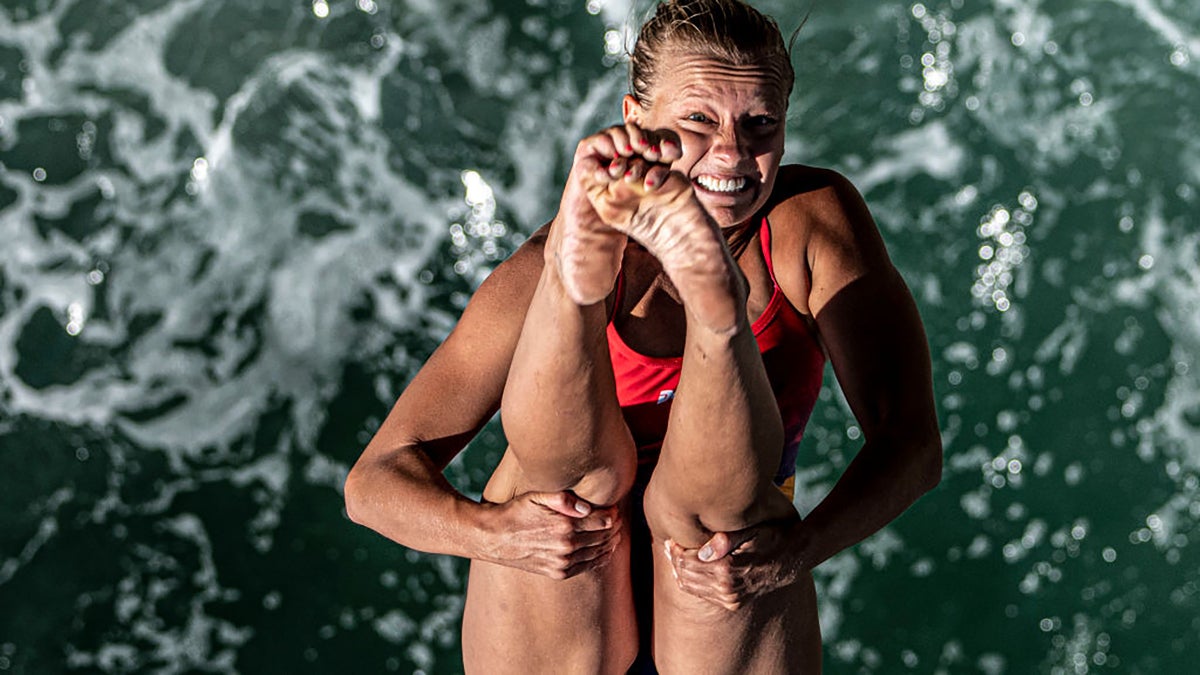
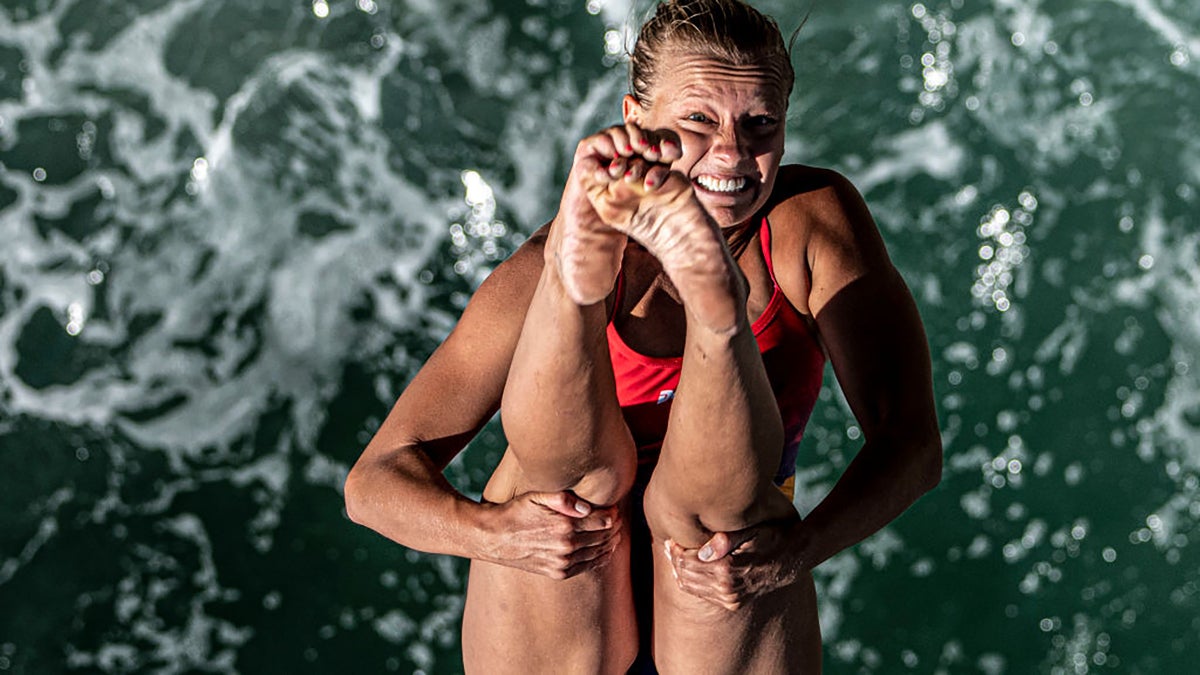
Australian diver Rhiannan Iffland has dominated the Red Bull Cliff Diving World Series since joining the tour in 2016. This past September, Iffland, 34, wrapped up her ninth consecutive international title. Iffland told Outside what it’s like to nail the entry on three flips (with a half twist) from a 68-foot (21-meter) cliff.
There’s always more fear at the start of the season, especially with your first dive. I spent the whole offseason doing weightlifting and training from lower platforms, but I’d only done three high dives—from above the Olympic height of 33 feet—in the four months leading up to the 2025 World Series. So that first one is intense.
The kick-off event for 2025 was at the cliffs in El Nido, on Palawan Island in the Philippines. I dove there once before, in 2018, but I don’t remember being as scared back then as I was this time around. It’s an amazing spot. You have to rock climb to reach the platform. Then you take these bamboo ladders, you’re pushing trees out of the way, and when you get to the top, you think, oh my God, this place is out of a fairy tale.
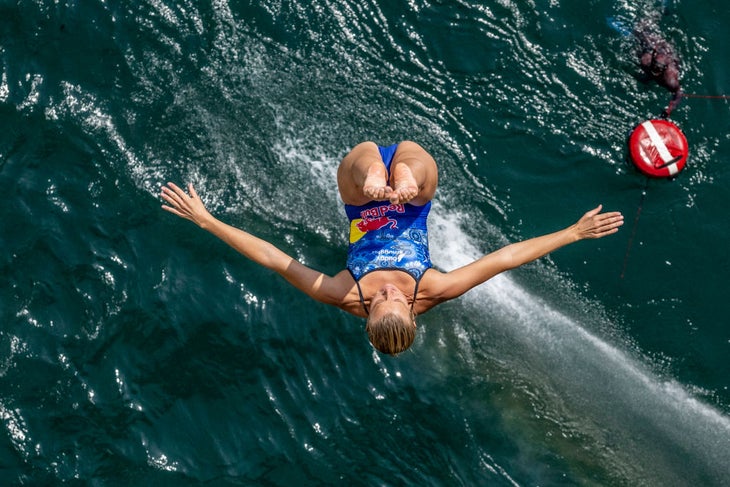
The climb to it was a via ferrata, so it was all aligned. But it was really hot and sunny. I enjoy rock climbing, but I think for some divers, that was the scariest part of the whole thing. You had that nervousness about the climb first, and then the nervousness about getting to the platform and doing the dive next. While you’re shuffling along the side of the cliff, you hear the people before you diving and hitting the water, and you want to know what’s happening, what kind of scores people are getting. All your senses are completely heightened. I tried to enjoy it as an adventure.
The temporary platform extended about half a meter out from the cliff. There wasn’t much room to warm up or stretch or anything. Luckily, my legs were on fire from the climb when I got there. (In the Red Bull Cliff Diving World Series, women jump from a height of 68 feet).
On the platform, I got ready to do my dive, a front triple pike with a half twist, by visualizing exactly what was about to happen in the air. You only do one or two dives per day during a Red Bull competition because the water impact is so tough on your body from that height, even when you go in just right. The sun happened to be shining right in my face during that first dive, which was tough, because you always use visual markers in the air. You see the water, you see the cliff, you see the water again, and so on. That’s how you know when to come out of your flips and twists and start lining up the feet-first entry.
Before every dive, I stand up on the end of the platform and visualize. It can be really scary, mid-dive, if you come out and say, OK, that’s not what I’m supposed to see. Like if you’re doing an inward, jumping backward off the platform and flipping forward, and you come out and see the huge cliff face in the wrong spot. That’s happened to me a few times.
We always dive with a team of rescue divers waiting in the water below, because if you land wrong, you can get knocked out or hurt by the force of the water. In my first high diving meet, during the 2016 FINA World Cup in Abu Dhabi, I was doing an inward biryani, which is what we call a flip with a half twist, and I came up short, almost horizontal. I wasn’t quite knocked out, but was totally out of breath. So I needed the rescue divers to help me out of the water. That first high-diving meet happened to be the worst competition of my life. I finished dead last.
The Abu Dhabi crash changed my outlook a bit on high diving, but a lot of the emotions, and the fear, have remained the same. I got into the sport after working in a diving show on a cruise ship. Thinking back to my very first high dive, I still remember climbing the ladder and basically shitting my pants, asking myself, is this actually what I want to do? But then you do the dive, you hit the water, and it feels so exhilarating. It makes you want to get out and do it again.
I would say that you get more comfortable sitting with those feelings. As time goes on, you acknowledge that they’re there. And the fear is not a bad thing. The fear tells us that we’re human, even though we do these crazy things from stupid heights.
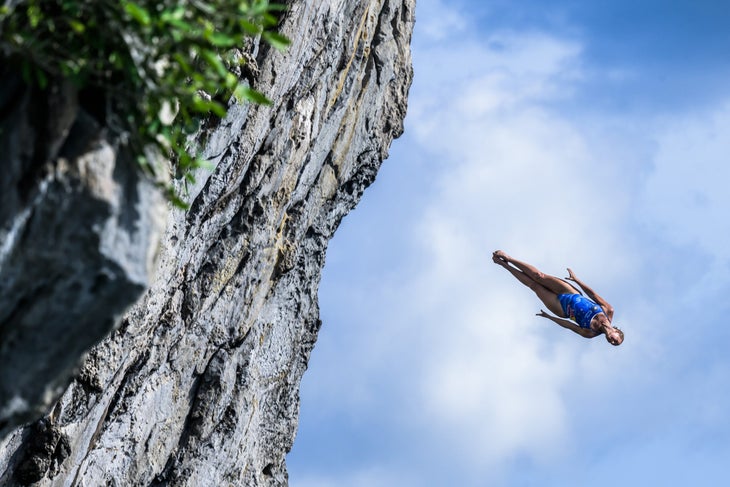
Having said that, I’ve certainly changed my competitive mindset over the years. There are a lot of divers that come and go, whereas I’ve been on the Red Bull tour since 2016 so I’m practically part of the furniture. The environment is friendly, but we’re all big competitors. I know that I’m the one with a target on my back. That can be difficult.
Cliff diving is such a mental sport. You have a combination of things that can easily overwhelm your performance. There’s the fear of what you’re about to do, and then the technical aspect of doing, say, a back triple somersault with two twists. And then you’ve got the judges, and the crowd, and the self-expectations. I try to play it one competition at a time.
When you’re in the dive, you just have to let things flow. It’s hard to put into words. Personally, I think the time in the air goes by really slowly. On a dive like that front triple in El Nido, I’ve done it so many times that I know all the cues. Sometimes your thoughts change in the air, like if you miss a leg wrapping into the pike—your thoughts scatter. You really don’t want that to happen.
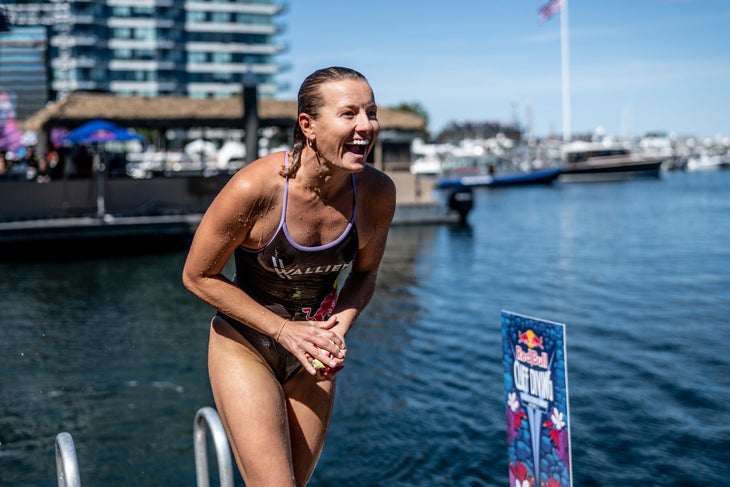
If everything’s going right, like they did at El Nido, I’m thinking really technical thoughts. Sometimes it’s a sigh of relief, and you think, okay, I see the water now. That’s perfect. Everything’s under control, and that’s exactly what I’m supposed to be looking at.
I don’t think too hard about the entry. If I do, it doesn’t go well. Divers try to make as small a splash as possible. For me, I try to connect every part of the dive up until the finish. And then the entry happens. We always dive with at least 17 feet of vertical water depth—I go straight down when I hit. Sometimes you make minor last-second adjustments in the air, which need to happen really fast. But when you’ve trained so much, those start to happen automatically.
I started diving at a cruise ship show when I was 21. That’s where I first saw the Red Bull Cliff Diving World Series and understood the height and type of dives they were throwing. After they introduced a women’s competition in 2014, I said, holy shit, I want to be there.
As told to Eric Olson.
The post Fear Is Your Friend: What It’s Like to Dive off a 68-Foot Cliff. appeared first on Outside Online.