







Democrats are vowing to expand the midterm map into redder territory next year after strong showing Tuesday night in Tennessee, but prominent moderates warn the party must still overcome its tarnished national brand.
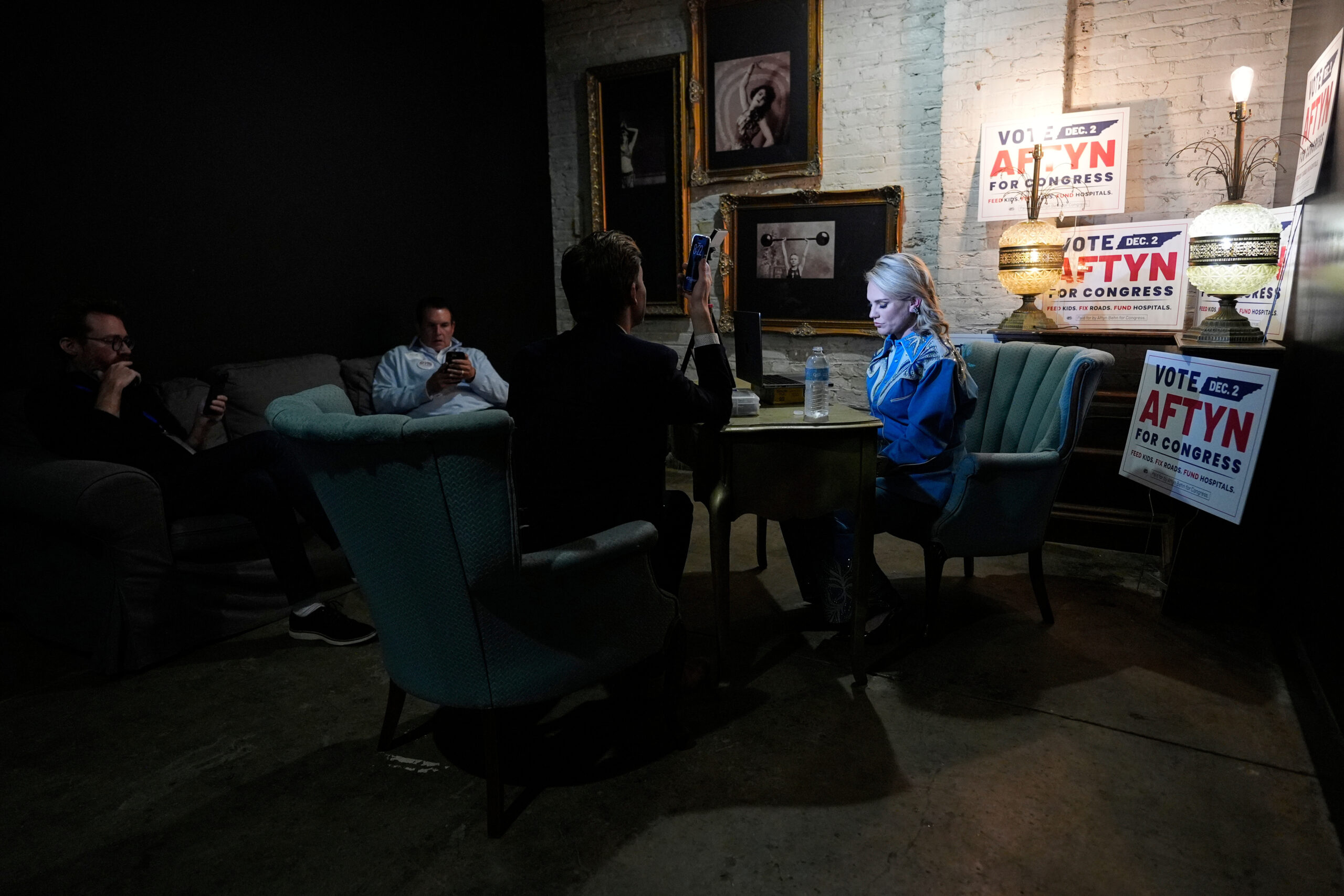
State Rep. Aftyn Behn’s overperformance in a district President Donald Trump won by more than 20 points last year further emboldened Democrats, after sweeping victories last month. The Democratic Congressional Campaign Committee is planning to soon expand its 35-seat target list of Republican-held seats, according to a person familiar with the committee’s thinking who was granted anonymity to share details. And in a memo to donors and allied groups obtained by POLITICO, Senate Majority PAC President JB Poersch said Tuesday’s results “mean Ohio, Florida, Alaska, Texas and Iowa could be competitive.”
But Behn’s progressive credentials — and the GOP’s ability to spend-heavilly and bring her down with previous comments about police funding — is inflaming debates about the future of the Democratic Party and what types of candidates it should nominate in primary contests.
Former Democratic Rep. Conor Lamb of Pennsylvania, who flipped a deep-red district in a 2018 special election, called the race “a missed opportunity.”
“It just sort of looks like we ran a standard to progressive Democratic campaign and we got the result you would expect,” Lamb said. “What a successful candidate would have done is motivate people, exactly the way that she did around Nashville, but also appeal to some more people who are less partisan outside of it.”
He added, “to win enough of a House majority to really be able to do anything of significance, we’re going to have to do that.”
The internal sniping comes despite a string of special election overperformances this year — Democratic candidates won by double digits in New Jersey and Virginia’s gubernatorial races last month. Those victories spurred fundraising surges and candidate recruitment for Democrats.
Behn’s race turned into a national flashpoint after those successes, drawing more than $3.5 million in outside spending from Republican groups to attack her as “a very radical person” in TV ads. She outran Harris by less than any other Democrat in a special congressional election since Trump took office — though those other races didn’t draw any significant outside spending. That triggered a round of finger-pointing, particularly on social media, over whether a more moderate candidate might have performed better.
When pressed in media interviews during the campaign about her previous social media posts, Behn said she’d “matured,” adding she was a private citizen when she made the comments. She also said police funding should be decided at the local level.

“I don’t think it’s radical to have spent my entire career organizing to make healthcare more affordable or groceries cheaper,” she said ahead of Tuesday’s election.
Ian Russell, a Democratic consultant who worked on Behn’s campaign, responded to post-election criticisms, saying that in her interviews and campaign ads, “Aftyn was laser-focused on lowering costs — a message that our polling showed worked very well with both Democrats and the very small pool of persuadable voters.”
Internal Behn campaign analytics shared with POLITICO showed thousands of Democrats who did not vote in the 2022 midterms had come out in the early vote. Early voting data out of rural counties also suggested she won over some voters who previously cast ballots for Trump or GOP Rep. Mark Green.
But some Democrats lamented Behn’s “politically toxic positions” as “anvils weighing [her campaign] down,” Lanae Erickson, a senior vice president at the center-left Third Way, said.
After an election that many viewed as a disappointment for the GOP given the pattern of Democratic overperformances, Republicans were eager to exploit those divides.
“Democrats can daydream about ‘expanding’ the House map all they want, but reality keeps smacking them in the face,” National Republican Congressional Committee spokesman Mike Marinella said in a statement. “Their party is splintered, their messy primaries are a socialist free-for-all, and voters are consistently reminded that the Democrat Party is on the wrong side of every single issue.”
Even so, Behn’s ability to narrow Republicans’ margin-of-victory coupled with stronger-than-expected turnout gives Democrats reason for optimism heading into the midterms. That’s why Democrats say they are casting their eyes deeper into the electoral map, which includes 46 GOP-held congressional seats that Trump won by 13 or fewer points in 2024 — the margin by which Behn closed the gap between Trump and Harris.
“If Democrats do 13 points better than [Kamala] Harris did next November in every district, we flip the House and it’s not even close,” Democratic pollster Brian Stryker said. “Add this to New Jersey and Virginia, and it’s clear if the election were today we’d clean Republicans’ clocks.”
Courtney Rice, the DCCC’s communications director, said in a statement that the committee “started the 2026 cycle on offense with our original list of ‘Districts in Play,’ ranging from true swing districts to districts Trump won by 17 points.” She said recent elections “are further proof that our strategy of expanding the map and holding Republicans accountable for their broken promises to lower costs is the right one.”
The Tennessee race — which drew the attention of Trump and Harris — also yielded higher turnout than other special elections this year. Votes cast in the special election slightly surpassed the 2022 midterm in the district, and were roughly 54 percent of the total cast in the 2024 presidential election. None of the other congressional special elections where Democrats made bigger gains this year came near that.
That means Behn’s overperformance can’t just be chalked up to low-turnout conditions that typically favor Democrats. Narrowing Republicans’ margin even with midterm-like turnout gives the party new reason for optimism heading into 2026.
“There is a lot of excitement based upon what we saw last night in the 7th [District],” said Columbia, Tennessee’s Democratic Mayor Chaz Molder, who is challenging Rep. Andy Ogles in the state’s neighboring 5th District, which encompasses part of Nashville as well as suburbs and exurbs to the south.
“We saw a clear message from the voters that they want sensible leadership and candidates are focused on the issues that matter — lowering costs, that includes housing and grocery costs. I think affordability certainly remains a key theme here,” Molder said. “And so I’m going to use last night to show as a sign that I need to remain laser focused on those issues.”
An Ogles’ spokesperson did not respond to a request for comment.
The high turnout in the race is spooking some in the GOP, where the mood was already sour following Democrats’ victories last month. While some continue to dismiss Democrats’ ballot box strength as an off-year anomaly, others see a rough cycle ahead.

“I think the results are more good for Republicans than bad, but it’s clear the left is energized to turnout and if that continues a year from now it will be a rough year for Republicans,” said Republican strategist Matt Wolking.
And while Trump campaigned harder for Van Epps in Tennessee than he did in other races this year, he still hasn’t hit the trail, instead opting to rally voters remotely from Washington. To keep control of the House next year, Republicans believe Trump — who maintains a near-total grip on his MAGA base — needs to be more visible.
And as polls show that voters are losing faith in the president’s ability to handle the economy, Republicans need to find a cohesive message, fellow GOP members say.
Tony Fabrizio, Trump’s top pollster, told House Republicans during a closed door meeting to “stay the course and talk about the realities of the economy,” arguing the closer-than-desired margin was in part because of how Van Epps discussed the economy, POLITICO reported Wednesday.
Some of that is already underway. James Blair, Trump’s 2024 political director, told POLITICO after the GOP’s losses in November that the president “is very keyed into what’s going on” economically.
“I think you’ll see him be very, very focused on prices and cost of living,” Blair, who now serves as White House deputy chief of staff, said in the interview.
Speaker Mike Johnson dismissed the results on Wednesday, telling reporters, “This doesn’t concern me at all.”
“Democrats put millions of dollars in,” Johnson said. “They were really trying to set the scenario that there’s some sort of wave ongoing. There’s not.”
Lisa Kashinsky contributed to this report.