





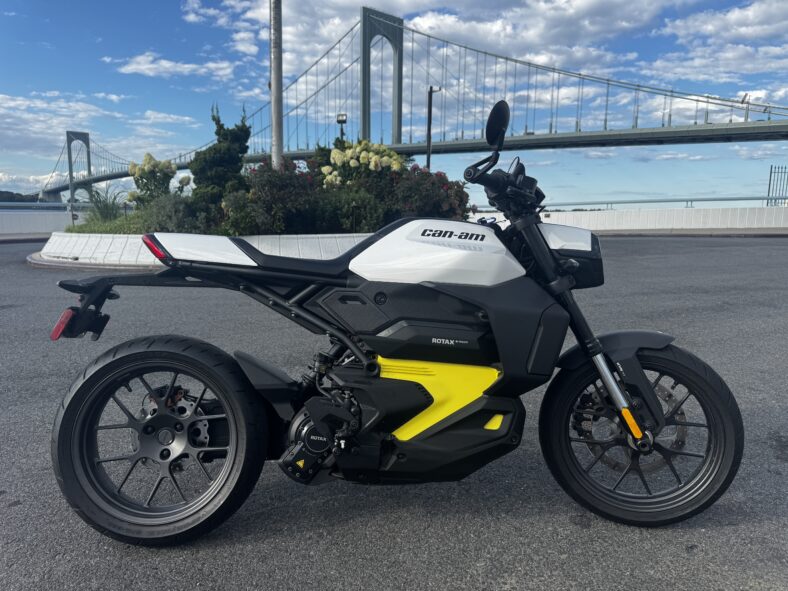
Electric cars and trucks have been around long enough to take a health share of the automotive market, but the era of the electric motorcycle is still in its infancy. Can-Am—a company best known for its off-road vehicles and killer trikes—is getting in on the ground floor with fully electric bikes like the street-ready Pulse and the versatile Origin. While EVs might not be for everyone, could an electric motorcycle be for every rider?
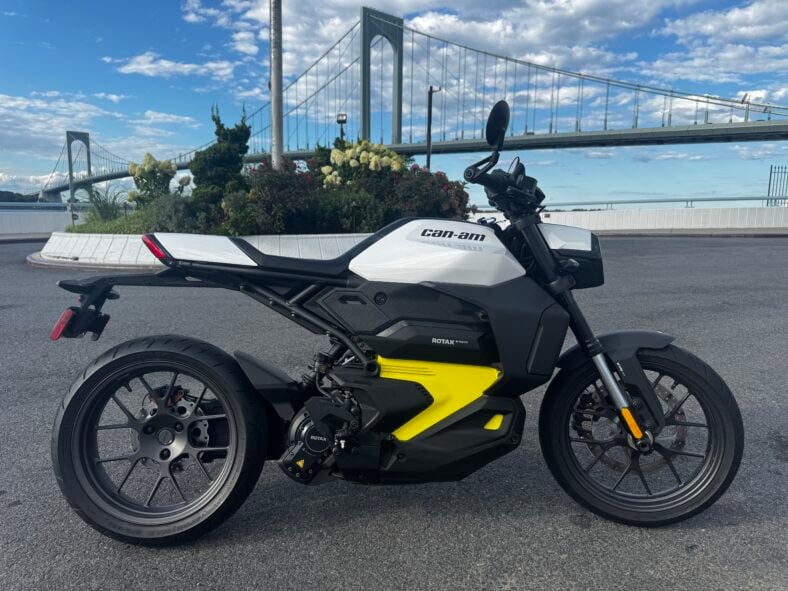
On initial inspection, the Pulse turns heads. Available in black, white or a special sterling-silver satin, the fairings and “gas tank” play second fiddle to the bold yellow bulk of the bike’s body, which houses the massive battery that allows the Pulse to transform electricity into pure adrenaline. Without looking closely, there’s really nothing that outs the Pulse as an EV when compared to its combustion-engine brethren. It’s just a good-looking bike.
On the performance front, like most EVs, acceleration is astounding. In Sport+ mode, the mode I rode in most, the 0-60 mph time was consistently under four seconds, and snapping the throttle immediately delivered more than enough power to get the front wheel up in the air; a shocking development when I discovered it, but an absolute joy every time thereafter. Similarly, the Pulse was equally up to the task of burnouts and any other oddball motorcycle trick I’d try to test on gas-powered bike.
Of course, Sport+ mode showcased the Pulse’s raw power. But two other modes, Normal and Eco, are available for those looking to go the distance, whether that means battery longevity or range. In my experience, riding the Pulse in Normal mode surprisingly didn’t differ much from Sport+. There was still plenty of torque and acceleration available when riding in Normal, and I could see average commuter making that their default mode.
Eco, on the other hand, is really for the rider who wants to squeeze as much distance out of a charge as possible. According to Can-Am, that amounts to about 100 miles. Even though I never actually used an entire charge in Eco for fear of stranding myself on the road, my experience largely corroborates that claim. However, acceleration tails off significantly and it was quite an effort to achieve the Pulse’s 80 mph top speed, which was no problem in Sport+.
As expected, the Pulse was a joy to ride, provided a thrill like any gas-powered sport or street bike would, connected me to the road like only a motorcycle can, handled the treacherous traffic conditions around NYC with aplomb, and even cut more than a few precious minutes off my daily commute. What surprised me was how quickly it would take a full charge, even off a traditional wall outlet. I was consistently getting from 10 or 20 percent all the way to 100 percent charge in two or three hours. On a supercharger, the time to full charge is cut down to about an hour.
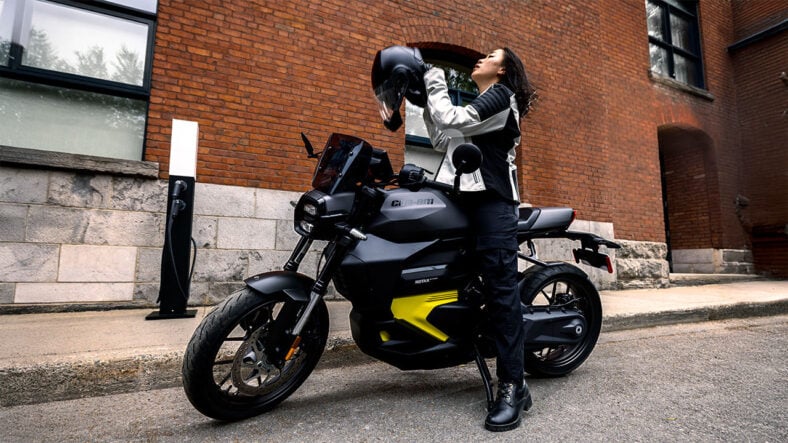
That range and those charging times put the Pulse does limit its use cases. For a commute it’s brilliant—mine is about 15 miles each way, and the Pulse tore it up daily. However, when the opportunity to visit a friend about 100 miles away came up, it presented the question of whether to chance it on the Pulse, knowing I would need to recharge before heading home. In my instance, I knew I could rely on public charging options, but had I been in an area underserved by charging infrastructure, I’d have probably taken that trip in my car instead.
There’s plenty of wonderful stuff to say about how the Pulse can go, but what’s arguably more interesting is how the Pulse can stop. There’s a unique regenerative decelerating system in addition to the traditional hand and foot brakes. The regen deceleration was initiated by rolling the throttle away from me, the opposite motion used to accelerate. For an experienced motorcyclist, this is a very counterintuitive motion that initially resulted in some very choppy stops. After a day or two, though, regenerative deceleration was my go-to means of stopping on local roads. Not only did it become a very natural motion, but it added to the bike’s range. It’s worth noting that I reverted back to traditional braking when riding the Pulse on highways for safety’s sake.
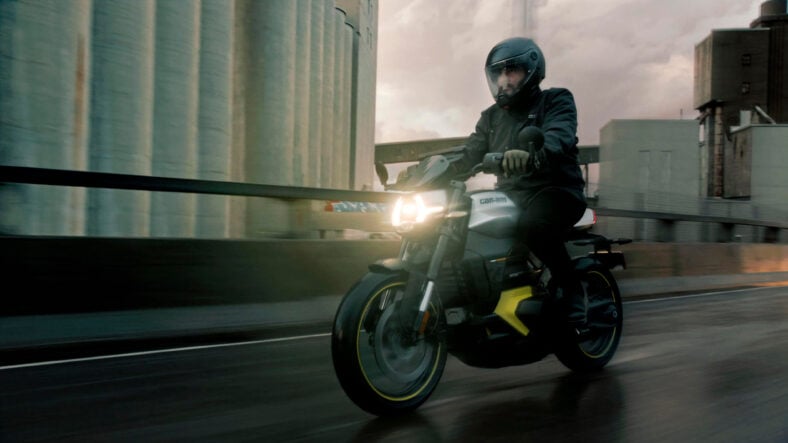
Beside the regenerative deceleration, two other characteristics stood out that are unique to nearly all electric motorcycles, the Pulse included. It’s silent, which isn’t necessarily a bad thing, but sometimes the best way to let the traffic around you know you’re there is to crack the throttle and announce your presence. The Pulse’s electric motor, at its loudest, emits a high-pitched hum. Its horn left some decibels to be desired, but a case can be made that anything quieter than a semi-truck’s honk falls short when you’re on the road with two wheels.
Secondly, the Pulse’s lack of a clutch was utterly jarring at the outset. There is a particular satisfaction and feel that come with using the left hand and left foot in tandem to manually move through the gearbox. That is wholly absent on all electric bikes. It took a few days before I stopped phantom clutching (pulling a handle that simply wasn’t there) while I was riding the Pulse. The upside to a clutch-less bike is the left hand is free to cycle through media controls and other stats on the Pulse’s big, bright 10-inch touchscreen display.
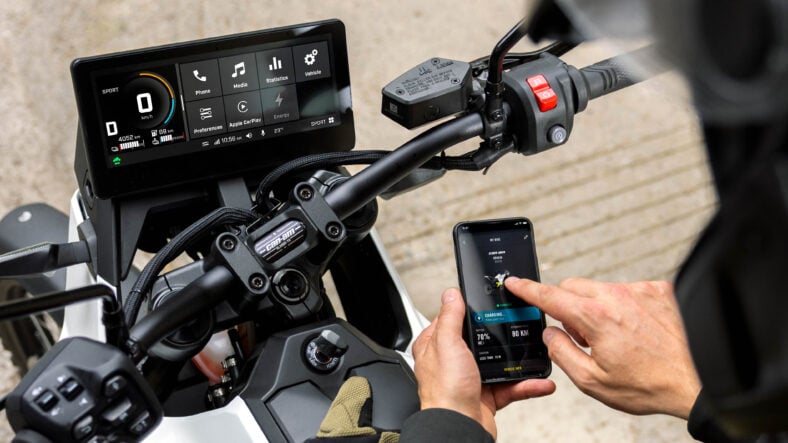
Speaking of the Pulse’s HUD, Can-Am has set what I consider to be a high bar for the rest of the motorcycles produced today. My dad is a lifelong Harley rider, currently on his second CVO, and I could see the jealousy in his eyes when he saw the screen on the Pulse. Built-in Bluetooth connectivity for phone calls and music, connectable to a variety of headsets, boasting both Apple CarPlay (wired) and Android Auto, there was no shortage of modern amenities to support delightful summer afternoon cruises with tunes bumping. Can-Am tells us that wireless connectivity for CarPlay is also in the works, a feature that will make the infotainment system practically perfect when it arrives.
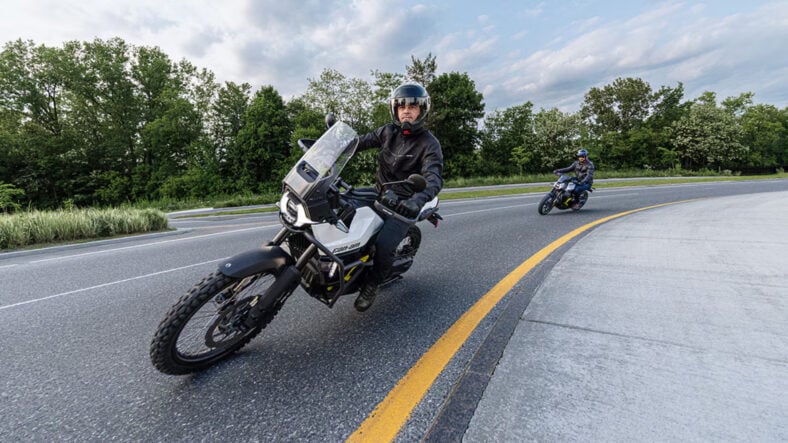
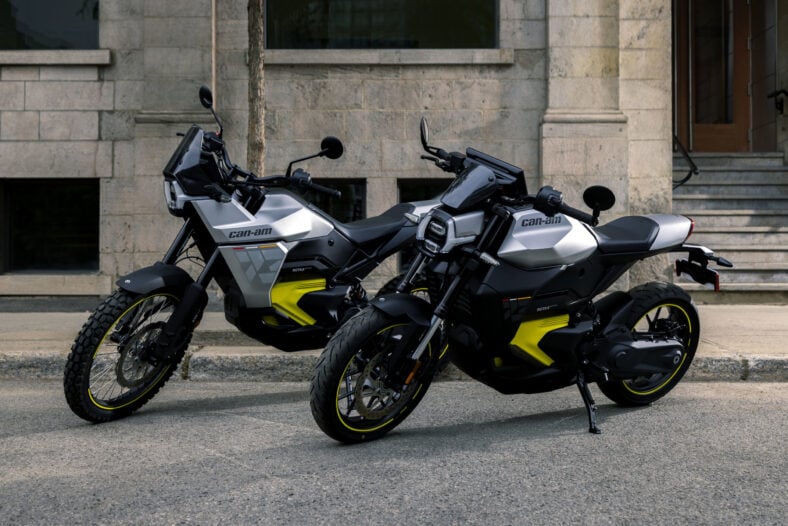
Even though I was able to try both bikes during my original Brooklyn test drive, it was the Pulse that I grew to love over the course of the summer months, and I had serious separation anxiety when returning it. Colleagues did say that their experience on the off-road-ready Origin, with its taller wheels and more substantial suspension, still offered a similar experience at its core, and they felt the same remorse returning theirs. This shared experience across two distinct models speaks to the notion that the philosophy behind Can-Am’s electric motorcycle endeavor is a unified one that can be applied to any kind of bike. Hopefully that means we see even more variety from them in the future. Starting at $10,999, the Pulse starts at $10,999 is available across North America.